
Why are cooler units important for industrial applications?
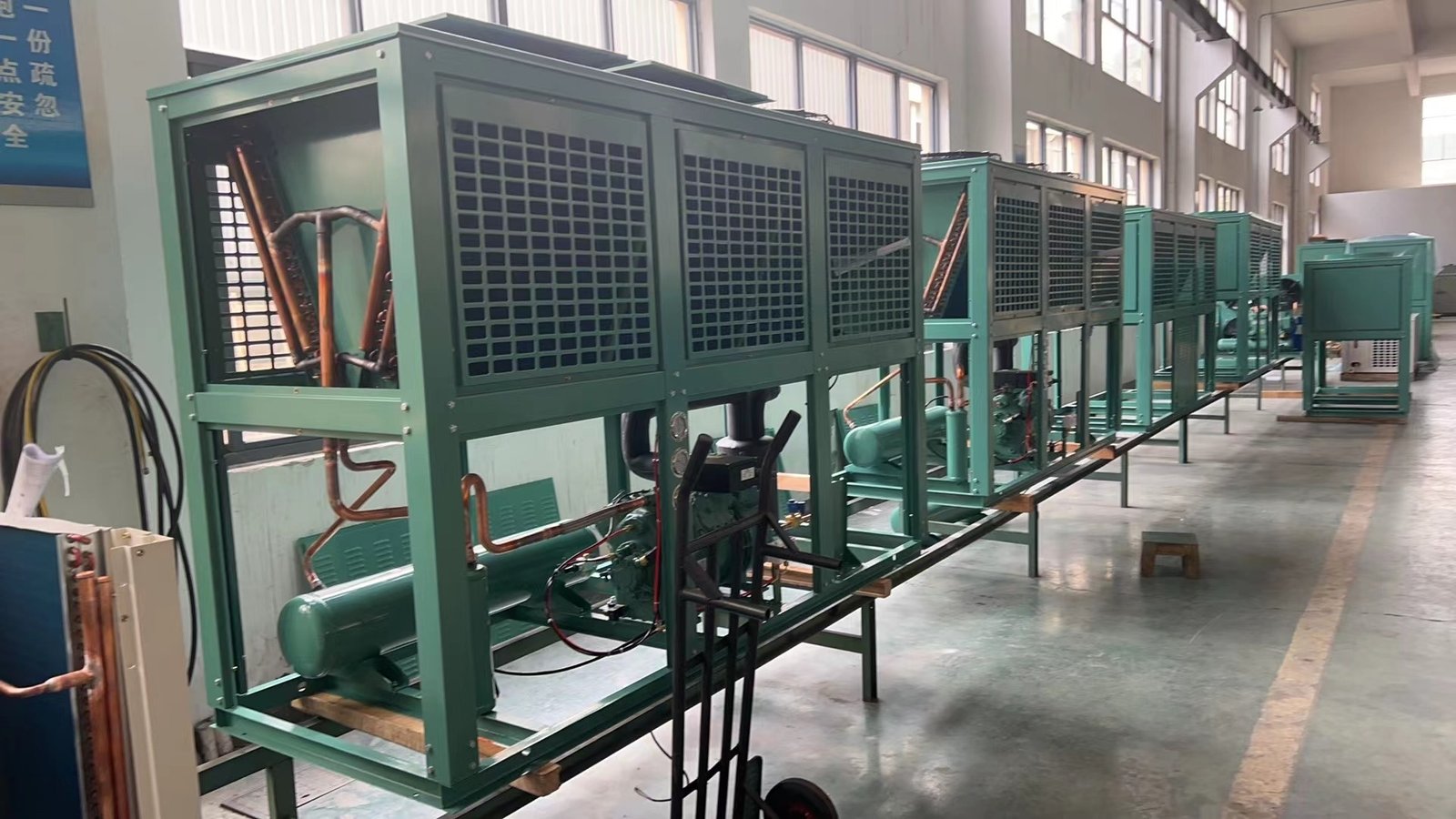
Let me say this straight – if you run any kind of industrial operation that involves heat generation, you already know that cooling is not a luxury. It is a necessity. But the real question is why cooler units specifically matter so much across different industries. Not just any cooling, but the right type of cooler unit for your specific process. I have seen too many factory owners try to cut corners on cooling equipment, only to end up with production halts, spoiled product, and a much bigger repair bill. So let me break down why cooler units are a must-have in five major industrial sectors, using real numbers and practical examples.

Temperature control in food processing and cold storage
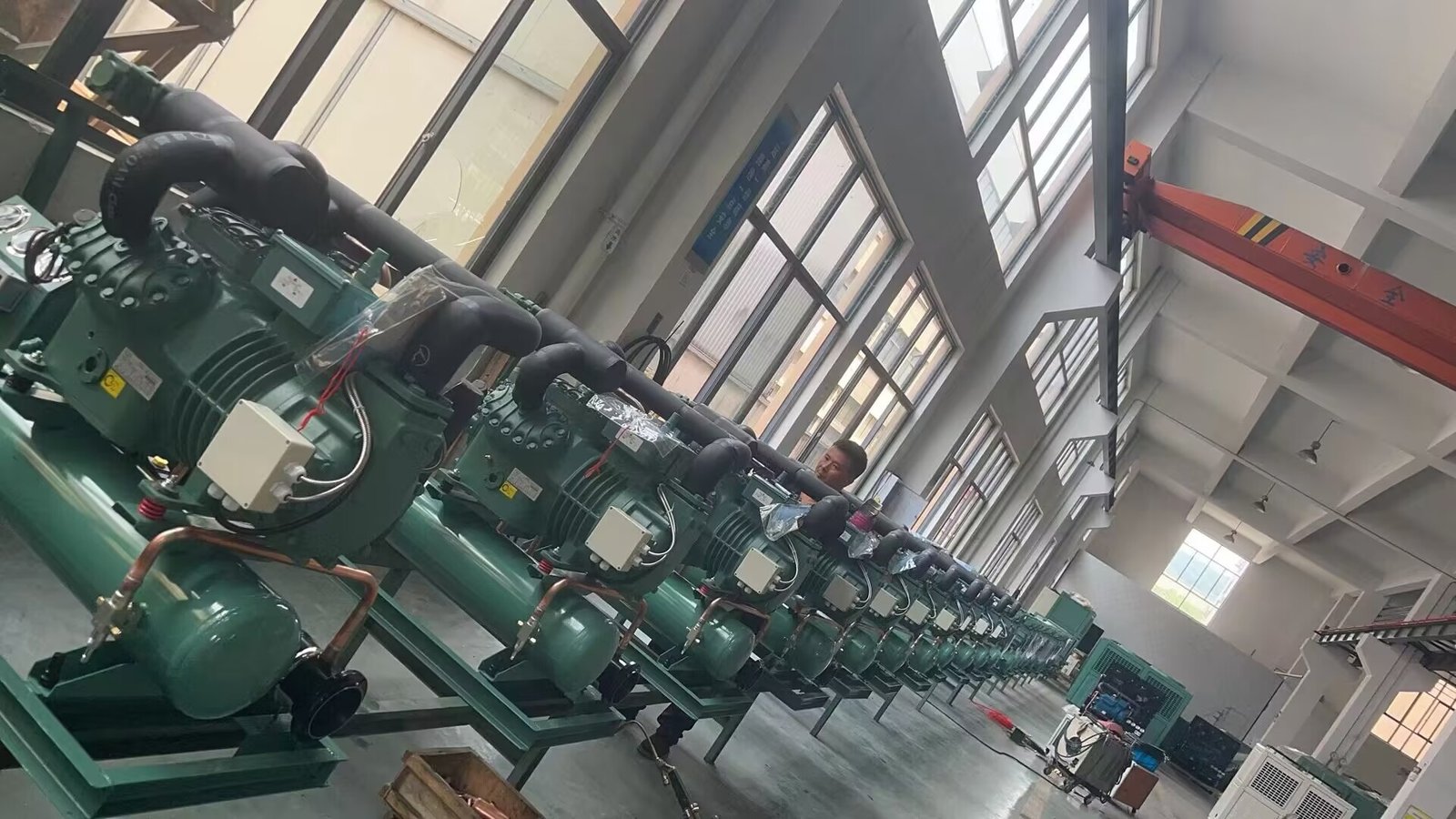
The food industry is probably the most obvious place where cooler units prove their value. Think about meat processing plants, dairy factories, beverage bottling lines, or even commercial bakeries. Every single step from raw material storage to final packaging requires strict temperature management. According to the 2023 report from the International Institute of Refrigeration, temperature abuse causes about 12% of all food spoilage globally. That is roughly 1.3 billion tons of food wasted every year just because the cooling system was not adequate or failed at a critical moment.
Now, let me give you a concrete example. A medium-sized poultry processing plant in Thailand installed high-efficiency screw chiller units in 2022. Before that, they used old reciprocating compressors that broke down every two months. Their product loss due to temperature fluctuation was around 3.5% of total output. After switching to modern cooler units with digital controllers and redundant circuits, that loss dropped to 0.4%. That is a direct cost saving of over 2 million Thai baht per month for a plant that processes 50,000 chickens per day. Not to mention the reduction in insurance premiums and the ability to pass audits from global retailers like Walmart and Carrefour.
But it is not just about preventing spoilage. Cooler units also affect the quality and texture of food products. For example, in ice cream production, the cooling rate during aging and freezing determines the crystal size. If your cooler unit cannot deliver consistent low temperatures within ±0.5°C, you get large ice crystals and a grainy texture. That product will never make it to export markets. I have personally visited a frozen dessert factory in Vietnam that lost a contract with a Japanese buyer because their old ammonia chiller had a temperature swing of 2°C during peak hours. That is the kind of real-world consequence that keeps procurement managers up at night.
Let me also throw in some data about energy consumption in food cold chains. A study from the European Commission in 2024 showed that refrigeration accounts for about 30% of total energy use in food processing plants. Upgrading to variable-speed cooler units with ECM motors can cut that by 25% to 40%. For a plant with an annual electricity bill of $500,000, that means $125,000 to $200,000 in savings. Plus, many governments in Europe and North America now offer tax credits or subsidies for energy-efficient refrigeration upgrades, which can cover 10% to 30% of the equipment cost.
If you supply cooler units to food processors, you need to highlight features like stainless steel evaporators for hygiene, easy-to-clean condensers, and compliance with HACCP and FSMA standards. Also, the ability to maintain low ambient temperature operation – many factories in hot climates struggle when outside temps hit 45°C. Your cooler units must be designed for those conditions, or else the customer will experience capacity derating and eventual breakdown.
Chemical and pharmaceutical processes require precise heat removal
Moving into the chemical and pharmaceutical world, the stakes get even higher. Here, temperature control is not just about preventing spoilage. It is about controlling reaction rates, ensuring product purity, and even preventing explosions. In many chemical reactions, the heat released during the process must be removed at exactly the right rate, or else the reaction can run away. The 2021 Flixborough disaster was a classic example of what happens when cooling fails – but we don’t need to go that far. Everyday operations in batch reactors, distillation columns, and crystallization units rely on cooler units to maintain safety and efficiency.
Take the example of a pharmaceutical company manufacturing APIs for generic drugs. They need to maintain reaction temperatures within a range of ±1°C for a 48-hour batch. If the cooler unit supplying chilled water at 5°C has a fluctuation of even 2°C, the reaction kinetics change. This can lead to lower yield, higher impurity levels, or even failed batches. A single failed batch of a high-value antibiotic can cost upwards of $1 million in raw materials and lost production time. I read a case study from 2023 about a plant in India that experienced a series of batch failures due to an undersized air-cooled chiller that could not handle the monsoon season humidity. The condensers got fouled, the discharge pressure spiked, and the chiller kept tripping. That plant lost three batches in one month – a total loss of $3.5 million. They finally replaced it with a water-cooled screw chiller with a remote condenser and saw zero failures in the next 12 months.
In the pharmaceutical industry, temperature control is also critical for storage of active ingredients and intermediates. Many APIs require storage at -20°C or even -80°C. That requires specialized cascade refrigeration systems or even liquid nitrogen cooling. But for the majority of coolers used in production, the demand is for reliable, precise chilling at temperatures from -10°C to 10°C. The key performance indicators include leaving chilled water temperature stability (should be ±0.5°C or better), ability to handle variable heat loads from batch operations, and low temperature rise during peak loads.
There is also a huge push for natural refrigerants in the chemical sector. As of 2024, the F-Gas Regulation in the EU has reduced the quota for HFCs by 55% compared to 2015 levels. Many chemical plants are switching to ammonia, CO2, or propane-based cooler units. If you are exporting to Europe, you need to offer units with low GWP refrigerants. A recent survey by the European Chemical Industry Council found that 78% of large chemical companies plan to replace their HFC chillers within the next 5 years. That is a massive market opportunity, but only for manufacturers who can provide the right certifications and support.
Another important point is the need for explosion-proof cooling units in hazardous areas. Chemical plants are often classified as Zone 1 or Zone 2 areas due to flammable vapors. Standard cooler units with open electrical components cannot be used there. You need units with ATEX or IECEx certification, sealed compressors, and intrinsically safe controls. I have seen distributors lose major contracts simply because they did not have ATEX options in their catalog. So if you target the chemical sector, make sure your product line includes explosion-proof models.
Data centers and electronics manufacturing depend on consistent cooling
Everyone talks about data centers these days, but many people don’t realize how much cooling matters for the reliability of servers. A 2023 report from Uptime Institute showed that 70% of data center outages are caused by power or cooling failures. And among cooling failures, the most common cause is a malfunctioning chiller or cooling tower. When a data center goes down, the average cost per minute can be $8,000 to $10,000, according to a study by the Ponemon Institute. That means a one-hour outage costs half a million dollars. For a large hyperscale data center, the cost can be much higher.
Data centers use cooler units in the form of chilled water systems that feed Computer Room Air Handlers (CRAHs) or direct liquid cooling. The trend is moving toward higher inlet temperatures – ASHRAE now allows up to 27°C for class A1 servers. But that still requires precise cooling control. The biggest challenge is that data center loads are not constant. They vary with server utilization, weather conditions, and time of day. An efficient cooler unit must be able to modulate capacity from 10% to 100% without sacrificing efficiency. This is where inverter-driven screw compressors or centrifugal chillers shine.
Let me show you a comparison of different cooler types commonly used in data centers, based on real-world data from the 2024 Data Center Cooling Survey by Schneider Electric:
| Cooler Type | Typical Capacity Range | Average COP at Full Load | Average COP at 50% Load | First Cost per Ton | Annual Maintenance Cost per Ton |
|---|---|---|---|---|---|
| Air-cooled scroll chiller | 10-100 tons | 2.8 | 2.2 | $1,200 | $180 |
| Water-cooled screw chiller | 100-500 tons | 4.5 | 4.0 | $1,500 | $220 |
| Water-cooled centrifugal chiller | 300-2000 tons | 6.0 | 5.5 | $1,800 | $250 |
| Magnetic bearing centrifugal chiller | 100-1000 tons | 6.5 | 6.8 | $2,500 | $80 |
| Adiabatic cooler (dry cooler with mist) | 50-300 tons | N/A (sensible cooling) | N/A | $800 | $100 |
As you can see, the initial cost varies, but the total cost of ownership over 15 years is very different. For a 500-ton data center, choosing a magnetic bearing chiller over an air-cooled scroll chiller can save over $300,000 in electricity per year, even though the upfront investment is higher. That is the kind of information your B2B buyers need to make informed decisions.
Now, electronic manufacturing – think semiconductor fabs, PCB assembly, and battery production. These facilities have incredibly tight temperature and humidity requirements. A semiconductor cleanroom, for example, must maintain temperature at 22°C ± 0.1°C and relative humidity at 45% ± 2%. The chillers that serve these cleanrooms need to provide extremely stable chilled water with minimal fluctuation. Even a 0.5°C swing can cause thermal expansion of lens systems in photolithography equipment, leading to wafer alignment errors. That means rejected chips worth thousands of dollars each.
In lithium-ion battery production, cooling is critical during the cell assembly and aging processes. The 2023 benchmark report from the International Energy Agency noted that battery manufacturing requires approximately 200 kWh of cooling energy per MWh of battery capacity. With global battery production expected to reach 3,000 GWh by 2030, that’s 600 GWh of cooling energy. Cooler units that use waste heat recovery or free cooling can cut that energy use by 30% to 50%. So if you are selling to battery gigafactories, you need to emphasize free cooling capability and low approach temperatures.
Manufacturing and mechanical cooling for heavy industries
This is the big one – heavy manufacturing like steel, plastic injection molding, machine tooling, and printing. You might think these industries just need water cooling for processes, but the reality is that many of them rely on cooler units to maintain machine accuracy and prevent thermal damage. Let’s take plastic injection molding as an example. The mold temperature directly affects the cycle time, part quality, and shrinkage. If the cooling water from your chiller is too warm or fluctuates, the plastic parts will have warpage, sink marks, or longer cycle times.
I visited a factory in Guangdong that produces automotive interior parts. They had 50 injection molding machines, each with its own individual chiller. The problem was that the chillers were old, air-cooled units placed outside in the summer heat. The ambient temperature would hit 38°C, causing the chillers to run at high condensing pressures and low efficiency. The mold cooling water temperature would rise from 20°C to 28°C during peak hours. That increased the cycle time by 15 seconds per part. For a daily production of 10,000 parts, that is 150,000 seconds of extra time – about 42 hours wasted per day across all machines. They installed a central water-cooled chiller system with a cooling tower and a buffer tank, which maintained a constant 20°C water temperature. Cycle times went back to normal, and the annual electricity savings were about $60,000.
In steel mills, cooler units are used for continuous casting machine rolls, furnace cooling, and hydraulic oil cooling. The cooling water must be free of scaling and corrosion to avoid blocking the narrow channels. Many steel mills now use plate heat exchangers with a secondary loop to protect the primary chiller. Also, the cooler units in steel mills often need to operate in extreme ambient conditions with high dust and heat. That means heavy-duty construction, finned coils with wide fin spacing, and corrosion-resistant coatings.
Let me also talk about compressed air systems. Many factories have compressed air dryers that use refrigerant to remove moisture. If the dryer’s cooler unit fails, you get wet compressed air, which damages pneumatic tools, valves, and even product quality. In food packaging, wet compressed air can cause label peeling. In pharmaceutical, it can cause contamination. So even though the cooler unit in a compressed air dryer is small, it is critical.
There is a growing trend toward integrating cooler units into smart factory systems. Industrial IoT sensors can monitor chiller performance, predict failures, and optimize energy use. A 2024 survey by Frost & Sullivan showed that 55% of industrial plants plan to invest in predictive maintenance for their cooling systems within the next two years. If your cooler units come with built-in connectivity and cloud monitoring, you have a huge selling point.
Oil and gas, and power generation need rugged cooling solutions
Last but not least, the oil and gas and power generation sectors. These are harsh environments – high pressure, flammable gases, salt spray, extreme temperatures, and remote locations. Cooler units used here must be robust, reliable, and often built to API 661 or similar standards. In natural gas processing plants, the gas needs to be cooled after compression to separate liquids. This requires large air coolers or chiller systems that operate with very low temperature approach. If the cooler fails, the gas can cause hydrate formation in pipelines, leading to blockages and safety hazards.
In power plants, both thermal and nuclear, cooling is essential for the condenser. A large thermal power plant uses thousands of tons of cooling water per minute. If the main cooling water pump fails, the plant has to trip. But many power plants also use smaller cooler units for generator hydrogen cooling, bearing oil cooling, and transformer cooling. These are often closed-loop systems with plate heat exchangers. The reliability requirement is extremely high because a transformer failure can cost $5 million to replace and cause weeks of downtime.
For off-grid oil rigs and mining sites, cooler units must be able to run on dirty power generators, handle wide ambient temperature ranges, and require minimal maintenance. Many remote sites use air-cooled chillers because they don’t need additional water supply. However, the latest trend is toward hybrid coolers that can switch between air cooling and evaporative cooling depending on ambient conditions. That can reduce energy consumption by 40% compared to pure air cooling.
I should also mention the rising demand for cooler units in the data center sector within oil and gas companies themselves. The digitalization of drilling operations and seismic data processing requires on-site computing power, which needs cooling. And because these sites are often in hot desert regions, the cooling load is extreme. One oil operator in the Middle East installed a 1,000-ton air-cooled chiller powered by solar panels to cool their edge data center. The system uses thermal energy storage to shift cooling load to nighttime, reducing generator fuel consumption. That is an example of innovation that your customers will be interested in.
Now, let me give you a few real-world data points from the 2024 Global Cooling Market Report by Transparency Market Research. The industrial cooling equipment market was valued at $28.5 billion in 2023 and is expected to reach $42.3 billion by 2031, growing at a CAGR of 5.1%. The fastest-growing segment is for chillers used in data centers, with a CAGR of 8.3%. The second fastest is for pharmaceutical and chemical cooling at 6.7%. If you are a manufacturer targeting global export, those are the sectors to invest in.
But remember, B2B buyers are not just looking for a machine. They want a solution provider. They want to know about spare parts availability, local service support, warranty terms, and total cost of ownership. If you can provide a cooler unit that has a 10-year compressor warranty, remote monitoring, and a local distributor who stocks filters and seals, you will win the deal even if your price is 10% higher than the competition.
One more thing – compliance with international standards. For exporting to different regions, you need CE, UL, ASME, or BIS certifications depending on the destination. Many buyers will check these before even requesting a quote. So make sure your product documentation is ready.
Frequently Asked Questions
Q: What is the typical lifespan of an industrial cooler unit, and how can I extend it?
A: Most industrial chillers last between 15 and 25 years with proper maintenance. The lifetime depends on factors like refrigerant type, operating conditions, and how often the unit cycles. To extend lifespan, perform regular condenser coil cleaning, change oil and filters according to the manufacturer’s schedule, monitor refrigerant charge and superheat, and install a water treatment system for water-cooled chillers. Also, avoid running the chiller at full load continuously – use multiple units in a lead-lag configuration to distribute wear.
Q: How do I choose between air-cooled and water-cooled chillers for my factory?
A: Air-cooled chillers are simpler to install and don’t require a cooling tower or water source, making them ideal for small to medium applications or locations with water scarcity. Water-cooled chillers are more energy-efficient (higher COP), quieter, and often cheaper to run over the long term, but they need a consistent water supply and additional equipment like a cooling tower. If you have space for a cooling tower and the upfront budget, water-cooled is usually better for capacities above 100 tons. If you are in a remote area with no water, go air-cooled. For high ambient temperature regions above 40°C, water-cooled units maintain performance better.
Q: What refrigerant should I choose for a new chiller that I plan to export to Europe or the US?
A: For Europe, you should avoid HFCs with high GWP. R-134a and R-410A are being phased out. The common choices are R-513A (GWP 631), R-1234ze (GWP 7), or natural refrigerants like ammonia (R-717) and CO2 (R-744). In the US, the AIM Act is phasing down HFCs, so R-32 (GWP 675) is acceptable, but many buyers prefer R-454B or R-290 (propane) depending on safety requirements. Always check the most recent F-Gas or EPA regulations for your target country. If you are unsure, offer a unit with a refrigerant that has a GWP below 700 and is widely available.
Q: Can I use the same cooler unit for both process cooling and HVAC cooling in my facility?
A: Technically yes, but it is not recommended unless the temperature requirements are very close. Process cooling often needs low temperatures like 5°C to 10°C, while HVAC cooling usually uses 7°C to 12°C chilled water. If you combine them, you may need a secondary heat exchanger or a dedicated control strategy. More importantly, if the process load is large and fluctuates, it can upset the HVAC cooling and cause discomfort in the office areas. In most cases, it is better to have separate chiller systems for process and comfort cooling to maintain reliability and control.
Q: What is the most common failure in industrial chillers and how can I prevent it?
A: The most common failure is compressor burnout caused by liquid slugging or oil starvation. This often happens when the system has a low refrigerant charge, incorrect superheat setting, or a faulty expansion valve. Another common issue is condenser fouling (especially in air-cooled units with outdoor installation) which leads to high discharge pressure and eventual trip. To prevent these, schedule regular preventive maintenance, install a liquid line solenoid valve to prevent refrigerant migration when the chiller shuts down, and use a moisture indicator and filter drier. Also, ensure proper winterization in cold climates – use a glycol mixture to prevent freeze-up in the evaporator.