
You’re sourcing cooling fan units for your clients across different industries. Maybe they run cold storage warehouses, manage data centers, or operate heavy industrial machinery. The fan you pick has to match the exact airflow, pressure, noise, and reliability they need. If you pick wrong, you get returns, complaints, and lost business. So let’s walk through the real selection factors for each major sector, with actual numbers you can use right now.
For Cold Storage and Refrigeration Warehouses

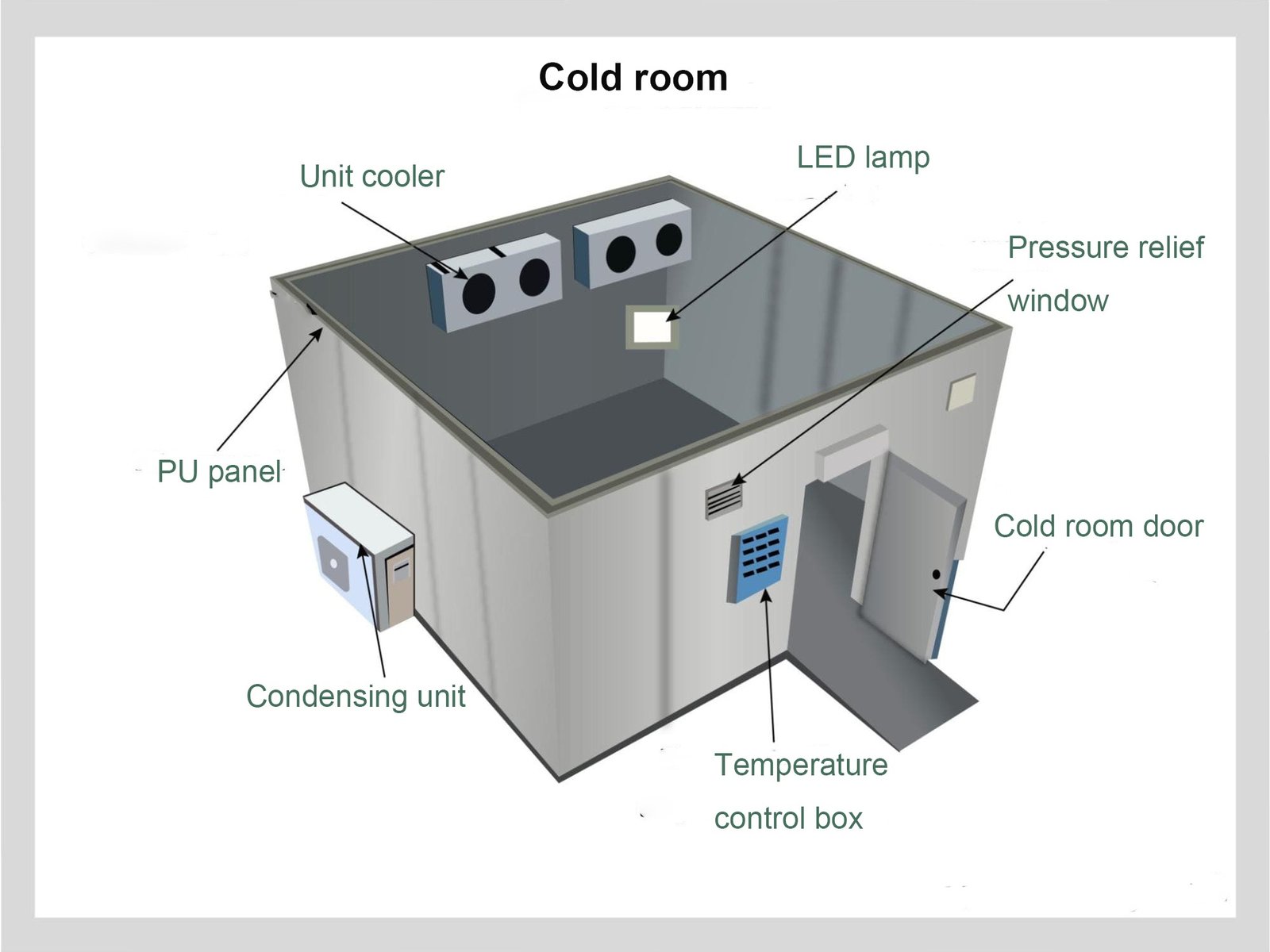
Cold storage facilities need fans that move air efficiently at low temperatures. Most warehouses run between -25°C and +4°C. Standard AC motors and bearings can fail when condensation freezes on the windings. You need DC motors or specially sealed AC motors with IP54 or higher. According to the 2024 Global Cold Storage Report, energy costs make up 35% of operating expenses for these facilities. Every 10% improvement in fan efficiency saves about $0.08 per square foot annually.

Key specs to check:
- Static pressure range: typically 50 to 150 Pa for ceiling-mounted evaporator units. Higher if the ductwork is long.
- Airflow: 300 to 2000 CFM per unit depending on room size.
- Noise limit: most warehouses have no strict noise regulation, but workers complain when it exceeds 65 dBA.
- Motor type: EC (electronically commutated) motors are now standard because they deliver 30% less power consumption than shaded-pole motors at the same airflow. For example, a 500 CFM fan with EC motor draws 55W versus 80W for an AC motor.
- Bearing type: sealed ball bearings with low-temperature grease rated down to -40°C. Sleeve bearings crack at -10°C.
- Blade material: aluminum or reinforced polypropylene. Steel blades corrode faster in humid cold rooms.
Here’s a quick comparison for three common cold storage fan models in 2025:
| Model | Airflow (CFM) | Static Pressure (Pa) | Power (W) | Noise (dBA) | Motor Type | IP Rating | Price (USD) |
|---|---|---|---|---|---|---|---|
| Fan-A 150 | 450 | 80 | 48 | 58 | EC | IP54 | 185 |
| Fan-B 200 | 600 | 120 | 72 | 62 | EC | IP55 | 210 |
| Fan-C 300 | 800 | 150 | 95 | 66 | AC (shaded pole) | IP54 | 130 |
Notice Fan-C uses an AC motor. It’s cheaper upfront but costs $28 more per year in electricity at $0.12/kWh running 24/7. Your dealer clients often overlook this lifetime cost. Make sure they calculate total cost of ownership over 5 years.
For ammonia-based refrigeration systems, you also need ATEX certification if the fan is inside a room with potential refrigerant leakage. The IEC 60079-0 standard classifies Zone 2 areas where ammonia can accumulate. Use explosion-proof fans with aluminum blades to avoid sparks. In 2024, the global ammonia refrigeration market grew 6.2% driven by cold chain logistics in Southeast Asia. That means more demand for ATEX-rated fan units.
For Data Center Precision Cooling
Data centers are a completely different ball game. They need constant airflow at high static pressures because of dense server racks and raised floors. The industry standard ASHRAE 2021 says supply air temperature should be 18–27°C, but many hyperscale operators run at 24°C to save energy. Fans used in computer room air handlers (CRAH) and in-row coolers have to deliver high pressure—often 250 to 500 Pa—to push air through perforated tiles and through the servers.
Key selection parameters:
- Fan type: backward-curved centrifugal fans dominate because they handle pressure fluctuations better than axial fans. Forward-curved fans are cheaper but less efficient at high static.
- Speed control: PWM or 0–10 V DC input is essential. Most data centers use variable frequency drives to modulate fan speed based on server load. A 2025 survey from Uptime Institute shows 78% of data centers now use EC fans in cooling units, vs 45% in 2020.
- Efficiency: look for fans meeting or exceeding the Energy Star for Data Centers specification. Minimum efficiency index (MEI) greater than 0.75 is required in Europe (EU 327/2011). For a 2000 CFM unit, a high-efficiency fan might draw 280W versus 380W for an old model.
- Noise: data centers have noise constraints for office areas nearby. Most spec sheets list noise at 65–75 dBA at 1 meter. But if the cooling unit is installed in a soundproofed room, it’s less critical.
- Redundancy: N+1 fan configuration is common. Each fan unit should be hot-swappable. Your clients need to know whether the fan is tool-less removable.
Real-world example: A 500 kW data center in Singapore uses 12 in-row coolers, each with 4 fans delivering 3000 CFM at 350 Pa. They switched from AC to EC fans in 2023. The power consumption dropped from 42 kW to 31 kW for the fan array. That’s a 26% reduction. With electricity cost at $0.15/kWh, they save $14,400 per year.
Here’s a table showing typical fan specs for different data center cooling configurations:
| Application | Airflow (CFM) | Static Pressure (Pa) | Typical Fan Diameter (mm) | Motor Type | Max Noise (dBA) | Price Range (USD) |
|---|---|---|---|---|---|---|
| CRAH unit (raised floor) | 6000–12000 | 300–500 | 630–800 | EC | 70–78 | 800–1800 |
| In-row cooler | 2000–5000 | 250–400 | 400–560 | EC | 65–72 | 400–900 |
| Rear door heat exchanger | 800–2000 | 150–250 | 315–400 | EC | 58–65 | 200–450 |
| Precision ceiling mount | 1000–3000 | 200–350 | 350–500 | EC | 60–68 | 300–700 |
Your B2B clients need to understand that for data centers, airflow measurement is more critical than for cold storage. Use a flow hood or anemometer to verify actual CFM. Also, filter pressure drop adds 30–80 Pa to the system resistance. A fan selected without accounting for dirty filters will stall after 6 months.
For Industrial Machinery and Hydraulic Systems
Industrial cooling fans are used on compressors, injection molding machines, hydraulic power units, and welding equipment. These environments have high ambient temperatures (often 50–60°C inside enclosures), vibration, and dust. The fan must survive thousands of hours of continuous operation. A typical hydraulic oil cooler needs airflow of 500 to 3000 CFM at a static pressure of 100 to 200 Pa.
Selection criteria:
- Temperature rating: the fan motor and bearings must be rated for ambient up to 70°C. Standard IP54 fans can fail at 60°C if not derated. Look for fans with “T” class insulation (155°C) or higher.
- Vibration resistance: unbalanced impellers cause early bearing failure. Specify fans with G2.5 balance grade per ISO 1940. Maximum vibration velocity should be below 4.5 mm/s.
- Protection against liquids: IP55 minimum. IP65 if the fan is near cutting fluid or washdown areas.
- Blade material: stainless steel or die-cast aluminum for high-temperature environments. Plastic blades warp at 80°C continuous.
- Control: thermostatic or pressure-based speed control via a relay. Many industrial fans use a simple on/off thermostat. Variable speed drives are rare because cost sensitivity is high.
Let’s look at a real case: a compressor station in Texas uses 8 fans with 750 mm diameter blades. The original fans were belt-driven axial units. They switched to direct-drive EC fans in 2024. The power dropped from 1.2 kW to 0.85 kW per fan. But the big saving was maintenance—belt replacement every 3 months was eliminated. Over 5 years, the total cost of ownership dropped by $2,100 per fan.
For hydraulic systems, the critical parameter is air velocity across the heat exchanger. A typical oil cooler requires 2.5–5 m/s face velocity. If the fan cannot provide that, the oil temperature rises and the system shuts down. Your client needs to match the fan’s free air curve with the heat exchanger’s pressure drop curve. Most manufacturers provide a data sheet with the pressure drop at different airflow rates.
Here’s a simple selection matrix for industrial fans based on enclosure size:
| Enclosure Volume (m³) | Required Airflow (CFM) | Static Pressure (Pa) | Recommended Fan Diameter (mm) | Motor Power (W) | Noise (dBA) | Cost (USD) |
|---|---|---|---|---|---|---|
| 1–3 | 300–600 | 80–120 | 250–315 | 30–60 | 55–60 | 80–150 |
| 3–8 | 600–1500 | 100–180 | 400–560 | 80–200 | 60–68 | 150–350 |
| 8–20 | 1500–4000 | 150–250 | 630–800 | 250–600 | 68–75 | 350–700 |
| >20 | 4000–8000 | 200–300 | 900–1000 | 600–1200 | 72–80 | 700–1500 |
Note: these numbers assume moderate dust levels. For heavy dust (cement plants, sawmills), you need larger safety margins. A common rule: multiply required airflow by 1.3 if the filter is washable. Also, consider using backward-curved impellers for dirty air because they are less prone to clogging than forward-curved.
For Agricultural Greenhouses and Livestock Barns
Greenhouse and barn ventilation is a huge market, especially in countries like Mexico, Turkey, and China where protected agriculture expands quickly. Fans here must move large volumes of air at low pressure. Typical greenhouse fans deliver 10,000 to 50,000 CFM at 30–70 Pa. They run for long hours in high humidity, corrosive fertilizer fumes, and direct sunlight.
What your clients should look for:
- Airflow efficiency: measured in CFM per watt. A good greenhouse fan achieves 20–25 CFM/W. Cheap models often get 12–15 CFM/W. The difference over a 24-hour cycle is significant. For a 30,000 CFM fan, 25 CFM/W means 1200W. At 12 CFM/W, it’s 2500W—more than double.
- Corrosion resistance: galvanized steel housing with a powder coating that lasts 5 years. Stainless steel is better but costs 40% more. Polypropylene housing works well and never rusts.
- Shutter design: motorized shutters or gravity shutters. For cold climates, you need tight sealing to prevent heat loss during winter. Shutter leakage should be less than 2% at 100 Pa.
- Belt or direct drive: belt drive allows lower motor RPM and less noise, but belts need replacement every 2 years. Direct drive is simpler and more reliable. For large axial fans, belt drive is still common because direct-drive motors at 1800 RPM are noisy.
- Variable speed: many growers use 2-speed or variable frequency drives to control ventilation based on temperature and humidity. This can cut energy use by 30% compared to on/off operation.
Let’s check a real data point from the 2025 Greenhouse Climate Control Survey: a 1-hectare tomato greenhouse in Almería, Spain, uses 24 fans of 1.2m diameter. Total airflow: 720,000 CFM. They switched from standard AC fans to high-efficiency EC fans. The fan power went from 3.2 kW each to 2.1 kW each. Annual electricity saving: €28,000. Payback period: 2.1 years.
For livestock barns (poultry, swine), the challenge is ammonia and dust. Ammonia gas corrodes copper windings rapidly. You need motors with sealed windings or epoxy coating. Some suppliers offer “ammonia-resistant” fans with stainless steel shafts and special varnish. Also, barn fans often use direct-drive because belts absorb ammonia and degrade faster.
Here’s a typical selection table for barn fans:
| Barn Type | Recommended Airflow per Bird (CFM) | Total Area (ft²) | Typical Fan Size (in) | Number of Fans | Motor Type | Recommended CFM/W |
|---|---|---|---|---|---|---|
| Broiler chicken (summer) | 6–8 | 10,000 | 48 | 8–12 | EC | >20 |
| Layer hen (tunnel) | 4–6 | 20,000 | 36 | 12–18 | EC | >18 |
| Swine finishing | 100–150 per pig | 5,000 | 36 | 4–8 | AC (2-speed) | >15 |
| Dairy freestall | 800–1200 per cow | 15,000 | 48 | 6–10 | EC | >22 |
Notice that for swine, AC 2-speed is still used because of cost sensitivity. But the trend is shifting to EC as prices drop. In 2024, EC fan prices for agricultural use fell 15% year-over-year, according to the USDA Agricultural Ventilation Equipment Report.
Global Compliance and Certification Requirements
Your buyers ship fans to dozens of countries. Each market has its own regulations. Ignoring them can lead to customs delays, fines, or even product bans.
Let’s go through the major certifications you need to have on your spec sheets:
CE marking (Europe) – mandatory for fans sold in EU/EEA. Includes Low Voltage Directive (2014/35/EU), EMC Directive (2014/30/EU), and the ErP Directive (2009/125/EC) for energy efficiency. For industrial fans, the ErP requires minimum efficiency (MEI ≥ 0.4 for fans up to 500W, ≥ 0.6 for larger). Also check the Ecodesign Implementing Regulation (EU) 2019/1781 for motor efficiency (IE3 or IE4).
UL/CSA (North America) – for fans entering US and Canada. UL 507 for electric fans, UL 1004 for motor-operated air-moving devices. Your fan must have a UL recognized motor and maybe the complete fan assembly listed. Especially important for refrigeration and HVAC applications. The 2025 revision of UL 507 adds stricter requirements for blade strength at high speed.
CCC (China) – China Compulsory Certification for fans used in refrigeration equipment and industrial cooling. Even if you sell to a Chinese importer who re-exports, you may need CCC if the final product is installed in China. The certification covers safety and EMC. Wait time is about 6–8 weeks.
EAC (Eurasian Economic Union) – required for Russia, Belarus, Kazakhstan, Armenia, Kyrgyzstan. The EAC mark covers safety and efficiency. The technical regulation TR CU 004/2011 applies to low-voltage equipment. Many Western fan manufacturers find the EAC process expensive because of local testing requirements.
SASO (Saudi Arabia) – for the Gulf region. Fans need IECEE certification and the Saudi Quality Mark. The energy efficiency standard (SASO 2663) for fans is being updated in 2025. Expect minimum airflow per watt requirements similar to the US Energy Star.
BSMI (Taiwan) – for Taiwan. Only required for fans used in household and commercial applications. Industrial fans may be exempt.
Other regional marks:
- UKCA (UK) – essentially same as CE but after Brexit. Accepted until 2027.
- RCM (Australia/New Zealand) – for EMC and safety.
- NOM (Mexico) – energy efficiency and safety.
- KCC (South Korea) – for EMC and safety.
Now, what about real-time data? As of early 2025, the global cooling fan market is estimated at $12.5 billion, growing at 5.8% CAGR. The fastest growing segment is EC fans in data centers (12% CAGR). For agricultural fans, growth is 4.2% driven by vertical farming and greenhouse expansion in the Middle East. You should share these numbers with your distributor clients so they know where to focus.
One more thing: energy efficiency regulations are tightening globally. For example, the US Department of Energy issued a new fan rule in January 2025 that raises minimum efficiency levels for commercial and industrial fans by 15% compared to 2020. Fans manufactured after June 2026 must meet this standard. Your clients need to stock compliant models now, or they’ll be stuck with non-compliant inventory.
FAQ
Q: What is the most common mistake when selecting a cooling fan unit for a B2B client?
A: Choosing a fan based only on airflow (CFM) and ignoring static pressure. Many clients assume a high-CFM fan will work in any system, but if the ductwork or heat exchanger adds resistance, the actual airflow can drop by 40% or more. Always check the fan curve and match it to the system resistance.
Q: How do I calculate the total cost of ownership for a fan unit?
A: Add purchase price, installation cost, annual electricity cost (watts × hours × electricity rate), maintenance costs (belt replacement, bearing grease, filter cleaning), and expected lifespan. For EC fans, the payback period against AC fans is usually 1.5 to 3 years for 24/7 operation. Use the formula: TCO = Purchase + (Power × Hours × Rate × Years) + Maintenance.
Q: Can I use the same fan model for both cold storage and data center applications?
A: No. Cold storage fans need low-temperature grease, sealed windings to handle condensation, and often corrosion-resistant coatings. Data center fans need high static pressure, precise speed control, and low noise. A fan designed for 80 Pa cannot deliver the 400 Pa needed in a data center. They are optimized for completely different operating points.
Q: What are the latest trends in cooling fan technology for 2025?
A: Three big trends: (1) EC motors are becoming the default even in price-sensitive industries like agriculture because the payback is now under 2 years. (2) IoT-enabled fans with real-time monitoring using Modbus or BACnet are growing, especially in data centers and industrial automation. (3) Lightweight composite blades (carbon fiber reinforced polymer) are entering the market, offering 20% weight reduction and lower inertia for faster response.
Q: How do I verify the performance claims of a fan supplier?
A: Ask for a test report according to AMCA 210 (air performance) and ISO 3745 (noise). Reputable suppliers provide third-party certified test data. You can also request a sample for your own in-house test using a flow chamber. Beware of suppliers who only provide “calculated” specs without test reports. AMCA-certified fans have a certified rating seal.
Q: What is the best way to handle fan selection for a multi-zone system like a large cold storage facility?
A: Use a load calculation per zone—each room has different temperature and door opening frequency. Select fans with overlapping performance ranges so you can tune the speed. Many modern EC fans accept 0–10V or PWM control, allowing one controller to manage all zones. Duct static pressure sensors at the farthest point help maintain proper airflow without oversizing.