
So you’re looking to help your customers pick the right rack cooling unit? Let’s get straight to the point. Rack cooling units are not one-size-fits-all. If you’re a dealer or distributor serving data centers, telecom shelters, industrial automation, or even medical imaging rooms, your clients will have very different heat loads, space constraints, and reliability requirements. Choosing the wrong unit means higher energy bills, equipment failures, or even fire risks. In this guide, I’ll walk through the exact factors you need to evaluate when selecting a rack cooling unit, with current industry data and practical examples that matter to your bottom line.
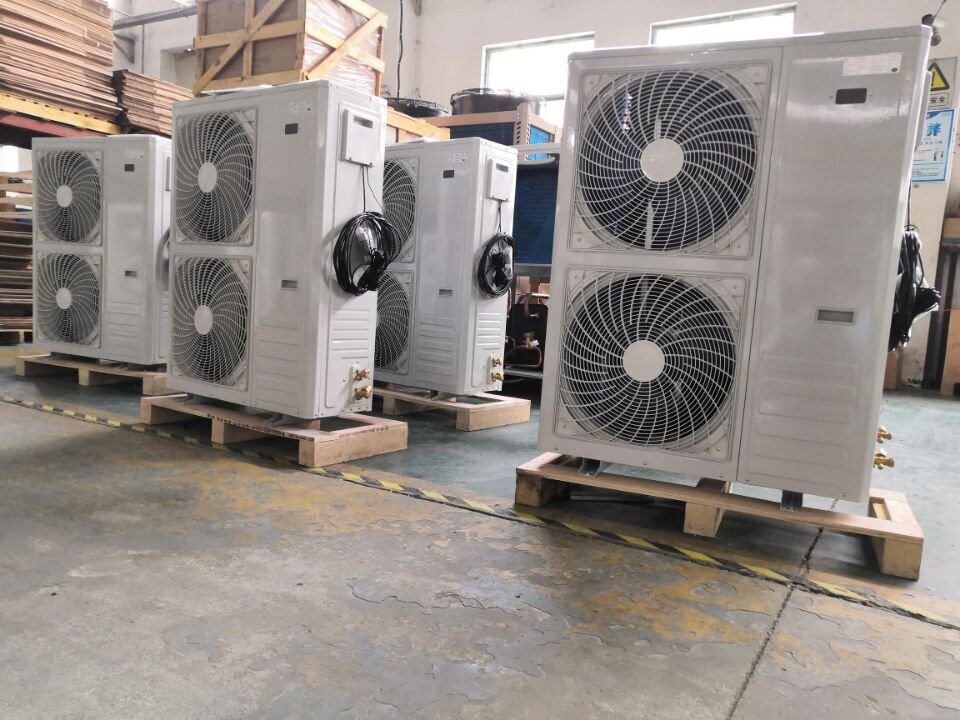
First, let’s define what we’re talking about. Rack cooling units (also called rack-mount air conditioners, cabinet coolers, or in-row coolers) are compact HVAC systems designed to fit directly into or alongside server racks, electrical cabinets, and other enclosed equipment. They remove the heat generated by electronics inside the enclosure and keep the internal temperature within safe operating ranges. For B2B buyers, the key decision points are cooling capacity, physical footprint, airflow direction, power efficiency, intelligence features, and compliance with regional standards. I’ll cover each of these in detail.
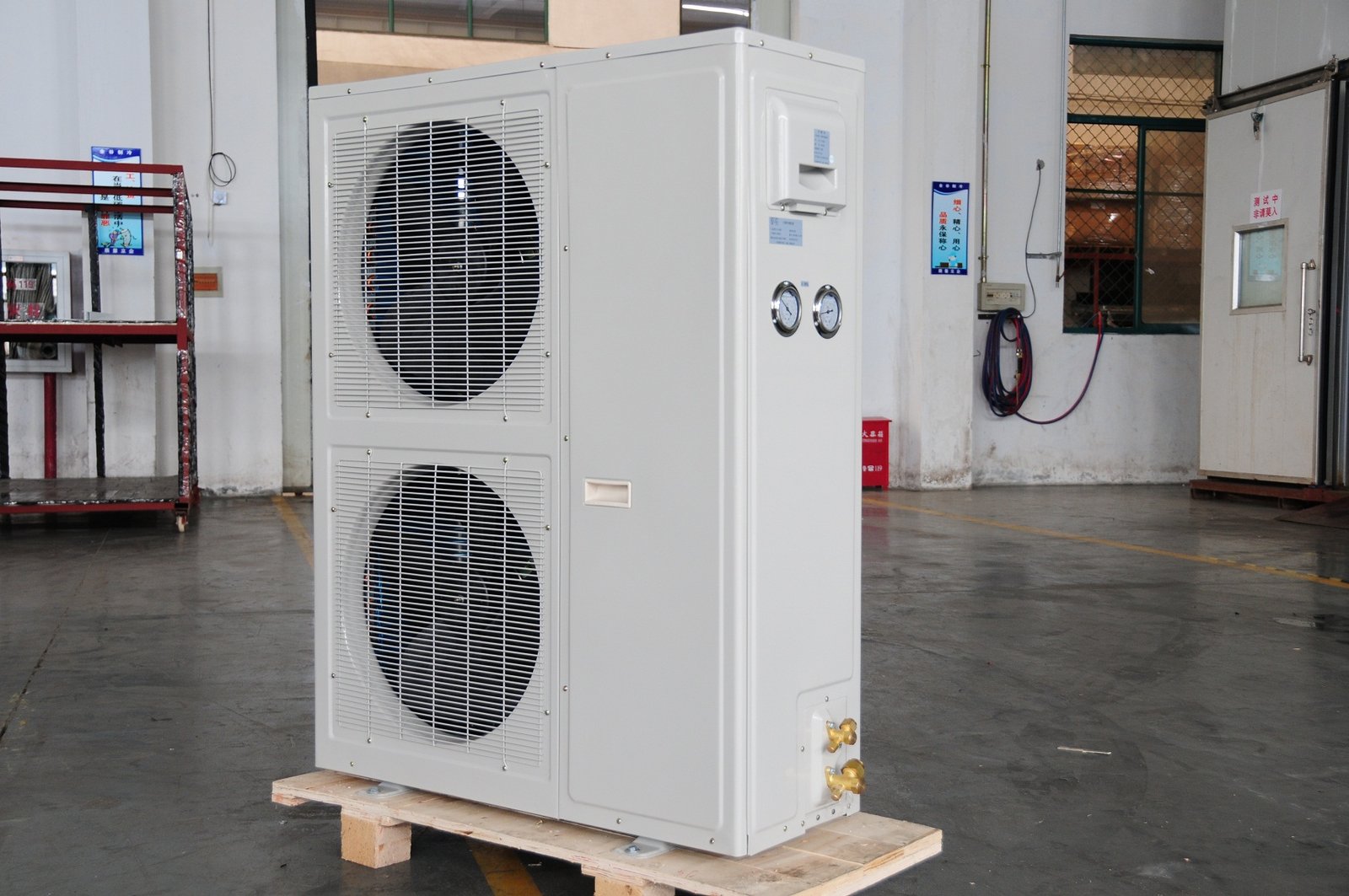
Understanding the Heat Load and Cooling Capacity Requirements
The first thing you need to know is how much heat your customer’s equipment actually produces. This sounds obvious, but I’ve seen countless cases where dealers recommend a 5 kW unit for a cabinet that only draws 2 kW, wasting money on oversized hardware, or worse, a 3 kW unit for a cabinet that peaks at 8 kW, causing thermal shutdowns.
Heat load is typically measured in Watts (W) or British Thermal Units per hour (BTU/h). 1 W ≈ 3.412 BTU/h. Most server racks today have power densities between 2 kW and 15 kW per rack, but high-density deployments (like GPU clusters or HPC) can exceed 40 kW per rack. For industrial control cabinets, heat loads are usually lower, around 500 W to 3 kW.
To get a real number, ask your customer for the total nameplate power of all devices in the rack, then multiply by 0.8 to 1.0 depending on actual utilization. If they don’t have that, you can use a rule of thumb: measured input current (amps) × voltage (V) × power factor. For a 208V single-phase system drawing 15A with PF 0.9, that’s 208 × 15 × 0.9 = 2,808 W.
Now, the cooling unit’s rated capacity must be at least 1.2 to 1.5 times the heat load to handle peak loads and provide a safety margin. For example, a 3.5 kW heat load needs a cooling unit rated at 4.2–5.25 kW. But here’s the catch: cooling capacity is often rated at a specific ambient temperature (e.g., 35°C return air). If your customer’s facility runs hotter or the unit is installed in a high-altitude location, derate the capacity accordingly. Typical derating is about 1% per 100m above 1000m altitude.
Let’s put some real numbers into a table. The following data is based on current 2024–2025 industry standards from ASHRAE TC 9.9 and common manufacturer specs:
| Heat Load (kW) | Recommended Cooling Capacity (kW) | Typical Application | Common Rack U Size |
|---|---|---|---|
| 0.5–1.0 | 1.0–1.5 | Small telecom cabinet, single server | 1U–2U |
| 1.5–3.0 | 2.0–4.0 | Industrial PLC cabinet, edge server | 2U–4U |
| 3.5–6.0 | 4.5–8.0 | Mid-size server rack, network switch | 4U–6U |
| 6.5–12.0 | 8.0–15.0 | High-density data center rack | 6U–8U |
| >12.0 | 15.0+ (often liquid-assist or in-row) | GPU cluster, HPC cabinet | 8U+ or standalone |
Note: These are rough guidelines. Always verify with the manufacturer’s performance curve under your specific conditions.
Form Factor, Installation, and Airflow Direction
Once you know the cooling capacity, you need to figure out how the unit physically fits into the rack and how it moves air. There are three main form factors in the market today: rack-mount (1U to 8U), side-mount (attached to the side of the cabinet), and in-row (installed between racks). Each has pros and cons for different layout styles.
Rack-mount units are the most common for standard 19-inch server racks. They slide into the rack rails like any other piece of equipment. They typically come in 2U, 4U, 6U, or 8U heights. A 2U unit might handle up to 1.5 kW of cooling, while an 8U unit can go up to 15 kW. The big trade-off is that they take up valuable rack space that could otherwise hold servers. If your customer is space-constrained, consider a side-mount or in-row unit that doesn’t eat into U slots.
Side-mount units mount on the left or right side of the cabinet, either inside or outside. They’re great for retrofitting existing racks because you don’t need to remove any active equipment. However, they require enough clearance on the side of the rack (usually 3–6 inches). Also, side-mount units often have lower cooling capacities per unit of volume compared to rack-mount.
In-row cooling units are large floor-mounted units that sit between rows of racks. They push cold air directly into the cold aisle and return warm air from the hot aisle. They’re very efficient for data centers with high density, but they require a raised floor or overhead ducting. For standalone cabinets, in-row is usually overkill.
Airflow direction is critical. Most rack cooling units are available in two configurations: front-to-rear (or front-to-top) and rear-to-front. Front-to-rear units pull warm air from the front of the rack (where the servers’ exhaust is) and discharge cool air out the rear or top. Rear-to-front units do the opposite. You must match the airflow direction with your customer’s rack layout. If the rack is against a wall, front-to-rear might not work because hot air has nowhere to go. In that case, a top-discharge unit or a ducted solution is needed.
One more thing: condensate management. Most rack cooling units use compressor-based refrigeration and produce condensate water from dehumidification. You need a built-in condensate evaporation system (e.g., hot gas bypass or a heater) or a drain line. If the unit will be installed in a location without a floor drain, make sure the model has an integrated condensate pump or evaporator. Otherwise, you’ll get complaints about water pooling inside the rack.
Power Efficiency and Smart Controls
Energy costs are a huge concern for your customers, especially in data centers where cooling can account for 30–40% of total electricity bills. So when you’re helping them choose a rack cooling unit, don’t just look at the nameplate kW – look at the EER (Energy Efficiency Ratio) or SEER (Seasonal Energy Efficiency Ratio). For rack-level cooling, the common metric is COP (Coefficient of Performance). A COP of 2.5 means the unit moves 2.5 kW of heat for every 1 kW of electrical input. Modern efficient units can reach COP of 3.0 to 4.0 at moderate ambient temperatures.
But efficiency isn’t just about the compressor. Variable-speed fans and inverter-driven compressors can save 30–50% power compared to fixed-speed units, especially under partial load conditions. Most racks don’t run at 100% load 24/7. A smart controller that adjusts fan speed and compressor frequency based on actual temperature demand will dramatically reduce your customer’s operating expenses.
Also, consider the type of refrigerant. The industry is moving away from R-410A to lower-GWP (Global Warming Potential) refrigerants like R-32, R-454B, or R-290 (propane) in some regions. Check local regulations. In the EU, F-Gas phase-down is pushing towards refrigerants with GWP < 150 by 2027. In the US, the AIM Act is phasing down HFCs. If you’re selling to European or North American customers, make sure your units are compliant with current and upcoming bans. That’s a selling point you can use to differentiate your offer.
Smart controls also include remote monitoring via Modbus, BACnet, SNMP, or cloud protocols. Your customers want to be able to check temperatures, humidity, fan speed, and alarm status from a dashboard. Some units even have predictive maintenance features that alert users when filters are dirty or compressors are running too hot. For a B2B dealer, offering units with open-protocol communications gives your clients more flexibility to integrate into their existing BMS (Building Management System) or DCIM (Data Center Infrastructure Management).
Let me show you another table with typical power consumption and COP values for different sizes (based on 2025 market data from major OEMs):
| Cooling Capacity (kW) | Typical COP at 35°C | Annual Energy Consumption (kWh, assuming 50% load, 8760 hrs) | Refrigerant Type |
|---|---|---|---|
| 1.5 | 2.8 | ~2,300 | R-32 or R-454B |
| 3.5 | 3.2 | ~4,800 | R-32 |
| 6.0 | 3.5 | ~7,500 | R-410A (phasing out) |
| 10.0 | 3.8 | ~11,500 | R-454B |
Note: Actual consumption depends on ambient temperature, setpoint, and runtime.
Application-Specific Considerations: Data Centers, Telecom, and Manufacturing
Not all rack cooling applications are the same. Here’s how to tailor your recommendation based on the industry your customer serves.
Data Centers
Your customer’s data center clients typically need high reliability (99.999% uptime) and N+1 redundancy. They often use raised floors, cold aisle containment, and in-row cooling for high-density racks. But for edge data centers or small server rooms, rack-mount units are a cost-effective solution. Look for units with dual power inputs (redundant power supplies) and automatic transfer switches. Also, noise level matters: a data center floor might have noise limits of 75 dBA, while a server room inside an office might need under 55 dBA. Check the decibel rating.
Telecom Shelters and Outdoor Cabinets
Telecom customers place their equipment in outdoor cabinets or shelters that can experience ambient temperatures from -20°C to +50°C. Standard rack cooling units use air-cooled condensers that reject heat to the outside. But in very hot climates, they may need a unit with an ambient lockout feature that prevents the compressor from running when the outdoor temperature exceeds 55°C. Also, telecom racks are often battery-backed, so the cooling unit should be able to run on DC power (like -48VDC) or have an inverter. Some telecom clients prefer thermoelectric coolers for low heat loads (<500W) because they are silent and have no compressor, but they are much less efficient at high delta T.
Industrial Automation and Manufacturing
In factories, racks often sit on the shop floor where they are exposed to dust, oil, moisture, and vibration. Industrial rack cooling units need a higher IP rating (at least IP54 or NEMA 12) to protect the internal electronics from contaminants. They also need to be built with corrosion-resistant coils (epoxy-coated or copper-nickel). Additionally, the ambient temperature inside a factory can exceed 40°C, so the cooling unit should have a high ambient rating. Some industrial customers require cooling units with a built-in filter that can be cleaned easily because of dust accumulation.
Another emerging application is medical imaging (CT machines, MRI consoles). These generate significant heat and require precise temperature control within ±0.5°C. Standard rack cooling units may not hold that tight tolerance; you need units with PID-controlled electronic expansion valves and high-accuracy sensors.
Global Standards, Certifications, and Supply Chain Factors
If you’re exporting to different markets, you must ensure your cooling units have the right certifications. For the US and Canada, look for ETL or UL listing (UL 484 for room air conditioners, or UL 1995 for heating and cooling equipment). For the EU, CE marking with LVD (Low Voltage Directive) and EMC (Electromagnetic Compatibility) is mandatory, plus compliance with the EU Ecodesign Directive (Lot 6 for air conditioners requires seasonal efficiency labeling). For Australia, RCM mark; for the Middle East, SASO or ESMA may apply. Your customers will ask for these certificates during procurement, so have them ready.
Also consider voltage and frequency. Most rack cooling units come in 208–230V single-phase for North America, 400V three-phase for Europe, and 220V single-phase for China and parts of Asia. Make sure the manufacturer can offer multiple voltage options or at least a wide-input power supply. Frequency is less critical (50/60 Hz works on most modern inverter compressors).
Finally, pay attention to supply chain lead times and warranty. In 2025, global shipping costs and component shortages are still unpredictable. Work with a manufacturer that stocks fast-moving models in regional warehouses. A 2-year warranty is standard, but 3–5 years can be a strong differentiator. Also, ask about after-sales technical support – your customers need someone who can answer installation questions in their local timezone.
Now, let’s wrap up with some real-world Q&A that your dealer clients might ask you.
Q&A
Q: My customer has an older rack that’s only 42U tall. He wants to add cooling but can’t give up any U space. What should I recommend?
A: Go with a side-mount unit. Measure the side clearance – most side-mount units need 4–6 inches on the left or right of the rack. If that’s not available, consider a rack-mounted unit that sits on top of the rack (ceiling-mount) or a floor-standing in-row unit that’s placed next to the rack. Another option is a split-system design where the compressor is remote and the evaporator is a slim unit that fits inside the rack, but that requires refrigerant piping.
Q: We’re looking at a unit with R-410A refrigerant. Is that still okay for Europe?
A: R-410A has a GWP of 2,088, and under the EU F-Gas regulation, it is being phased down. As of 2025, new stationary air conditioning equipment with GWP > 750 is banned in certain applications. From 2027, the cap will tighten further. I strongly recommend moving to R-32 (GWP 675) or R-454B (GWP 466) for any units you plan to sell in Europe. For the US, the EPA’s AIM Act mandates a 40% reduction in HFC production by 2024, with further cuts through 2036. R-410A is still available but prices are rising. Switch to lower-GWP refrigerants to future-proof your product line.
Q: How do I calculate the exact cooling capacity needed for a server rack with mixed equipment?
A: Use a power meter or clamp meter to measure the actual current draw of the entire rack at peak load. Multiply volts × amps × power factor (usually 0.9 for modern server power supplies). Then add 20% safety margin. For example, if you measure 12A at 208V with PF 0.9, that’s 208 × 12 × 0.9 = 2,246W. Add 20% = 2,695W, so a 3 kW cooling unit would be sufficient. But also check the exhaust air temperature – if the rack is already running above 35°C, you might need a larger unit to pull it down quickly.
Q: Are there any new trends in rack cooling technology I should know about to advise my customers better?
A: Yes, three big trends:
- Liquid cooling integration – For racks above 20 kW, direct-to-chip or rear-door heat exchangers are becoming mainstream. Some rack cooling units now have a hybrid option that uses both air and liquid.
- AI-driven controls – Newer units use machine learning to predict thermal loads and adjust fan speeds proactively, cutting energy use by up to 25%.
- Low-GWP natural refrigerants – Propane (R-290) and CO2 (R-744) are entering the market for small rack cooling units, especially in Europe and Japan. They have near-zero GWP but require stricter safety measures (ATEX certification for propane).
Q: What’s the typical lifespan of a rack cooling unit, and what maintenance do they need?
A: A well-maintained compressor-based unit lasts 8–12 years. Key maintenance: clean or replace air filters every 3–6 months (more often in dusty environments), check refrigerant pressure annually, clean condenser coils (if air-cooled) with a soft brush or compressed air, and verify condensate drain lines are clear. For units with electronic expansion valves, the controller may need firmware updates. Offering a maintenance kit (filters, gaskets, and a cleaning brush) as an upsell can be a good revenue stream.
Q: We have a customer who wants to install rack cooling units in a high-altitude location (3,000 meters above sea level). Any special considerations?
A: Yes, high altitude reduces air density, which reduces the cooling capacity of air-cooled condensers and fans. The unit’s compressor will also have reduced efficiency. For every 1,000 meters above sea level, derate the cooling capacity by about 10% from the factory rating. So a 5 kW unit at sea level will only deliver about 3.5 kW at 3,000m. You’ll need to select a unit with a larger nominal capacity. Also, check if the manufacturer offers altitude compensation in the controller or an upgraded condenser fan. Some units have a high-altitude kit option.
That covers the essentials. The right rack cooling unit is a balance of thermal performance, physical fit, energy efficiency, and market compliance. Keep these factors in your checklist, and you’ll be able to guide your customers to a solution that works, not just a solution that fits. If you have specific product specifications or need help calculating cooling loads for a particular project, feel free to reach out.