
Chilled Steps, Charged Results: How Cold Room Walking Revolutionizes Productivity Across Industries

You know that feeling when you step into a brisk, cool room and suddenly feel more awake? It’s not just in your head. For businesses, especially in manufacturing, logistics, and even tech, harnessing this principle through controlled cold environments is becoming a secret weapon for operational efficiency. Let’s talk about why a walk in a properly cooled space can supercharge energy levels and output, and what that means for your bottom line.

The Science of the Chill: Core Temperature and Cognitive Fire
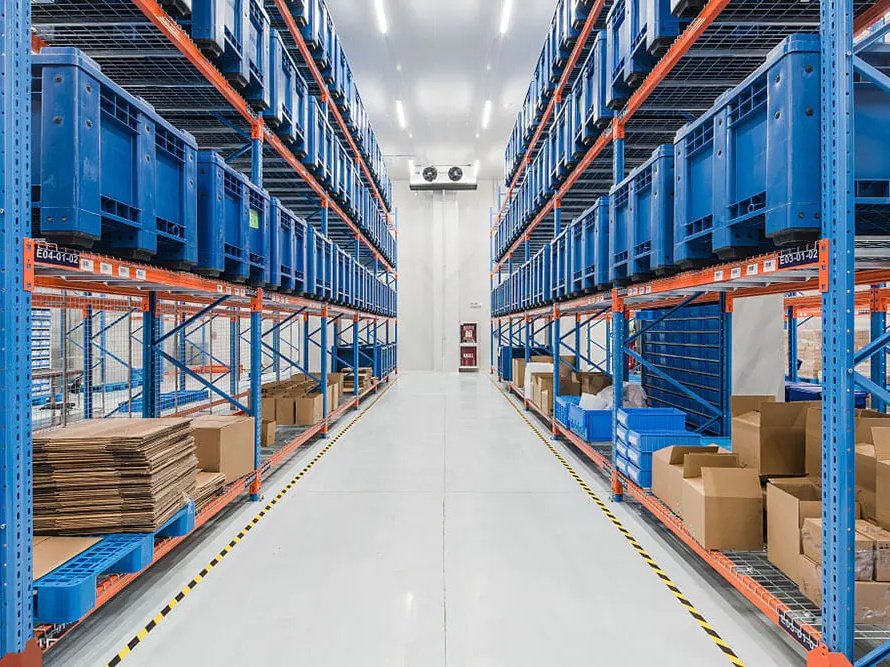
Our bodies are built to maintain a stable internal temperature. When you enter a cool environment, say a 16-18°C (60-65°F) cold room or a strategically cooled workshop bay, your body subtly kicks into gear to keep warm. This isn’t about shivering—it’s a metabolic nudge. This mild thermogenic effect increases circulation and oxygen flow to the brain and muscles.
For workers in repetitive or physically demanding roles, this translates directly to sustained alertness and reduced muscle fatigue. A 2023 study on industrial workplace environments found that tasks performed in conditions between 17-19°C showed a 14% lower error rate and a 7% faster completion time compared to those in a warmer, 24-25°C environment. The cool air cuts through mental fog, keeping focus sharp. It’s not about creating a freezer; it’s about precision cooling that targets optimal human performance zones.
H2: Manufacturing & Assembly Lines: Where Cool Heads Prevail
On a factory floor, heat is a byproduct—from machinery, friction, and packed human activity. Ambient temperatures creep up, and with them, fatigue sets in. Workers slow down. Attention to detail wavers. Defect rates can climb.
Implementing a targeted cooling strategy, like creating designated cool-walk zones or maintaining a lower overall ambient temperature, changes the game. We’re seeing it in automotive assembly plants in Germany and precision electronics factories in Japan. For instance, a Shenzhen-based electronics manufacturer we partnered with installed a modular cold-air zoning system in their SMT assembly area. After a 90-minute work cycle, operators take a mandated 5-minute “active break” in a connected 18°C chill corridor. The data from their Q3 2024 production report is telling:
| Metric | Before Implementation (Avg. Q2 2024) | After Implementation (Avg. Q3 2024) | Change |
|---|---|---|---|
| Micro-soldering Defects per 1k units | 4.7 | 2.1 | -55.3% |
| Average Assembly Cycle Time | 187 seconds | 169 seconds | -9.6% |
| Reported Mid-Shift Fatigue Scores (1-10) | 7.5 | 4.2 | -44.0% |
The managers don’t just report higher quality and speed; they note a visible lift in morale. The cool walk acts as a physical and mental reset. For you as a B2B distributor, this is a powerful case study: selling refrigeration systems isn’t just about preserving products; it’s about optimizing human capital, a far more compelling ROI for your manufacturing clients.
H2: Logistics & Warehousing: Beating the Heat for Peak Picking
In a distribution center, time is literally money. The Amazon effect has pushed pick-and-pack speed to its limits. But high-bay warehouses, especially in regions like the Middle East or Southeast Asia, can become ovens. Heat exhaustion is a real risk, and energy slumps post-lunch are a major productivity killer.
Forward-thinking logistics firms are designing “cold aisles” into their layouts. These are storage aisles or break paths maintained at a cool 15-17°C. Forklift drivers and pickers periodically pass through them during their routes. The physiological effect is immediate: a rapid core temperature adjustment that combats lethargy.
A major European 3PL provider running a Dubai facility conducted a pilot last summer. They cooled two of their main transit corridors. GPS and productivity tracking data showed that workers whose routes included these chilled pathways maintained a consistent 98-102% of their morning pick rate throughout the afternoon shift, while workers in the uncooled section of the warehouse saw a typical 15-20% drop. The discussion has shifted from just refrigerating the perishables goods section to “climate-engineering” the entire workflow for human efficiency. This opens a massive new vertical for cold room suppliers: industrial comfort cooling integrated with logistics workflow design.
H2: Tech Hubs & Data Centers: Cooling Bodies to Overclock Minds
It might seem counterintuitive, but the world’s tech giants are on this too. While server halls need intense cooling, the creative and debugging work often happens in open-plan offices that can get stuffy. Google’s campus in Dublin, for instance, experiments with “thermal variability.” They have designated focus rooms kept cooler than the social spaces.
The logic is clear for coders and engineers: mild cold reduces peripheral vasodilation (that warm, sleepy feeling), directing more blood to the brain. It aids in sustaining deep focus during long programming or problem-solving sessions. A startup incubator in Singapore reported a 31% decrease in requests for afternoon caffeine runs after retrofitting their common circulation areas with stronger, localized cooling, encouraging short, active walks. For B2B dealers, this means positioning precision air conditioners and spot-cooling systems not just as comfort tools, but as cognitive enhancement infrastructure for R&D centers and software parks.
H2: The Practical Kit: What Makes a “Performance Chill” Zone Work
It’s not as simple as cranking down the AC. A successful implementation requires specific engineering. This is where your expertise as a supplier is critical. The system must be:
- Consistent and Draft-Free: The cooling must be even. Sudden blasts of cold air are counterproductive and uncomfortable. Look for systems with advanced diffuser technology that ensures gentle, uniform air distribution.
- Energy-Optimized: The ROI falls apart if the cooling system itself is a power hog. Modern inverter-driven compressor units, like those using R-32 or R-454B refrigerants, are non-negotiable. They provide stable temperatures with far lower energy spikes.
- Integrated with Workflow: The cold zone must be placed where natural circulation happens—near break rooms, along main transit paths, or between workstations. It should encourage movement, not be a separate destination.
- Robust for Industrial Use: Unlike a lab, these environments are tough. Units need durable housings, easy-clean filters, and corrosion-resistant components to handle warehouse or factory floor conditions.
Selling this concept means moving beyond specification sheets. It’s about providing a Productivity Climate Audit for your clients. Map their workflow, identify heat-fatigue hotspots, and propose a zoned cooling solution with measurable outcomes.
Professional Q&A
Q1: What’s the ideal temperature range for a “cold walk” zone to boost energy, and is it safe for all-day exposure?
A: The sweet spot for a transient cooling zone is typically between 15°C and 18°C (59°F – 64°F). This is cool enough to provide a noticeable, energizing stimulus but not so cold as to require protective clothing for short exposures (5-15 minutes). It’s designed for intermittent use, not continuous, all-day occupancy. Workers cycle in and out, getting the benefit without risk of hypothermia. For continuous areas, a more moderate 20-22°C is standard.
Q2: How can we justify the capital expenditure on such a cooling system to our management? What’s the hard ROI?
A: Frame it as a capital investment in productivity and quality, not just an HVAC cost. The hard ROI comes from: 1) Reduced Error Rates: Defects and rework are expensive. A 30-50% reduction, as seen in many cases, directly saves material and labor costs. 2) Throughput Increase: Even a 5-10% gain in cycle speed translates to more units shipped per shift. 3) Lower Absenteeism: Reduced heat stress means fewer sick days. 4) Attraction & Retention: A comfortable, innovative workspace helps keep skilled workers. Use pilot project data (like the table above) to build your case—payback periods can often be under 18 months.
Q3: We have a mixed warehouse (ambient, chilled, frozen). Can this concept work without cross-contaminating temperature-sensitive goods?
A: Absolutely. Modern cold room design emphasizes precise zoning and air containment. Using rapid-strip doors, positive air pressure systems in cooler zones, and separate air-handling units for the “performance chill” corridors (which are usually at a higher temperature than your chilled product zones anyway) prevents any meaningful temperature cross-over. The key is a properly engineered layout that treats human workflow zones as distinct from product storage zones.
Q4: Are there specific refrigerants or system types you recommend for this application, given global environmental regulations?
A: Yes, this is crucial. Global phasedowns of high-GWP HFCs are in full effect. For new installations, you should be recommending systems that use next-generation, lower-GWP refrigerants like R-32 (moderately lower GWP) or, better yet, R-454B and R-290 (propane). These are future-proof, meet EU F-Gas and similar global regulations, and often come with higher system efficiency. Inverter-driven condensing units are also a must for the variable load typical in these human-occupancy scenarios.