
The Unseen Engine: How Condenser Coils Power Industries from Data Centers to Dairy Farms

Alright, let’s cut straight to the chase. If you’re in the business of sourcing or selling HVAC&R components globally, you know the condenser coil isn’t just a piece of metal tubing. It’s the heart of the heat rejection process, and its performance dictates efficiency, reliability, and ultimately, your client’s bottom line across wildly different applications. Forget the generic tech specs for a minute; let’s talk about what really matters in the real world.
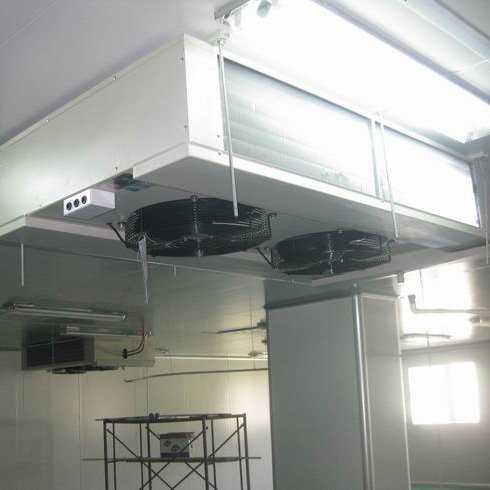
Condenser Coils in Commercial Refrigeration: Beyond the Supermarket
When you think commercial refrigeration, you might picture supermarket display cases. But the scope is vast: cold storage warehouses, food processing plants, beverage chillers, and pharmaceutical storage. Each has a unique demand on the condenser coil.
In a high-ambient temperature region, a coil for a cold storage warehouse needs to be an absolute beast. We’re talking about enhanced fin designs – like spine fins or corrugated patterns – that maximize heat transfer even when it’s 45°C outside. The coil tubing must handle higher refrigerant pressures (R-404A, R-407A, etc.) consistently. For a food processing line, where equipment runs 24/7 with frequent defrost cycles, the coil’s material integrity is critical. Copper tubes with a protective coating (like blue fin or tin dip) are often specified to resist corrosion from moisture and occasional chemical exposure. The recent shift towards lower-GWP refrigerants like R-448A or R-449A also impacts coil design, as some require slightly different pressure and heat transfer characteristics.
Here’s a quick look at how coil requirements diverge within this sector:
| Application | Primary Stress Factor | Typical Coil Material & Feature | Key Consideration for Buyers |
|---|---|---|---|
| Cold Storage (-25°C) | Continuous high load, high ambient temps | Copper tube, aluminum spine fin, corrosion protection | Airflow capacity, cleanability, pressure rating |
| Beverage Cooler (4°C) | Frequent door openings, varying load | Standard copper/aluminum, lower fan power | Cost-effectiveness, noise level, easy installation |
| Food Processing (Rapid Chill) | High humidity, potential ammonia use (if applicable) | Galvanized steel or coated coils, heavy-duty construction | Corrosion resistance, robust header design, safety compliance |
Industrial Process Cooling: Where Precision is Non-Negotiable
This is where condenser coils move from comfort or preservation to being a direct part of the manufacturing process. Think plastic injection molding, laser cutting, chemical reactor cooling, and data center cooling.
For a plastic molding machine, the chilling unit’s condenser coil must reject heat from the hydraulic system and the mold with unwavering stability. Any fluctuation in condensing temperature can affect cycle times and product quality. These coils are often part of a larger package with sophisticated controls. In data centers, the sheer density of heat generation is the challenge. Modern coils here are part of chilled water systems or direct expansion setups that work in tandem with economizers. The focus is on maximizing heat transfer per square foot. Microchannel coils (more on that below) are gaining huge traction here due to their compact size and efficiency, though their cleanability in dusty environments remains a point of discussion.
The demand here is for custom configurations – larger face areas, specific connection orientations, and compatibility with process chillers that might use water or a glycol mix as the condensing medium, not just air.
The Microchannel Evolution: Not a Magic Bullet, But a Powerful Tool
You’ve heard the buzz. Microchannel condenser coils, using flat aluminum tubes with internal micro-port technology and brazed aluminum fins, are everywhere. And for good reasons: they’re typically 20-30% more efficient in lab conditions, use less refrigerant, are lighter, and more corrosion-resistant than traditional copper tube/aluminum fin (CTAF) coils.
But as a B2B dealer, you need the full picture, not just the brochure. They excel in clean environments and are fantastic for OEMs in residential and light commercial units due to their compactness. However, in harsh industrial or coastal environments, their Achilles’ heel can be susceptibility to clogging. If a standard fin coil gets dirty, you can often clean it with a fin comb and coil cleaner. A clogged microchannel tube is a more serious issue. The market is adapting, though. We’re now seeing hybrid designs and improved fin pitches for better cleanability. The choice isn’t “microchannel vs. traditional” anymore; it’s about matching the right coil technology to the specific application environment you’re serving.
Specifying the Right Coil: A Dealer’s Checklist for Minimizing Callbacks
Your clients rely on you for expertise. When they need a condenser coil, either as a replacement or for a new build, these are the live, operational questions you should be asking them to nail the specification:
- Refrigerant Type: This is non-negotiable. Is it R-410A, R-32, a retrofit blend like R-454B, or an industrial refrigerant like Ammonia or CO2? Pressure ratings and material compatibility depend on this.
- Application Environment: Coastal (salt spray), chemical plant (corrosive vapors), dusty warehouse, or a clean server room? This dictates coating needs (epoxy, e-coating, etc.) and fin density.
- Duty Cycle: Is it running 24/7/365, or intermittently? Continuous duty calls for heavier construction and better materials.
- Available Footprint & Airflow: What are the physical space constraints? What is the static pressure the system fan must overcome? This determines coil face area, depth, and fin design.
- Total Cost of Ownership (TCO): Don’t just sell the cheapest coil. Sell the solution. A more expensive, coated, robust coil for a wastewater plant will outlast three cheap coils, saving your client downtime and labor costs. Frame your recommendation around TCO.
Maintenance Realities: Keeping the Rejection Going
Even the best coil will fail if neglected. The advice you give your clients builds your reputation as a knowledge partner. For air-cooled condenser coils, the number one enemy is fouling – dirt, dust, pollen, leaves. It acts as an insulator. A clean coil can reject heat at a condensing temperature 5-10°C lower than a dirty one. That directly translates to about 10-20% lower energy consumption for the compressor. Recommend regular visual inspections and cleaning with appropriate, non-corrosive solutions and low-pressure water. For coils in corrosive atmospheres, annual inspections for pitting or coating degradation are essential. Catching a small issue early prevents a catastrophic refrigerant leak and a much larger bill.
Professional Q&A for B2B Dealners
Q: A client in the Middle East needs replacement coils for rooftop units that keep failing. The copper tubes are corroding quickly. What’s the best upgrade path?
A: This is classic formicary corrosion, often accelerated by high heat, moisture, and atmospheric contaminants. Immediately move away from standard bare copper coils. Recommend coils with a robust protective coating. An e-coating (electrophoretic coating) offers superior, uniform coverage even on the interior fin surfaces compared to traditional spray coatings. For the most severe environments, solid aluminum microchannel coils can be a solution, as aluminum has different corrosion properties. Always ensure the coil is paired with proper filtration and maintenance.
Q: We have customers asking about “drop-in” coils for older systems using phased-out refrigerants like R-22. Is this advisable?
A: Tread carefully. While a physically compatible coil might exist, the system’s entire operation is a balance. A new, potentially more efficient coil designed for a different refrigerant can cause issues like incorrect subcooling/superheat, oil return problems, or even compressor damage if the metering device isn’t adjusted. The professional recommendation is to evaluate the entire system for a retrofit to a modern, available refrigerant or a planned full replacement. Selling just a “drop-in” coil can lead to performance problems and unsatisfied customers.
Q: How significant is the shift towards R-32 and other A2L “mildly flammable” refrigerants for condenser coil design?
A: It’s the dominant trend in many regions for new equipment. R-32 operates at higher pressures than R-410A. This means coils must be designed and certified for these higher working pressures. There’s no visual difference, but the engineering margins and manufacturing testing are more stringent. When sourcing, you must verify the coil’s pressure rating is suitable for the specific A2L refrigerant and application. Using an R-410A-rated coil on an R-32 system is a safety and liability risk.
Q: With rising copper prices, are aluminum tube coils a viable alternative for large commercial applications?
A: They are increasingly considered, especially for larger, custom coils. Advanced aluminum alloys and improved joining techniques (like controlled brazing) have enhanced reliability. The main advantage is cost and weight savings, with reasonable corrosion resistance. The trade-offs can include differences in expansion/contraction rates compared to copper headers (requiring careful design) and less familiarity among some service technicians. For specific applications like ammonia systems (where copper is incompatible), aluminum is standard. It’s a viable option worth discussing with your supplier for projects where initial cost is a major driver.