
Cross-Industry Insights: Selecting Commercial Wine Cooler Units for Global Distributors
Forget the one-size-fits-all approach. As a distributor, your clients aren’t just buying a “wine cooler”; they’re investing in a climate-controlled asset critical to their business’s reputation and revenue. Whether it’s a boutique hotel in Italy, a high-end retail chain in Dubai, or a private collector in California, their needs are as varied as the wines they handle. Your value lies in matching the precise technology to their specific commercial application. Let’s break down the selection matrix.
Hospitality & Sommelier-Driven Environments: The Silent Partner
In restaurants, luxury hotels, and wine bars, the cooler is a silent sommelier. It works relentlessly in the background, often within earshot of guests. Here, failure is not an option—a few degrees of fluctuation can alter the taste profile of a $500 bottle, directly impacting customer satisfaction and reviews.
The primary drivers here are vibration control, acoustic performance, and aesthetic integration. Compressor-based systems have evolved significantly. Look for units with compressors mounted on anti-vibration platforms or opt for advanced thermoelectric (Peltier) systems for smaller, by-the-glass storage where absolute silence is paramount. According to 2023 commercial appliance sound ratings, units operating below 40 dB are now considered essential for fine-dining spaces. Aesthetics matter just as much. Your clients need seamless integration—under-counter models for bars, glass-front display units for dining rooms, or modular cabinets for cellar walls. The finish isn’t just stainless steel; it’s custom panel-ready to match bespoke cabinetry. Your question to them shouldn’t just be about capacity, but: “Will this unit be visible to guests, and what is the ambient noise level of the room?”
Retail & High-Traffic Showroom Floor: The Merchandising Powerhouse
For wine retailers and gourmet grocers, the cooler is a sales tool. Its job is to merchandise and preserve simultaneously. This environment prioritizes display clarity, UV protection, and robust construction to withstand constant customer interaction.
Glass door quality is paramount. Doors must be multi-paned, with UV-filtering glass (blocking at least 99% of UV rays) to prevent light strike, which can spoil wine in a matter of weeks under showroom lighting. Heated glass panels are non-negotiable in humid climates to prevent condensation from obscuring the labels—nothing sells a bottle if the customer can’t see it. Consider traffic flow. For high-volume stores, units with sturdy commercial-grade handles and reinforced hinges are a must. The internal lighting should be LED, not just for energy efficiency, but because LED emits minimal heat and can be tuned to a color temperature (typically 2700K-3000K) that makes wine bottles look appealing without causing heat buildup. Storage flexibility is key; adjustable shelving that can accommodate everything from standard Bordeaux bottles to oversized Champagne magnums allows retailers to maximize inventory turnover.
Architecture, Construction & Large-Scale Cellaring: The Engine Room
This is for the serious projects: dedicated wine cellars in residential towers, winery tasting rooms, or corporate archives. Here, we move from standalone units to built-in or modular cellar cooling systems. You’re now consulting on the HVAC for a specialized space.
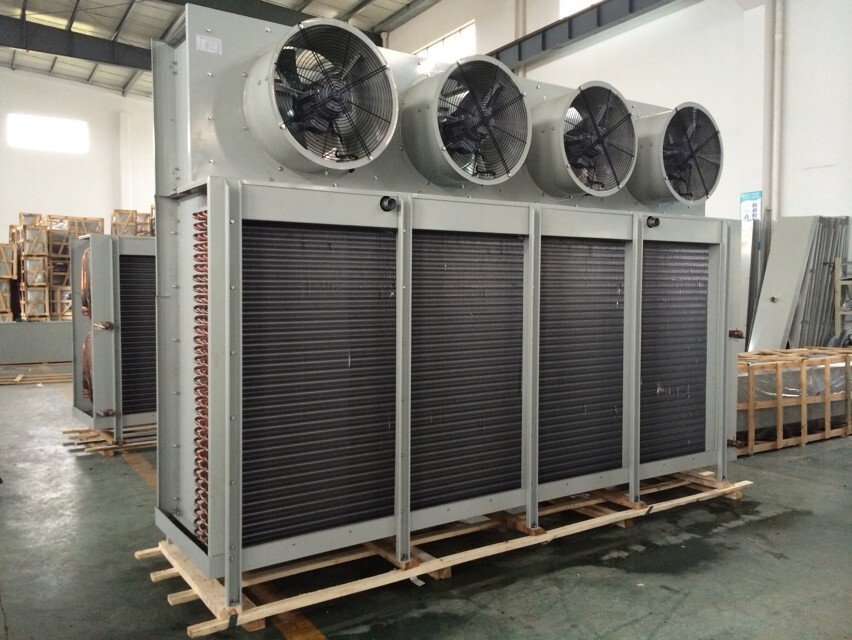
It’s all about calculating the heat load. You need real-time data: the room’s total cubic footage, the insulation value (R-value) of the walls/ceiling/floor, the geographic location’s ambient temperature, the heat generated by lighting and people, and even the “thermal mass” of the wine bottles themselves. A 500-bottle cellar in a London townhouse needs a vastly different system than a 3000-bottle space in Singapore. There are two main paths: Ducted Systems and Split Systems (Evaporator Units).
| Feature | Ducted System (Through-the-Wall) | Split System (Evaporator) |
|---|---|---|
| Best For | Smaller cellars (under 1500 cu. ft), simpler installs. | Larger, complex, or long/narrow cellars. |
| Installation | Unit sits entirely inside cellar; vents exhaust heat to adjacent space. | Evaporator inside cellar; condenser (compressor) remotely located (attic, basement). |
| Noise | Louder inside the cellar. | Virtually silent inside the cellar. |
| Airflow | Can create localized cool spots. | Allows for ducting to distribute air evenly. |
| Capacity | Limited by single-unit capacity. | Can handle very large heat loads. |
For architects and builders, the choice often hinges on planning flexibility. A split system allows the noisy compressor to be placed far away, preserving the cellar’s ambiance. Modern units offer digital touchscreen controls and Wi-Fi connectivity, allowing facility managers to monitor conditions from a smartphone, receiving alerts for temperature spikes or filter maintenance needs.
Technology & Logistics: The Precision Core
Distributors must understand the core tech to advise credibly. The debate often centers on Compressor vs. Thermoelectric (Peltier) Cooling.
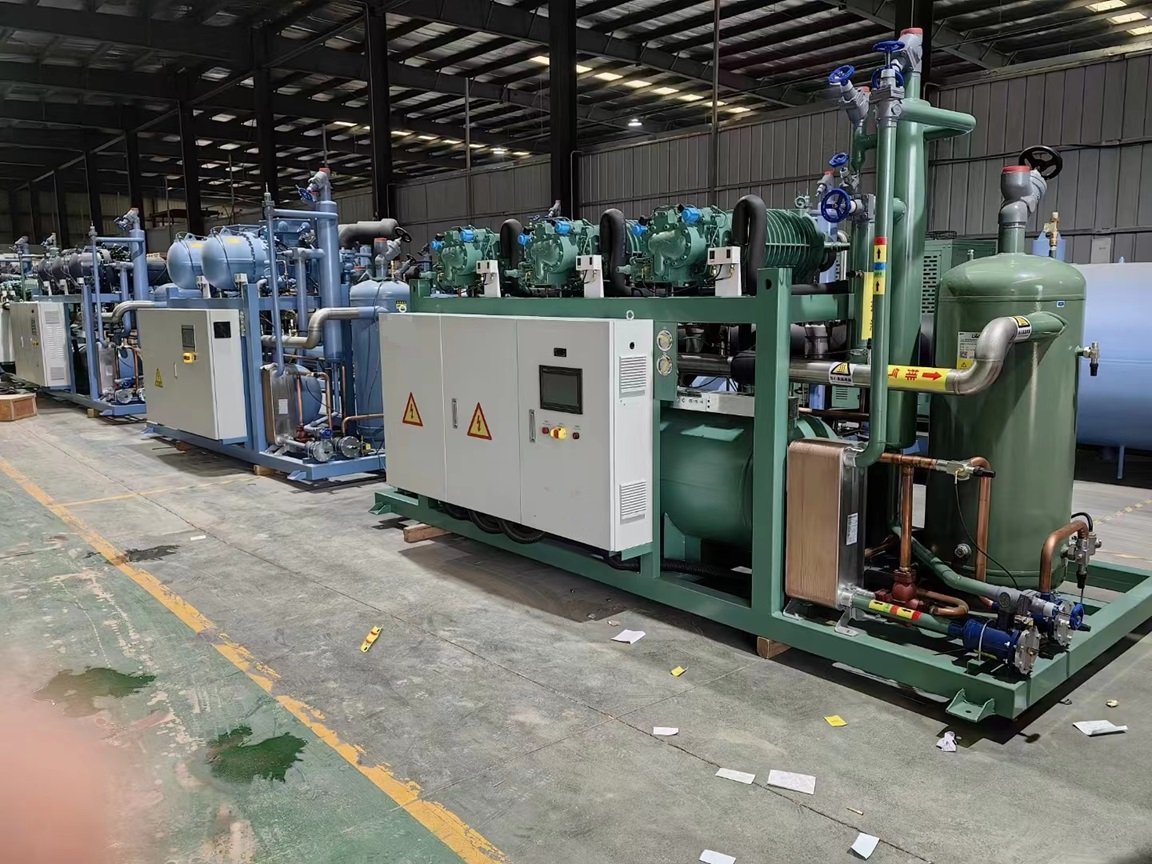
Compressor-based coolers are the industry standard for serious, large-capacity storage. They use a refrigerant cycle, are highly efficient at moving large heat loads, and excel at maintaining stable temperatures in varying ambient conditions. Modern variable-speed compressors are energy-efficient and quieter than older models. They are the only option for true, long-term wine aging at precise 55°F (13°C).
Thermoelectric units use an electrical current passing through a semiconductor to create a heat pump effect. They are vibration-free, completely silent, and have fewer moving parts. However, they are less efficient at cooling large spaces and have a more limited ambient temperature range. They are ideal for small, critical storage (e.g., holding opened bottles in a restaurant) or in environments where silence is the absolute priority.
Humidity control is the unsung hero. A relative humidity (RH) of 50-70% is crucial to prevent corks from drying out. The best commercial units have passive or active humidity control systems. In arid climates, a built-in humidifier tray or a system that minimizes moisture removal during the cooling cycle is essential. In contrast, units destined for humid regions need robust components to prevent internal condensation.
The Global Distributor’s Checklist: Beyond the Spec Sheet
Your due diligence before sourcing determines your reliability. Here’s your actionable checklist:
- Ambient Temperature Range: Verify the unit’s operational specs against the client’s summer high temperatures, not just average temps. A unit rated for 90°F ambient will fail in a non-insulated storeroom that hits 110°F.
- Energy Compliance: Align with regional standards: ENERGY STAR in North America, CE/ERP in Europe, MEPS in Australia. This isn’t just about ethics; it’s a direct selling point for your client’s end-users who face high operational costs.
- Service & Parts Network: The machine will need maintenance. Does the manufacturer offer a global warranty? Are parts like compressors, fans, and controllers readily available and cross-shipped internationally? Downtime is lost inventory.
- Packaging & Logistics: Ensure the manufacturer uses export-grade, humidity-resistant packaging. Palletization standards matter. A dented unit upon arrival is a logistical and financial nightmare.
Professional Q&A
Q: For a hotel client wanting under-counter units in multiple bars, is a thermoelectric model a viable professional choice?
A: It depends on scale and climate. For a small, air-conditioned bar storing a few dozen bottles for immediate service, a high-quality thermoelectric unit can be excellent due to its silence and vibration-free operation. However, for a main bar storage area with high bottle turnover and potentially warmer ambient conditions (like a kitchen pass-through), a compressor-based unit with a strong cooling capacity and faster recovery after door openings is far more reliable. Always prioritize stability over silence for core inventory.
Q: We’re distributing to both North America and Europe. What are the critical electrical and sizing differences we must account for?
A: This is crucial. Electrical: North America uses 110-120V/60Hz, while most of Europe uses 220-240V/50Hz. Many manufacturers produce dual-voltage models, but you must specify this at order. Plug types also differ. Sizing: The standard “750ml wine bottle” is universal, but case dimensions and shelving preferences differ. More critically, European kitchen design often uses standard cabinet heights (e.g., 82cm, 92cm) for under-counter integration, while US standards differ. Ensure the manufacturer provides models that fit these precise cavity dimensions to avoid costly custom cabinetry work for the end-user.
Q: How critical is digital connectivity in commercial coolers today, and what should we look for?
A: For B2B applications, it’s shifted from a luxury to a near-necessity for inventory protection. Look for systems that offer:
- Remote Monitoring: Real-time temperature and humidity tracking via a cloud dashboard or app.
- Alert Customization: The ability to set high/low thresholds and receive alerts via SMS or email—not just an audible alarm inside the premises.
- Diagnostic Logs: Historical data logs are invaluable for troubleshooting, proving due care for insurance purposes, and for sommeliers to track cellar conditions.
- Integration Potential: Some high-end systems can integrate with building management systems (BMS) in hotels or corporate facilities. This level of control directly translates to risk mitigation, a powerful value proposition you can offer.