
Smart Cooling for Every Business: Condensing Units That Work Harder, Last Longer
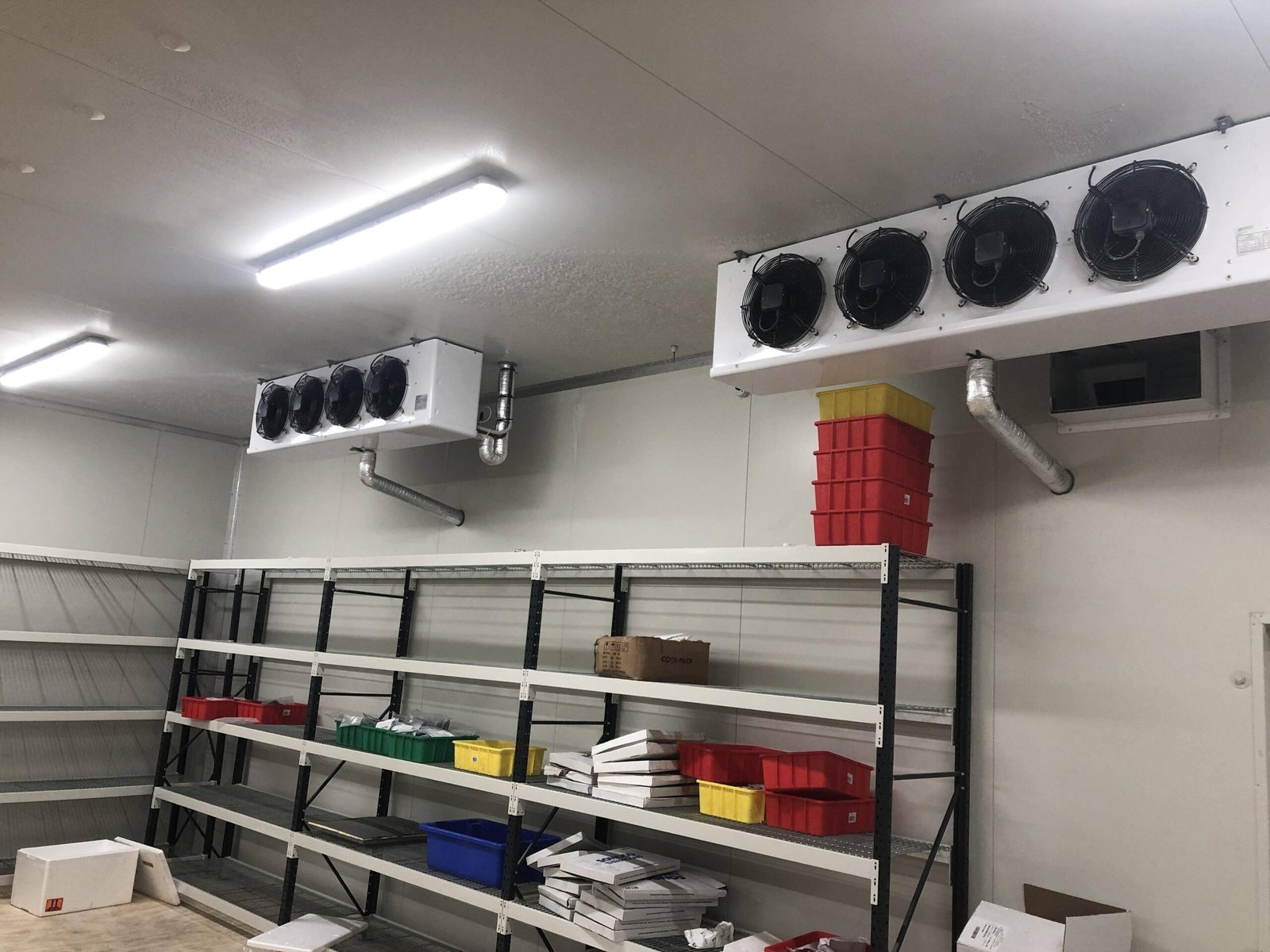
Let’s talk straight about the heart of your commercial cooling system: the condensing unit. It’s not the most glamorous piece of kit, but when it’s running smoothly, nobody notices. When it fails, everything stops. For a B2B buyer, your choice isn’t just about specs on a sheet; it’s about reliability, efficiency, and total cost of ownership for your clients. Whether you’re stocking shelves for a supermarket chain in Dubai or ensuring vaccine integrity for a pharma distributor in Brazil, the right unit makes all the difference. Here’s a breakdown of what’s working now across key sectors.

Commercial Cold Storage and Logistics Hubs

In large-scale warehousing, the game is about consistent low temperatures and massive heat load removal. Units here are the heavy lifters. The current trend is moving decisively towards variable-speed (inverter) compressor technology. Why? Because a traditional on/off unit is like driving a car by only using the accelerator and the brake. An inverter unit smoothly adjusts its speed to match the exact cooling demand, leading to energy savings of 30-50% in typical logistics applications. For a frozen storage facility running at -25°C, this isn’t just a utility saving; it’s a massive operational cost cutter.
The real-world data from 2023 installations shows a clear preference for robust, medium-temperature units (R404A/R448A refrigerants) with integrated microprocessor controllers that offer remote monitoring. This is non-negotiable now. A distributor needs to be able to check the status of a unit in a remote warehouse from their phone—seeing suction/discharge pressure, compressor run status, and any alarm history. Look for units with standard MODBUS or BACnet protocols for easy integration into Building Management Systems.
Here’s a snapshot of typical workhorse models for this sector:
| Model Series | Compressor Type | Best For | Key Feature for Distributors |
|---|---|---|---|
| Logistics-Pro Inverter | Digital Scroll (Inverter) | Large Frozen (-25°C) Storage | Exceptional part-load efficiency, low sound levels. |
| Warehouse-Tough DX | Semi-hermetic Piston | High-Ambient Chiller Rooms (0 to +4°C) | Easy field serviceability, wide availability of parts. |
| ColdChain Max | Screw Compressor | Massive Distribution Centers | Unmatched capacity, extremely long lifespan. |
Food Processing and Industrial Kitchens
This environment is tough. It’s greasy, involves frequent door openings, and has wildly fluctuating loads. Hygiene is paramount. Condensing units here need to be corrosion-resistant, often with coated coils or stainless-steel options. For blast chillers or rapid freezing tunnels, you need units that can pull down temperature fast and handle high humidity from product loading.
The talk among equipment specifiers now is about dual-circuit units. If one circuit fails, the other can often maintain a safe temperature, preventing a total product loss. This redundancy is a major selling point for your clients in meat processing or ready-meal production. Furthermore, units designed for CO2 (R744) transcritical cycles are gaining serious traction in Europe and North America for their low environmental impact and excellent performance in low-temperature applications, though they require a higher initial investment and technical know-how.
Healthcare and Laboratory Precision Cooling
This is where tolerance for error is zero. Blood banks, vaccine storage, and research labs demand stability above all else. The condensing units supporting these applications are about precision and failsafes. We’re talking about units with redundant compressor systems, seamless automatic switchover during power glitches, and incredibly tight temperature control bandwidths (±0.5°C or better).
The refrigerant shift is pronounced here. Many new facilities are moving away from HFCs entirely, opting for R290 (propane) or R600a (isobutane)-based units. These natural refrigerants have ultra-low Global Warming Potential (GWP) and excellent efficiency, but charge sizes are limited due to flammability, making them suitable for the modular, distributed cooling systems common in labs. For distributors, this means offering not just the hardware but also the safety consultation and certification support.
Retail Supermarket Display
A supermarket’s refrigeration is its public face—and its biggest energy consumer. The trend is moving from numerous individual condensing units (one per display case) to centralized distributed systems using smaller, efficient condensing units on the store roof or in a plant room, connected to multiple display cases. This simplifies maintenance and improves overall efficiency.
For the individual plug-in medium-temperature display case (for dairy, beverages), the market is dominated by quiet, low-profile units designed to fit into furniture-grade cabinetry. Sound levels matter immensely. A buzzing, rattling unit will drive customers away. The latest models focus on aerodynamic fan design and vibration isolation. For low-temperature ice cream or frozen food displays, units must handle glass door defrost cycles efficiently without causing temperature spikes.
Tropical and High-Ambient Climate Challenges
This is a critical niche. A unit rated for 35°C ambient will struggle and fail prematurely in a 50°C Middle Eastern summer. Units for these regions are specifically engineered with oversized condensers, higher-grade compressor materials, and software that manages high discharge temperatures. They often use refrigerants like R410A or the newer R32, which handle heat better than some alternatives. For distributors in Southeast Asia, Africa, or the Middle East, pushing the “standard Euro model” is a recipe for callback headaches. You need units with a proven track record and published performance data at 45°C, 50°C, and even 55°C ambient.
Professional Q&A for B2B Buyers
Q1: When my client asks about the lifespan of a condensing unit, what’s a realistic figure I should quote, and what most impacts it?
A: Under proper maintenance, a quality commercial unit should deliver 10-15 years of service. The single biggest factor is operating conditions. A unit sized too small (running constantly under high stress) or one operating in a dirty, high-ambient environment without regular coil cleaning might last only 5-7 years. Emphasize correct sizing, installation quality, and a simple maintenance contract.
Q2: The refrigerant phase-down (like the EU F-Gas Regulation) is confusing. What refrigerants are future-proof for my inventory?
A: Focus on units using lower-GWP HFO blends (like R513A, R452A) for retrofits and new builds where natural refrigerants aren’t feasible. For new technology, R290 (propane) and CO2 (R744) systems are the clear long-term future. R410A is being phased out; avoid large stockpiles. R134a still has life in some applications but is declining. Your manufacturers should provide clear refrigerant transition roadmaps.
Q3: How important is the smart controller, and is it worth the extra cost for my clients?
A: It’s not an extra anymore; it’s essential. The ROI comes from preventing losses. A smart controller with remote alerts can notify a facility manager of a high-pressure alarm at 2 AM, allowing for intervention before a compressor burns out. It enables predictive maintenance—tracking run hours for service scheduling or noticing slowly declining efficiency. For you as a distributor, it reduces warranty claims and builds a service-based relationship with the client.
Q4: We get a lot of requests for “quiet” units. What should we look for in the specifications?
A: Sound power level (dB(A)) is the key metric, not just sound pressure. Look for units below 65 dB(A) for retail settings. Features that enable this: large, slow-rotating fans with optimized blades, fully enclosed compressor compartments with sound insulation, and variable-speed drives that avoid the loud “on” surge of fixed-speed compressors. Always ask for certified sound data from the manufacturer.