
Title: The Heartbeat of Your Cooling System: Decoding the Non-Negotiable Role of the Outdoor Condenser Unit
Let’s cut straight to the point. In the world of HVAC&R, if the indoor unit is the face of comfort, the outdoor condenser unit is the relentless, hard-working engine. For you, the B2B distributor connecting manufacturers to global markets, understanding this component isn’t just technical jargon—it’s the core of your value proposition, your inventory strategy, and your customers’ satisfaction. Its performance dictates energy bills, system longevity, and ultimately, the success of projects across industries.

When your commercial or industrial clients look at a cooling system, they see the sleek indoor vents or the massive cold storage rooms. What they often overlook, yet you must champion, is the metal cabinet sitting outside—the condenser unit. This is where the real magic of heat rejection happens. It’s the decisive factor between a reliable, efficient operation and a chain of costly service calls.
More Than Just a Metal Box: The Technical Core of Heat Rejection
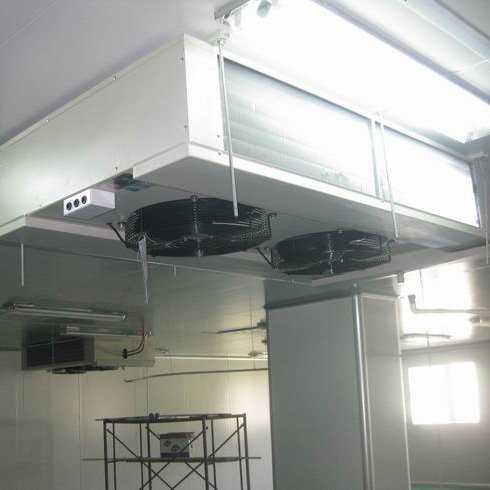
So, what’s actually inside that weatherproof casing? It’s a symphony of critical components working under pressure—literally.
- The Compressor: Often called the heart, it’s the most expensive part. It pumps refrigerant, raising its pressure and temperature. A failure here is often a total system replacement scenario.
- The Condenser Coil: This is a network of tubing with fins, usually made of copper or aluminum for optimal heat transfer. Here, the hot, high-pressure refrigerant gas releases its heat to the outside air (facilitated by a fan) and condenses into a liquid.
- The Condenser Fan: This powerful fan pulls ambient air across the hot coil, maximizing heat dissipation. Its motor’s efficiency and durability are critical, especially in harsh environments.
- Control Boards and Valves: Modern units feature sophisticated electronics for regulating pressure, temperature, and system diagnostics.
The process is continuous: indoor heat is absorbed by the evaporator, carried to the outdoor unit by refrigerant, and ejected into the atmosphere. If this outdoor unit stumbles, the entire heat-rejection cycle fails. There’s no backup. This isn’t a component you can underspecify.
Why Your Customers’ Bottom Line Depends on Condenser Selection
For your B2B clients—be they facility managers, project developers, or cold chain logistics providers—the condenser unit is a capital investment with direct operational consequences. Here’s how it translates to their business language:
1. Energy Efficiency = Direct Operational Cost
The condenser’s ability to reject heat directly impacts compressor workload. A well-designed, clean, and correctly sized condenser coil allows the compressor to run efficiently. A undersized or clogged coil forces the compressor to work harder, longer, leading to significant electricity waste. In today’s market, with global energy prices volatile and corporate sustainability goals paramount, promoting high-efficiency condenser units isn’t a luxury; it’s a key selling point. Look for units with features like Electronically Commutated (EC) fans and microchannel coils, which offer superior efficiency and are increasingly demanded in regions with strict energy regulations like the EU and parts of North America.
2. Reliability & Uptime: The Silent Reputation Keeper
Consider a supermarket chain. A failed condenser unit in one store doesn’t just mean a repair bill; it means spoiled inventory, lost sales, and a damaged reputation. For a data center, it’s catastrophic. The outdoor unit, exposed to the elements, is the most vulnerable yet most critical for uninterrupted operation. Recommending units with robust construction, corrosion-resistant coatings (like blue fin or gold fin coatings for coastal or high-pollution areas), high-quality compressor brands, and protective features against voltage fluctuations is how you become a trusted advisor, not just a vendor.
3. Total Cost of Ownership (TCO) Over Initial Price
Savvy B2B buyers are looking beyond the sticker price. They analyze TCO: purchase price + installation + energy consumption + maintenance + lifespan. A cheaper, lower-quality condenser might save upfront capital but can double or triple costs over a 10-year period through energy waste and frequent repairs. Your role is to educate them on this calculus. Presenting a slightly more expensive, premium-efficiency unit with a 5-year comprehensive warranty often shows a clear ROI within the first few years of operation.
Impact of Condenser Efficiency on Client Operational Expenditure
| Condenser Unit Specification | Seasonal Energy Efficiency Ratio (SEER) / Integrated Part Load Value (IPLV) Range | Estimated Annual Energy Cost for a 20-Ton System* | Projected 10-Year Energy Expenditure | Key Market Demand |
|---|---|---|---|---|
| Standard Efficiency | 13-15 SEER / Mid IPLV | $4,800 – $5,500 | $48,000 – $55,000 | Cost-sensitive emerging markets, basic applications |
| High Efficiency | 16-18 SEER / High IPLV | $3,900 – $4,500 | $39,000 – $45,000 | General commercial sector, regions with moderate energy costs |
| Premium/VFD Efficiency | 19+ SEER / Very High IPLV | $3,200 – $3,800 | $32,000 – $38,000 | EU, North America, high-energy-cost regions, green building projects |
Table note: Cost estimates are illustrative based on average commercial electricity rates of $0.12/kWh and annual runtime. Variable Frequency Drive (VFD) compressors and fans offer the greatest savings at partial loads, which is where systems operate 80% of the time.
Industry-Specific Demands: Your Niche Market Opportunities
The “one-size-fits-all” approach fails here. The importance of the outdoor unit magnifies when viewed through different industry lenses.
For Data Centers & Telecom Infrastructure: Here, cooling is mission-critical. Condenser units must offer N+1 redundancy, extreme precision in temperature control, and operate 24/7/365. They are often part of complex chiller systems or DX systems with advanced controls. Highlight units with built-in system monitoring, compatibility with Building Management Systems (BMS), and exceptional reliability metrics.
For Agricultural Cold Chain & Food Processing: Durability against corrosive environments (from fertilizers, saline air, or processing chemicals) is key. Condensers for cold storage must perform flawlessly in wide ambient temperature ranges, from scorching heat to freezing conditions. Emphasize units with heavy-duty coils, protective coatings, and components rated for low-ambient operation to prevent freeze-ups.
For Commercial Retail & Hospitality: Noise levels matter immensely. A loud condenser unit can lead to complaints from hotel guests or neighboring businesses. Aesthetics can also be a factor. Your product line should include low-sound-level models and options with decorative enclosures. Efficiency is a direct sales tool for them—lower overhead means higher profit margins.
For Industrial Process Cooling: This is about raw power and customizability. Condensers might need to handle high process temperatures or integrate with specific industrial refrigerants. Your value lies in providing units that match precise thermal load requirements and are built with industrial-grade components for harsh factory environments.
The Distributor’s Checklist: What to Evaluate in a Manufacturer’s Condenser Unit
When sourcing from manufacturers like us, your technical evaluation should be rigorous. Move beyond basic specs.
- Component Transparency: Who supplies the compressors (Copeland, Danfoss, etc.), fans, and PCBAs? Recognizable brands add value and reassure your clients.
- Design for Serviceability: Can an engineer easily access the compressor, clean the coils, or replace a fan motor? Units designed with service in mind reduce your customers’ future maintenance costs and downtime.
- Smart Features & Connectivity: Is it just a dumb metal box, or does it have potential for IoT integration? Units with MODBUS, BACnet, or even basic fault alert systems are future-proof and command a higher price.
- Compliance & Certifications: Does it meet the latest safety and efficiency standards for your target markets? CE, UL, AHRI, and ErP certifications are not optional; they are your ticket to trade.
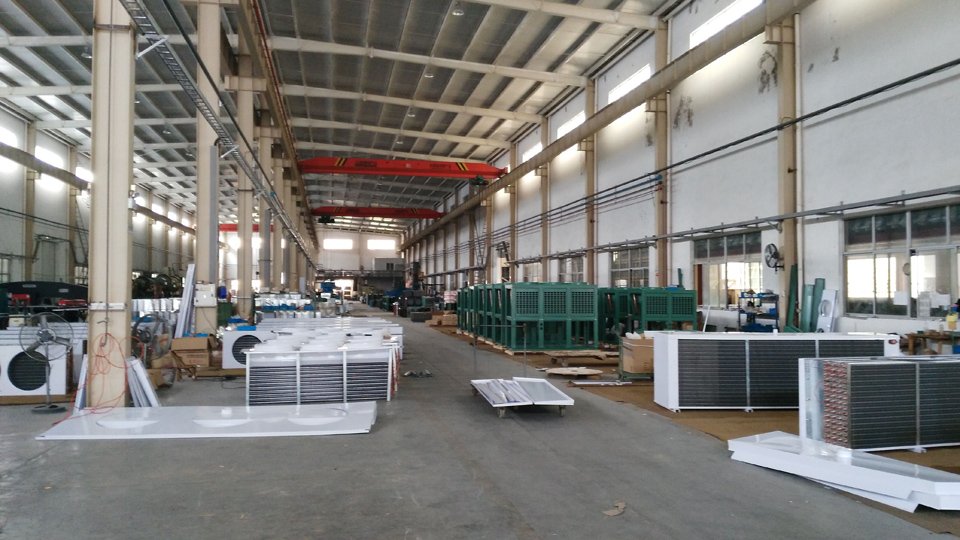
- Manufacturing Consistency & Testing: Inquire about the production line quality control and final performance testing. Do they do a full run-in test before shipment? Consistent quality minimizes your hassle with defective units.
Q&A: Addressing Common Dealer & End-User Queries
Q1: A client asks, “We have limited outdoor space. Can we install a smaller condenser unit if we upgrade to a more powerful indoor unit?”
A: Absolutely not. This is a critical misunderstanding. The outdoor condenser must be precisely matched to the indoor evaporator capacity. An undersized condenser cannot reject the heat absorbed by an oversized indoor unit. This forces the compressor into constant overdrive, leading to rapid failure, frozen coils, and voided warranties. Always insist on matched, certified systems.
Q2: “Is the condenser’s fan motor a big deal? Can we use a cheaper replacement?”
A: It’s a huge deal. The fan motor ensures airflow across the coil. A cheap, inefficient motor draws more power, provides less airflow, and burns out quickly, often taking the compressor with it due to high head pressure. Always recommend or supply OEM-specified motors, especially high-efficiency EC types, which can reduce fan energy consumption by up to 70%.
Q3: “Our customer’s unit is in a coastal area. They clean it regularly, but it’s rusting. What should we have recommended?”
A: Standard galvanized steel coatings aren’t enough for salt-air environments. For such applications, you must specify units with enhanced anti-corrosion treatments. This includes epoxy-coated coils, aluminum or composite fan blades, and cabinets with high-quality powder coating or stainless-steel options. This upfront investment prevents costly premature replacements.
Q4: “We’re bidding on a green building project. How does the condenser unit contribute to LEED or BREEAM points?”
A: Significantly. High-efficiency condenser units directly contribute to points in the “Energy and Atmosphere” category by reducing overall building energy consumption. Furthermore, using units with low Global Warming Potential (GWP) refrigerants (like R-32 or R-454B) addresses “Material and Resources” and “Innovation” credits. Provide the necessary AHRI certification documents and manufacturer’s sustainability data sheets to your client for their submission.