
Beyond Tea and Rain: The UK’s Coolest Industrial Facts for Global Suppliers

Okay, let’s cut straight to it. When you think of the UK, maybe you picture the Queen (or now, the King), Big Ben, or a cup of tea. But for a B2B player like you in the global supply chain, especially in sectors like industrial equipment, the UK is a powerhouse of specific, demanding, and lucrative opportunities. Understanding its unique industrial landscape is key to unlocking deals. Here’s what you really need to know.
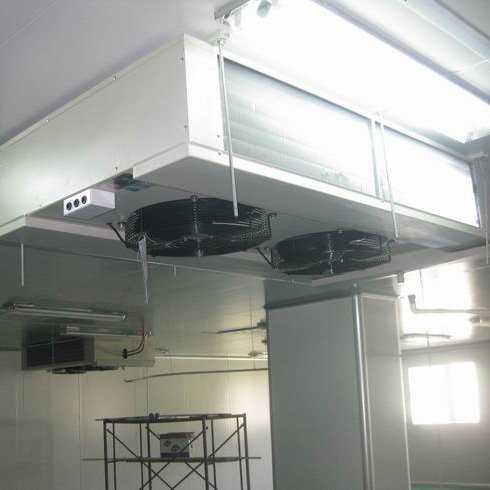
A Nation Built on Precision Cold: Food, Pharma & Logistics
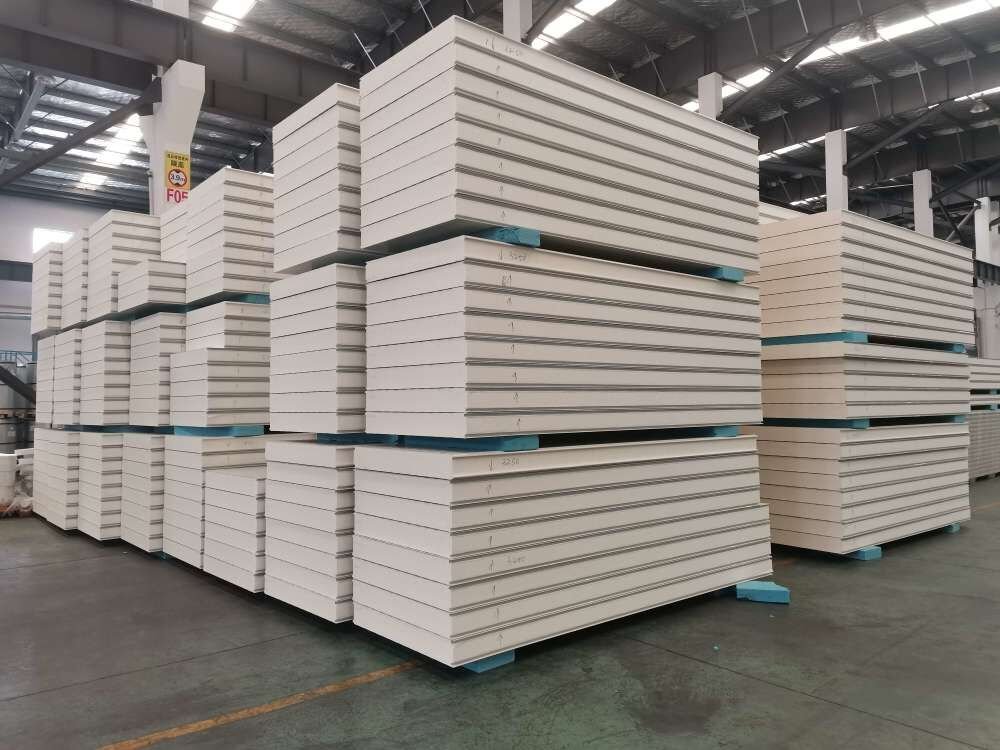
Forget the bland stereotype of British food. The UK is a severe stickler for cold chain integrity, and that means serious business for quality equipment suppliers.
The UK grocery retail market is one of the most concentrated and competitive in the world. Giants like Tesco, Sainsbury’s, and Asda operate complex, just-in-time supply chains. A single temperature deviation can result in massive waste and contractual penalties. The demand isn’t just for refrigeration; it’s for real-time monitoring, IoT-enabled cold storage solutions, and energy-efficient transport units that comply with strict regulations like the UK’s Food Standards Agency (FSA) guidelines.
Then there’s pharmaceuticals. The UK is home to the ‘Golden Triangle’ of Oxford, Cambridge, and London, a global epicenter for life sciences and biotech. This sector doesn’t just “need cooling”; it requires ultra-precise, validated, and auditable environmental control for everything from mRNA vaccine storage to genetic materials. The cold chain logistics for pharma here are governed by MHRA (Medicines and Healthcare products Regulatory Agency) standards, which align with EU GDP (Good Distribution Practice). Post-Brexit, the UK maintains equally stringent, often identical, rules. For a supplier, this means equipment must have flawless documentation, calibration traceability, and often, backup system integrations.
| Key Data Snapshot: UK Cold Chain Demand | Sector | Key Driver | Equipment Focus | Recent Regulatory Focus |
|---|---|---|---|---|
| Food Retail | Reducing food waste, meeting supermarket SLAs | Energy-efficient commercial chillers, blast freezers, telemetry systems | FSA stricter temp control audits; Net Zero targets | |
| Pharmaceuticals | Growth in biologics & cell/gene therapies | Ultra-low temp (ULT) freezers (-80°C), pharmacy refrigerators, validated storage | MHRA emphasis on post-Brexit compliance & data integrity | |
| Logistics | Rise of same-day delivery & dark stores | Last-mile delivery refrigeration units, modular cold storage | Crackdown on diesel-powered transport cooling in cities |
The Invisible Engine: Data Centers & Tech Infrastructure
Here’s a fact that might surprise you: London is the largest data center market in Europe, and the UK is second globally only to the U.S. in cloud platform revenue. All those servers? They generate immense heat and require precise, 24/7 cooling. The cooling solution isn’t an afterthought; it’s a critical infrastructure component that dictates a data center’s PUE (Power Usage Effectiveness) and, ultimately, its profitability and sustainability credentials.
The market is moving fast. Direct-to-chip liquid cooling, immersion cooling, and advanced CRAC (Computer Room Air Conditioning) units are in high demand as server densities increase. The UK’s climate, with its generally cooler ambient temperatures, also drives innovation in free-air cooling and adiabatic systems, but with a big caveat: humidity control is absolutely critical due to the maritime climate. Equipment must handle variability without fail.
For a B2B supplier, this means engaging with specialized M&E (Mechanical and Electrical) contractors and data center operators. Your talk needs to shift from basic cooling capacity to reliability (think 99.999% uptime), total cost of ownership, and how your systems integrate with Building Management Systems (BMS) for granular control.
Green Rules, Green Business: The Net-Zero Mandate
This isn’t just a trend; it’s the law. The UK has legally binding targets to reach Net Zero carbon emissions by 2050. This has created a massive, regulated shift in every industry. The Phase-down of HFC refrigerants (like R404A, R507) under the UK F-Gas Regulation (which mirrors the EU’s) is a primary driver. Equipment using high-GWP refrigerants is facing bans and steeply rising gas costs.
What are UK distributors and end-users asking for now? Systems that use natural refrigerants:
- CO2 (R744) Transcritical Systems: Gaining huge traction in supermarkets and industrial heat pumps, despite the UK’s varying climate.
- Ammonia (R717) & Propane (R290): For large industrial applications, with a focus on charge reduction and safety innovations.
- Hydrocarbon-based units: For smaller commercial applications.
Selling a standard unit with high-GWP refrigerant is becoming a non-starter. Your product line needs to be future-proof. Furthermore, energy efficiency standards like ErP in Europe are closely watched benchmarks in the UK. The best-in-class EER and COP figures are now a primary selling point, not just a line on the spec sheet.
Building the Future: Construction & HVAC Integration
The UK construction sector has its own unique rulebook. Building Regulations Part L (Conservation of Fuel and Power) sets strict limits on energy consumption for new builds and major renovations. This directly impacts HVAC system selection. There is a strong push for heat pump adoption—both air-source and ground-source—driven by government incentives like the Boiler Upgrade Scheme.
But here’s the practical bit for a manufacturer: British builders and M&E installers work with specific design norms and space constraints. Equipment needs to be compatible with common UK building management protocols, fit through standard doorways, and suit the typical footprint of a plant room. Noise regulations are also locally enforced and strict. A unit that’s perfect for a factory in Asia might fail on acoustic grounds in a dense London urban development.
Understanding BSI (British Standards Institution) and CIBSE (Chartered Institution of Building Services Engineers) guidelines is crucial. Your technical documentation, CE/UKCA marking, and performance data need to align seamlessly with how UK consulting engineers specify equipment.
Quickfire Q&A for the Strategic Supplier
Q1: We have CE-marked equipment. Is that enough to sell in the UK post-Brexit?
A: For the moment, CE marking is still accepted for most products in Great Britain (England, Scotland, Wales) until December 31, 2024. However, for a strategic, long-term presence, you should be obtaining UKCA marking. For Northern Ireland, the rules are different (NI requires UKNI or CE). The smart play is to have both CE and UKCA certifications to cover all bases seamlessly.
Q2: How important is local technical support and spares holding for UK distributors?
A: It’s often the deciding factor. UK B2B buyers place enormous value on rapid, on-the-ground support. A distributor will want to know you have a plan for quick spares delivery (ideally within 24-48 hours from within the UK or EU) and accessible technical training. Offering a framework for their engineers to become certified installers of your equipment is a powerful selling tool.
Q3: What’s the biggest mistake foreign cooling equipment makers make when approaching the UK market?
A: Assuming it’s a single, homogeneous market. Requirements in Scotland (colder, more rural projects) can differ from London (space-constrained, high-value tech projects). Also, underestimating the importance of paperwork: detailed O&M manuals in perfect English, clear safety files, and full compliance folders are expected as standard. The commercial conversation is highly specification and compliance-driven.
Q4: With the push for heat pumps, is there still a market for traditional commercial refrigeration?
A: Absolutely, but it’s evolving. The market for store fixtures, cold rooms, and display cases remains strong, but it’s now split into two streams: 1) Retrofitting existing systems with lower-GWP refrigerants and efficiency upgrades, and 2) Specifying new systems with natural refrigerants. The service and retrofit market is particularly robust and offers steady, recurring revenue for distributors.