
From Data Centers to Dairy Farms: The Multi-Industry Engine Called Condensation Units
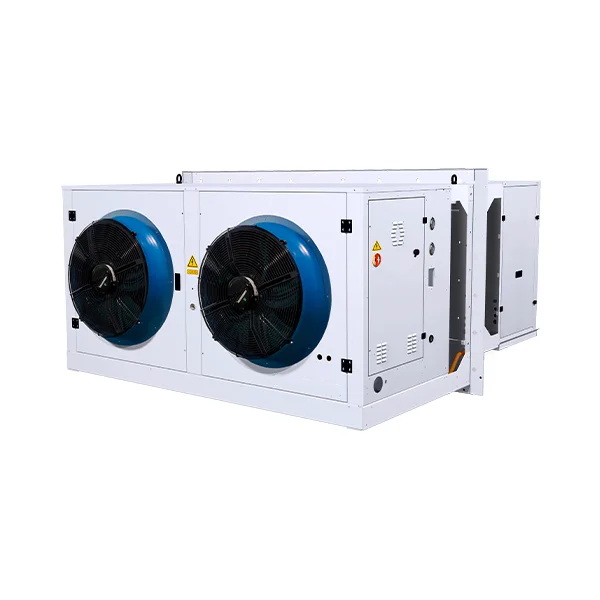
Picture this: a humidity-controlled mushroom farm in the Netherlands, a bustling pharmaceutical cleanroom in Singapore, and a hyper-scale data center in Nevada. They seem worlds apart, but there’s a silent, powerful workhorse humming away in each, ensuring their very operation: the condensation unit. If you’re in the B2B industrial or commercial equipment space, understanding this component isn’t just technical jargon—it’s about seeing a core driver of modern industry.
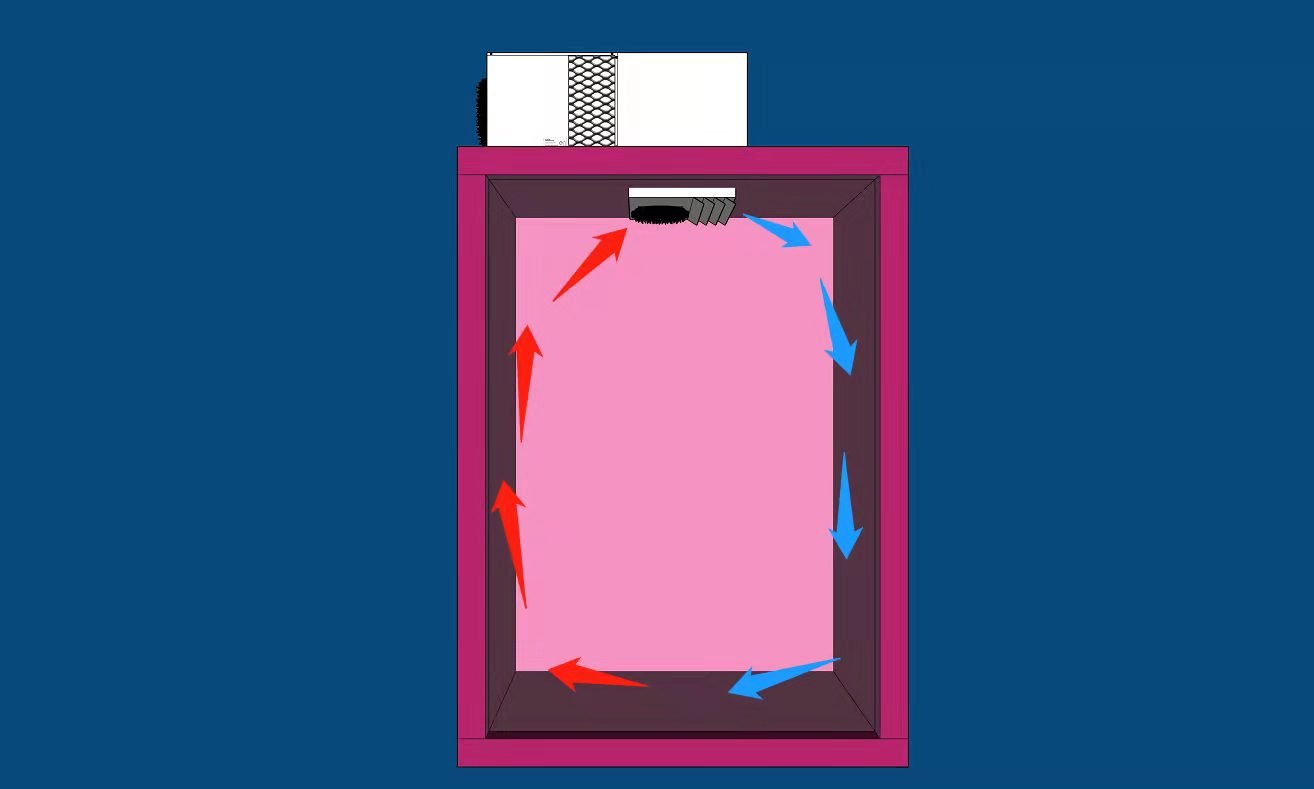
So, what exactly is it? Strip away the complexity, and a condensation unit is the heart of a mechanical refrigeration system. Its sole job is to reject heat. It takes in hot, high-pressure refrigerant gas from the system’s compressor and cools it down until it turns back into a liquid. This phase change releases a massive amount of heat into the outside environment (air or water). Without this crucial step, the entire cooling cycle grinds to a halt.
The Core Components and How They Work Together
Let’s open the cabinet. A standard air-cooled condensation unit, the most common type for global commercial use, isn’t a magical black box. It’s a precise assembly of key parts.
First, you have the compressor. It’s the pump, creating the pressure difference that drives the refrigerant cycle. We’re seeing a strong shift towards scroll and variable-speed compressors for their reliability and energy savings, especially in regions with high electricity costs.
Next, the condenser coil. This is a network of copper or aluminum tubes with fins, where the actual magic happens. As the hot refrigerant gas flows through, fans pull ambient air across the coils, carrying the heat away and condensing the refrigerant.
Those fans and motors are critical. Their efficiency dictates how well heat is rejected. ECM (Electronically Commutated Motor) fans are becoming the industry standard in premium units, offering precise speed control that adapts to ambient conditions, cutting energy use by up to 30% compared to fixed-speed motors.
Then there’s the receiver tank (not always present), which stores excess liquid refrigerant, and the control panel. Modern panels are the brains, featuring microprocessor controllers with diagnostic alerts, communication protocols (like BACnet, Modbus), and protection features that are essential for unattended facilities.
The process is a continuous loop: High-pressure gas enters the condenser -> Fans blow air, removing heat -> Gas condenses to high-pressure liquid -> Liquid moves to the expansion device to restart the cooling cycle.
Real-World Applications: Where Condensation Units Power Business
This is where it gets practical for a global distributor. You’re not selling a metal box; you’re selling operational continuity for diverse sectors.
- Food & Beverage Processing & Storage: This is a massive market. From blast freezing seafood for export in Vietnam to maintaining precise chillers for chocolate tempering in Belgium, condensation units must be hygienic (often with coated coils), robust, and incredibly reliable. A breakdown means spoiled inventory worth thousands. Units here often use stainless steel housings and food-grade configurations.
- Industrial Process Cooling: In chemical manufacturing in Germany or plastic injection molding in Mexico, machinery generates immense heat. Condensation units integrated into process chillers maintain exact fluid temperatures, ensuring product quality (like consistent plastic part dimensions) and preventing machine overheating. They demand corrosion-resistant components and high-duty cycles.
- Controlled Environment Agriculture (CEA): A booming global sector. Indoor vertical farms in the UAE and greenhouse complexes in Kenya use condensation units to manage not just temperature, but also dehumidify. Precise condensing control removes excess moisture from transpiration, preventing mold and optimizing plant growth. Energy efficiency is a top buying factor here.
- Pharmaceutical & Laboratory: Stability is non-negotiable. Labs in Switzerland and vaccine storage facilities in Brazil require condensation units that are part of systems maintaining ±0.5°C stability. Redundancy, ultra-precise controls, and low-noise operation are premium features.
- Data Centers & Telecom: The digital world’s backbone. Every server rack produces heat. Condensation units in CRAC (Computer Room Air Conditioning) units or as part of chilled water systems work 24/7 to prevent overheating. Their MTBF (Mean Time Between Failures) and energy efficiency (directly impacting PUE – Power Usage Effectiveness) are the primary sales metrics. The trend is towards units compatible with eco-friendly refrigerants and free-cooling integration.
Key Performance Metrics and Selection Data for Distributors
When your B2B clients evaluate units, they focus on data. Here’s a snapshot of critical comparison points across common applications:
| Application | Typical Cooling Capacity Range | Key Performance Focus | Preferred Condenser Type | Trending Refrigerant Options (2024) |
|---|---|---|---|---|
| Commercial Refrigeration (Supermarkets) | 10 – 80 kW | High Energy Efficiency (ESEER), Low Noise, Reliability | Air-Cooled, often with ECM fans | R449A, R452A (HFO blends for lower GWP) |
| Industrial Process Chillers | 50 – 500 kW | Stable Discharge Pressure, Corrosion Resistance, High Ambient Performance | Air-Cooled or Water-Cooled | R134a, R513A, R515B |
| Controlled Environment Agriculture | 20 – 150 kW | Precise Humidity Removal, Efficiency at Part Load, Durability in High-Humidity | Air-Cooled with desuperheater options | R454B, R32 (for heat pump integration) |
| Data Center Cooling | 100 kW – 1 MW+ | Maximum Uptime (N+1 Redundancy), High Efficiency at Part Load, Low PUE Impact | Air-Cooled, Glycol-Cooled | R1234ze, R513A, Water (in chilled water systems) |
| Pharmaceutical Storage | 5 – 50 kW | Precision Temperature Control (±0.2°C), Redundant Systems, Compliance Documentation | Air-Cooled (often modular backup) | R515B, R513A |
Installation Nuances and Maintenance for Longevity
A unit’s performance is only as good as its installation. This is a key value-add conversation for distributors.
Airflow is king. Units must be installed with ample clearance (usually 1-1.5 meters on air intake and discharge sides) as per manufacturer specs. Restricted airflow causes high head pressure, slashing efficiency and killing compressors prematurely. In dusty regions (Middle East, parts of Asia), recommending frequent coil cleaning schedules or optional coil guards is crucial.
Electrical compatibility is a major point of failure in global trade. A unit built for 60Hz/460V will fail on 50Hz/400V. Smart distributors specify voltage/frequency compatibility for the target market upfront. Furthermore, advocating for proper pump-down cycles and hard-start kits for areas with unreliable power grids builds trust.
Maintenance is predictive, not reactive. Guide clients towards units with accessible service valves and diagnostic ports. The conversation is shifting from “fix it when it breaks” to “monitor its health.” Highlighting units compatible with IoT monitoring platforms that track pressure, temperature, and efficiency in real-time is a strong selling point for 2024.
The Evolving Landscape: What’s Next for Condensation Technology?
The market is moving fast. For a distributor, stocking or promoting obsolete tech hurts credibility.
The refrigerant transition is the biggest driver. With the EU F-Gas Regulation and similar policies globally phasing down high-GWP refrigerants like R404A and R507, units using next-generation refrigerants (R454B, R1234ze, R515B) are no longer niche—they’re future-proof. Their higher efficiency also offsets their current higher cost.
Energy efficiency regulations (like EU ErP) keep tightening. Simply put, inefficient units will be illegal to sell in many markets. The focus is on units with variable-speed drives (VSD) on both compressors and fans, which can reduce energy consumption by over 40% in suitable applications.
Finally, connectivity is standard. A modern condensation unit should offer remote monitoring capabilities, allowing facility managers in one country and service providers in another to diagnose issues, optimizing maintenance schedules and preventing costly downtime.
Professional Q&A
Q1: For a distributor serving both European and Middle Eastern markets, what’s the single biggest technical specification to double-check when ordering condensation units?
A: The design ambient temperature. Units for the EU are often rated for a maximum of 35°C (95°F) ambient. Deploying the same unit in Saudi Arabia, where summer temperatures consistently exceed 45°C (113°F), will lead to catastrophic failure due to excessive head pressure. Always specify “high-ambient” models (rated for 46°C, 52°C, or even 55°C) for hot climate regions, which feature larger condenser coils, higher-grade components, and different refrigerant charge settings.
Q2: We hear a lot about “low-GWP” refrigerants. As a distributor, should I immediately switch all my inventory to these new options?
A: It’s a strategic transition, not an immediate flip. For replacement markets (servicing existing R404A systems), you still need a stock of compatible units and gases. However, for all new system projects, especially in regions with strict environmental regulations (Europe, North America, parts of Asia), leading with low-GWP options (like R454B for medium-temp or R1234ze for chiller applications) is essential. It demonstrates foresight and protects your clients from future compliance issues and retrofitting costs.
Q3: What’s a concrete, data-driven selling point for variable-speed condensation units over fixed-speed models for an industrial client focused on ROI?
A: Don’t just say “saves energy.” Provide the math. For example: A 100kW fixed-speed unit running at 70% load might have a seasonal COP of 3.0. A comparable VSD unit at the same load could achieve a COP of 4.5 or higher because it precisely matches motor speed to the cooling demand. This can translate to a reduction in energy consumption from roughly 33.3 kW to 22.2 kW for that load. At 8,000 operational hours per year and an electricity cost of $0.12/kWh, the annual savings exceed $10,000. The ROI on the VSD premium can often be under 2 years.