
Let’s get straight to the point. Choosing a cooling unit isn’t a one-size-fits-all decision; it’s a technical and commercial calculation that varies drastically by application. As a distributor, your success hinges on matching the right equipment to your client’s specific industry needs. Forget generic advice. Here’s how to dissect the selection process with a focus on the real-world data and specifications that drive B2B purchasing decisions in 2024.
Hospitality & Hotel Room Climate Control: Balancing Comfort and ROI
For hotel chains and resort developers, cooling is part of the guest experience and the bottom line. The key here is quiet operation, individual zone control, and energy efficiency that doesn’t compromise comfort.
Look beyond basic BTU ratings. For standard 30 sqm (≈325 sq ft) hotel rooms, a unit with 9,000-12,000 BTU/h is typical. However, the real differentiator is the seasonal energy efficiency ratio (SEER) or its equivalent for heat pumps (HSPF). In markets like the EU and North America, regulations are pushing minimum SEER ratings higher. As of 2024, targeting units with SEER > 15 for distribution is a competitive baseline. Variable Refrigerant Flow (VRF) systems are gaining massive traction for larger properties due to their simultaneous heating/cooling capability and centralized management. For distributors, stocking inverter-driven split systems with Wi-Fi/BNet connectivity for property management system (PMS) integration is no longer a premium option—it’s a standard request from hotel procurement teams.
Consider this real-time data point: The global hotel construction pipeline has over 14,000 projects as of Q1 2024. A significant portion is in warm climates like Southeast Asia and the Middle East. For these projects, corrosion-resistant condensers (coated coils, stainless steel casings) are a mandatory specification, not an upsell.
Critical Specs for Hospitality:
- Sound Level: < 45 dB(A) in indoor units for bedroom applications.
- Features: Auto-swing louvers, sleep mode, and dry/dehumidify function for coastal areas.
- Control: BACnet or MODBUS protocol compatibility for integration into building automation.
Data Center Precision Cooling: Where Uptime is Non-Negotiable
This is high-stakes cooling. Data centers and server rooms require precision air conditioning (PAC), not comfort cooling. The entire paradigm shifts from temperature control to environmental control, focusing on precise temperature (±0.5°C) and humidity (±5% RH) maintenance.
The metric that matters here is sensible heat ratio (SHR). IT equipment generates almost entirely sensible heat (dry heat), not latent heat (moisture). Standard air conditioners waste energy removing moisture. Precision cooling units are designed with a high SHR (>0.9) to remove mainly sensible heat. Cooling capacity is measured in kilowatts (kW), not BTUs. A standard server rack can draw 5-10 kW; an AI/GPU-intensive rack can exceed 40 kW.
Distributors must understand the redundancy levels (N, N+1, 2N) their clients require. The trend is moving toward indirect evaporative cooling and liquid cooling solutions for high-density racks, but DX-based precision CRAC/CRAH units still dominate the market for small to medium-sized deployments. According to a recent market analysis, the data center cooling market is projected to grow at a CAGR of over 13% from 2023 to 2028, driven by AI expansion.
| Data Center Type | Primary Cooling Method | Key Consideration for Distributors |
|---|---|---|
| Enterprise Server Room | Downflow PAC Units | Redundancy (N+1), humidity control, footprint. |
| Colocation Facility | InRow Cooling, CRAH with Chilled Water | Scalability, hot/cold aisle containment compatibility. |
| High-Density / AI | Direct-to-Chip Liquid Cooling | Hybrid systems, specialized supplier partnerships needed. |
Healthcare & Laboratory Environmental Control
In healthcare, cooling units are life-supporting infrastructure. Patient rooms, laboratories, pharmacies, and MRI suites have stringent, often legally enforced, requirements. Air filtration, consistent airflow, and precise temperature control are paramount.
For patient areas, fan coil units (FCUs) or dedicated outdoor air systems (DOAS) integrated with central chiller plants are common. The focus is on infection control. Units must allow for easy cleaning, have antimicrobial coatings on filters and coils, and provide a high number of air changes per hour (ACH). For pharmaceutical storage or blood banks, the requirement shifts to refrigeration-grade stability. Walk-in cooler/freezer units with ±2°C stability and 24/7 monitoring alarms are essential.
Laboratories, especially those handling sensitive experiments (e.g., PCR labs), require precise, stable temperatures. Here, independent, redundant cooling systems are standard. Distributors should be familiar with ISO Class standards for cleanrooms and NSF/CE certifications for equipment used in clinical environments. The post-pandemic expansion of biotech infrastructure globally has created a sustained demand for this specialized cooling segment.
Agricultural & Produce Storage: Preserving Value from Farm to Port
This is less about human comfort and more about preserving economic value. From flower cold storage to banana ripening rooms and grain storage, the requirements are defined by the product’s respiration rate and optimal storage climate.
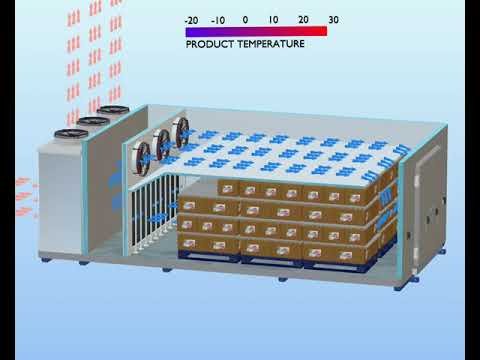
The critical parameter is the product’s field heat—the heat that must be removed immediately after harvest to halt spoilage. This requires a massive initial cooling capacity (blast chillers, rapid pre-coolers). After that, the system must maintain a very specific, often sub-zero, temperature and high relative humidity (often 85-95%) to prevent weight loss and decay. Controlled atmosphere (CA) storage, which modifies O2 and CO2 levels, is an advanced layer where cooling is integrated with gas management systems.
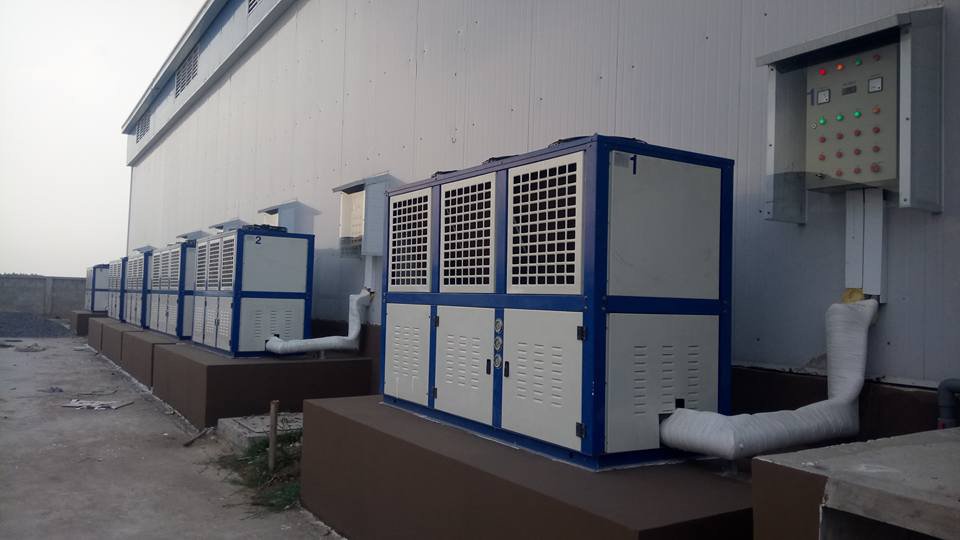
For distributors, this means understanding the difference between on-shore processing and reefer container applications. A cold storage warehouse needs a heavy-duty condensing unit with evaporator coils designed for high humidity. For the containerized shipping market (reefers), the need is for rugged, self-contained, diesel-electric or plug-in units that can maintain setpoints during intermodal transport. The global cold chain logistics market’s growth is a direct driver here. Offer units with robust telematics for remote temperature and location tracking—this is a major selling point for modern logistics companies.
Key Questions from Distributors – Answered
Q1: With fluctuating global freight costs and tariffs, how can we maintain competitive pricing on cooling units?
- A: Diversify your sourcing geographically. Consider manufacturing hubs in Southeast Asia (Thailand, Vietnam) for cost-effective, quality units for standard applications, while potentially using Chinese factories for more advanced, tech-driven models. Always calculate the landed cost (unit cost + freight + insurance + duties) for a true comparison. Building relationships with manufacturers who have CKD (Completely Knocked Down) assembly options in key regional markets (e.g., Eastern Europe, Mexico, Brazil) can drastically reduce your final delivered cost and lead time.
Q2: What are the most important certifications we should demand from manufacturers for global distribution?
- A: This is market-specific but prioritize these: CE (EU), UKCA (UK), ETL/cUL (North America – OSHA compliant), CCC (China import), and CRAA (China quality). For energy efficiency, Energy Star (US), ErP (EU), and MEPS (Australia, GCC, others) are commercial necessities. For specific sectors, ISO 9001 (quality management) and AHRI Certification (validates performance ratings) add significant credibility.
Q3: How critical is the move towards low-GWP (Global Warming Potential) refrigerants like R-32 and R-454B?
- A: It is commercially and legally critical. The Kigali Amendment to the Montreal Protocol is being enacted worldwide, phasing out HFCs like R-410A. The EU F-Gas Regulation and the US AIM Act are actively restricting high-GWP refrigerants. Distributors must future-proof their inventory. R-32 is the dominant near-term solution for residential/slight commercial. For larger systems, R-454B and other A2L “mildly flammable” refrigerants are the next standard. Partner with manufacturers who are ahead of this curve and can provide the necessary training and safety documentation for handling new refrigerants.
Q4: Our clients increasingly ask about “smart” features. What functionality actually adds value for B2B buyers?
- A: Avoid gimmicks. The valuable smart features are: 1) Remote Group Management: Ability to monitor, schedule, and adjust settings for hundreds of units from a single dashboard (critical for retail chains, hotels). 2) Predictive Maintenance Alerts: Units that self-diagnose filter clogging, refrigerant leaks, or coil frost and send alerts to facility managers. 3) Open Protocol Integration: Compatibility with building management systems (BMS) like BACnet MS/TP or Modbus, allowing the cooling system to communicate with lighting, security, and other HVAC components. This is what facility managers and installers are looking for.