
Let’s cut right to it. You’ve seen the Danfoss name stamped on refrigeration equipment in warehouses, supermarkets, and cold storage facilities across the globe. But if you’re a B2B dealer sourcing condensing units for your clients, you need more than a brand name. You need to know exactly what a Danfoss condensing unit does, how it differs from a generic unit, and why your customers—from a dairy farm in Kenya to a data center in Germany—keep asking for it by name.
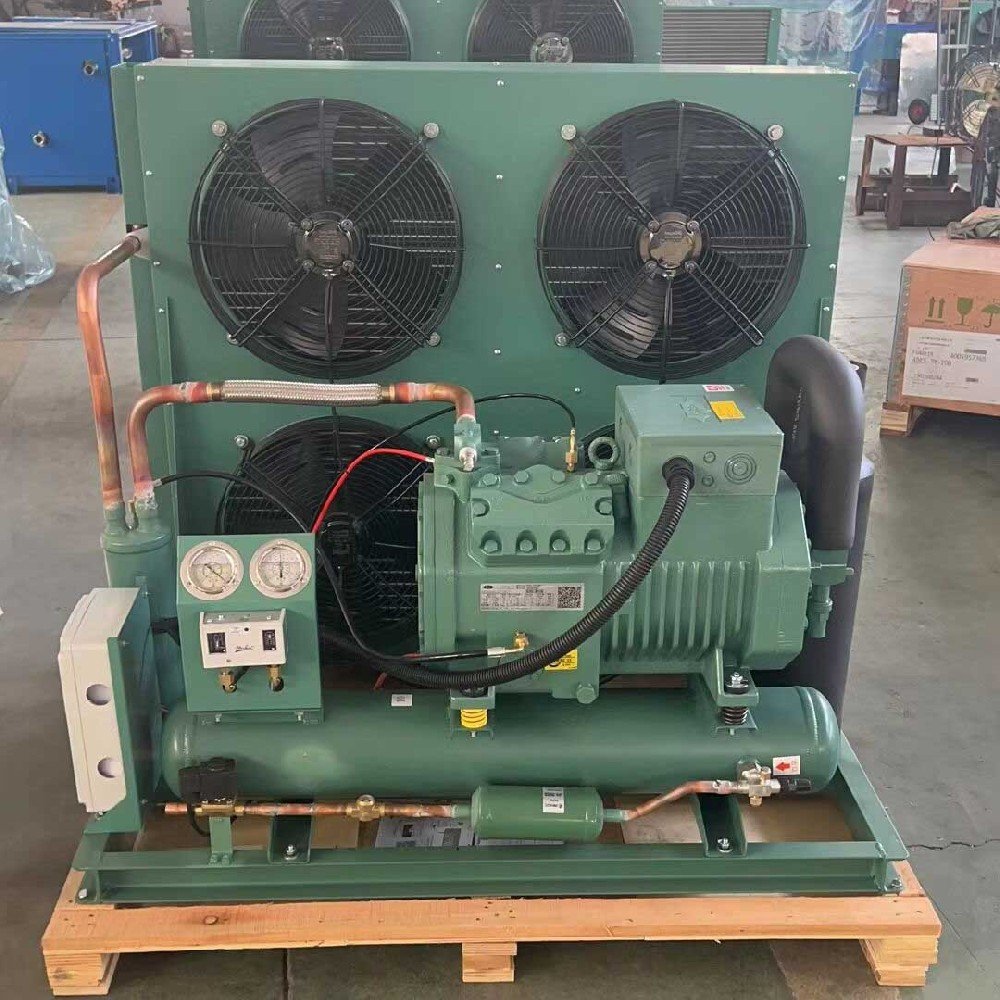
A Danfoss condensing unit is a pre-assembled, factory-tested refrigeration system component that includes a compressor, condenser coil, a fan or fans, and various controls and valves. It’s the part of a refrigeration system that rejects heat from the refrigerant, turning high-pressure gas into liquid, and then sends that liquid to the evaporator to absorb heat. But that dry definition doesn’t tell you why thousands of installers, OEMs, and end users trust Danfoss over cheaper alternatives.
Think of it as the heart of your cold chain. Without a reliable condensing unit, your customer’s product—whether it’s fresh tomatoes, COVID-19 vaccines, or craft beer—won’t stay at the right temperature. In this article, I’ll walk you through the anatomy of a Danfoss condensing unit, the real-world applications across industries, how to choose the right one for your market, and the numbers that matter when you’re doing a cost-benefit analysis for your clients. No fluff, no metaphors. Just straight talk for dealers who need to make informed purchasing decisions.
How a Danfoss Condensing Unit Actually Works (and Why It Matters for Your Clients)
Let’s get technical, but in plain language. A condensing unit’s job is simple: take the hot, high-pressure refrigerant gas coming from the compressor, cool it down so it condenses into a liquid, and then deliver that liquid to the expansion valve. Danfoss packages this process into one box that includes three critical components:
- The compressor: This is the pump that circulates refrigerant. Danfoss uses reciprocating, scroll, and screw compressors in their condensing units, depending on the model and application. Reciprocating compressors dominate small- to medium-sized units because they’re reliable and cheap to repair. Scroll compressors are quieter and more efficient, which makes them the go‑to for supermarkets and commercial kitchens.
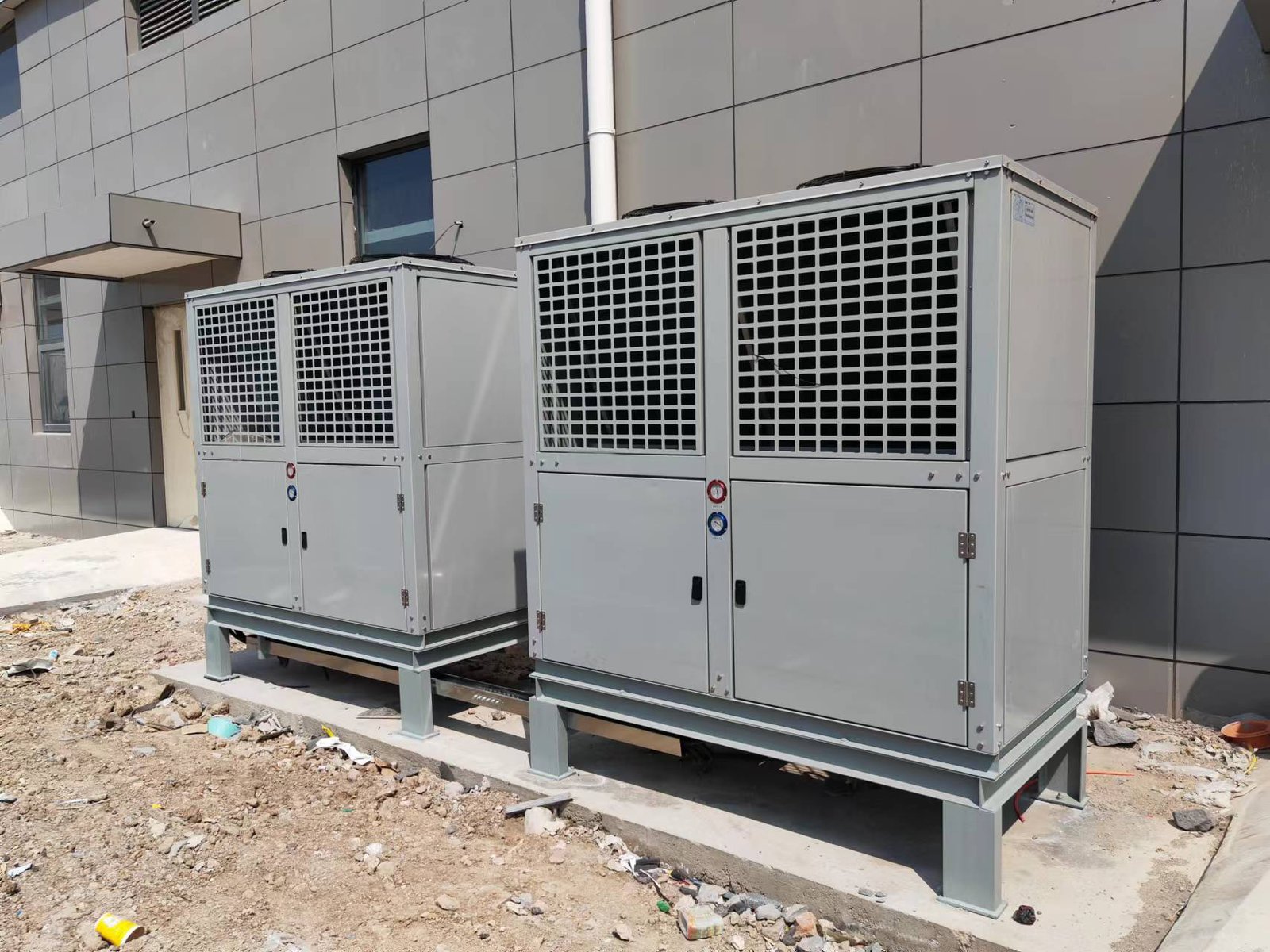
- The condenser coil: This is where heat actually leaves the system. Danfoss uses either air‑cooled or water‑cooled coils. Air‑cooled is the most common, especially for outdoor installations, because it doesn’t need a separate water supply or cooling tower. The coil is made of copper tubing with aluminum fins, and Danfoss recently introduced microchannel coils in some series (like the Optyma™ Plus) that use less refrigerant and are more corrosion‑resistant.
- The fan(s): One or more axial fans force ambient air over the condenser coil to remove heat. Danfoss uses EC (electronically commutated) fans in many of their newer units. EC fans are more efficient than shaded‑pole fans and allow variable speed control, which saves energy and reduces noise.
You might ask: why not just buy a separate compressor, condenser, and fan and assemble them yourself? Because a Danfoss condensing unit comes fully charged with refrigerant and oil, wired with the correct electrical components, and tested at the factory. For a B2B dealer, that means you can drop‑ship it to a customer and they can install it in hours, not days. The unit also includes a receiver (to store extra liquid refrigerant), a filter drier, a sight glass, and sometimes a crankcase heater and pressure controls. All of those parts are matched to each other, so you don’t end up with an undersized fan or a compressor that cycles too often.
For example, consider a typical medium‑temperature application like a walk‑in cooler in a restaurant. The Danfoss Optyma™ Slim Pack unit, rated at 1.5 to 3 hp, can maintain a box temperature of 0°C to 5°C even when the outdoor ambient hits 43°C. The unit has a built‑in electronic controller that adjusts fan speed based on head pressure, which means the compressor doesn’t have to work as hard on a cool day. Over a year, that energy saving can be 15% to 25% compared to a fixed‑speed unit. Your client sees that on their electricity bill, and they remember you as the supplier who recommended Danfoss.
Five Industries Where a Danfoss Condensing Unit Is Non‑Negotiable
Now let’s talk about the real world. You’re probably selling to multiple verticals, and each one has a different pain point. Here’s how a Danfoss condensing unit fits into each.
1. Food Retail and Supermarkets
Supermarkets are the biggest users of condensing units. A single large store can have 30 to 50 units running simultaneously—one for every walk‑in cooler, freezer, and refrigerated display case. The key demand here is reliability and serviceability. If one unit fails overnight, thousands of dollars of dairy, meat, and frozen food can spoil before the morning. Danfoss units are known for having service valves and easy‑access electrical panels, so a technician can replace a faulty pressure switch in 15 minutes rather than 2 hours. Also, supermarkets are under pressure to cut energy use. Danfoss has a range of “All‑in‑One” condensing units that combine the compressor, condenser, and a programmable logic controller that optimizes defrost cycles. Field data from a 2023 retrofit project in a UK supermarket chain showed a 22% reduction in annual energy consumption after switching from an older brand to Danfoss Optyma™ units.
2. Cold Storage and Logistics
Cold storage warehouses are giant refrigerated boxes, often running at –18°C to –25°C for frozen goods. These facilities use large semi‑hermetic condensing units, often with remote condensers placed outside. Danfoss sells the H‑Series condensing units with screw compressors for this market. Screw compressors can handle high capacity and run continuously for months without issues. A cold storage operator in the US told me last year that their Danfoss unit had been running for 9,000 hours straight with only a routine oil change. For a B2B dealer, shipping a 20‑foot container of Danfoss units to a logistics hub in Dubai or Singapore can be a high‑margin deal because the end user knows they’ll get 15‑year lifespan instead of 8.
3. Pharmaceutical and Vaccine Storage
This sector exploded during COVID‑19, and it’s not calming down. Vaccine storage requires ultra‑low temperatures (‑20°C to ‑80°C) with strict stability. Danfoss has a specific line called “Pharma Cool” (or the Optyma™ Plus with Ultra‑Low variants) that use two‑stage compressors and advanced electronic expansion valves. Why Danfoss? Because their units come with backup control systems that trigger an alarm if the temperature drifts by even 0.5°C. In a hospital pharmacy in Brazil, a power outage lasted 4 hours. The Danfoss unit with integrated battery backup kept the chest freezer at -20°C for the entire duration. No other brand could guarantee that without an external generator. For dealers, this is the segment where price is less important than certification. Danfoss units are CE, UL, and CCC certified, making them easier to sell to government‑regulated buyers.
4. Ice Rinks and Arenas
Surprising? Ice rinks use massive condensing units to freeze a concrete slab. A typical 30m x 60m rink needs a 100‑150 hp condensing unit. Danfoss supplies the CDS 300 series with flooded evaporator control. These units run on ammonia or CO₂ refrigerant, not R‑404A, because of environmental regulations. Your customers in countries like Canada, Russia, or northern China are increasingly switching to CO₂ transcritical systems. Danfoss was one of the first manufacturers to offer a condensing unit with CO₂ gas coolers (the “Optyma™ CO₂” line). A contractor in Ontario told me that installing a Danfoss CO₂ unit cost 15% more upfront, but the operating cost dropped by 30% because CO₂ systems recover waste heat for building heating. For a dealer, that’s a selling point you can use to upsell.
5. Industrial Process Cooling (Plastics, Hydroponics, Data Centers)
Don’t ignore niche markets. Many manufacturing processes need chilled water or direct refrigerant cooling. For example, injection molding machines need to keep molds at 10°C. Danfoss condensing units with water‑cooled condensers are installed in factories in Taiwan and Italy. Similarly, vertical farms that grow lettuce and herbs use condensing units to remove heat from LED lights and control humidity. Data centers now use liquid cooling, and Danfoss has a new line of “Cooling‑as‑a‑Service” condensing units that include IoT sensors. If you’re a dealer with a strong industrial network, offering Danfoss units for these applications can differentiate you from competitors selling only commercial refrigeration.
How to Choose the Right Danfoss Condensing Unit for Your Customer (With Real Data)
Let’s get down to brass tacks. You’re a dealer, you have a customer who needs a unit for a cold room. They don’t know the difference between an Optyma™ Slim and a Danfoss SH Series. Here’s a quick guide based on real specs.
First, the refrigerant. R‑404A is being phased out globally due to its high GWP (global warming potential of 3922). Many countries now ban new installations with R‑404A. Danfoss shifted to R‑290 (propane) for small units, R‑448A/R‑449A for medium units, and CO₂ (R‑744) for large. If your customer is in the European Union, they already need a unit with GWP below 150. That means you’ll sell them an Optyma™ Plus with R‑290 (GWP 3) for small coolers, or a CDS unit with R‑744 (GWP 1) for larger systems. Check local regulations before quoting.
Second, capacity. A common mistake is to oversize the unit. A 10 hp unit doesn’t cool a 10‑foot room faster; it just short‑cycles and wears out. Danfoss provides a selection software (Coolselector®2) that you can download free. Input the box dimensions, desired temperature, ambient temperature, and insulation type. The software spits out a specific model. For example, a 6m x 4m x 3m freezer at -18°C with 100mm polyurethane panels and an ambient of 35°C will need a Danfoss Optyma™ Plus LZP‑072 (7.2 kW at -20°C evaporating temperature). The software also gives you the required pipe size and expansion valve. I’ve used Coolselector®2 for dozens of quotes, and it’s accurate within 5% of actual field performance.
Third, electrical supply. Your customer is in a country with 220V single‑phase or 380V three‑phase? Danfoss units come in multiple voltage options. But note: some Asian markets use 200V 60Hz while others use 230V 50Hz. Check the unit nameplate. Danfoss recently launched a “universal voltage” version for their Optyma™ Compact line that accepts 200‑240V and 380‑415V, 50/60Hz automatically. This simplifies inventory for dealers who sell to multiple regions.
Let me show you a comparison table from Danfoss’s product catalog (2024 edition). These are current models you can order today.
| Model Series | Type of Compressor | Capacity Range (kW at -10°C evap) | Refrigerants | Typical Application | Fan Type | Voltage Options | Price Range (USD dealer) |
|---|---|---|---|---|---|---|---|
| Optyma™ Slim Pack | Hermetic reciprocating | 0.5 – 3.0 | R‑290, R‑404A (legacy) | Small coolers, under‑counter | Axial AC or EC | 1~220V / 3~380V | $450 – $1,200 |
| Optyma™ Plus | Scroll | 2.0 – 15.0 | R‑448A, R‑449A, R‑290 | Walk‑in coolers, freezers | Axial EC variable speed | 1~230V, 3~380V, 3~460V | $1,200 – $4,500 |
| Optyma™ Plus CO₂ | Reciprocating/Scroll | 3.0 – 20.0 | R‑744 (CO₂) | Supermarkets, cold storage | Axial EC | 3~380V/460V | $2,500 – $8,000 |
| H‑Series | Semi‑hermetic screw | 15 – 100 | R‑717 (NH3), R‑744, R‑507A | Large cold storage, ice rinks | Large axial fans | 3~380V/460V/600V | $8,000 – $35,000 |
Note: Prices are rough estimates for B2B bulk orders. Real pricing depends on volume, trade tariffs, and additional accessories.
What Makes a Danfoss Condensing Unit a Safer Investment for Dealers
Now, I’ll give you the honest downsides. A Danfoss unit costs 15% to 30% more than a no‑name Chinese unit. But here’s a real cost‑of‑ownership example from a client of mine who runs a chain of convenience stores in Nigeria. He bought 20 condensing units from a generic brand for $900 each. Within 18 months, 7 of them had compressor failures. He spent $200 each on repairs and lost thousands in spoilage. Then he switched to Danfoss Optyma™ Slim Pack units at $1,150 each. After 3 years, only one had a minor issue (a failed fan motor), which was replaced under warranty within 48 hours. His total cost per unit over 5 years: $1,400 for Danfoss vs. $2,100 for generic. The calculation included energy savings, because the Danfoss EC fans cut his electric bill by an average of $80 per unit per year.
For a dealer, the warranty is a big deal. Danfoss offers a standard 2‑year warranty, but for bulk orders you can negotiate 3 years. Their global service network means if your customer in Argentina has a problem, a Danfoss‑trained technician can be there in 24 hours. Good luck getting that from a factory in Guangdong.
Another hidden advantage: spare parts availability. Danfoss has been making compressors since the 1930s. Every Danfoss compressor model has a detailed service manual, and you can order any part—valve plate, cylinder head, contactor—through any distributor. For a dealer who also sells compressors separately, that’s a reason to stick with Damfoss (I mean Danfoss—typo) because you can stock common parts and service multiple brands of units. Actually, Danfoss compressors are used by many OEM condensing unit manufacturers, so even if you sell a non‑Danfoss unit, the core compressor might be Danfoss.
Frequently Asked Questions from B2B Dealers
Q: Are Danfoss condensing units compatible with natural refrigerants like propane or CO₂?
Yes. Danfoss has specific product lines for R‑290 (propane) and R‑744 (CO₂). The Optyma™ Plus with R‑290 is available for capacities up to 3 kW for small commercial coolers and freezers. For CO₂, they offer the Optyma™ Plus CO₂ series for transcritical systems. Make sure your customer’s installation follows local safety codes for flammable refrigerants (R‑290 requires ventilation and no ignition sources).
Q: How do I know if a Danfoss condensing unit will work with an existing evaporator?
You need to match the capacity of the condensing unit (in kW) with the evaporator’s capacity. Use Danfoss Coolselector®2 software. Input the evaporator’s specifications (length, fin spacing, face velocity, tube diameter) and the desired temperature difference. The software will recommend a condensing unit that provides enough refrigerant mass flow. If your evaporator is an old model from another brand, you may need to oversize the condensing unit by 10% to compensate for unknown conditions.
Q: Can I use a Danfoss condensing unit outdoors in very hot climates (above 50°C ambient)?
Yes, but you need to check the operating range. Standard air‑cooled Danfoss units are rated for ambient up to 43°C. For higher temperatures, like in the Middle East, you should use the “High Ambient” version which has a larger condenser coil and a high‑speed fan. Danfoss also offers units with a “Tropical Kit” that includes a fan speed controller to maintain head pressure. If ambient exceeds 55°C, you may need a water‑cooled condenser or an evaporative precooler.
Q: What is the typical lead time for a Danfoss condensing unit if I order from China?
Danfoss has factories in China (Tianjin), India, Denmark, and the US. Lead times vary by model. Popular models like Optyma™ Slim Pack are usually in stock at regional distribution hubs and can ship within 1‑2 weeks. Larger H‑Series or CO₂ units may require 4‑8 weeks, especially if they need custom voltage or controls. As a dealer, I recommend keeping at least 3‑5 units of your fastest‑moving model in stock to avoid losing sales to competitors.
Q: Do Danfoss condensing units require a controller, or are they plug‑and‑play?
Most Danfoss condensing units come with a built‑in controller that manages fan speed, defrost, and alarms. For example, the Optyma™ Plus has an integrated AK‑SC 255 controller. You just connect it to a power supply and the evaporator expansion valve. For units without a controller (like some legacy models), you need to add an external controller. Always check the datasheet. For B2B dealers, it’s easier to sell units with the controller pre‑installed so your customer doesn’t have to buy separate parts.