
AC Condenser Unit vs. Evaporator Coil: The Industrial Duo Redefining Climate Control Across Sectors

Let’s cut straight to the chase. For you, the global dealer and distributor building a portfolio of reliable HVAC solutions, understanding the core hardware isn’t just technical—it’s commercial. The condenser unit and the evaporator coil are the non-negotiable heartbeat of any refrigeration or air conditioning system. Their synergy dictates efficiency, cost, and application success. Forget the residential basics; we’re talking about the specs that matter for data centers, cold storage, manufacturing floors, and large-scale commercial projects.

The Core Hardware Breakdown: More Than Just Outdoor vs. Indoor
First, let’s strip these components down to their functional reality.
The condenser unit is the system’s exhaust and radiator, always located outside the conditioned space. Its job is rejection. It receives high-pressure, high-temperature refrigerant gas from the compressor and uses a coil network and a fan to dissipate that heat into the outside air. As the refrigerant loses heat, it condenses into a high-pressure liquid. For you, the key selling points here are durability against environmental elements, fan motor efficiency (often measured in ECM or standard shaded pole), coil material (copper vs. aluminum with different corrosion protections), and compressor technology (scroll, reciprocating, or increasingly, inverter-driven). A 2023 report from the Air-Conditioning, Heating, and Refrigeration Institute (AHRI) indicates a continued 15% year-on-year growth in shipments of commercial-grade condensing units with inverter technology, highlighting market shift towards variable capacity.
The evaporator coil is the system’s absorption engine, installed inside the air handler or directly in the ductwork. Its mission is to absorb heat. The high-pressure liquid refrigerant, now passed through an expansion device, becomes a cold, low-pressure mixture as it enters the coil’s tubing. A blower forces air across the coil’s fins, the refrigerant boils off (evaporates), absorbing massive amounts of heat from that air in the process. The now-cooled and dehumidified air is circulated back into the space. Your B2B clients care about coil design (face area, fin density, number of rows), material compatibility (copper tubes/aluminum fins standard, but cupronickel for marine or corrosive environments), and air pressure drop characteristics which directly impact blower energy use.
Think of it as a closed-loop cycle: the evaporator picks up the heat, the condenser kicks it out. One cannot perform without the other being precisely matched.
Demanding Environments: Matching the Duo to the Industry
This is where your consultancy as a distributor adds value. Recommending the right configuration is industry-specific.
For Data Centers & Telecom Shelters: Downtime is catastrophic. Here, precision is paramount. Evaporator coils are part of Computer Room Air Handler (CRAH) or precision AC units, requiring exceptionally sensitive expansion valves and coils designed for 24/7 operation at high sensible heat ratios (removing heat without excessive dehumidification). Condenser units must be ultra-reliable, often configured in N+1 redundancy. Latest trend? Utilizing free cooling coils within condensing units when ambient temperatures drop, significantly reducing compressor run time. A 2024 Q1 analysis from Uptime Institute shows that nearly 40% of new data center deployments in temperate regions now specify condensers with integrated free cooling circuits, projecting a 25-40% reduction in annual cooling energy cost.
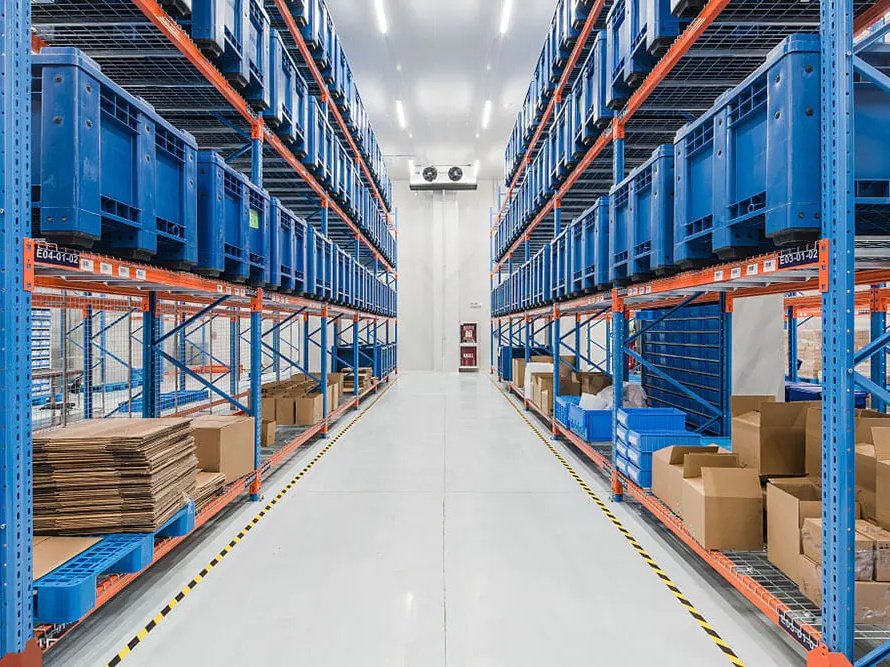
For Cold Storage & Logistics: This is the realm of capacity and reliability at low temperatures. Evaporator coils are large, heavy-duty, often defrosting (electric, hot gas, or air) to manage frost buildup at sub-zero temperatures. Distributors should highlight coil surface treatments that resist frost adhesion. Condenser units for low-temp applications (like blast freezers) are built with larger compression ratios and may use refrigerant subcoolers to boost capacity. The global push for frozen food logistics, accelerated by pandemic-era shifts, has seen a sustained 12% annual demand increase for industrial condensing units rated for -25°C to -35°C evaporation, according to the Global Cold Chain Alliance.
For Pharmaceutical Manufacturing & Cleanrooms: The non-negotiable here is air quality and precise environmental control. Evaporator coils are integrated into complex HVAC systems with high-efficiency filtration. Coil hygiene is critical—features like hydrophilic fin coatings that inhibit microbial growth and easy-clean designs are major selling points. Condenser units must be positioned to avoid contamination and are often specified with variable speed drives to maintain strict temperature (±1°C) and humidity (±5% RH) setpoints without cycling, which can disrupt airflow patterns.
The Partnership: Why System Matching Isn’t a Suggestion, It’s a Mandate
This is your critical message to clients: mixing and matching condensers and coils from different OEMs or of different capacities is a high-risk gamble. They are engineered as a system. The AHRI certification for matched systems exists for a reason. An undersized evaporator coil with an oversized condenser might short-cycle, failing to dehumidify properly. The reverse leads to high head pressure, compressor overload, and premature failure. As a distributor, your leverage is in providing AHRI-certified performance data (like SEER2, EER, IEER ratings) for the exact pair you’re selling. This protects your client’s investment and your reputation.
Here is a snapshot of performance variables based on a matched 20-ton commercial rooftop system (using R410A, transitioning towards A2L refrigerants like R-32 in new models):
| Component / Specification | Condenser Unit | Evaporator Coil | Impact of Mismatch (Example) |
|---|---|---|---|
| Primary Function | Heat Rejection | Heat Absorption | System balance lost; efficiency plummets |
| Key Metric | Condensing Temperature | Evaporating Temperature | High condensing temp. reduces capacity, increases power draw |
| Capacity (This Matched Pair) | 20 Tons (240,000 BTU/h) | 20 Tons (240,000 BTU/h) | Using an 18-ton coil: reduces total capacity, increases compressor stress |
| Coil Material (Typical) | Copper tube, Aluminum fin with Blue Fin or other coating | Copper tube, Aluminum fin (epoxy coated for indoor) | Material mismatch can cause galvanic corrosion at connection points |
| Refrigerant Charge | Specified for 50 ft. line set + coil volume | Integral to total system volume | Incorrect charge due to mismatched volume harms compressor & efficiency |
| IEER (Integrated EER) | System Rating: 16.5 | (Contributes to system rating) | Mismatch can lower IEER by 30% or more, destroying promised energy savings |
The Dealer’s Checklist: Specification Questions for Your Clients
Your conversation with a commercial client should drill into their real needs:
- Application Profile: Is it comfort cooling, process cooling, or low-temperature storage? What are the exact design conditions (indoor/outdoor temp, humidity)?
- Load Characteristics: Is the space high sensible heat (server room) or high latent heat (indoor pool)?
- Installation Constraints: Roof-top vs. ground-level for the condenser? Air handler configuration for the coil?
- Future-Proofing: Are they considering refrigerant phase-downs (R410A to R-32, R-454B)? Offering units designed for future A2L refrigerants can be a key differentiator.
- Total Cost of Ownership: Move beyond unit price. Discuss IEER, predicted maintenance intervals for coils (filter type, cleanliness), and compressor warranty terms.
Professional Q&A for the B2B Dealer
Q1: A client wants to replace just a failed condenser unit with a newer, higher SEER model but keep the old evaporator coil to save cost. What’s the risk?
A: The risk is operational failure and voided warranties. Newer condensers are optimized for specific refrigerant flow rates and pressures. The old coil’s internal volume, circuiting, and pressure drop will not match. This leads to improper refrigerant charge, potential liquid slugging of the compressor, drastically reduced efficiency (negating the new SEER benefit), and almost certainly a denial of the compressor warranty by the manufacturer. Always insist on a matched system or a full AHRI-certified compatibility check from the OEM.
Q2: For a cold storage project in a coastal region, what specific specs should I look for in both components?
A: For the condenser unit, demand a corrosion-resistant package: hot-dip galvanized steel casing, epoxy-coated coils, and preferably a condenser coil with a specialized coating like “Blue Fin” or equivalent. For the evaporator coil inside, while less exposed to salt air, ensure the fins have an anti-corrosion epoxy coating. For both, specify that all electrical components (contactors, fan motors) have a high IP rating and conformal coating. This adds cost but prevents catastrophic failure within a few years.
Q3: How do inverter-driven condensing units change the game for commercial applications, and do they require special evaporator coils?
A: Inverter (variable speed) condensers modulate compressor and fan speed to match the exact cooling load, achieving far higher part-load efficiency (hence superior IEER ratings). They provide much tighter temperature control and reduced cycling wear. Yes, they often require specifically matched evaporator coils and, critically, compatible electronic expansion valves (EEVs) that can modulate refrigerant flow in sync with the compressor. Selling an inverter condenser with a standard fixed-orifice coil and TXV wastes its potential and can cause control issues.
Q4: With the global shift towards lower-GWP refrigerants, what should I be stocking now?
A: The market is in transition. For new equipment, prioritize models designed for and charged with R-32 or R-454B. These A2L “mildly flammable” refrigerants have significantly lower Global Warming Potential (GWP) than R-410A and are becoming the new global standard. Ensure your technical staff is trained on their safe handling (require different tools and protocols due to flammability). For replacement parts for existing R-410A systems, maintain stock but guide clients towards future-ready solutions for new projects. The EU F-Gas regulation and similar policies worldwide are rapidly accelerating this shift.