
Smart Climate Control for Every Business: HVAC Solutions for Retail, Hospitality, Healthcare & More
Let’s talk about the real engine behind comfortable, functional, and profitable businesses: the heating and cooling system. For B2B dealers and distributors navigating the global market, understanding the nuanced demands across different sectors isn’t just helpful—it’s your competitive edge. Forget one-size-fits-all. Today’s commercial and industrial HVAC landscape is about precision, reliability, and smart integration.

Demands in Modern Commercial Construction
The blueprint for today’s offices, mixed-use developments, and smart buildings has HVAC at its core. It’s no longer just about temperature; it’s about air quality, zone control, and seamless building integration.
- Core Requirements: Builders and contractors need systems that are VRF (Variable Refrigerant Flow) or DOAS (Dedicated Outdoor Air Systems) ready. Ducted and ductless mini-split systems are in high demand for their flexibility in retrofits and new builds. The focus is on modular units that can be scaled as a building expands.
- The Integration Imperative: Equipment must communicate. Compatibility with Building Management Systems (BMS) and IoT platforms is non-negotiable. Units with Modbus, BACnet, or LonWorks protocols are the baseline. Clients want to see real-time data on energy consumption (kW/ton) and system health from a single dashboard.
- Efficiency & Regulations: Global standards are tightening. In the EU, the ErP directive pushes for higher seasonal efficiency. In North America, SEER2 and HSPF2 ratings are the new benchmarks. Distributors need to stock units that meet or exceed these, like inverter-driven compressors with EER ratings above 16 for cooling and COP values above 4.0 for heat pumps.
Latest Technical Specifications for Dealers:
- Refrigerant Transition: R-410A is being phased down globally. Stock and promote units using next-gen refrigerants like R-32 (higher efficiency, lower GWP) and R-454B. Provide clear guidance on handling, servicing, and regulatory timelines.
- Sound Matters: Commercial projects have strict dB(A) limits. Low-ambient cooling and heating performance specs (-15°C to 52°C operation) are critical for all-geography reliability.
- Connectivity: Wi-Fi, cloud monitoring, and API accessibility for fleet management are now standard asks from facility managers.
HVAC for Hospitality: Cooling Rooms and Heating Guest Experience
A hotel’s HVAC system directly impacts reviews, operational cost, and staff efficiency. It’s a 24/7 operation with peak demands that are entirely predictable.
- The Challenge of Occupancy: Rooms flip from occupied to unoccupied multiple times daily. PTAC (Packaged Terminal Air Conditioner) and PTHP (Packaged Terminal Heat Pump) units remain staples for individual room control, but central systems with advanced room controllers are gaining ground for luxury segments. Key needs include ultra-quiet operation (< 40 dB in-room), rapid pull-down/pull-up temperature change capability, and tamper-proof settings.
- Common Area Strategy: Lobbies, restaurants, and conference halls require robust air handling units (AHUs) and fan coil units (FCUs) with high filtration (MERV 13+ post-pandemic) and demand-controlled ventilation (DCV) to save energy when spaces are less crowded.
- The Data Point: A 2023 report by Hospitality Tech shows that 68% of guest complaints related to “room comfort” (too hot/cold, noisy AC). Providing hotels with systems featuring automated setback during unoccupied periods and streamlined maintenance alerts directly addresses this pain point.
| Hotel Area | Recommended System Type | Critical Features for Distributors to Highlight |
|---|---|---|
| Guest Rooms | High-Wall Ductless Mini-Split / PTAC/PTHP | Quiet operation (<40 dB), Wi-Fi control, auto fan speed, anti-mildew filters. |
| Corridors & Back of House | Ceiling-Concealed Ducted Units | Reliability, easy service access, continuous low-speed operation. |
| Restaurants & Kitchens | Heavy-Duty Cassette Units / Make-up Air Units | High cooling capacity, grease-resistant filters, powerful extraction compatibility. |
| Lobby & Conference | Ceiling Cassette (4-way blow) / AHU | Wide air throw, even distribution, integrated fresh air, DCV compatibility. |
Precision Climate in Healthcare and Laboratories
This is the high-stakes arena. HVAC is part of the clinical infrastructure, governing infection control, procedural integrity, and patient recovery.
- Critical Environment Control: Hospitals need dedicated systems for ORs, isolation rooms, pharmacies, and labs. Requirements include precise humidity control (often 40%-60% RH), HEPA filtration (99.97% efficiency on 0.3-micron particles), and strict positive/negative pressure differentials (monitored in Pascals). Fan coil units and air handlers for these areas must be built with hospital-grade coatings and sealed casings.
- Reliability as a Mandate: Equipment failure is not an option. Redundancy (N+1 configuration), seamless automatic switchover, and components with extended lifespans are key selling points. Distributors should partner with manufacturers offering 24/7 critical parts logistics.
- Energy Efficiency in a 24/7 Setting: While life-safety comes first, energy costs are colossal. Highlight systems with energy recovery ventilators (ERVs) that precondition incoming fresh air, and chillers/heat pumps with part-load efficiency metrics that excel under constant, varying loads.
Cold Chain and Agricultural Storage Solutions
From farm to fork, and pharma to factory, precise temperature and humidity control in the cold chain is a global trade essential.
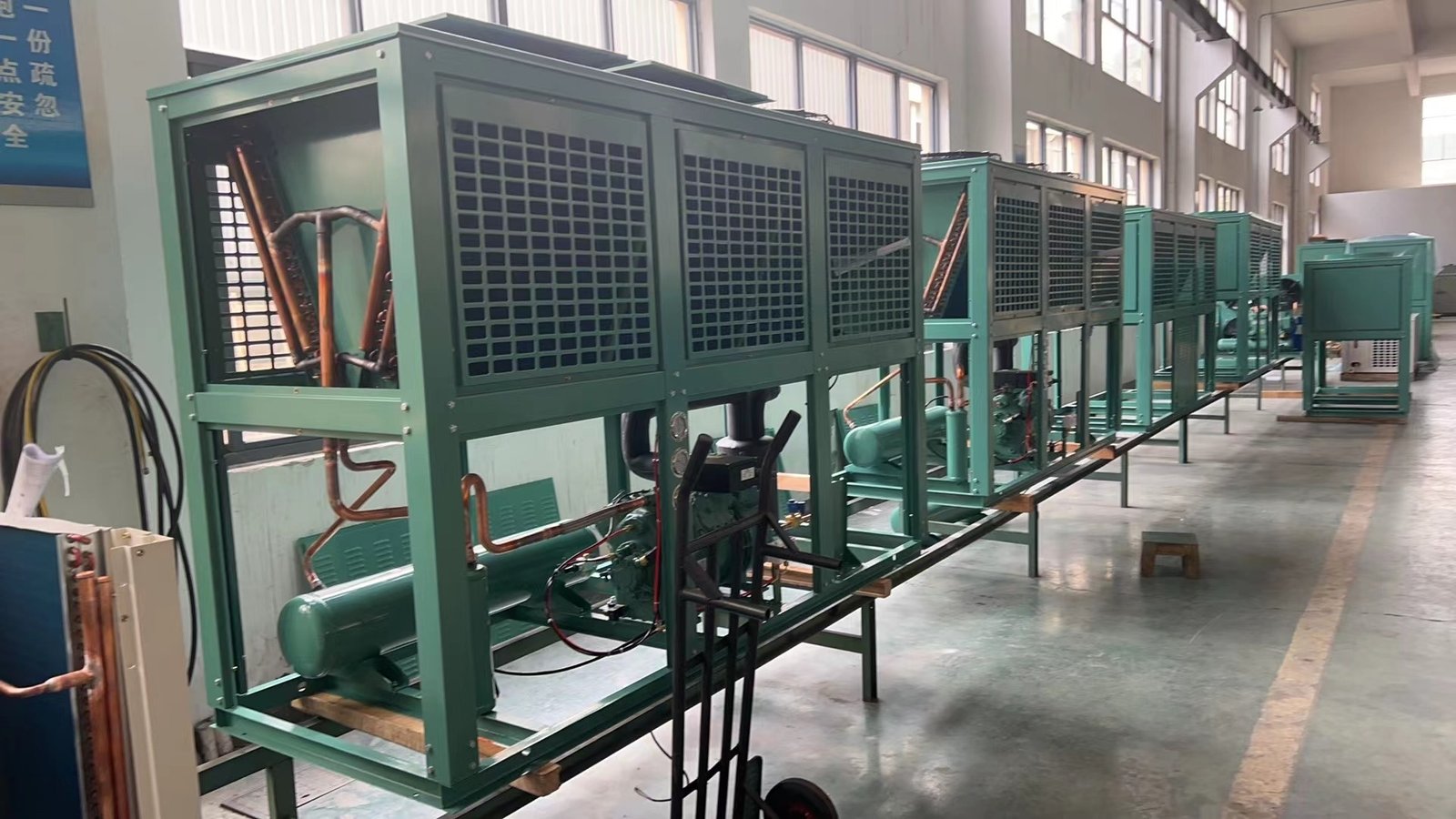
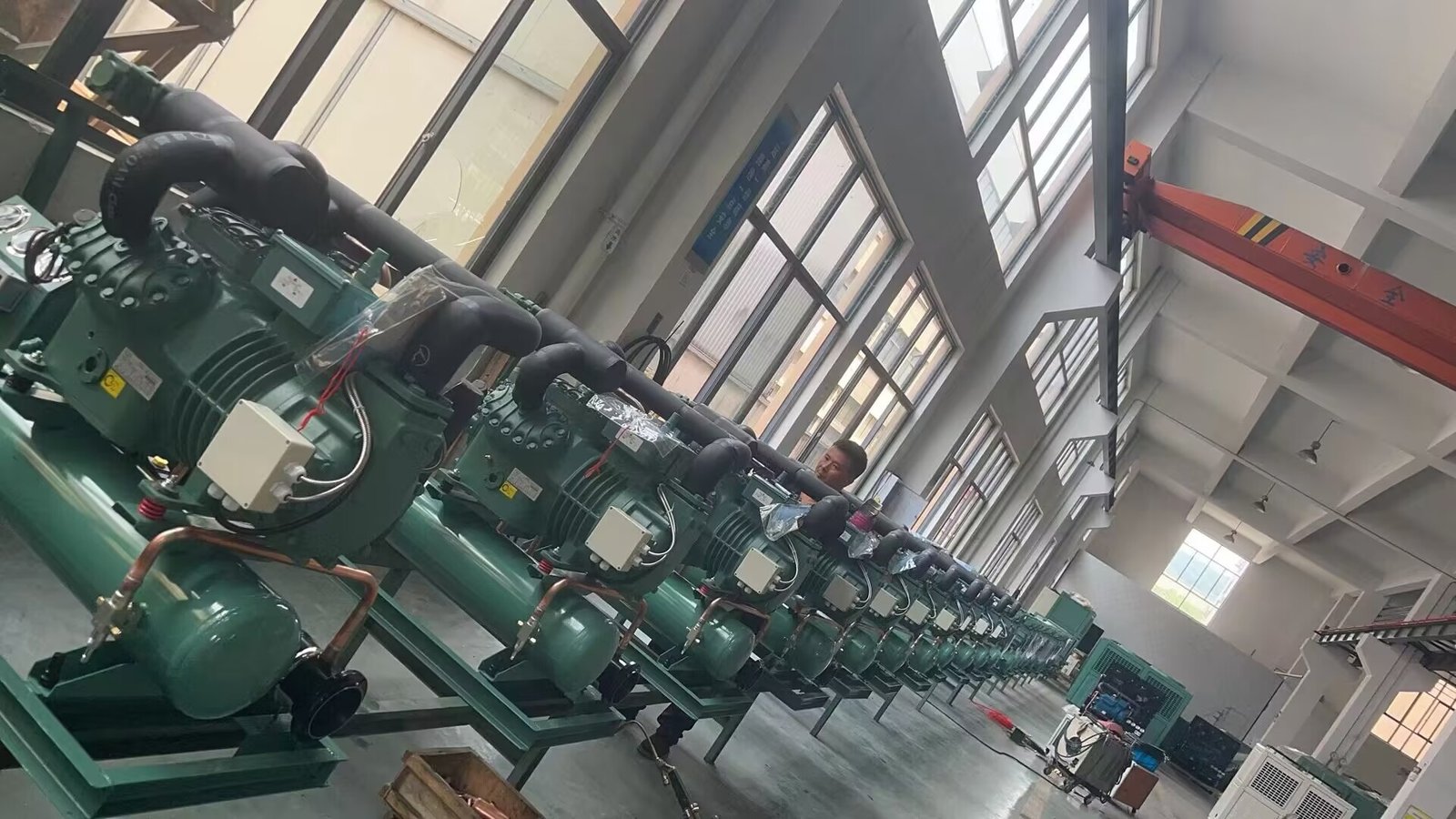
- Warehouse & Logistics Hubs: The demand is for robust, low-ambient condensing units and freezer evaporators that maintain stable temperatures (-25°C to +15°C range) in high-bay spaces with frequent door openings. Defrost cycle efficiency (electric, hot gas) is a major differentiator. Discuss coefficients of performance (COP) at specific operating temperatures.
- Agricultural Product Preservation: For flower auctions, fruit ripening rooms, or vegetable storage, systems require precise ethylene and CO2 scrubbing capabilities alongside temperature control. Humidity accuracy of ±2% can be the difference between premium and lost produce.
- The Tech Upgrade: Telemonitoring is revolutionizing cold chain logistics. Offer units with embedded sensors and IoT gateways that provide chain-of-custody logs, predictive maintenance alerts for compressor failure, and real-time temperature/humidity mapping—directly valuable for your B2B clients’ own compliance reporting.
Industrial Process Cooling and Ventilation
Manufacturing, data centers, textile plants—each has unique thermal loads that go far beyond human comfort.
- Process-Specific Systems: Spot cooling for injection molding machines, cabinet coolers for electrical panels, dry coolers for laser cutters, and chilled water systems for chemical processes. These are high-margin, application-engineered solutions. Understand the heat load in kW/Tons and the required process fluid temperatures.
- Durability & Air Quality: Industrial environments are harsh. Equipment needs corrosion-resistant coatings (e.g., epoxy, goldfin), heavy-duty filters for particulate matter, and components rated for continuous operation. Explosion-proof units are a required niche for petrochemical and pharmaceutical clients.
- Heat Recovery = Cost Recovery: This is a major sales angle. Systems that can capture waste heat from processes and repurpose it for space heating or pre-heating process water offer dramatic ROI. Provide case studies with calculated payback periods.
Q&A for the B2B Dealer
Q: Our clients are concerned about the phase-out of HFC refrigerants like R-410A. What should we be stocking and recommending now?
A: You’re right to focus on this. The global shift under the Kigali Amendment is accelerating. Right now, the safest bets for new equipment are units charged with R-32 or R-454B. R-32 has a lower GWP than R-410A and offers higher efficiency. R-454B has an even lower GWP and similar performance characteristics to R-410A, making it a true “drop-in” successor in terms of capacity and line set requirements for many systems. Stock these models and ensure your technical teams are trained on their safe handling. For the aftermarket/service side, continue managing R-410A inventory but guide clients towards retrofitting with newer options when major repairs are needed.
Q: How critical is IoT and connectivity in commercial HVAC, and what’s the minimum standard our product line should have?
A: It’s moved from a “nice-to-have” to a “must-have” for most commercial segments. For building owners, it enables predictive maintenance, reduces site visits, and optimizes energy use. For you as a dealer, it creates sticky service contracts and new revenue streams through data analytics. The minimum standard is built-in WiFi or an optional gateway that allows for:
- Remote monitoring of system status (on/off, mode, set temperature).
- Basic alarm alerts (high pressure, filter clog, communication error).
- Energy consumption metering.
For higher-end projects, look for open protocol support (BACnet MS/TP or IP, Modbus RTU) to integrate directly into the building’s BMS without proprietary gateways.
Q: We serve markets with extreme climates—very hot summers and very cold winters. What specifications should we prioritize in our heat pump offerings?
A: Look for models with explicitly stated low-ambient heating performance. Key specs to compare:
- Heating Capacity at Low Temp: What is the unit’s heating output (in kW or Btu/h) at an outdoor temperature of -15°C (5°F) or even -25°C (-13°F)? A good unit will retain over 70-80% of its rated capacity.
- COP at Low Temp: The Coefficient of Performance indicates efficiency. At -15°C, a COP above 2.0 is solid; the best units maintain COP > 2.5.
- Defrost Technology: Advanced cycle algorithms that minimize defrost frequency and duration are crucial to maintaining comfort and efficiency in humid, freezing conditions.
Always request the manufacturer’s extended performance data charts, not just the single-point rating. This data is your technical sales tool.