
Beyond Cool Air: How AC Units and Condenser Coils Drive Efficiency in Global Supply Chains
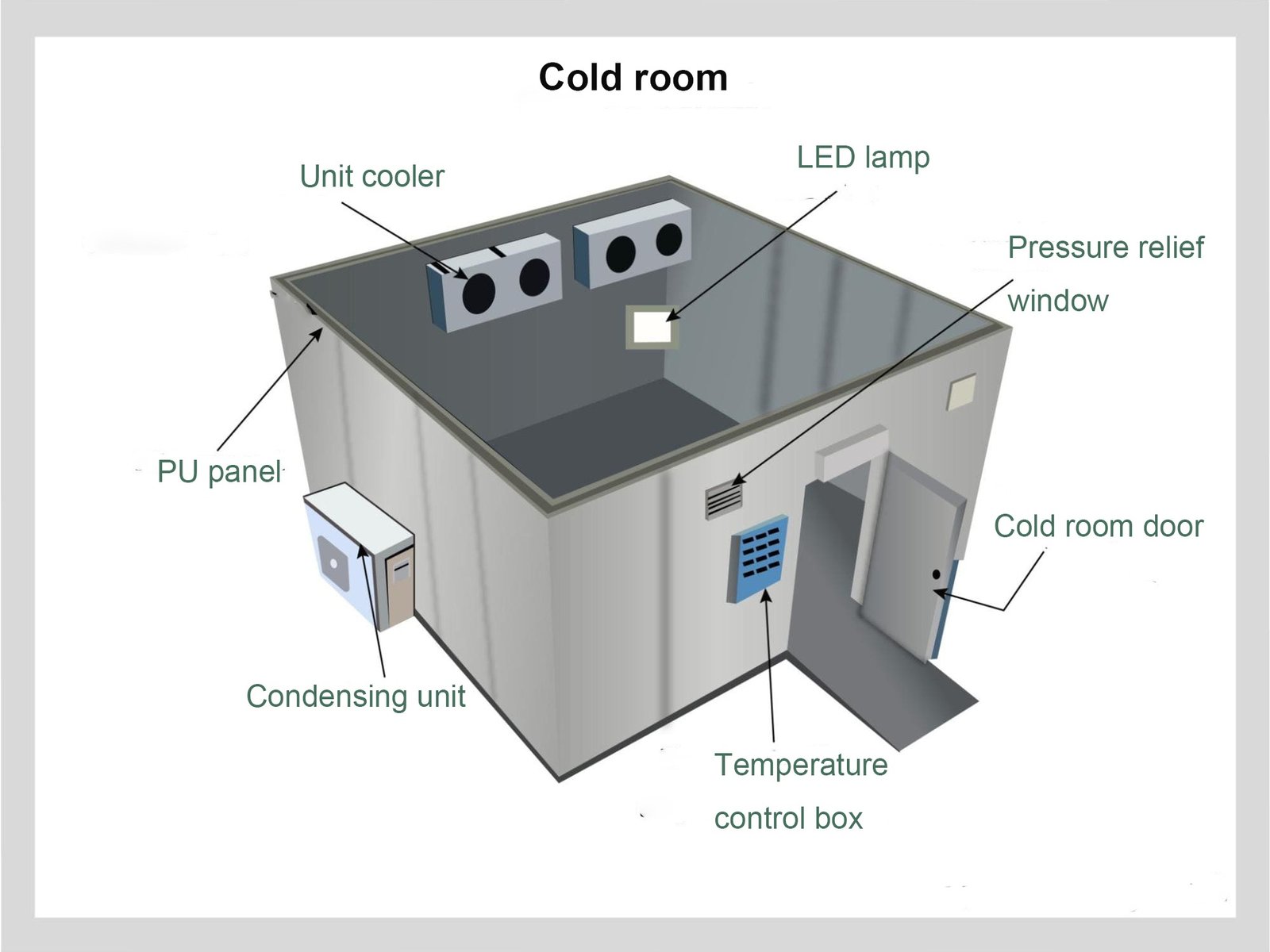
You’re sourcing commercial cooling equipment. It’s not about buying a box that blows cold air; it’s about investing in the reliability of your client’s operations—whether that’s a server farm in Singapore, a seafood processing plant in Norway, or a pharmaceutical warehouse in Brazil. The core of this decision often boils down to understanding the system: the complete AC unit versus its critical component, the condenser coil. Let’s strip away the jargon and talk about what this means for your inventory, your margins, and your customers’ bottom line.

Commercial Grade Cooling: Where the Real Demands Live

Forget residential. The B2B world operates on a different scale. Downtime isn’t an inconvenience; it’s a line-item cost on a P&L statement. When you’re evaluating an AC unit versus a standalone condenser coil, you’re looking at two distinct value propositions for your dealership.
A complete packaged or split AC unit is a turnkey solution. You’re sourcing and selling a tested, matched system. The compressor, evaporator coil, condenser coil, and controls are designed to work in harmony. For your customers in sectors like hospitality or retail, this is often the preferred route. It simplifies procurement, installation, and warranty handling. The manufacturer has done the system engineering. Your value add is in logistics, local support, and perhaps a service contract.
Now, the condenser coil itself is a high-value, high-specificity component. It’s the heart of heat rejection. In heavy industries—chemical processing, power plants, large-scale refrigeration—systems are often built custom, not bought off-the-shelf. Here, your role transforms. You’re not just a distributor; you’re a technical supplier. A manufacturer like us can provide ultra-durable coils with specific materials (like cupro-nickel for corrosive environments) or enhanced fin designs for extreme ambient temperatures. Selling coils means you’re catering to the maintenance, repair, and overhaul (MRO) market and large OEM integrators. The unit is a product; the coil is a precision-engineered part of a larger capital asset.
Matching Technology to Industry Pain Points
Different industries sweat over different things. Let’s break down how the unit vs. coil decision maps onto real-world scenarios.
For Data Centers and Telecom Hubs, the primary metric is uptime. Redundancy is everything. Here, you might see a hybrid approach. They install complete, ultra-high-efficiency precision AC units for baseline cooling. However, their facility teams keep critical spares, like condenser coils, on hand for rapid swap-out during preventative maintenance or to combat coil fouling. Selling to this sector means your data sheets must highlight SEER (Seasonal Energy Efficiency Ratio) and IEER (Integrated Energy Efficiency Ratio) ratings for units, and for coils, focus on cleanability, corrosion resistance, and rapid delivery times.
In Cold Chain and Food Processing, temperature consistency is law. A failure means spoiled inventory worth millions. These facilities often use colossal refrigeration systems where the condenser is a separate, massive component. Your customer here is likely an engineering firm or the facility’s chief engineer. They need coils that can handle ammonia or glycol-based refrigerants, with robust construction to withstand harsh washdowns. A complete unit is less common here; they’re buying and replacing heavy-duty coils as part of system lifecycle management. Your expertise in material science (aluminum vs. copper fins) becomes a key selling point.
Manufacturing and Industrial Plants face ambient contamination. Textile mills have lint, woodshops have dust, metalworks have particulates. A standard unit’s condenser coil can clog in weeks. For you, this presents an opportunity. Instead of selling a replacement unit, you can offer a solution: high-grade, easy-clean coils with wider fin spacing or specialized coatings. You provide the component that extends the system’s life, positioning your business as a problem-solver, not just a box-mover.
The Procurement Lens: Cost, Lead Time, and Lifecycle
As a dealer, your calculus involves more than just unit cost. Let’s talk real numbers and timelines.
| Complete AC Unit | Standalone Condenser Coil | |
|---|---|---|
| Procurement Complexity | Lower. One SKU, one order. | Higher. Requires exact match to existing system (dimensions, connection sizes, capacity). |
| Initial Investment | Higher upfront capital cost. | Significantly lower per-item cost. |
| Inventory Risk | Higher. Bulky, model-specific. | Moderate. Can service multiple system types with careful SKU management. |
| Margin Potential | Standardized, often competitive. | Can be higher on specialized, made-to-order, or urgent MRO items. |
| Customer Dependency | Transactional. May seek alternate supplier for next unit. | Strategic. Becomes a critical part of their supply chain for ongoing maintenance. |
Lead times are where this gets critical. Post-2020 supply chain realities are still here. A standard commercial AC unit from Asia to Europe might have a 60-90 day lead time. A custom coil, depending on complexity, could be 30-45 days. But here’s your advantage: a savvy dealer stocks a range of the most common coil types for popular systems. You can offer a 3-day delivery for a critical coil replacement, while a full unit replacement would shut your customer down for months. That service level cements a long-term partnership.
Specifications That Matter in 2024: Beyond the Basics
Your technical buyers are looking at specs you need to master. For complete units, the buzz is all about regulatory compliance and smart features. EU’s F-Gas regulations and global shifts towards lower GWP (Global Warming Potential) refrigerants like R-454B or R-32 are non-negotiable. Units must be designed for them. IoT integration for predictive maintenance is moving from premium to standard.
For coils, the devil is in the details. It’s about face velocity (optimizing airflow vs. pressure drop), fin count (more fins = more efficiency but more prone to clogging), and tube construction. Microchannel coil technology, using flat tubes and louvered fins, is gaining traction for its compact size and efficiency, but it has different servicing requirements. You need to know when to recommend a traditional fin-and-tube coil versus a microchannel. Providing this guidance makes you a consultant.
The Service & Sustainability Angle: Your Recurrevenue Stream
This is where your business model evolves. Selling a unit might get you a one-time profit. Selling coils, and the expertise around them, builds recurring revenue.
A condenser coil is the component most exposed to the elements and wear. It requires regular cleaning and, eventually, replacement. If you supply the original coil, you become the natural source for the replacement. You can offer coil cleaning services, chemical treatments to prevent corrosion, and performance monitoring. In an era where sustainability drives purchasing decisions, promoting coil cleaning and repair over full system replacement is a powerful message. You’re helping clients reduce e-waste and raw material use—a strong ESG (Environmental, Social, and Governance) selling point for their annual reports.
Q&A for the Global Dealer
Q: For a new commercial construction project, should I always push for complete units?
A: Not necessarily. For very large or specialized projects, the consulting engineers often specify major components separately. Engage early. Offer to connect them with our engineering team to provide coil specs that match their chosen compressor and chiller system. You become part of the design chain.
Q: A client’s old unit has a leaking coil. The unit is 15+ years old. Do I sell a coil or push for a unit replacement?
A: Run the numbers with them. A new coil might fix the immediate issue, but an old unit running on phased-out R-22 refrigerant is inefficient and a regulatory risk. Show the total cost of ownership: the coil repair cost plus 3 years of high energy bills vs. the investment in a modern, efficient unit with a new warranty. Position yourself as the advisor for their long-term operational cost, not just the quick fix.
Q: How can I ensure the coils I stock are compatible with the most systems?
A: Focus on “universal” retrofit coils for top-tier compressor brands (like Copeland, Bitzer) in the most common capacities. Work with us to analyze your region’s most prevalent commercial systems. We can help you build a core inventory of 10-15 coil SKUs that cover 80% of your emergency MRO demand, while manufacturing custom ones on demand for the remaining 20%.
Q: With copper prices volatile, how do you manage coil pricing?
A: We employ material hedging and offer design alternatives. We can provide quotes for both full copper and aluminum coil options with clear performance differentials. This transparency allows you to offer your customers a choice: premium material at a variable cost or a cost-stable, efficient alternative. We give you the flexibility to navigate market shifts.