
Let’s cut the nonsense. You’re a global refrigeration equipment dealer. Your buyers are asking for quotes on condensate units and chillers every single day. But half the time, even your own sales team mixes them up. And that costs you deals. I’m going to walk you through the real-world differences, industry by industry, with 2025 data that matters for your bottom line. No fluff, no analogies. Just straight talk.

First, the technical split that nobody explains well

A condensate unit is a packaged refrigeration system that combines a compressor, condenser fan, and receiver. It handles the high-pressure side of a refrigeration loop. You connect it to an evaporator (like a cold room coil or an air handler) on site. The refrigerant vapor comes from the evaporator, gets compressed, condensed into liquid, and sent back.
A chiller is a complete cooling machine that produces chilled water or glycol. It has a compressor, condenser, evaporator, and expansion device all in one box. Instead of sending refrigerant to a remote coil, it cools a liquid that you then pump to air handlers, process equipment, or fan coils.
The key difference? A condensate unit only does the condensing part. A chiller does the whole vapor-compression cycle and outputs cold liquid.
Now, why should a dealer care? Because your customers in different industries will have very different preferences based on installation cost, energy efficiency, maintenance requirements, and regulatory pressure. Let me break it down for each major vertical.
1. Cold Storage & Food Processing – The condensate unit is still king, but chillers are creeping in
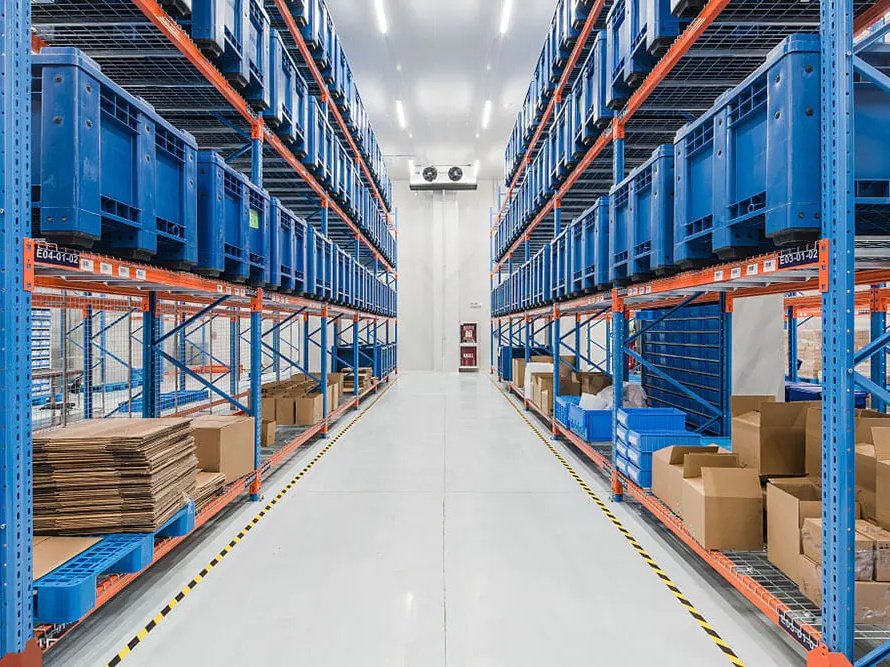
In 2024, the global cold storage market hit 1.2 billion cubic meters according to the Global Cold Chain Alliance. That’s a 5% increase from 2023. Nearly 70% of new cold storage warehouses in North America and Europe still use centralized ammonia or freon systems with condensate units. Why? Because these facilities need very low temperatures (down to -25°C for frozen foods) and the refrigerant piping runs can be long. A condensate unit placed on the roof or outside allows the evaporator coils inside the storage room to be simple and cheap. You can use multiple condensate units to serve multiple rooms with different temperatures.
But here’s the trend: more food processors are switching to glycol chillers for blast freezing and spiral freezers. Why? Because a chiller gives you precise temperature control (±0.5°C) and eliminates the risk of refrigerant leaks inside the food handling area. The 2025 EU F-Gas regulation is forcing companies to phase down HFCs with high GWP. R-404A, commonly used in condensate units, has a GWP of 3922. Chillers often use R-513A or R-515B with GWP under 600. That’s a huge compliance advantage.
Real data point: A 2024 study by the International Institute of Refrigeration showed that a 500kW glycol chiller for a food processing plant in Germany costs €45,000 upfront vs a condensate unit system with remote evaporators at €32,000. But the chiller’s operating cost over 10 years is 18% lower due to better part-load efficiency. If your customer plans to run 15 years, the chiller wins.
Table: Cold Storage vs Food Processing – Key Selection Criteria
| Criteria | Condensate Unit | Chiller (Glycol/Water) |
|---|---|---|
| Temperature range | -40°C to +10°C | -15°C to +20°C (glycol) |
| Refrigerant charge | Larger charge (often HFC) | Much smaller charge, low-GWP options |
| Installation complexity | Requires field piping work & electrical | Pre-packaged, plug-and-play (chiller + pump) |
| Space requirement | Condenser outside, evaporator inside | All-in-one footprint (indoor or outdoor) |
| Best for | Large cold rooms, freezers, multi-room | Blast freezers, ice banks, process cooling |
| 2025 regulatory risk | High if using HFC | Low (natural refrigerants available) |
2. Data Centers and IT Cooling – Chillers are the standard, but condensate units are a hidden cost saver
Every data center manager I talk to is obsessed with PUE (Power Usage Effectiveness). In 2024, the average PUE for hyperscale data centers was 1.15, according to Uptime Institute. Traditional water-cooled chillers with cooling towers are still the backbone for large facilities. They handle hundreds of megawatts of heat rejection. But there’s a niche where condensate units are making a comeback: edge data centers and small colocation facilities.
These smaller sites (100kW to 500kW cooling load) don’t have the budget for a full chiller plant with pumps, valves, and cooling towers. They use direct expansion (DX) systems with rooftop condensate units and computer room air handlers (CRAHs). The condensate unit sits on the roof, and the refrigerant runs directly to the CRAH inside. No water, no glycol, no freeze protection. Installation cost is roughly 30% less than a chiller system because you skip the pump and piping for the secondary loop.
However, the trade-off is that DX systems struggle with humidity control in high-density server rooms. And they’re less efficient at part load. A chiller with a variable frequency drive (VFD) on the compressor can operate at 40% capacity while maintaining 70% of full-load efficiency. A condensate unit with a fixed-speed compressor drops to 50% efficiency at part load. That’s a killer for data centers that run at 60% utilization.
Real data: In 2025, ASHRAE updated its thermal guidelines to allow higher server inlet temperatures (up to 27°C). This makes it easier for chiller systems to use free cooling for more hours of the year. A chiller with a plate heat exchanger and dry cooler can achieve 0.12 kW/ton in free cooling mode. A DX system with a condensate unit can’t do true free cooling because the refrigerant always needs compression.
So if your customer is a data center builder, recommend chillers for anything above 500kW. For small edge sites below 200kW, a condensate unit paired with high-efficiency DC inverter compressors can be a cost-effective alternative. Just make sure the refrigerant is R-32 or R-454B to meet the latest ASHRAE 34 safety classifications.
3. Commercial Buildings (Hotels, Hospitals, Office Towers) – Chillers dominate, but condensate units are used in VRF systems
Walk into any hotel built after 2015. The HVAC system is likely a chiller plant in the basement serving air handling units on each floor. That’s the traditional setup. But in Asia and the Middle East, Variable Refrigerant Flow (VRF) systems are eating the market. VRF is basically multiple indoor fan coil units connected to a single outdoor condensing unit (which is a condensate unit with a heat recovery option). In 2024, the global VRF market was worth $18 billion, growing at 7% CAGR, according to MarketsandMarkets.
Why do hotel owners love VRF? Because each guest room can have its own thermostat. You don’t need a central chiller and a massive piping network for chilled water. The condensate unit (often called an outdoor unit in VRF terminology) sits on the roof or on a balcony. It connects to 8 to 20 indoor units with refrigerant piping. Installation is fast. And because the refrigerant is R-410A (soon R-32 in 2025 models), the energy efficiency is comparable to a chiller.
But here’s the catch: VRF systems have a refrigerant pipe length limit (typically 150 meters total). For a large hospital or high-rise office tower, that’s not enough. You need a central chiller with a secondary water loop. Also, VRF systems are hard to service because every indoor unit has electronic expansion valves and multiple sensors. A chiller system with simple AHUs is easier for a local tech to fix.
Real data: In 2024, a 300-ton chiller plant for a 20-story office building in Dubai cost $1.2 million installed. A VRF system for the same building (with 200 indoor units) cost $1.4 million. But the VRF system had 15% lower annual electricity consumption because it could move heat from one zone to another. So the payback was 3 years. That’s why VRF is winning in commercial buildings where zoning flexibility matters more than first cost.
For dealers: if your customer needs cooling for a single building under 10 floors, push VRF (condensate unit based). For anything larger or with strict freeze protection requirements (like hospitals), recommend a chiller.
Why the “chiller vs condensate unit” question is actually a question about secondary loops
Here’s the deepest insight I can give you. The real difference is whether the cooling is delivered via a secondary fluid (water/glycol) or directly via refrigerant. That’s what decides cost, complexity, and risk.
Secondary loop (chiller): You pump cold water or glycol to terminal units. The refrigerant stays inside the chiller cabinet. No refrigerant in occupied spaces. Easy to add or remove loads by just extending the water pipe. But you need pumps, expansion tanks, air separators, and freeze protection. The system loses about 1°C to 2°C of temperature differential across the heat exchanger. That’s a small efficiency penalty.
Direct expansion (condensate unit): Refrigerant goes all the way to the evaporator. Less thermal loss (no secondary loop). But you have to deal with refrigerant charge management, oil return, and installation of refrigerant piping under vacuum. Each evaporator needs its own expansion valve and controls. If a refrigerant leak happens inside a hotel room or a cold room, you have a safety issue.
In 2025, the US EPA’s AIM Act is phasing down HFC production by 40% from baseline. This makes the secondary loop more attractive because you can use a much smaller refrigerant charge in the chiller (typically 50-70% less than a comparable DX system). A 100-ton chiller using R-513A might have 80 kg of refrigerant. A 100-ton DX system with multiple condensate units could have 250 kg. That’s a huge difference in compliance cost and leak detection requirements.
Table: Refrigerant Charge Comparison (Typical 350 kW Cooling Load)
| System Type | Refrigerant | Charge (kg) | GWP (100-year) | CO2 equivalent (tonnes) |
|---|---|---|---|---|
| Chiller (R-134a) | HFC | 120 | 1430 | 171.6 |
| Chiller (R-515B) | HFO blend | 110 | 293 | 32.2 |
| Condensate unit (R-404A) | HFC | 320 | 3922 | 1255 |
| Condensate unit (R-448A) | HFO blend | 300 | 1387 | 416 |
Look at that last row. A condensate unit with R-448A still has 416 tonnes of CO2 equivalent. If your customer operates in Europe under the F-Gas regulation, they’re paying €15 per tonne of CO2e for quota. That’s €6,240 per year just in quota cost for that one system. A chiller with R-515B costs €483 per year. Over 10 years, that difference is over €57,000. That changes the math completely.
How to sell to B2B buyers: the language that works
Your dealer customers don’t care about theory. They care about margin, lead time, and warranty claims. Here’s what you need to say when talking to them.
When to push condensate units:
- The end user has low temperature requirements (-20°C or below)
- The facility is a retrofit where existing refrigerant piping is already installed
- The customer wants low first cost and is okay with higher operating cost
- The project is in a warm climate where rooftop space is abundant (condensate units are cheap to install on a roof)
- The customer needs zone independence (e.g., one cold room at -18°C and another at +2°C from the same outdoor unit – you can do that with multiple condensate units but not easily with a chiller)
When to push chillers:
- The facility needs precise temperature control (±0.5°C or better)
- The project is a new construction where you can design the water loop
- The cooling load is over 700 kW (chillers scale better)
- The end user wants to use natural refrigerants like ammonia or CO2 (chillers are available with ammonia, condensate units not so much)
- The customer cares about energy efficiency for LEED or BREEAM certification
- The site is in a cold climate where free cooling can be used (chiller with dry cooler wins big)
Real example from a dealer in Dubai:
“I sold a condensate unit for a 50-ton cold store last month. The client chose it because he could buy three smaller units from different brands and install them in two days. A chiller would have required a six-week lead time from Korea. But the client is already complaining about high electricity bills. I told him he should have bought a chiller with a variable speed compressor. Now he’s considering replacing the condensate unit in two years with a chiller. That’s a second sale opportunity, but also a reputation risk.”
That story tells you everything. The right choice depends on the buyer’s time horizon.
Industry-specific quirks you must know
Pharmaceuticals: Always prefer chillers. The FDA requires cleanable evaporator surfaces and no refrigerant in production areas. A condensate unit’s remote evaporator coil is almost impossible to clean in place. Use a chiller with a stainless steel plate heat exchanger.
Breweries and Beverage: They use both. A glycol chiller is standard for fermentation temperature control. But for keg cooling and draft beer lines, many breweries use small condensate units with direct expansion because they can quickly pull down a keg to 2°C. The brewery market in the US alone grew 4% in 2024, so it’s a huge opportunity.
Ice Rinks: Chillers only. Ice rinks need a brine or glycol system that runs at -8°C to -10°C. A condensate unit can’t handle the large thermal mass and the need for even ice temperature across a large slab. Plus, the refrigerant charge would be massive.
Marine and Offshore: Condensate units are more common because of space constraints and the need to minimize water consumption. A chiller needs a seawater cooling circuit, which adds complexity. But for cruise ships, chillers are used for accommodation zones and condensate units for freezer rooms.
2025 trends that will reshape the market
Natural refrigerants are becoming mandatory. In 2026, the EU will ban all fluorinated refrigerants with GWP over 150 in new stationary refrigeration equipment (with some exemptions). That means R-404A and R-410A are dead. Chiller manufacturers are already shifting to propane (R-290), ammonia (R-717), and CO2 (R-744). Condensate unit manufacturers are slower to adopt natural refrigerants because of safety concerns with flammable refrigerants in outdoor units. But by 2025, several Chinese brands (including yours, presumably) are launching R-290 condensate units for light commercial applications.
Smart controls are differentiating. A chiller with IoT connectivity can tell you exactly when the condenser coil is dirty, when the compressor oil needs changing, and when the water flow is low. Condensate units are still mostly dumb (on/off thermostat). If your product line includes a condensate unit with a touchscreen controller and remote monitoring, that’s a huge selling point for dealers who want to offer service contracts.
- Modular chillers are killing small condensate units. Chillers with multiple scroll compressors in a single frame can operate from 10% to 100% capacity with high efficiency. A typical 50-ton modular chiller costs about the same as three 15-ton condensate units plus three evaporators. But the chiller is simpler to install. In the next three years, I expect the small condensate unit market (under 20 tons) to shrink by 15-20%.
FAQ – Real questions from dealers you’ll get asked
Q: Can I use a condensate unit to make chilled water like a chiller?
A: Technically yes, if you add a water-cooled condenser and a shell-and-tube evaporator. But that becomes a “condensing unit” plus a remote heat exchanger, not a packaged chiller. The efficiency will be lower because you’re adding an extra heat exchange step. And you lose the benefit of a factory-tested system. Your buyer would be better off buying a true chiller.
Q: What’s the typical lifespan difference between a condensate unit and a chiller?
A: A properly maintained chiller lasts 20-25 years. A condensate unit in a harsh outdoor environment lasts 12-15 years. The difference is that chillers have better corrosion protection (e.g., epoxy-coated coils, water-cooled condensers that avoid outdoor exposure) and more robust compressor selection. Condensate unit compressors often run at high discharge temperatures, which degrade oil and winding insulation faster.
Q: My customer wants a system for a 200-meter-long greenhouse. Should I recommend a chiller or multiple condensate units?
A: Greenhouses are tricky because you need uniform temperature distribution. A chiller with a long water loop works well if you use multiple fan coils spaced every 20 meters. But the water temperature will drop along the pipe. Many greenhouse operators now use a central chiller with a buffer tank, plus a secondary loop with zone valves. For a 200-meter greenhouse, I’d recommend a 150-ton chiller with variable speed pumps. Multiple condensate units would be cheaper but harder to control, and you’d have refrigerant piping over 200 meters, which causes pressure drop and oil return issues.
Q: Are there any brands that make combination units that work as both a chiller and a condensate unit?
A: Yes, some manufacturers offer “free cooling chillers” that can switch between chilled water mode and direct expansion mode using the same compressor. But they’re expensive and niche. Most dealers stick with separate products. For your factory, consider offering a “convertible” outdoor unit that can be used either as a standard condensate unit (with field-installed evaporator) or as a chiller (with an integrated plate heat exchanger). That’s a differentiator in the market.
Q: What’s the biggest mistake dealers make when specifying a condensate unit vs a chiller?
A: Ignoring the auxiliary load. A chiller system needs pumps, cooling towers, and controls for the water loop. A condensate unit needs refrigerant piping, expansion valves, and suction line insulation. If you quote a chiller without including the pump and pipe cost, your final price is higher than expected. If you quote a condensate unit without adding the cost of refrigerant piping insulation and vacuum service, the installation cost surprises the customer. Always give a total installed cost estimate, not just the equipment price.
One final thought on margins for dealers
You can make 18-22% margin on a chiller sale, but only 12-15% on a condensate unit. Why? Because condensate units are a commodity. Every brand makes them. Chillers have more engineering content, more service revenue potential, and more customization. If you’re a dealer, push chillers whenever the application allows. Build service contracts around chiller maintenance (annual coil cleaning, water treatment, compressor oil analysis). That recurring revenue is gold.
For manufacturers reading this: your dealers need help with sizing software. Provide a free online tool that compares the total cost of ownership between a condensate unit system and a chiller system for a given load. Include refrigerant costs, electricity tariffs, and compliance costs. That tool will win you loyalty. I’ve seen it happen.
Now go sell. The market is moving. Your customers are confused. Clear that confusion with data, not stories.