
Alright, let’s do this. No fluff, no introductions. You’re a global B2B importer/exporter of cooling equipment, and you need straight talk about what moves the needle in 2025. This is the Cool Unit Guide – the handbook you wish you had before you placed that last container order. Let’s jump in.
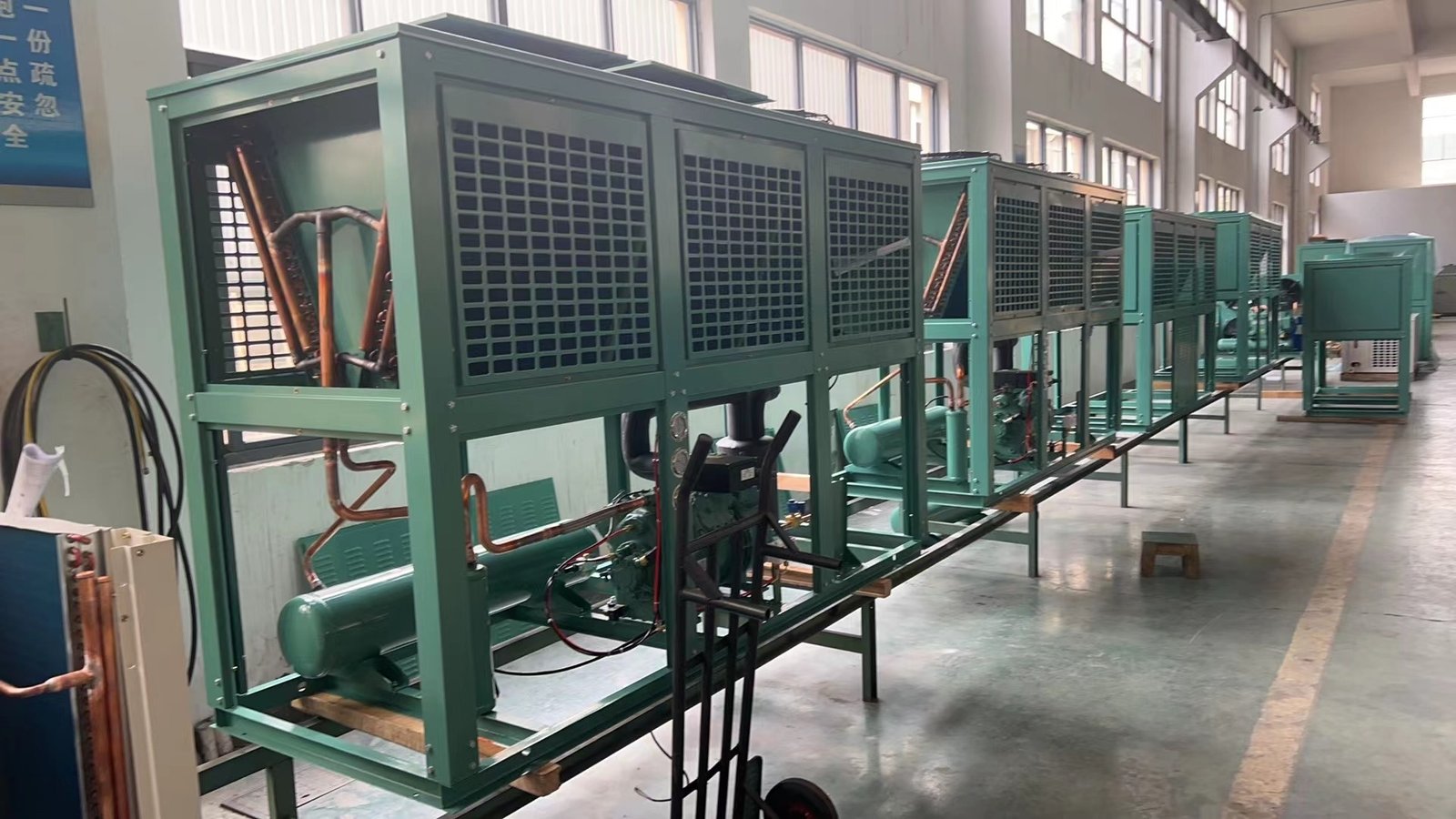
So here’s the thing: the cooling unit market isn’t just growing – it’s splitting into distinct niches faster than ever. If you’re still treating all “cooling units” as the same product, you’re leaving money on the table. We are a Chinese manufacturer, and we know the ins and outs of the supply chain from Shenzhen to Shanghai. But this guide isn’t about us. It’s about giving you the data, the specs, and the industry-specific knowledge you need to make smarter buys and sell faster.

Let’s start with the numbers that actually matter in 2025.
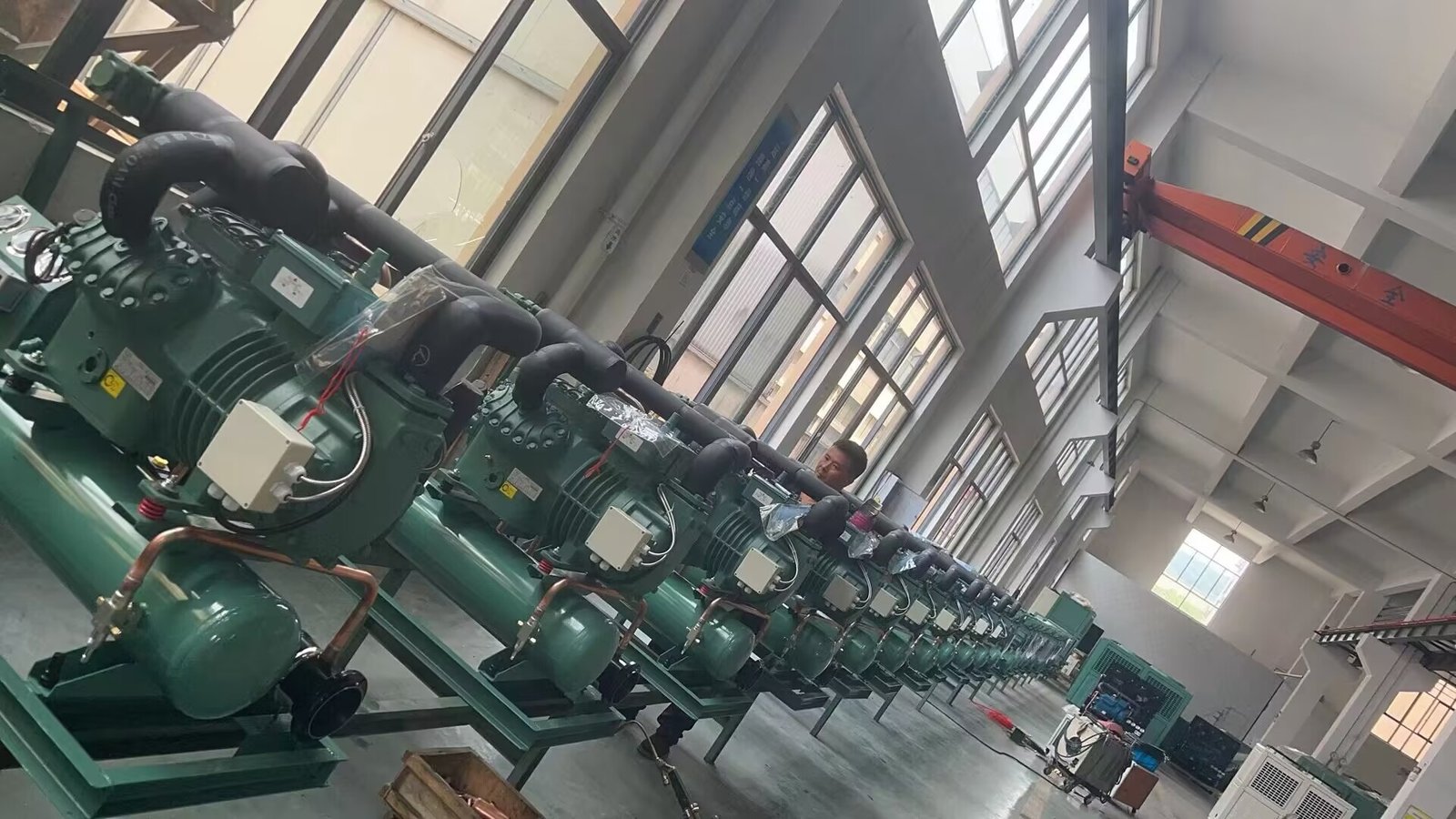
The Current State of Global Commercial Refrigeration: Real Numbers to Plan Your Year
The global commercial refrigeration market hit about $45.8 billion in 2024, and by 2030 it’s projected to cross $68 billion. That’s a compound annual growth rate (CAGR) of 6.8%. But here’s where it gets interesting for you as a dealer: the growth isn’t uniform.
| Region | 2024 Market Share (%) | Projected CAGR (2024-2030) | Key Drivers |
|---|---|---|---|
| Asia-Pacific | 38% | 8.1% | Rapid cold chain expansion, China’s domestic food & pharma growth |
| North America | 28% | 5.4% | Retrofits for low-GWP refrigerants, data center cooling boom |
| Europe | 22% | 5.9% | F-gas phase-down, strict energy labels |
| Middle East & Africa | 7% | 7.5% | Hot climate, food import reliance |
| Latin America | 5% | 6.2% | Supermarket modernization |
Notice anything? Asia-Pacific is your biggest market, but it’s also the most price-sensitive. North America wants energy efficiency and low-GWP refrigerants – they’re willing to pay a premium. Europe is all about compliance: the F-gas regulation is driving a shift from R-404A to R-290, R-32, and R-454B. If your cooling units don’t meet these specs, you’ll lose entire markets.
Take the United States. The EPA’s Technology Transitions rule means that starting in 2025, many new refrigeration systems in retail and cold storage must use refrigerants with a Global Warming Potential of less than 300. That kills R-404A (GWP 3922) and forces adoption of hydrocarbons (R-290, GWP 3) or HFO blends. If your manufacturing line isn’t ready for propane-based compressors, you’re already behind.
Also, don’t sleep on the data center sector. By 2025, global data center cooling market is expected to hit $25 billion. That’s not just precision air conditioners – it’s liquid cooling units, chillers, and heat rejection systems. But the specs are brutal: they demand high reliability (99.999% uptime), narrow temperature tolerances (18-27°C), and often require custom-built solutions. More on that later.
Bottom line: the days of shipping one generic condensing unit for all applications are over. You need to segment your inventory by region and application. Use the table above to decide where to push your best products.
Key Technical Specifications That Make or Break a Deal
When a buyer asks for a quote, they don’t just want a price. They want to know if your unit will survive their conditions. Here are the specs you need to have on your datasheet – and the numbers that actually matter.
Energy Efficiency Ratio (EER) and Coefficient of Performance (COP)
For commercial refrigeration, COP is king. A typical air-cooled condensing unit running R-404A might have a COP of 1.5 to 2.0 at -20°C evaporating temperature. Switch to R-290 (propane) with a properly optimized system, and you can hit COP of 2.2 to 2.8. That’s a 30-40% savings on electricity. The EU’s Energy-Related Products (ErP) directive already mandates minimum COP values for units sold in Europe. For example, from 2024, a medium-temperature condensing unit must have a Seasonal Energy Efficiency Ratio (SEER) of at least 3.5. If your unit doesn’t meet that, forget about Europe.
Refrigerant Type
This is the biggest decision you’ll make in 2025. Here’s a quick cheat sheet:
| Refrigerant | GWP | Application | Pros | Cons | Regulatory Status |
|---|---|---|---|---|---|
| R-290 (Propane) | 3 | Small to medium commercial (reach-in, display cases) | Low cost, high efficiency, available everywhere | Flammable (A3), requires ATEX/IECEx certification | Approved under EPA SNAP, Kigali Amendment, EU F-gas |
| R-32 | 675 | Medium-temp, split systems | Very high efficiency, lower GWP than R-410A | Mildly flammable (A2L), requires special handling | Widely adopted in AC; growing in refrigeration |
| R-454B | 466 | Medium-temp, replacement for R-410A | Lower GWP, non-flammable (A1) | Slightly lower capacity than R-410A | Approved by EPA, used in residential and light commercial |
| R-404A | 3922 | Old systems | High capacity, well understood | Banned in new EU equipment since 2020; phase-out accelerating | Avoid for new designs |
| R-448A/R-449A | ~1400 | Drop-in for R-404A | Lower GWP, non-flammable | Still above 150 GWP – not future-proof | Good for existing retrofits only |
Ambient Temperature Range
If you’re selling to the Middle East or India, your unit must survive 50°C+ ambient. Standard off-the-shelf Chinese units often rate to 43°C. That’s not enough. You need heavy-duty condensers, oversized fans, and maybe even liquid injection cooling. Specify the maximum ambient in your datasheet clearly. Many dealers lose customers because they didn’t ask about the installation location.
Compressor Type
Scroll compressors dominate the small-to-medium range (1-10 HP). Semi-hermetic reciprocating compressors are still common in large systems (20 HP+). But here’s a trend: inverter-driven scroll compressors are gaining ground because they modulate capacity, save energy, and reduce peak load. For walk-in coolers and cold rooms, an inverter compressor can cut energy use by up to 40% compared to fixed-speed. If you can source inverter-based units at competitive prices, that’s your edge.
Condenser Type
Air-cooled condensers are cheapest and easiest to install. But in hot climates, efficiency plummets when ambient goes above 40°C. Water-cooled condensers (cooling towers) are more efficient but need water treatment and more maintenance. For remote areas, evaporative condensers are a good middle ground. When quoting for a project, always ask about water availability and quality.
Electrical Requirements
Your buyer in the US needs 208-230V single-phase or 460V three-phase, 60Hz. Europe wants 400V three-phase, 50Hz. Middle East often follows 380V 50Hz. If you offer a multi-voltage unit with a plug-in transformer, you can serve multiple markets with one SKU. But that adds cost and complexity. Most Chinese manufacturers build 50Hz units by default – make sure your partner can do 60Hz for North America.
Certifications
This is a deal killer if missing. For Europe: CE marking (mandatory), plus a specific certification like TÜV or DEKRA for pressure equipment (PED). For North America: UL/ETL listing and CSA for Canada. For Australia: RCM mark. For Saudi Arabia: SASO. Don’t assume your manufacturer has these. You must verify each batch. One container with uncertified units can get seized at customs, and the buyer will blame you.
Industry-Specific Cooling Solutions: From Food Processing to Data Centers
One size doesn’t fit all. Here’s how to tailor your offering for three high-growth sectors.
Food Processing and Cold Storage
This is the biggest volume segment. Think blast freezers, cold rooms, and spiral freezers. The specs are brutal: -40°C evaporating temperature for blast freezers, fast pull-down times, high capacity. You need compressors that can handle low suction pressure without liquid slugging. Copeland and Bitzer are the gold standards, but many Chinese-made copies are decent if you specify the right oil and refrigerant (R-404A still used in retrofits, but R-290 or R-454B for new builds).
Key pain point: corrosion. Food processing facilities are wet and acidic. Condenser coils with epoxy coating or copper tubes with aluminium fins? Go with coated coils. Also, the evaporator must have a stainless steel drain pan to avoid rust. A cheap drain pan will fail in 3 months, cause water damage, and cost you the entire account.
Pharmaceutical Cold Chain
Pharma requires precision: ±0.5°C to ±2°C depending on the product (vaccines at 2-8°C, some biologics at -20°C or -80°C). Standard refrigeration units can’t hold that tight a tolerance without electronic expansion valves and PID controllers.
Also, GxP compliance matters. Your units must have data logging, alarm outputs, and backup power. Many pharma buyers want units that integrate with Building Management Systems via Modbus or BACnet. If you can offer a unit with a PLC controller and RS485 communication, you can charge 20-30% more.
Data Center Cooling
This is a different beast. Data centers use computer room air conditioners (CRAC) or chillers with precision control. The load is sensible heat (no humidity), and the target is 18-27°C with 40-60% RH. The units run 24/7 with redundancy (N+1 or 2N).
Key spec: sensible heat ratio should be above 0.9. In-row cooling units are popular for high-density racks. If you’re getting into this, you need variable speed fans, direct expansion or chilled water options, and free cooling capability (economizers). The margins here are higher, but the technical support demands are also higher. You need a local service partner who can respond within 4 hours.
Commercial Kitchens and Supermarkets
These are price-sensitive, high-volume. Think reach-in coolers, display cases, and walk-in coolers. The trend in 2025 is toward hydrocarbon refrigerants (R-290) because of the EU F-gas phase-down and US EPA push. Many Chinese manufacturers now produce R-290 condensing units with ATEX certification. If you can offer these at a competitive price, you’ll own the small shop market in Europe and Southeast Asia.
One more thing: supermarkets want remote monitoring. They want to know if a unit is running hot before the food starts spoiling. IoT-enabled controllers from Carel or Danfoss are standard. You don’t need to build your own – just buy a unit that’s compatible with a cloud platform like Emerson’s Skope or Danfoss’s Ally.
Sourcing from China: What to Look for in a Manufacturing Partner
You’ve got the specs, you know the markets. Now how do you pick the right factory? Here’s what I’ve learned from working with dozens of Chinese cooling manufacturers.
Factory Audit Is Non-Negotiable
Don’t trust the Alibaba listing. Go to the factory. Check the production line – do they use automatic brazing or manual? Are they doing leak tests (helium sniffing or water bath)? Look at the QA room: do they have a running test bench for every unit? The best factories run 100% of units for 2-4 hours under load. Cheap factories only run 5% of units.
Certification Capability
Does the factory have in-house certification engineers or do they rely on external labs? For UL, they need to work with a third party like UL itself or Intertek. That adds 2-4 months lead time. Plan ahead. For CE, they can self-declare if they have technical files, but many buyers want an independent test report from TÜV. Ask for samples of their certification documents.
Minimum Order Quantities and Lead Times
Typical MOQ for custom units (different voltage, different refrigerant) is 50-100 pieces. Standard models can be 20 pieces. Lead times from order to shipment are usually 30-45 days for standard, 60-90 days for custom. But shipping from China to Europe or US adds another 20-40 days. Plan your inventory accordingly. If you need urgent stock, some factories keep a buffer of 200-500 units of popular models.
Payment Terms
Most Chinese factories want 30% deposit, 70% before shipment (or after inspection). For new relationships, you can negotiate 30/70 with a 10% retention paid after installation. But don’t expect net 60. For large repeat orders, some offer L/C at sight. Always use a third-party inspection company like SGS or Bureau Veritas for the final shipment.
After-Sales Support
This is where many Chinese manufacturers fall short. They sell you the unit, and if it fails, you’re on your own. Good manufacturers stock spare parts (compressors, fan motors, controllers) and can ship replacement parts within 48 hours. Ask for a list of spare parts they keep. Also ask about warranty: typical is 12-18 months from date of shipment. Extended warranty (24 months) is available at extra cost.
Customization Flexibility
The best factories have a dedicated R&D team that can modify the unit to your specs: change the condenser coil size, add a subcooler, change the compressor brand, add an oil separator. They’ll charge for NRE (non-recurring engineering) but the cost is usually $1,000-$5,000 depending on complexity. If you want exclusive designs, they can sign an NDA and give you a two-year exclusivity window.
One piece of advice: don’t go for the cheapest factory. The difference between a $300 condensing unit and a $400 unit is often the compressor brand, the fin thickness, and the controller quality. The cheap one will cost you more in warranty claims. I’ve seen dealers lose 20% of their profit because they had to replace compressors in the field.
Frequently Asked Questions for Global B2B Cooling Distributors
Q: What’s the safest refrigerant choice for new equipment in 2025?
A: For small-to-medium commercial (under 5 HP), R-290 (propane) is the clear winner. It’s cheap, efficient, and GWP 3. The flammability risk is manageable if the unit is designed with proper safety (hermetic compressor, spark-free fans, pressure switches). For larger systems (5-20 HP), R-454B is a good non-flammable option with GWP 466. Avoid R-404A completely for new designs.
Q: How do I ensure my Chinese-manufactured units pass UL certification?
A: You need to partner with a factory that has UL certification experience. They must send samples to UL’s lab in the US or a local UL satellite in China (e.g., UL LLC’s office in Guangzhou). The process takes 3-6 months. Make sure the factory includes the UL mark cost in their price – it’s usually $500-$2,000 per model. Also, UL requires annual factory inspections – ask if the factory has passed within the last 12 months.
Q: What are the common issues with cold room condensing units in tropical climates?
A: The biggest problem is high discharge pressure due to high ambient temperature. The solution is an oversized condenser with a fan that runs at higher speed, or a liquid receiver with a subcooler. Many Chinese units are designed for 43°C max ambient – for 50°C+ you need a heavy-duty model. Also, use a crankcase heater to prevent oil migration during off cycles, and install a high-pressure safety switch.
Q: Can I mix 50Hz and 60Hz units in a single shipment?
A: Yes, but be careful. A 50Hz compressor running on 60Hz will run 20% faster and consume more power, but the cooling capacity may drop due to lower refrigerant flow. If you supply 50Hz units to a 60Hz market, you must derate the capacity. Better to manufacture units specifically for each frequency. Most factories can switch the motor taps and rewiring for 60Hz – just specify it in the purchase order.
Q: How do I test a cooling unit before placing a bulk order?
A: Ask for performance test reports from the factory’s lab: evaporating temperature, condensing temperature, refrigerant mass flow, and COP at standard conditions (ASHRAE standard). Also ask for a reliability test report: 1000 hours continuous running at maximum load. If possible, visit the factory and witness a live test. For first orders, buy 2-3 samples and run them in your own facility for 2-4 weeks before going to full container quantity.
Q: What’s the typical profit margin for a distributor in the cooling unit business?
A: Gross margins range from 15% to 35% depending on the product. Standard condensing units (under $500 FOB) have thin margins – 10-15%. Custom units with special refrigerants, certifications, or controls can have 25-30%. Data center cooling units can yield 35%+ if you offer service contracts. The real profit often comes from spare parts and consumables (filters, oil, controllers). In any case, factor in a 5-10% buffer for warranty claims and lost sales.
That’s the handbook. Now go out there and sell smarter.