
H2: Unboxing and Pre-Installation Checks
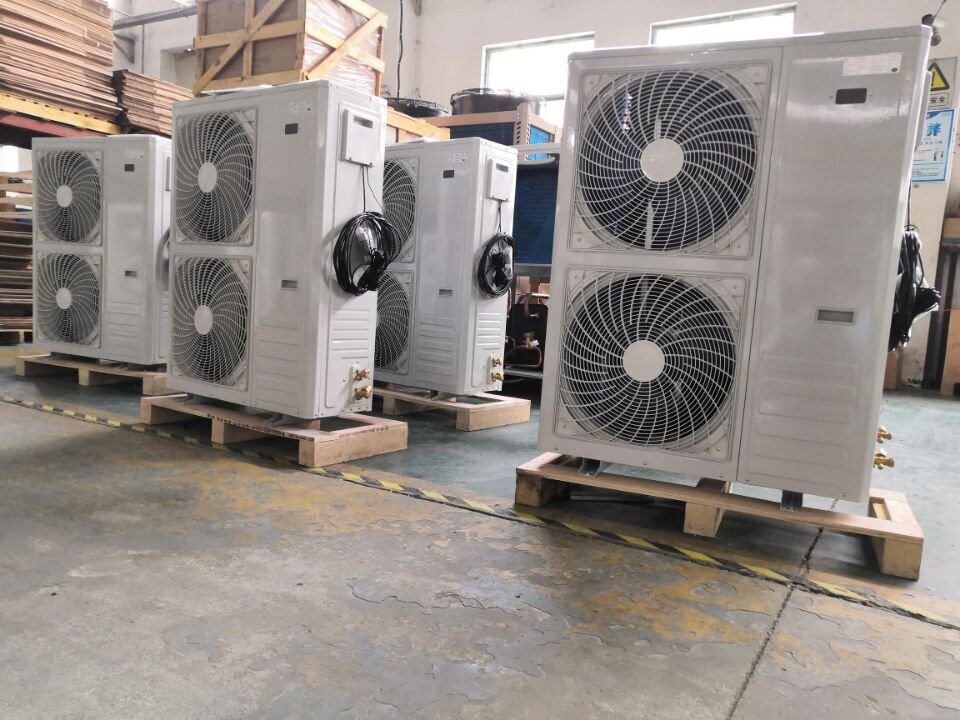
Alright, let’s get straight into it. You’ve got your new cooling unit, likely a Mighty series or something similar, and it’s time to get it running. Before you even think about mounting or wiring, the unboxing phase is critical. Don’t just rip the crate open.
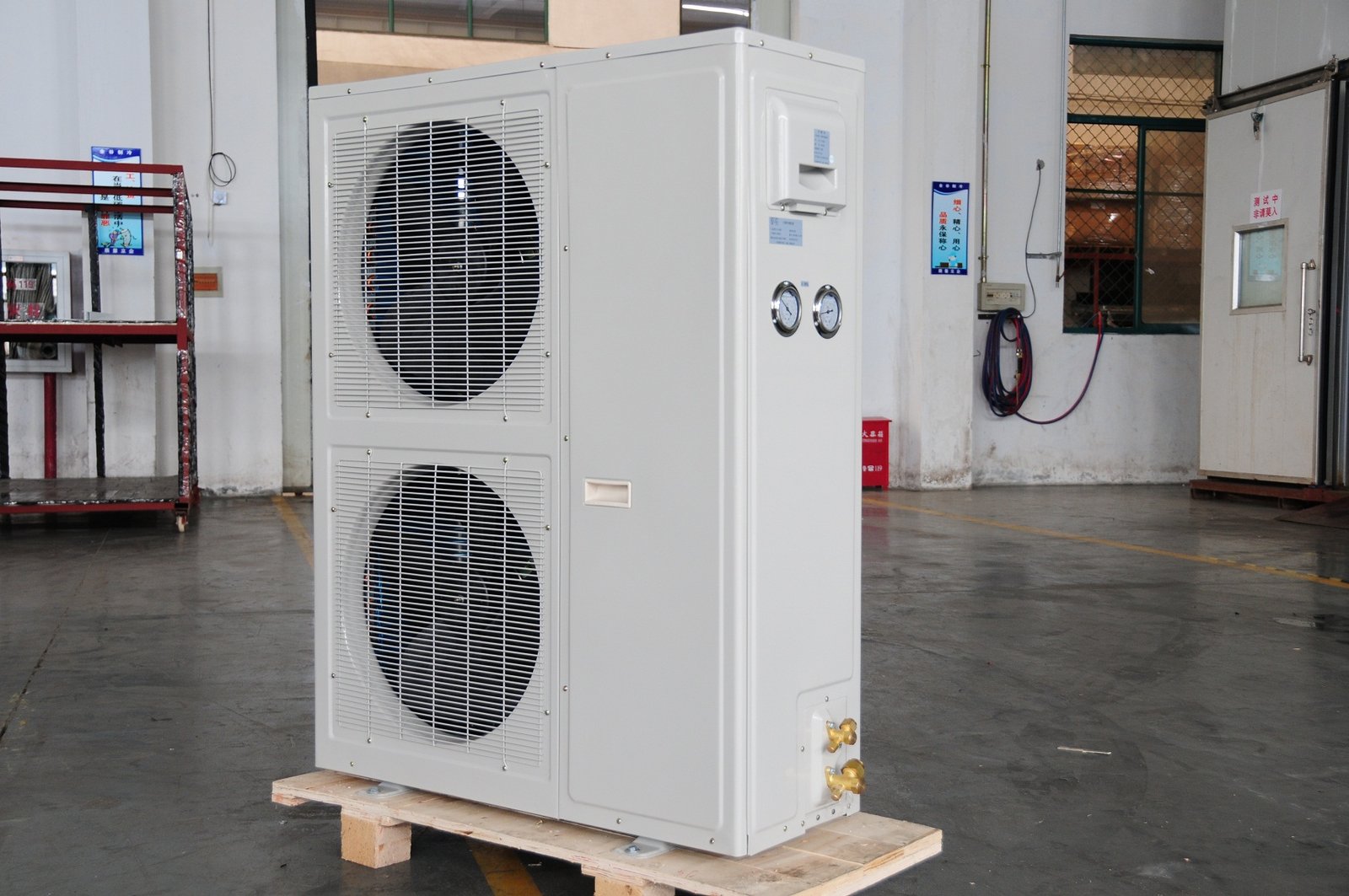
First, inspect the packaging for any obvious damage during transit. If there are dents or punctures, take photos immediately for your freight claim and notify us or your supplier. Once you open it, carefully lay out all components against the packing list. You should typically find the main condensing unit, evaporator coils (depending on the model), mounting brackets, hardware kits, electrical conduit fittings, user manuals, and warranty certificates. Check for any scratches or cosmetic issues on the panels – while they might not affect function, it’s good to document them upfront.
Now, verify the nameplate data. This is non-negotiable. Match the model number (e.g., MIGHTY-24H) and serial number with your order documents and the packing list. Crucially, check the electrical specifications: voltage (e.g., 208-230V 3PH), frequency (60Hz/50Hz), and refrigerant type (like R-410A or R-454B). Installing a unit with the wrong voltage is a catastrophic and costly mistake. Also, confirm the unit’s cooling capacity (in kW or Tons of Refrigeration) matches your project’s heat load calculation. Here’s a quick reference table for common global voltage standards you might encounter:
| Region / Standard | Typical Commercial Voltage | Phase | Frequency |
|---|---|---|---|
| North America (NEMA) | 208-230V, 460V | 3-Phase | 60 Hz |
| European Union (IEC) | 400V | 3-Phase | 50 Hz |
| UK & Commonwealth | 415V | 3-Phase | 50 Hz |
| Australia / NZ (AS/NZS) | 400V | 3-Phase | 50 Hz |
| Many Asian Markets | 380-400V | 3-Phase | 50 Hz |
Finally, choose your location. It needs solid structural support, clear airflow (maintain at least 1-1.5 meters of clearance on all sides, especially the coil discharge), away from corrosive fumes, and with easy access for future maintenance. The foundation should be level, rigid, and able to handle the unit’s weight and vibration.
H2: Mounting and Securing the Unit
Whether it’s going on a rooftop, a concrete pad, or a wall, secure mounting is what prevents callbacks and safety hazards. For roof-mounted Mighty units, always use our proprietary or approved curb adapter. Never just screw it directly onto the roof deck. The curb provides a raised, sealed platform that integrates with the roof’s waterproofing. Use the provided template to ensure the roof curb is perfectly square and level before permanently fixing it. Bolt the unit down to the curb using the vibration-isolating pads and bolts from the kit – don’t substitute with random hardware.
For ground installation on a concrete pad, ensure the pad is at least 4 inches thick, extends 6-12 inches beyond the unit footprint, and is perfectly level. Anchor the unit using expansion bolts or concrete anchors, again using vibration pads. For wall mounting, you must attach it to structural members (studs, beams), not just the cladding. The provided heavy-duty brackets are designed for this. Use a torque wrench to tighten all structural bolts to the specification in the manual. An under-torqued bolt will loosen with vibration; an over-torqued one can strip the threads.
H2: Electrical Connection and Safety Protocols
Warning: This part demands a licensed electrician familiar with local codes. We’re talking about high-voltage, multi-phase power. The general steps are as follows. First, run the correct gauge of conduit and wire from your main disconnect switch to the unit’s termination box. The wire size depends on the Minimum Circuit Ampacity (MCA) and Maximum Overcurrent Protection (MOP) listed on the nameplate – follow that, not a guess. For example, a MIGHTY-24H might have an MCA of 34A and an MOP of 50A, requiring 8 AWG copper THHN wire in many jurisdictions.
Inside the unit’s main electrical panel, you’ll find the terminal block. Connect the line (L1, L2, L3), neutral (if required), and a dedicated equipment grounding conductor. Double-check that the supply voltage at the terminals matches the nameplate before energizing. Phase sequence is vital for 3-phase compressor motors. Use a phase rotation meter. Incorrect rotation will cause the compressor to try to run backwards, leading to immediate failure.
Next, connect the control wiring. This is low voltage (usually 24V) from the thermostat or building management system (BMS) to the unit’s control board. Typically, you’ll run an 18/5 or 18/8 shielded cable. Connect common (C), cooling call (Y), fan (G), and possibly reversing valve (O/B for heat pumps). Follow the wiring diagram exactly – it’s your roadmap. Use wire ferrules on stranded wires for a clean, secure connection in terminal blocks.
H2: Refrigerant Piping and Vacuum Dehydration
If you’re dealing with a split system (separate condensing unit and evaporator), this is the most technically sensitive step. The goal is a clean, dry, tight system. First, always use refrigeration-grade copper tubing (Type ACR) that is nitrogen-charged and sealed. Unsealed copper pipe will have internal oxidation and contaminants.
Cut the pipes to length with a tube cutter, never a saw. Deburr the ends meticulously. Slide the nut and flare fitting onto the pipe before flaring. Use a quality flaring tool to create a perfect 45-degree flare. Under-flared or over-flared connections will leak. Connect the liquid (smaller) and suction (larger) lines to the unit’s service valves, which are front-seated (closed) at shipment. Tighten with two wrenches – one to hold the valve body, one to tighten the nut – to avoid twisting the valve stem.
Now, pressure test with dry nitrogen. Pressurize the entire circuit (including the evaporator coil) to the recommended test pressure (often around 350-550 psi for R-410A systems). Check for leaks with an electronic leak detector and soap bubbles. Hold the pressure for at least 24 hours to confirm integrity. After testing, you must perform a deep vacuum. Connect a high-quality vacuum pump and micron gauge to the system. Pull a vacuum to below 500 microns (the lower, the better). Isolate the pump and monitor the gauge. A rise of more than 100-200 microns over 10-15 minutes indicates moisture or a leak. The vacuum removes air and, critically, moisture which turns to acid inside the system and destroys the compressor.
H2: System Charging, Startup, and Performance Verification
Once the vacuum holds, you’re ready for refrigerant. Our Mighty units are charged for a certain length of pre-installed piping (e.g., 5 meters). For longer lines, you must add additional refrigerant charge as per the manual’s calculation based on line length and diameter. Do not charge by guesswork or by superheat/subcooling alone on initial startup. Weigh in the additional charge using a digital scale.
With the charge complete, it’s startup time. Energize the unit. Set the thermostat to call for cooling. You should hear the contactor click, the outdoor fan start, and then the compressor engage smoothly. Immediately, check the electrical parameters: use a clamp meter to verify amperage on each leg is within the Rated Load Amps (RLA) on the nameplate. Significant imbalance or over-amperage indicates a problem.
Now, take refrigerant readings. Attach your manifold gauges and a temperature probe. You need to measure the system’s superheat (for fixed orifice systems) or subcooling (for TXV/EXV systems). Compare your readings to the target values in the manual. Low superheat? Likely overcharged. High superheat? Undercharged or restricted. Also, measure the temperature drop across the evaporator coil (air entering vs. air leaving). For commercial comfort cooling, you should typically see a 16-22°F (9-12°C) drop with proper airflow. Log all these operational data – they are your baseline for future maintenance and proof of correct installation.
Let the system run for a full cycle. Check for unusual vibrations, verify condensate is draining properly, and ensure all panels are securely fastened. Provide the end-user with the manual and point out the location of the main disconnect and air filters.
Professional Q&A
Q: For export to the EU, what specific certifications do your Mighty cooling units carry, and how do they impact installation?
A: Our units for the EU market are CE marked, complying with the Low Voltage Directive (LVD) 2014/35/EU and Electromagnetic Compatibility (EMC) Directive 2014/30/EU. Crucially for refrigeration, they also comply with the F-Gas Regulation (EU) 517/2014. This means they use low-GWP refrigerants like R-454B or R-32, and only certified F-gas technicians with proper recovery equipment can handle the refrigerant during installation and service. The installation manual includes the required F-gas leakage check procedures.
Q: What’s the lead time for a replacement compressor for a MIGHTY-48H model, and what’s the cross-border shipping process?
A: As of this quarter, standard lead time for a replacement scroll compressor for the 48H model is 5-7 working days ex-works from our factory. For urgent orders, we offer a 3-day expedited service. We handle all export declarations (HS code 84143090 for hermetic compressor units) and can ship via DDP terms. We recommend you keep a critical parts inventory. All compressors come with a separate warranty term documented on the certificate.
Q: We service data centers. Do your units have native BMS integration protocols for remote monitoring of runtime, alarms, and setpoints?
A: Yes. Our Mighty Pro series comes with a standard onboard controller supporting BACnet MS/TP and Modbus RTU protocols over RS-485. This allows direct integration with most major Building Management Systems (BMS) like Siemens, Johnson Controls, or Schneider Electric for real-time monitoring of suction/discharge pressure, coil temperatures, compressor status, and active alarm codes (e.g., high pressure, low voltage, fan failure). The communication points list is available in the BMS Integration Guide.
Q: In high-ambient temperature regions (consistently above 45°C/113°F), do we need to derate the cooling capacity, and are there factory options for this?
A: Absolutely. All rated capacities are based on standard conditions (e.g., 35°C ambient). At 45°C ambient, capacity can drop by 15-20%, and power draw increases. For these markets, we offer the Mighty HAT (High Ambient Temperature) configuration as a factory option. This includes a larger condenser coil, upgraded fan motors, a refrigerant charge optimized for higher pressures, and a compressor with an enhanced operating envelope. Always consult our engineering team for project-specific selection software output for your exact design conditions.