
From Server Rooms to Salon Suites: A Cross-Industry Guide to Air Cooled AC Installation
Alright, let’s get straight to it. Installing an air-cooled AC unit might seem like a universal task, but if you’re sourcing, stocking, or selling these systems to businesses worldwide, you know the devil is in the details. A one-size-fits-all guide doesn’t cut it for a B2B audience. The needs of a boutique hotel in Portugal, a microbrewery in Canada, and a server room in Singapore are worlds apart. This guide breaks down the installation process through the lens of different industries, giving you, the distributor, the actionable knowledge your clients need.
Understanding the Core Kit and Pre-Installation Non-Negotiables
Before we touch a single tool, let’s talk about what’s in the box and what needs to happen before installation day. An air-cooled AC system primarily consists of the indoor unit (like a fan coil or air handler), the outdoor condenser unit, refrigerant piping, electrical wiring, and the control system.
The pre-installation phase is where you help your clients avoid 80% of future headaches. First, load calculation is king. It’s not about square footage alone. For a commercial kitchen, you’re calculating heat from ovens and fryers. For a IT closet, it’s the server wattage. Selling a unit that’s undersized leads to constant breakdowns and unhappy customers; oversized units short-cycle, leading to humidity problems and wasted energy. Use modern software or enlist a partner to do a proper Manual J (or equivalent regional) calculation.
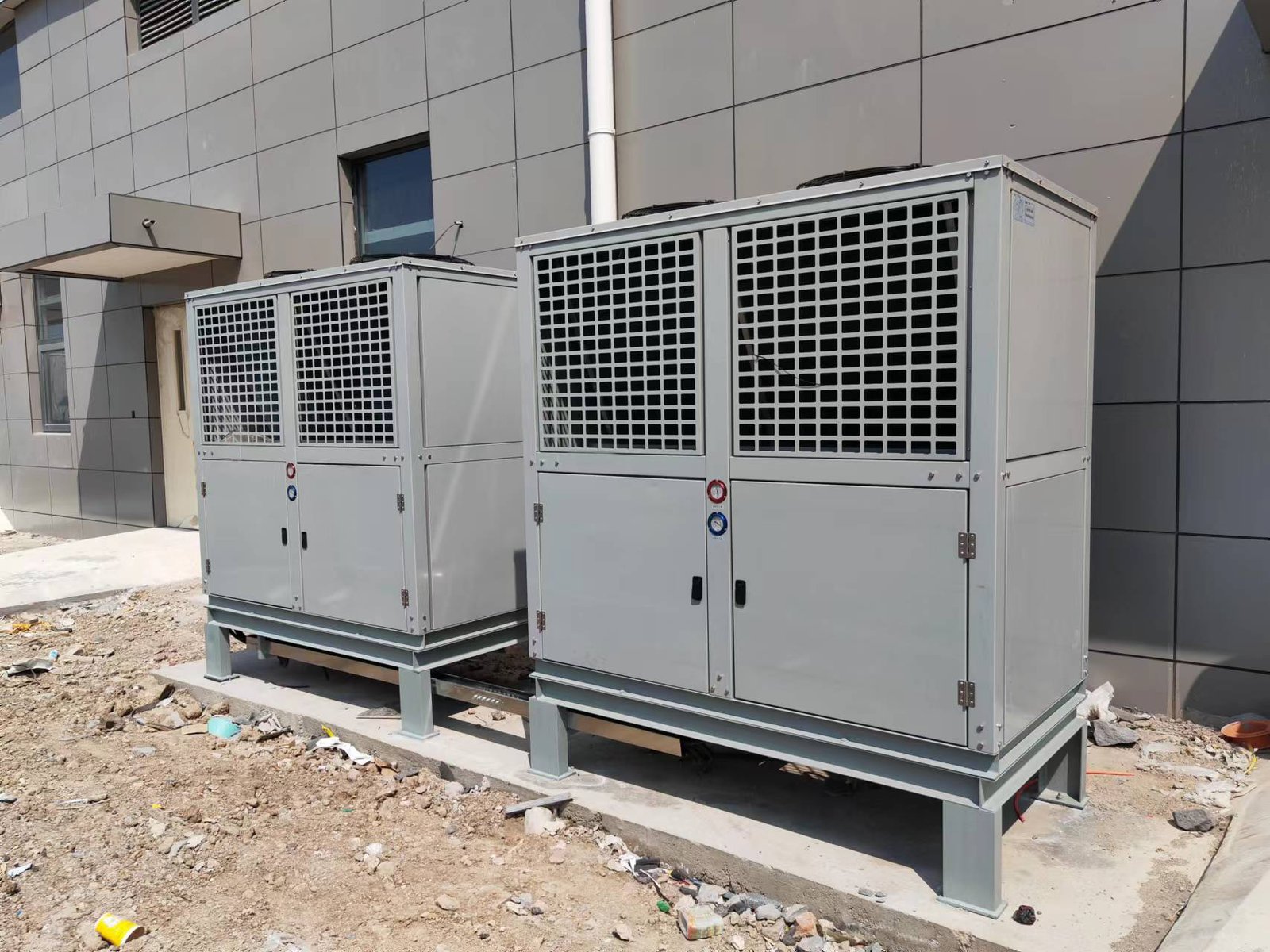
Second, unit placement is a strategic decision. The outdoor condenser needs unimpeded airflow. The rule of thumb is a minimum of 1-1.5 meters of clear space on all sides, but local codes and specific model specs dictate the final call. Think about service access for maintenance. For the indoor unit, consider air distribution, noise, and drainage path. The condensate drain line must have a consistent downward slope—no sags or traps that breed algae and cause leaks.
Finally, compliance is your license to operate. This isn’t just about technical specs. It’s about navigating the maze of local building codes, electrical regulations, and refrigerant handling laws (like the F-Gas regulation in the EU or EPA Section 608 in the US). Ensure your installation teams are certified, and the equipment you supply meets the destination market’s safety and efficiency standards (CE, UL, ISO, etc.).
Sector-Specific Installation Nuances: Beyond the Basics
Here’s where your value as a knowledgeable supplier skyrockets. Let’s drill into industry specifics.
Hospitality & Retail: Think aesthetics and guest experience. Installation in a hotel room or high-end store must be minimally invasive and quiet. The indoor unit is often a ceiling-concealed or ducted system. Coordination with interior designers is crucial to integrate grilles seamlessly. Drainage is a silent killer here—a clogged line causing water damage in a guest room is a nightmare. Emphasize the need for clean, accessible drain ports and easy-to-clean filters for housekeeping staff.
IT & Telecommunications: This is a mission-critical environment. Redundancy is often designed into the system (N+1 configuration). Precision is key—temperature and humidity must be controlled within a tight band. Installation focuses on reliability: redundant power feeds to units, seismic bracing in active zones, and ensuring there’s no single point of failure in the refrigerant or drainage lines. The noise of the outdoor unit is a secondary concern compared to unwavering uptime.
Food & Beverage (Production & Storage): In a brewery, dairy, or cold storage facility, hygiene and robust performance are paramount. Units installed in food processing areas often require stainless steel casings or special coatings to withstand frequent wash-downs. In storage areas, the focus is on maintaining consistent low temperatures. The installation must account for high latent heat loads (moisture from products) and often involves specialized high humidity coils. Drain pans must be easily accessible for regular sanitation.
- Light Industrial & Workshops: Durability is the watchword. These spaces have dust, fumes, and large, frequently opened doors. Installations use heavier-duty filters (or recommend them as an upsell) and position units to create air curtains at doorways. The outdoor condensers must be placed to avoid intake of metal particulates or chemical fumes, which can rapidly degrade the coil.
The Step-by-Step Field Installation Walkthrough
Let’s get our hands dirty. This is the sequence your installation teams should follow, and you should be able to articulate it to assure clients of professional execution.
Site Prep & Mounting: Verify the prepared mounting locations for the indoor and outdoor units. Are the wall brackets or concrete pads level, structurally sound, and vibration-isolated? For rooftop installations, ensure the roof can bear the weight and that proper waterproofing flashings are used.
Piping & Electrical Runs: This is skilled work. Refrigerant piping must be clean, dry, and sealed (nitrogen purging during brazing is a sign of a quality install). Linesets should be properly insulated to prevent condensation. Electrical conduits and cabling must be sized correctly per the unit’s MCA (Minimum Circuit Ampacity) and MOPD (Maximum Overcurrent Protection Device) ratings on the nameplate—never guess.
Vacuum & Dehydration: After pressure testing with nitrogen, the system must be placed under a deep vacuum (typically below 500 microns) for a sustained period. This removes all moisture and non-condensable gases. Skipping or rushing this step is the leading cause of premature compressor failure and reduced efficiency.
Refrigerant Charging: Charge the system with the exact type and weight of refrigerant specified by the manufacturer. Modern units often come with a pre-charge for a standard lineset length; adjustments are made based on the actual installed length. This is not a “by feel” process.
- Control & System Commissioning: Wire the thermostat or building management system (BMS). Power up the system and run it through all modes: cooling, fan, and heating (if heat pump). Measure superheat/subcooling, voltage/amperage, temperature split across the coil, and airflow. Document these commissioning readings—they are the baseline for all future maintenance.
The Data-Driven Edge: Performance and Market Context
For a global distributor, presenting real-time data builds immense credibility. Here’s a snapshot of why installation quality directly impacts the bottom line, using current metrics.
| Performance Metric | Impact of Poor Installation | Industry Benchmark (2024) |
|---|---|---|
| Energy Efficiency (SEER/EER) | Can drop by 30% or more due to improper charge/airflow. | Top-tier commercial units now achieve SEER > 18, EER > 13. |
| System Lifespan | Reduced by up to 50% (e.g., 7-10 years vs. 15-20 years). | Average design life of a well-installed system is 15+ years. |
| Warranty Claims | Improper installation is the #1 cause of voided warranties. | Leading manufacturers require installer certification for validation. |
| Operational Cost | A 20% efficiency loss can increase lifetime costs by tens of thousands. | Focus on TCO (Total Cost of Ownership), not just unit price. |
Furthermore, guide your clients on regional trends: In the EU, the Ecodesign Directive pushes for higher seasonal efficiency. In markets with high electricity costs (e.g., Germany, Japan), promoting inverter-driven, variable-speed units installed with precision makes a compelling financial case. In hotter, dustier climates (MENA region), emphasize the installation of easy-clean filters and coil coatings.
Professional Q&A
Q: A client in a coastal region is worried about salt spray corrosion. What installation and product specs should I recommend?
- A: This is critical. Recommend units with marine-grade corrosion-resistant coatings on both the outdoor condenser coils and the casing. During installation, advise positioning the unit away from direct, prevailing sea winds if possible, or installing a deflector baffle. A more frequent maintenance schedule (quarterly coil cleaning and inspection) is non-negotiable to wash off salt deposits.
Q: Our customer’s new unit is tripping the circuit breaker immediately after power-on post-installation. What’s the first thing to check?
- A: Do not keep resetting it. This is a hard electrical fault. First, power down completely. The most common culprits in a new install are a pinched wire causing a ground fault during mounting, or a mis-wired connection between the indoor and outdoor units (e.g., communication line contacting power). A systematic check of all electrical terminations for shorts and correct phasing is step one.
- Q: We are seeing a spike in demand for R-32 refrigerant units. From an installation standpoint, is the process different from R-410A?
- A: Yes, and safety is paramount. R-32 has a mildly flammable (A2L) classification. While the installation procedures for piping, vacuum, and charging are similar, it requires extra caution. Installers must use torches with flame arrestors when brazing, ensure the area is well-ventilated, and use leak detectors specifically calibrated for A2L refrigerants. The tools and practices are evolving—ensure your teams are trained on the latest protocols for A2Ls.