
Montreal’s Temperature-Controlled Spaces: From Industrial Cold Storage to Café Refrigeration Needs

The Backbone of Montreal’s Cold Chain: Industrial Cold Rooms

Let’s talk about what keeps Montreal’s food and beverage sector running—industrial cold storage. It’s not the glamorous part of the business, but without it, the city’s famous cafes and exporters wouldn’t have a steady supply of fresh ingredients. Montreal’s port and logistic hubs rely on a network of high-capacity cold rooms, which are critical for import/export activities.
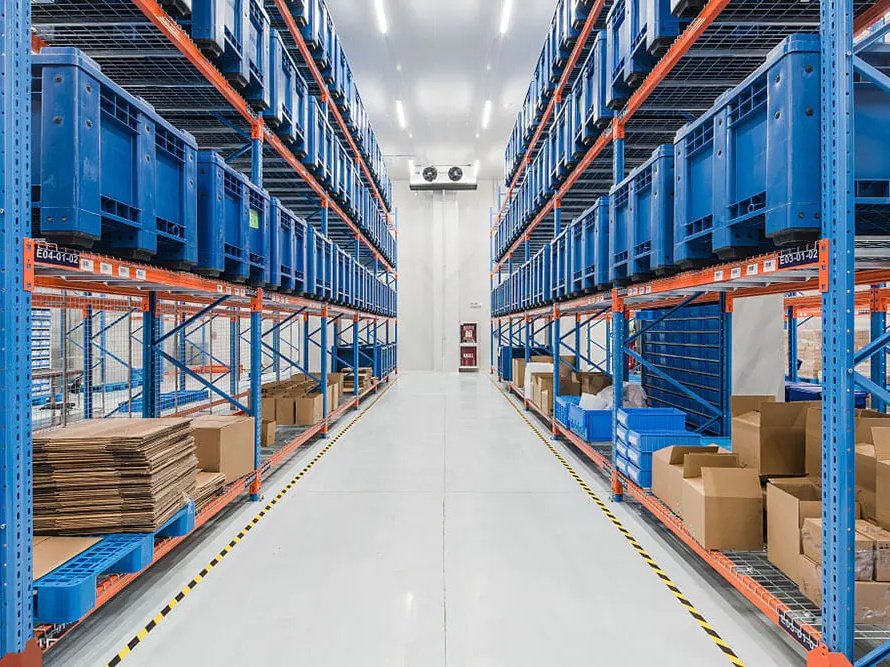
For B2B dealers, understanding the specs of these systems is key. We’re looking at large-scale modular cold rooms, often with capacities ranging from 5,000 to over 50,000 cubic feet. The focus here is on durability, precise temperature zones (from chilled +2°C to deep freeze -25°C), and energy efficiency. The technology has shifted heavily toward inverter compressors and eco-friendly refrigerants like R-448A to meet stringent regulations. Real-time monitoring through IoT sensors is now standard, allowing remote management of temperature, humidity, and door access—a major selling point for logistics companies managing cross-border shipments.
Here’s a snapshot of current cold room trends in industrial settings:
| Feature | Industrial Cold Room Trend (2024) | Importance for B2B Dealers |
|---|---|---|
| Primary Refrigerant | Phasing to R-448A, R-449A | Compliance with EPA & F-Gas regulations is a top client concern. |
| Energy Efficiency | Inverter compressors, LED lighting with motion sensors | Reduces operational cost by ~30%; a major selling point. |
| Control Systems | IoT-enabled remote monitoring & alerts | Minimizes product loss; essential for export compliance documentation. |
| Construction | Hygienic, corrosion-resistant panels (PIR core) | Demand from pharma & high-end food storage sectors is rising. |
| Capacity Range | 2,000 – 50,000+ cu. ft. | Modular designs allow customization for warehouse integration. |
The demand is driven by Montreal’s role as a trade corridor. Exporters of dairy, seafood, and processed foods need facilities that ensure compliance with international food safety standards during storage and before shipment.
Café Culture’s Hidden Engine: Commercial Refrigeration
Now, switch gears to the streets of Plateau-Mont-Royal or Old Montreal. Every cozy café, from the artisanal roaster to the franchise, is powered by a miniaturized, aesthetic version of that cold chain. The needs are different but equally technical. A café’s refrigeration is its daily workhorse: under-counter refrigerators for milk, display chillers for pastries and salads, and potentially a compact blast chiller for food prep.
For dealers, the café segment is about space optimization, noise reduction, and design. Equipment must fit into tight kitchen footprints and often be visible to customers. The trend is toward sleek, stainless-steel units with glass doors for display. But beneath the surface, the requirements are serious: precise temperature stability to prevent milk spoilage or salad wilting, rapid pull-down times, and easy cleaning to pass health inspections. Energy consumption is a huge factor for cafe owners facing rising utility costs, making high-efficiency models with good insulation a clear winner.
The data shows café owners prioritize reliability above all—downtime means lost sales immediately. They also look for units with digital thermostats for accuracy and simpler compliance checks.
Side-by-Side: Specs That Matter for Different Buyers
An industrial cold storage manager and a café owner might both buy a “refrigeration system,” but their checklists are worlds apart. Let’s break down the decision drivers.
For the Industrial Cold Storage Operator / Exporter:
- Scale & Scalability: Can the system be expanded? Does it integrate with warehouse management software?
- Precision & Compliance: Can it maintain tight temperature tolerances for HACCP/ISO 22000 certification? Does it provide audit trails?
- Durability & Uptime: Built for 24/7 operation with heavy-duty components. Redundant systems are often a requirement.
- Total Cost of Ownership: Focus on long-term energy savings and minimal maintenance over initial purchase price.
For the Café or Bistro Owner:
- Footprint & Layout: Exact dimensions are critical. Will doors swing correctly in a cramped kitchen?
- Ambient Noise Level: A loud compressor can ruin café ambiance. Low-decibel ratings are a selling feature.
- Ease of Sanitation: Removable shelves, rounded corners, and anti-microbial coatings matter.
- Upfront Cost & Operating Cost: Budgets are tighter; clear ROI on energy-efficient models needs to be demonstrated.
Understanding this divergence is what makes a B2B dealer effective. You’re not just selling a box that gets cold; you’re selling operational continuity for an exporter or the preservation of a café’s customer experience.
The Energy Equation and Total Cost of Ownership
This is where the conversation gets real for all buyers, regardless of size. Electricity costs are a significant line item. In industrial settings, a cold room can account for over 60% of a warehouse’s energy use. For a café, refrigeration might be the second-largest energy user after heating/cooling the space itself.
The move to inverter technology is the game-changer. Traditional compressors cycle on and off at full power. Inverter-driven compressors adjust their speed to match the exact cooling demand, leading to significant savings—often 20-40%. For an industrial cold room running continuously, that’s a payback period on the premium investment measured in just a few years. For a café, it means lower monthly bills from day one.
Smart dealers are now offering TCO (Total Cost of Ownership) calculators. You plug in local energy rates, usage patterns, and compare standard vs. high-efficiency models. This shifts the discussion from sticker price to long-term value, which resonates with savvy business owners in both sectors.
Future-Proofing: Smart Tech and Sustainability
The future for both the warehouse and the café is connected and green. IoT is not just for giant cold storage facilities anymore. Even mid-range commercial refrigerators now offer simple Wi-Fi connectivity, sending alerts for temperature excursions or filter maintenance needs.
For exporters, this data is part of the “cold chain integrity” documentation required by many foreign buyers. For a café manager, it’s about getting a text message if a fridge door is left ajar overnight, potentially saving thousands in spoiled inventory.
Sustainability is a growing purchase driver. Regulations are phasing down high-GWP (Global Warming Potential) refrigerants. Equipment using next-gen refrigerants like R-290 (propane) is entering the market, offering high efficiency and a drastically lower environmental footprint. B2B dealers need to be advisors on this transition, helping clients navigate regulations and choose gear that won’t be obsolete in five years.
Professional Q&A for B2B Dealers
Q: We have clients in both food export and hospitality. What’s the one technical specification we should start emphasizing across the board?
A: Energy Efficiency Ratio (EER) or Coefficient of Performance (COP). With global energy costs volatile, efficiency is the universal concern. For industrial clients, translate high EER/COP numbers into projected yearly savings. For café owners, show the direct impact on their utility bills. It’s a concrete metric that justifies premium models.
Q: Are café owners really interested in smart, connected refrigeration, or is it overkill for their scale?
A: Interest is growing rapidly, but the value proposition must be clear. For them, it’s not about big data analytics; it’s about loss prevention and convenience. Emphasize features like remote temperature monitoring via a smartphone app, which helps them manage multiple locations or get peace of mind after hours. Alerts for “door open” or “high temperature” prevent costly spoilage incidents. Frame it as insurance, not just a tech gimmick.
Q: A client is worried about the phase-out of common HFC refrigerants. What should we advise for new purchases?
A: Advise them to future-proof their investment. Recommend models that use next-generation, lower-GWP refrigerants like R-448A/R-449A for medium-low temp applications or R-290 (propane) for certain commercial plug-in models. Explain that this protects them from upcoming regulatory bans and potential future costs of retrofitting or sourcing soon-to-be-phased-out gases. Highlight that equipment designed for these newer refrigerants is often more efficient.
Q: For an exporter building a new cold storage facility in Montreal, what are the key questions we should ask to specify the right system?
A: Go beyond just “How big?”
- Product Mix & Temps: What specific products? (e.g., fresh produce at +2°C, frozen meat at -18°C). This dictates required temperature zones.
- Turnover & Access: How often will doors be opened? Is it for long-term storage or daily order picking? This affects compressor sizing and defrost cycles.
- Compliance Needs: What are the exact certification requirements (e.g., CFIA, FDA, EU standards) of their target markets? This dictates sensor placement, data logging, and alarm specs.
- Expansion Plans: Is the facility likely to expand in 3-5 years? This argues for a modular, scalable system from the start.