
Cross-Industry Cooling Solutions: The Machinery Powering Global Business
Let’s talk about what keeps the wheels of global industry turning. Beyond the factory floors and server rooms, reliable air cooling isn’t just about comfort—it’s a non-negotiable pillar for operational integrity, product quality, and bottom-line profits. If you’re sourcing or supplying equipment for diverse commercial and industrial sectors, understanding the specific cooling unit that fits each puzzle is key. Here’s a breakdown of the essential air cooling units driving efficiency across the board.

Demand in Manufacturing & Industrial Spaces

Walk into any active manufacturing plant, and you feel it—the heat from machinery, processes, and human labor. Here, cooling isn’t optional; it’s critical for machine longevity, worker safety, and consistent product output.
We’re talking about large-scale solutions. Industrial evaporative coolers are a go-to for vast, open spaces in drier climates, offering massive air volume turnover at a fraction of the electrical cost of traditional refrigerant systems. They pull in hot, outside air, pass it through water-saturated pads, and deliver a continuous stream of cooled, fresh air. For factories dealing with metals, plastics, or textiles, this method prevents overheating and maintains a stable environment. Then there’s the heavy-duty roof-mounted packaged unit. These are the workhorses, installed on the roof to save floor space. They handle both cooling and ventilation, integrating directly with make-up air systems to replace exhausted air. Durability and ease of service are paramount. Components must withstand corrosive atmospheres, constant vibration, and 24/7 runtimes. The data point here is straightforward: unplanned downtime due to equipment failure can cost tens of thousands per hour. B2B buyers prioritize units with robust construction, accessible service panels, and compressors rated for continuous industrial duty cycles.
Precision Cooling for Agriculture & Produce Storage
The cold chain doesn’t start at the supermarket; it begins at harvest. For B2B dealers serving the agricultural and logistics sectors, precision is everything. A slight temperature or humidity fluctuation can decimate a crop’s value or violate stringent export phytosanitary protocols.
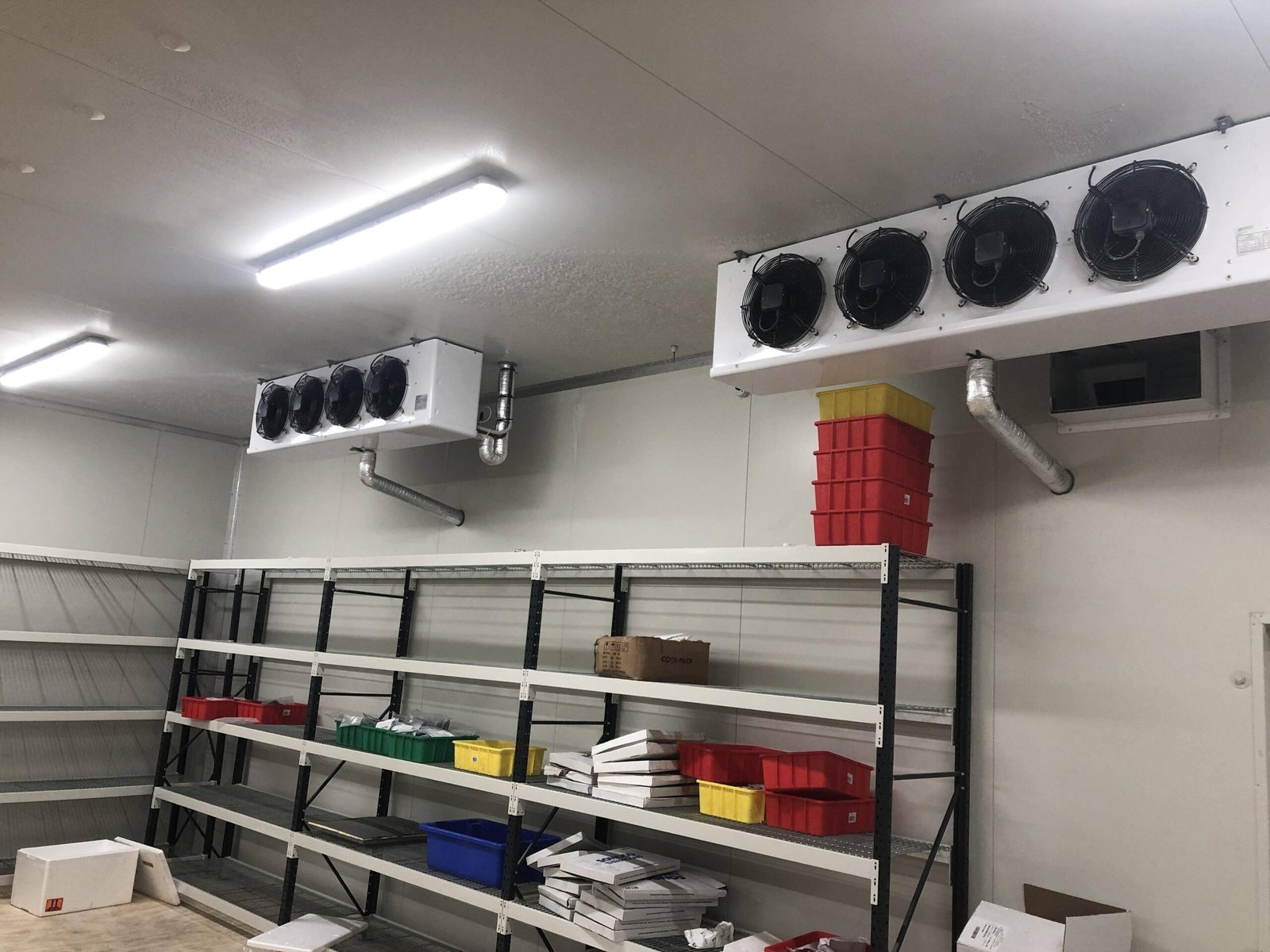
Enter the world of horticultural and produce storage cooling. These are high-humidity, precision units designed for fruit and vegetable cold rooms, floral coolers, and processing areas. Unlike standard air conditioners that dehumidify, these systems often incorporate humidification controls to keep produce from drying out. Key features include precise digital thermostats (capable of maintaining temperatures within ±0.5°C), corrosion-resistant evaporator coils (to handle ethylene gas from ripening produce), and specialized defrost cycles that minimize temperature spikes. For larger operations, modular cold storage units with staged compressors are essential. They allow the system to match the cooling load precisely, saving significant energy when full capacity isn’t needed. Real-time monitoring systems are a major selling point. Dealers can offer clients remote access to temperature, humidity, and alarm logs—crucial data for audit trails and ensuring compliance with international food safety standards during export.
High-Density Heat Management in IT & Data Centers
This sector defines “mission-critical.” Every watt of power used by servers, switches, and storage arrays converts directly to heat. An unscheduled thermal event can mean widespread service outages and catastrophic data loss.
Cooling for data centers is a specialized field dominated by precision air conditioning (PAC) units and Computer Room Air Handlers (CRAHs). The metrics that matter here are entirely different. We focus on sensible cooling capacity (the ability to remove dry heat), precise temperature and humidity control, and redundancy. In-row coolers have become a standard for modern, high-density setups. They are placed directly between server racks, capturing hot exhaust at the source before it can mix with the cold aisle air, dramatically improving efficiency. The key performance indicator is Power Usage Effectiveness (PUE). A lower PUE means more energy goes to the IT load, not the cooling infrastructure. Modern units feature variable speed fans, EC motors, and compatibility with free cooling (using outside air when ambient conditions allow). For B2B specifiers, the conversation revolves around scalability, integration with Building Management Systems (BMS), and service agreements with guaranteed response times. The unit’s footprint and heat rejection method (air-cooled, water-cooled, glycol-cooled) are decision points dictated by the facility’s design.
Commercial & Retail Refrigeration Air Curtains
This is a niche with a massive impact on energy savings. In supermarkets, restaurants, and cold storage warehouses, the constant opening of doors creates a huge thermal load. The solution isn’t just a stronger cooler; it’s about creating an invisible barrier.
Commercial air curtains, or air doors, are mounted above entrances to refrigerated spaces. They blast a high-velocity, invisible stream of air across the doorway, separating the internal cold environment from the external warm, humid air. The result? A drastic reduction in cold air loss, minimized condensation and frost build-up on coils, and improved hygiene by keeping out insects and dust. For exporters and dealers, the specs to highlight are airflow velocity, motor type (often shaded pole or EC for efficiency), and heating options (for customer entrances in colder climates). The ROI is easily quantifiable: a properly installed air curtain can reduce refrigeration energy costs by 30% or more at that doorway. It’s a direct operational saving that appeals to any chain store’s facilities manager.
Here’s a quick comparison of core unit types for different retail back-end applications:
| Application | Recommended Unit Type | Key Performance Focus | Primary Benefit for Client |
|---|---|---|---|
| Supermarket Cold Room | Medium-Temp Packaged Condensing Unit | High-efficiency scroll compressor, low sound level, anti-corrosion coating | Reliable hold of regulated temps, reduced energy costs, compliance |
| Restaurant Kitchen | Heavy-Duty Ventilation & Spot Cooler | High static pressure for ducting, grease-resistant filters, easy-clean design | Heat and odor removal, staff comfort, safety |
| Warehouse Loading Bay | Industrial Air Curtain | High air velocity & volume, robust construction, EC motor for 24/7 use | Significant energy savings, stable internal temperature, pest control |
| Pharmacy Server/Storage Room | Small Precision AC Unit | Sensitive temperature/humidity control, remote monitoring, alarm relays | Protects sensitive inventory/equipment, ensures regulatory compliance |
Q&A Section
Q1: For a manufacturing client looking to upgrade, is a higher SEER rating always the best choice for cost savings?
A: Not necessarily. While a high Seasonal Energy Efficiency Ratio (SEER) is excellent for seasonal, variable-load applications, industrial settings often run 24/7 under full load. In these cases, the Integrated Energy Efficiency Ratio (IEER) and full-load efficiency metrics are more critical. A unit with a robust compressor and components designed for continuous operation, even with a slightly lower SEER, may offer better long-term reliability and lower total cost of ownership than a high-SEER unit built for lighter duty cycles.
Q2: We have clients in regions with volatile power grids. What features should we prioritize?
A: Focus on units with built-in protection against voltage fluctuations. Look for models with wide input voltage tolerance (e.g., +/- 15% or more). A “soft start” feature is also crucial—it reduces the inrush current during compressor startup, minimizing stress on generators and preventing nuisance tripping. For critical applications, recommend units compatible with automatic transfer switches and consider systems with modular, redundant compressor circuits.
Q3: How important is the refrigerant type for our export markets?
A: It’s a primary legal and logistical concern. Regulations like the EU F-Gas Regulation are constantly evolving, phasing down HFC refrigerants with high Global Warming Potential (GWP). For future-proofing, prioritize units using lower-GWP refrigerants like R-32 or R-454B. Always verify the latest regulatory requirements in your target countries—shipping units with banned or restricted refrigerants can result in rejected shipments and fines.
Q4: A data center client asks about “free cooling.” What exactly does this mean for the cooling unit?
A: Free cooling allows the unit to use cool outside air to remove heat instead of running the compressor’s mechanical refrigeration cycle. For the hardware, this means the unit must have an additional set of coils or an integrated economizer module. When ambient temperature drops below a set point, the system’s controls automatically engage the free cooling circuit. This can slash energy consumption by 50-70% in suitable climates, making it a powerful selling feature. Ensure the unit’s controls are sophisticated enough to seamlessly switch between modes for maximum efficiency.