
5 Condensing Units Powering Global Industries Right Now
If you’re sourcing cooling hardware for your clients, you know the condensing unit is the non-negotiable heart of the system. It’s the workhorse that makes commercial and industrial refrigeration possible. Forget one-size-fits-all. Today’s top units are engineered for specific sector demands, balancing raw power with razor-sharp efficiency. Here’s a breakdown of the units moving the needle across key global markets.

Keeping the Cold Chain Locked: Retail & Food Service
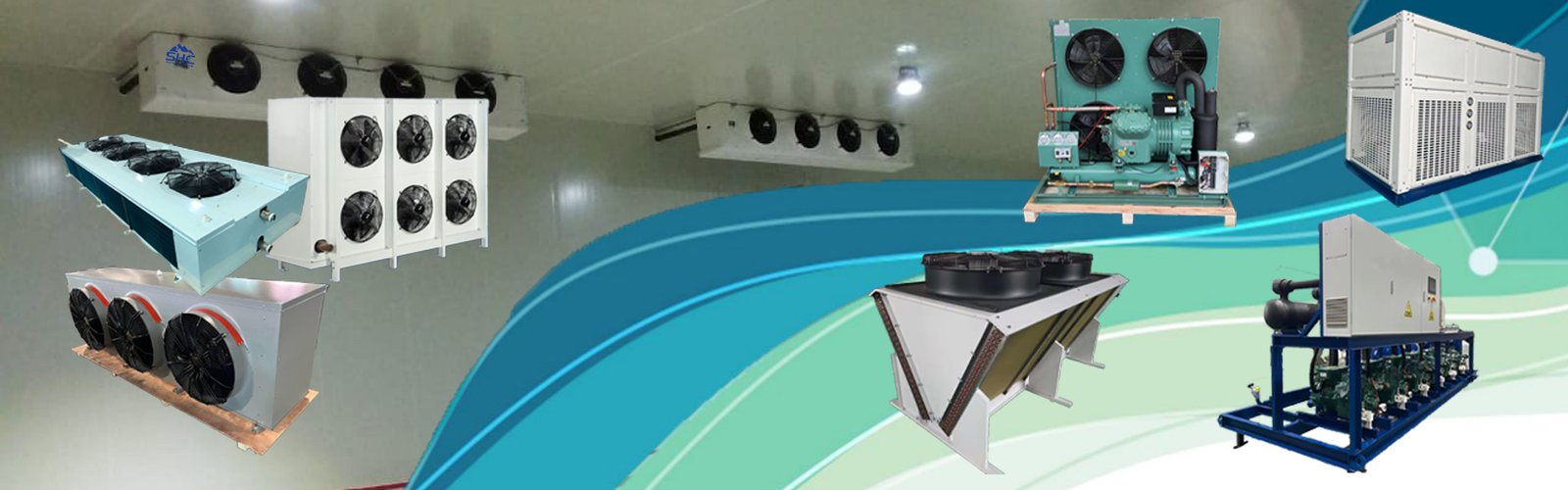
Walk into any supermarket, restaurant, or cold storage warehouse—the consistent chill you feel is delivered by robust condensing units. For dealers in this space, reliability is the absolute top selling point. Downtime means spoiled inventory and lost revenue.
The current demand is for high-temperature (MT) and medium-temperature (LT) plug-and-play units with a strong tilt towards energy savings. Think scroll compressor-based models with integrated variable speed drives (VSD). A unit that can ramp down during low load periods cuts a client’s operational electricity costs significantly. For outdoor installations common in back-of-house operations, look for units with corrosion-resistant coatings (like epoxy finishes) and wide ambient operating ranges (-15°C to 48°C). Sound levels matter more than ever for urban restaurants; low-decibel models are a premium upgrade you can offer.
Right now, a hot product category is condensing units designed for transcritical CO2 (R744) applications, especially in European and North American markets with strict F-Gas regulations. These units are complex but represent the future for sustainable food retail.
Industrial Process Cooling: Precision is Everything
This is where specs get serious. We’re talking chemical manufacturing, pharmaceuticals, plastics molding, and data centers. The condensing unit here is less about preserving food and more about removing process heat with exacting precision.
Industrial chillers and large-capacity remote condensers dominate. The key for B2B dealers is understanding the secondary coolant: is it water, glycol, or a specialized fluid? Air-cooled condensing units are popular for their easier installation where water is scarce, but evaporative-cooled models offer far higher efficiency in dry climates, despite higher maintenance.
The non-negotiable feature is stable performance under 100% load, 24/7. Components are heavy-duty: semi-hermetic or open-drive compressors, industrial-grade electrical panels, and robust pressure controls. Redundancy is a major selling point. Offering units that can be paired in parallel systems, providing backup capacity, is a huge value-add for clients where an unscheduled stop costs millions.
Specialized Environments: From Farms to Fuel Stations
Some of the most interesting applications are in niche markets. For agricultural exporters, condensing units for controlled atmosphere (CA) storage are crucial. These units must maintain precise low temperatures and humidity levels to preserve the quality of apples, pears, or kiwi fruit for months. They often pair with specialized gas scrubbers.
In the petroleum sector, explosion-proof (EXd) condensing units are mandatory for cooling areas near fuel dispensers or storage. Every component, from the motor to the contactor, is housed to prevent ignition. It’s a specialized, high-value niche.
Another growing area is containerized and modular cold rooms for temporary storage or mobile applications. Offering a pre-charged, quick-connect condensing unit as part of a turnkey plug-in refrigeration container is a fantastic bundled solution for growing logistics companies.
Tech & Efficiency: What Dealers Need to Explain
The internal specs are your ammunition. When talking to a technical buyer, here’s what matters in 2024:
- Compressor Tech: Scroll compressors lead in reliability for small-to-medium commercial apps. Screw compressors take over for large industrial needs. Piston compressors remain a cost-effective workhorse.
- The Refrigerant Shift: R454C and R32 are gaining traction as lower-GWP replacements for R410A. R290 (propane) is excellent for efficiency but has charge limits due to flammability. Know the regulations in your target export market.
- Smart Controls: Units with IoT-ready controllers are no longer a gimmick. They allow for remote monitoring of pressure, temperature, and energy consumption, enabling predictive maintenance. This is a major selling point for reducing service calls.
- Part-Load Efficiency: Don’t just sell the full-load COP. The Seasonal Energy Efficiency Ratio (SEER) or Integrated Part Load Value (IPLV) tells the real story of efficiency in the real world, where systems rarely run at 100%.
Side-by-Side: Current Market-Leading Unit Profiles
| Feature / Model Category | High-Efficiency Retail Unit (e.g., for supermarkets) | Robust Industrial Unit (e.g., for process cooling) | Niche Application Unit (e.g., Explosion-Proof for Petrochemical) |
|---|---|---|---|
| Typical Compressor | Digital Scroll with VSD | Semi-Hermetic Screw | Heavy-Duty Piston (EXd Certified) |
| Common Refrigerant | R449A or R454C | R134a or R513A | R134a |
| Key Selling Point | Ultra-low energy consumption at part-load, low sound levels | Extreme durability, high-pressure capability, serviceability | Fully certified explosion-proof enclosure, reliable under harsh conditions |
| Ideal Ambient Range | -20°C to +46°C | -10°C to +43°C | -25°C to +55°C |
| Smart Features | Cloud-connected controller, alarm relay, data logging | Industrial PLC interface, multiple safety redundancies | Basic but robust controls, focus on safety interlocks |
| Target Market | Supermarkets, Convenience Stores, Restaurants | Pharmaceutical Plants, Chemical Processors, Plastic Manufacturers | Gas Stations, Oil Refineries, Chemical Storage Facilities |
Your Condensing Unit Questions, Answered
Q: For a new cold storage warehouse project, should I recommend air-cooled or water-cooled condensing units?
A: It’s a classic trade-off. Air-cooled units have lower upfront cost and simpler installation, saving you and your client time/money. However, they are less efficient, especially in hot climates, leading to higher lifetime electricity costs. Water-cooled units are significantly more efficient and quieter but require a cooling tower, water treatment, and higher maintenance. The choice boils down to local water costs/policies, climate, and your client’s priority: capex or opex.
Q: How critical is the choice of refrigerant for my export market?
A: It’s the single most critical regulatory factor. The EU’s F-Gas regulations are rapidly phasing down HFCs. North America is following with SNAP rules. Markets like Australia and Japan have their own schedules. Selling a unit with a refrigerant that faces a near-term phase-out or steep tax increase is a major disservice to your client. Always check the latest local regulations. Future-proof units use R290, R744, R32, or next-gen HFO blends like R454C.
Q: We often get service calls for units tripping on high pressure in summer. Is this a unit defect?
A: Not necessarily. It’s often an installation or maintenance issue. The most common causes are: 1) insufficient airflow due to dirty condenser coils (advise regular cleaning), 2) units installed in a confined space or near a wall without adequate clearance (follow manufacturer specs), or 3) faulty or undersized condenser fans. Before blaming the unit, audit the installation environment. Offering a preventative maintenance contract can solve these recurring issues for your client.
Q: What does “pre-charged” really mean, and how does it affect installation?
A: A “fully pre-charged” unit comes from the factory with all the refrigerant it needs sealed inside, up to the service valves. This makes installation faster, cleaner, and reduces the risk of field charging errors. It’s a major selling point for consistent quality. However, it requires the field-installed piping (the “line set”) to be precisely sized and vacuum-dried perfectly before opening the valves. “Pump-down” or “critical charge” systems offer more field flexibility but require skilled technicians to charge correctly onsite.