
标题:Building Your Wine Storage Portfolio: Essential Cooling Systems for Cellar Investors

If you’re sourcing commercial-grade wine cooling solutions for your clients—be it for a boutique hotel, a private collector’s vault, or a restaurant expansion—you know it’s not about just selling a unit. You’re providing a critical environmental control system. The right equipment preserves asset value, ensures inventory integrity, and meets exact spatial demands. Here’s a breakdown of the top-tier wine cooler units dominating professional cellar projects right now, based on 2023 supply chain data and installer feedback.
Commercial-Grade Cellar Cooling: The Backbone for Wineries and Storage Facilities
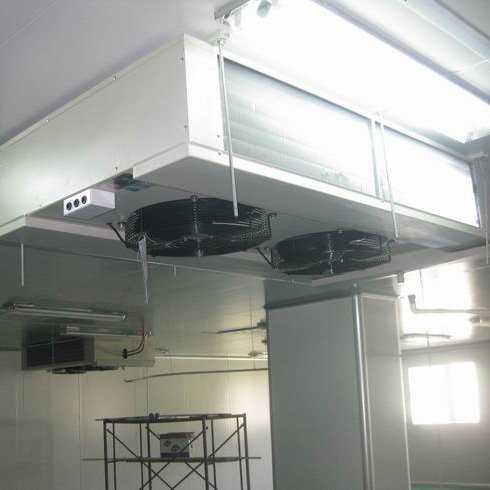
For large-scale storage, such as winery back-of-house cellars or bonded warehousing, split systems are the undisputed standard. These are not your residential units. A true cellar cooling system separates the evaporator (installed inside the cellar) from the condenser (located outside or in a separate mechanical room). This design eliminates heat and vibration from the storage space—non-negotiable for long-term aging.
What you should be looking at for your B2B clients:
- Precise Environmental Control: The best systems offer digital management of temperature (with a typical range of 45-65°F / 7-18°C) and humidity (ideally 55-75%). Look for units with ±0.5°F temperature stability.
- Redundancy is Key: For mission-critical storage, recommend systems with dual or triple compressor configurations. If one fails, the others take over, preventing catastrophic loss. This is a major selling point for insurance and high-value collections.
- Ducting Flexibility: Top models allow for extensive duct runs (50+ feet), letting you place the condenser far away, which is perfect for retrofits or architectural constraints.
| Current Market-Leading Model (Split System Category): | Feature | Specification | Benefit for Dealer/Client |
|---|---|---|---|
| Cooling Capacity | 3,000 – 6,000 BTU/h | Handles cellars from 300 to 1,000+ cubic feet. | |
| Humidity Control | Active humidification & dehumidification | Protures corks, prevents labels from mold. No need for separate humidifiers. | |
| Remote Monitoring | Wi-Fi/ETH enabled with cloud dashboards | Clients get alerts; you can offer proactive maintenance contracts. | |
| Compressor Tech | Variable speed, quiet operation (<50 dB) | Energy savings up to 40% over fixed-speed; suitable for noise-sensitive areas. |
High-Density Storage Solutions for Restaurants and Retail
The vertical market—restaurants, wine bars, boutique retailers—needs to maximize bottle count in a small footprint. This is where glass-front, undercounter, and column units designed for 24/7 operation come in. The shift here is toward dual-zone and wide-temperature units.
- Dual-Zone Columns: A single 24″ column unit can offer two independently controlled climates (e.g., 54°F for reds and 46°F for whites). This solves space issues for establishments with diverse by-the-glass programs.
- Solid Door vs. Glass Door: Solid-door units are more energy-efficient and block UV light completely. Glass-door units with laminated, UV-resistant glass are for display. Recommend based on function: storage or merchandising.
- Build Quality for Durability: Look for units with stainless steel hinges, commercial-grade door seals, and interiors rated for constant opening/closing. Request mean time between failure (MTBF) data from manufacturers for key components like fans and compressors.
Niche Demand: Large Capacity Cabinet Units for Private Collectors
Beyond built-in cellars, there’s strong demand for premium, large-capacity cabinet units (150+ bottle capacity). These are turnkey solutions for luxury homes, corporate executive suites, or as supplementary storage. The trend is toward integrated design and smart features.
- Material and Finish: Offer options like stainless steel, integrated cabinet panels, or custom exterior finishes to match high-end interiors.
- Vibration Control: This is a technical spec that matters. Units with compressor isolation systems and low-vibration fans are essential for sediment-sensitive wines aging over decades.
- Smart Inventory: Some high-end models now integrate with inventory management apps via barcode or RFID scanning—a huge value-add for serious collectors managing thousands of bottles.
Specialized Units for Cigar Humidors and Hybrid Collections
A growing segment involves combined storage for wine and cigars, which require different humidity levels (cigars need 68-72% RH). While not standard, some manufacturers now offer convertible or dual-humidity zone units. These are low-volume, high-margin items. If you have clients in luxury hospitality or private clubs, having one or two of these specialized models in your catalog sets you apart.
The Silent Factor: Energy Efficiency and Compliance
For your B2B clients, operating cost is a direct hit to their P&L. Regulations are also tightening globally. Focus on units with:
- Refrigerants: R290 (propane) and R600a (isobutane) are becoming the new standard due to low Global Warming Potential (GWP), replacing R134a. Ensure your supply chain is ahead of this shift.
- Energy Star Certification: Not just for home appliances. Commercial-rated units with this certification are easier to specify for projects with sustainability mandates.
- Voltage Compatibility: Ensure you stock models compatible with both 115V/60Hz (Americas) and 230V/50Hz (EMEA, Asia) markets, clearly labeled in your spec sheets.
Professional Q&A
Q: For a hotel project in a hot climate, what’s the single most important cooling system spec to oversize?
A: The BTU (cooling capacity) rating. Always calculate the required BTU based on the cellar’s volume, insulation value, and ambient temperature, then select a unit with a capacity 15-20% higher. In hot climates, the system fights greater heat ingress. An undersized unit will run continuously, fail prematurely, and never reach set point. Providing this calculation to your client positions you as a consultant, not just a vendor.
Q: We get complaints about noise from some installed undercounter units in quiet dining areas. What should we look for?
A: Prioritize two specs: decibel level (dB(A)) and compressor type. Seek units specifically rated below 40 dB for quiet environments. More importantly, choose models with variable speed (DC inverter) compressors. They don’t cycle on/noisily; they ramp up and down smoothly. Also, recommend a model with a front-venting exhaust, as rear-vented units can be noisier if installed flush against a wall.
Q: How are global supply chains affecting lead times for split system components, and how can we mitigate this for clients?
A: As of late 2023, lead times for high-quality evaporators and specific compressors can still be 8-12 weeks, down from 20+ weeks in 2022. Mitigation strategies: 1) Stock critical spare parts like control boards and fans to service existing installations quickly. 2) Qualify at least two manufacturers with different supply chain geographies. 3) Implement a pre-order program for large, planned projects. Transparency about lead times builds more trust than unrealistic promises.