
Silent Night, Cool Profit: Your 2024 Sourcing Guide to Bedroom Air Cooling Units for the B2B Market
Alright, let’s cut straight to the chase. If you’re a B2B distributor, importer, or wholesaler sourcing air cooling units for bedrooms, you’re not just moving boxes of metal and plastic. You’re supplying a critical component of modern living—a product where consumer demand is sharply pivoting away from “just cold air” to “intelligent, silent, and efficient personal climate control.” The bedroom unit segment is exploding, driven by rising global temperatures, increased work-from-home culture (think home offices that double as bedrooms), and a premium placed on sleep quality. The days of bulky, noisy window units are over for the mid-to-high-end market. Here’s what your retail and commercial clients are asking for in 2024, and what you need to know to source profitably and reliably.

H2: The 2024 Bedroom Unit Breakdown: Key Tech & Market Trends Your Clients Demand
Walk into any major appliance retailer in North America, Europe, or key Asian markets, and the bedroom AC section looks different. It’s not about raw BTU power; it’s about features that sell themselves. Your OEM partners in China need to be ahead of these trends.
First, inverter technology is non-negotiable. For bedrooms, a fixed-speed compressor that cycles on (loudly) and off is a deal-breaker. Inverter-driven units maintain a set temperature by continuously modulating compressor speed. The result? Consistent temperature (no more midnight chills or sweats) and, crucially, a drastic reduction in noise. Top-tier bedroom units now operate below 20 dB on low speed—quieter than a whisper. When sourcing, demand detailed dB ratings at various fan speeds, not just a single, often misleading “low noise” claim.
Second, smart integration is the expected standard, not a premium. Wi-Fi and app control (compatible with Google Home, Alexa, and Apple HomeKit) are baseline. The real value-add for dealers is in the sleep-specific programming: units that can gradually increase temperature towards morning to mimic natural body cooling, geofencing that turns the unit on when the homeowner is headed back, and voice-activated mode changes. Sourcing from manufacturers with robust, regularly updated proprietary apps or seamless API integration with major platforms is key.
Third, air quality is now part of the cooling package. A basic filter doesn’t cut it. Multistage filtration—combining anti-dust filters, activated carbon for odors, and often a PM2.5 or even HEPA-grade filter—is a major selling point in polluted urban markets. Some models now incorporate gentle humidification or ionization. For your B2B clients, this means higher average selling prices and better margins.
Here’s a snapshot of the core specifications driving sourcing decisions in 2024:
| Feature Category | Minimum Market Expectation (Tier 1 Markets) | Premium Differentiator | Sourcing Checkpoint |
|---|---|---|---|
| Noise Level | < 25 dB (Low Speed) | < 19 dB (Sleep Mode) | Request third-party lab test reports for verification. |
| Control | App + Wi-Fi, Basic Timer | Full Smart Ecosystem Integration, Sleep Algorithms, Voice Control | Test the app yourself. Is it intuitive? Is the UI professional? |
| Air Management | Multi-layer Basic Filtration | HEPA/PM2.5 Filter, Ionizer, Auto Swing (Vertical/Horizontal) | Check filter cost and availability. Can local dealers easily source replacements? |
| Installation | Simplified DIY Kits (for specific models) | Flexible Drain Options, Low-Profile Design, Customizable Vents | Packaging matters. Are installation guides multilingual and clear? |
| Energy Rating | Local Minimum Standard (e.g., ENERGY STAR in US) | Exceeds Local Max Tier by 15-20% | Certifications must be verifiable and up-to-date for target markets. |
H2: Efficiency & Compliance: Navigating the Global Regulatory Maze
This is where the real business risk and opportunity lies. As a distributor, you are responsible for the compliance of the products you sell. Energy efficiency regulations are tightening globally, and missteps are costly.
In the European Union, the Ecodesign Directive and Energy Labeling Regulation (now with the rescaled A-G labels) set stringent limits on Seasonal Energy Efficiency Ratio (SEER) and Seasonal Coefficient of Performance (SCOP). For bedroom units (typically split systems under 12kW), you must ensure your Chinese manufacturer is testing to the correct EU standards and providing the accurate, legally required label and product fiche. The “A+++” old label is gone; ensure new documentation reflects the new scale.
In the United States, ENERGY STAR certification is a powerful market tool. The latest Version 6.0 criteria are stricter. A unit bearing this label moves faster off shelves and may qualify for utility rebates, a huge selling point for your dealers. Sourcing requires confirmation that the factory has valid certification from an EPA-recognized body for the specific model numbers you’re purchasing.
Australia and New Zealand have their own MEPS (Minimum Energy Performance Standards). Middle Eastern markets like Saudi Arabia (SASO) and the UAE (ESMA) have unique safety and efficiency requirements, often needing specific GCC certifications.
Your sourcing due diligence must include:
- Updated Certificates: Never accept generic certificates. They must match the exact model and production batch.
- Component Traceability: Ensure the factory uses certified compressors (like from GMCC, Panasonic, etc.) and refrigerants compliant with regional phase-down schedules (R32 is currently the global mainstream for its lower GWP, but local codes vary).
- Packaging & Documentation: Labels, manuals, and warranty cards must be in the local language and meet legal requirements.
Partnering with a manufacturer that has a dedicated compliance department and a track record of exporting to your target regions is not a luxury; it’s a necessity for scalable, sustainable business.
H2: Installation, Serviceability & The Dealer Experience
Your retail and contractor clients hate callbacks. A unit that is difficult to install or service erodes their profit and damages your brand. Sourcing decisions must heavily weigh the “after-sale” design.
Ease of Installation: Look for units designed with the installer in mind. This includes:
- Pre-charged Quick Connect Linesets: For specific DIY or simplified installer models, these reduce installation time and error.
- Clear, Accessible Valve Layout: Service valves should be easy to reach with a wrench without dismantling the unit.
- Comprehensive, Multi-language Installation Manuals: Video QR codes on the unit are a huge plus.
- Universal Bracket Designs: Can the same wall bracket fit multiple models in the series? This simplifies dealer inventory.
Serviceability & Parts Commonality: Ask your potential supplier:
- “What is your standard warranty policy for B2B partners?” (12-15 months parts, 36-60 months on compressor is common).
- “What is the lead time and process for ordering common spare parts (PCBs, fan motors, filters)?”
- “Do you offer technical training webinars or on-site sessions for our dealers?”
- “Is there strong parts commonality across your model range?” This allows dealers to stock fewer SKUs of spare parts.
A manufacturer that supports you with training, clear technical documentation, and a responsive parts supply chain becomes a true partner, not just a factory.
H2: Building Your Sourcing Checklist: From Factory Floor to Warehouse
Before you place that 500-unit container order, go beyond the sample. Here’s your action plan:
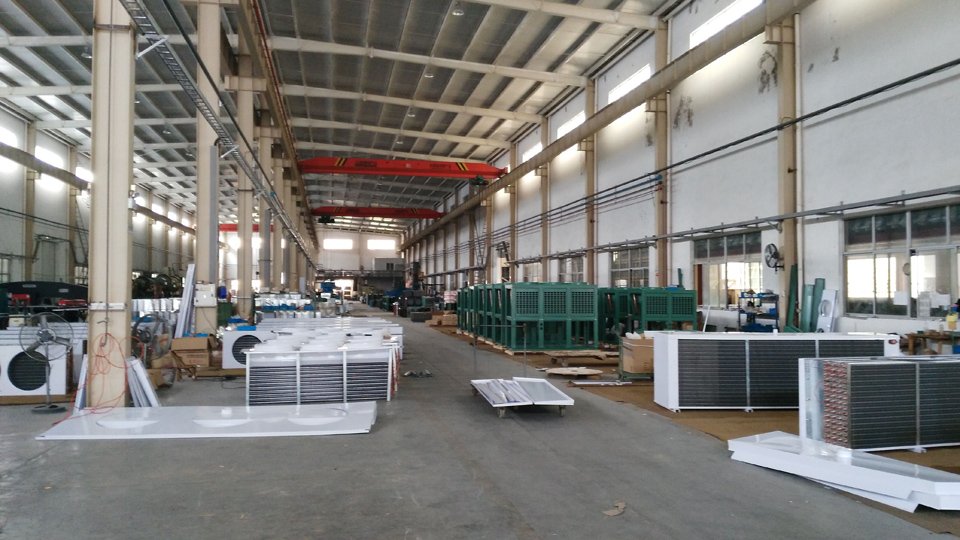
- Factory Audit (Virtual or In-Person): Focus on their R&D lab. Do they have sound testing chambers? Do they perform reliability testing (like start-stop cycles)? What does their production line quality control look like?
- Request a “Live” Data Feed: Ask for access to their real-time production system for your order, or at minimum, weekly photo/video updates. Transparency builds trust.
- Discuss MOQ and Flexibility: Can they accommodate mixed container loads with other compatible products (like fans or dehumidifiers)? What is their lead time from order to ship (45-60 days is standard, but confirm)?
- Logistics & Packaging: Is packaging robust for long sea voyages? Do they palletize correctly? Can they handle all shipping documentation (BL, packing list, certificate of origin)?
- Marketing & Sales Support: Do they provide high-resolution marketing images, 3D models, and detailed spec sheets? Can they white-label products? Do they attend international trade shows (like Mostra Convegno Expocomfort, ISH, or AHRI)?
The goal is to find a manufacturer that sees you as an extension of their sales force, investing in your success with quality products and reliable support.
Professional Q&A for B2B Distributors
Q1: We’re seeing demand for “R290 (propane) refrigerant” units in Europe. Is this a niche trend or the future? Should we start sourcing them?
A: This is a definitive directional shift, not a niche. R290 has an ultra-low Global Warming Potential (GWP of 3) compared to R32 (GWP 675). EU F-Gas regulations are aggressively pushing for lower GWP refrigerants. While R32 is the current global workhorse, R290 is gaining fast in the sub-12kW segment (perfect for bedrooms) due to its excellent efficiency. The main consideration is safety, as it’s flammable. Units require specifically engineered components and strict production controls. Source only from top-tier manufacturers with proven, certified R290 production lines and all necessary IEC/EN safety certifications. Starting a pilot order is highly advised to build familiarity.
Q2: How critical is “IoT platform independence” when sourcing smart ACs?
A: Extremely critical for long-term viability. Some factories lock you into their own proprietary app, which they may stop updating. Prioritize manufacturers whose units work with Matter, the new unified smart home standard, or at least offer direct, stable integration with major platforms (Tuya/Smart Life, Mirai, etc.) that are widely accepted. This future-proofs your inventory and prevents customer frustration from app abandonment. Ask: “If your app is discontinued in 5 years, will the unit still be controllable via Alexa or Google Home?”
Q3: For bedroom units, is there a “sweet spot” in BTU/h (or kW) capacity we should focus our inventory on?
A: Absolutely. Oversizing is a common mistake that leads to poor dehumidification and short-cycling. For standard bedrooms (100-250 sq ft / 10-23 sq m), the global sweet spot is 9,000 to 12,000 BTU/h (2.6 to 3.5 kW). This covers the vast majority of applications. Stock deeper in this range. Also, consider sourcing more “9k BTU” models for smaller rooms and apartments, which are a huge market in dense urban areas worldwide. Always provide your dealers with a simple sizing guide.
Q4: What’s the real-world impact of a high EER/SEER rating on a dealer’s sales pitch?
A: It translates directly to operating cost savings, the number one concern for end-users after purchase price. Use this example: A 10,000 BTU unit with a SEER of 15 vs. a SEER of 22. Over a 5-month summer at average use, the higher SEER unit can save $80-$150 in electricity, depending on local rates. For your dealer, this isn’t just a “green feature”; it’s a powerful tool to close the sale on a higher-margin, premium model. Provide them with simple calculators or comparison charts.