
Beyond Comfort: How Condensing Units Power Industries Worldwide
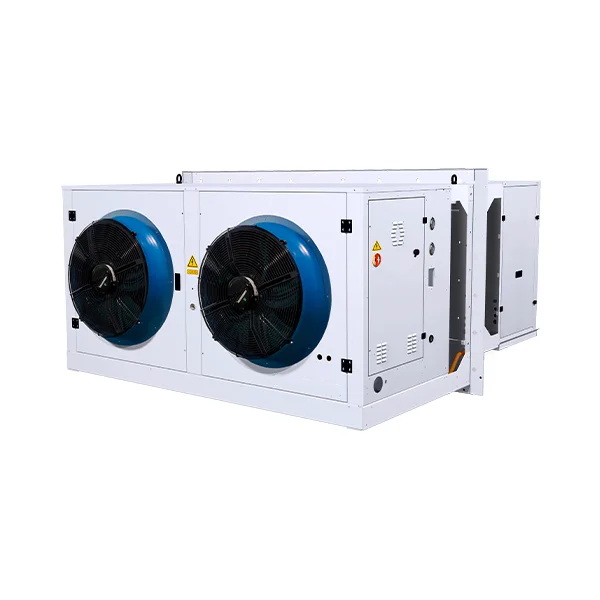
Alright, let’s cut straight to the point. When most people hear “air conditioning condensing unit,” they picture a noisy metal box humming away outside a house. But for you, a B2B player in global trade, that’s just the tip of the iceberg. Think of these units as the universal workhorses of temperature control, and their real story is in warehouses, server farms, pharmaceutical labs, and even on shipping docks. This isn’t about home comfort; it’s about preserving value, ensuring operational continuity, and meeting stringent international standards.
The Core Engine: Breaking Down the Condensing Unit
So, what exactly is it? In the simplest terms, an air conditioning condensing unit is the outdoor section of a split-system refrigeration circuit. It’s where the magic of heat dissipation happens. Its job is to take the high-pressure, high-temperature refrigerant gas sent from the indoor evaporator coil and convert it back into a liquid by releasing its heat to the outside environment.
The main players inside that rugged cabinet are:
- The Compressor: The heart of the unit. It pumps refrigerant through the system, raising its pressure and temperature. For industrial applications, scroll and semi-hermetic compressors dominate due to their reliability and efficiency.
- The Condenser Coil: A network of tubing with fins, usually made of copper or aluminum for optimal heat transfer. Ambient air blown across it by a fan pulls heat out of the refrigerant.
- The Condenser Fan: A heavy-duty fan designed for continuous operation, moving large volumes of air across the coil.
- Controls and Electrical Components: Including contactors, capacitors, and advanced control boards (like inverters) that manage operation, protect the system, and optimize energy use.
The critical difference between a residential unit and the ones you’re dealing with lies in scale, durability, and intelligence. Industrial and commercial condensing units are built for 24/7 operation, often in harsh environments—think salt spray near ports, dust in manufacturing zones, or extreme ambient temperatures in the Middle East or Scandinavia. They feature robust casings (often galvanized steel or coated for corrosion resistance), higher-grade components, and connectivity for building management systems.
Industry-Specific Applications: Where Condensing Units Create Value
This is where it gets interesting for a global distributor. The application dictates the specification, and understanding this is key to matching the right product with your client’s need.
- Commercial Refrigeration & Cold Chain Logistics: This is a massive market. Condensing units here are the backbone of walk-in coolers, freezer warehouses, and display cases in supermarkets. The trend is towards eco-friendly refrigerants (like R-448A, R-449A, and CO2) to comply with EU F-Gas regulations and similar policies worldwide. For export, units must be designed for precise temperature holds (e.g., -25°C for frozen goods) and have fail-safe controls. Real-time monitoring capabilities for remote temperature and fault alerts are now a standard ask from logistics companies.
- Data Centers & Telecom Infrastructure: Here, cooling isn’t about comfort; it’s about preventing million-dollar downtimes. Condensing units in precision air conditioning systems maintain strict temperature (±1°C) and humidity levels. They are often part of larger, redundant N+1 systems. The current demand is for units with inverter technology that can modulate capacity precisely, slashing energy use—which can be 40% of a data center’s operating cost. Noise is also a secondary concern compared to pure reliability and efficiency.
- Industrial Process Cooling: In manufacturing, plastics injection molding, chemical processing, and laser cutting, condensing units provide chilled water for process cooling. They need to handle high thermal loads consistently. Durability against airborne contaminants (oil, particles) is critical. The market is seeing a rise in water-cooled condensing units for locations with water access or where heat rejection efficiency needs to be maximized in a compact space.
- Agricultural & Pharmaceutical Storage: Whether it’s preserving the potency of vaccines or the freshness of harvested produce, the stakes are high. Condensing units for these sectors must offer rock-solid temperature stability and often require documentation and design that supports validation processes (like GMP – Good Manufacturing Practice). Stainless steel components and cleanable designs are common for pharma.
Efficiency & Compliance: The Language of Global Business
You can’t sell effectively without speaking the language of efficiency and standards. This is what your B2B clients base their ROI calculations on.
- Energy Efficiency Ratings: Key metrics vary by region. In North America, look at SEER2 (Seasonal Energy Efficiency Ratio) for comfort cooling and IEER (Integrated Energy Efficiency Ratio) for commercial units. The EU uses SEER (Seasonal Energy Efficiency Ratio) and ESEER (European Seasonal Energy Efficiency Ratio). Higher numbers mean lower operating costs. For 2024, the minimum efficiency standards continue to tighten globally, pushing demand for inverter-driven, variable-speed units.
- Refrigerant Phase-Down: This is a major driver. The Kigali Amendment to the Montreal Protocol is actively reducing the use of high-GWP (Global Warming Potential) HFC refrigerants. In Europe, the F-Gas Regulation imposes strict quotas. Markets are rapidly transitioning to lower-GWP alternatives like R-32 (for smaller systems), R-454B, and the A1-class “A2L” mildly flammable refrigerants, which require units with specific safety designs. Being ahead of these regulatory curves is a significant competitive advantage for exporters.
- Certifications & Standards: A unit’s passport is its certifications. Key marks include:
- CE / UKCA: For market access in Europe and Great Britain.
- AHRI Certification: (Air-Conditioning, Heating, and Refrigeration Institute) Provides performance verification, crucial for specifiers in North America.
- UL / ETL: Safety standards for the North American market.
- ISO 9001: Quality management systems assurance.
Selecting the Right Unit: A Guide for the Savvy Dealer
Your clients rely on your expertise. When advising them, move beyond basic tonnage/capacity (measured in kW or Tons of Refrigeration). Here’s a practical checklist:
- Ambient Operating Range: Will the unit function in -20°C winters or +52°C desert summers? Low-ambient kits for winter operation are a common add-on.
- Sound Level Matters (Sometimes): Critical for urban installations, hotels, or hospitals. Sound power levels (dB(A)) are a key spec.
- Connectivity & Controls: Can it integrate with a BMS via BACnet, Modbus, or have cloud-based monitoring? This is becoming a default expectation.
- Serviceability: Are components accessible? Is there a local supply of compressors and boards? Ease of maintenance affects total cost of ownership.
- Scalability: For projects that may expand, modular designs or units that can be linked in parallel are a strong selling point.
Key Data at a Glance: Global Condensing Unit Benchmarks (2024)
| Aspect | Commercial/Industrial Focus | Relevant Regions | Key Driver |
|---|---|---|---|
| Leading Refrigerants | R-410A (Phasing out), R-32, R-454B, R-448A/449A, CO2 (Transcritical) | Global (varies by regulation) | F-Gas Regulation, Kigali Amendment, Total Cost of Ownership |
| Efficiency Standard | SEER2 >15, IEER >14, ESEER >7.5 | North America (SEER2/IEER), Europe (ESEER) | Rising Energy Costs, Corporate Sustainability Goals |
| Critical Certification | CE/UKCA, AHRI, UL, CRAA (China) | EU, UK, North America, China | Market Access & Specification Compliance |
| High-Growth Application | Data Center Cooling, Cold Chain Logistics for Pharmaceuticals | Asia-Pacific, North America, Europe | Digitalization, Biotech, E-commerce Growth |
| Core Technology Demand | Inverter/Variable Speed, Connected Monitored Systems, A2L-Safe Designs | Global | Energy Savings, Predictive Maintenance, Regulatory Compliance |
Q&A for the Global Trade Professional
Q: My client in Germany is replacing an old R-404A system. What’s the most future-proof refrigerant option for a new condensing unit?
A: For the German/EU market, you should strongly recommend units designed for R-449A or R-448A (lower-GWP HFO blends) as a drop-in retrofit solution, or even better, a unit optimized for a CO2 (R-744) transcritical system for medium-temperature applications. Avoid R-410A for new installations, as its GWP is still high and it faces future phase-downs. Always verify compliance with the latest F-Gas quota limits.
Q: We are bidding on a project for a perishable goods warehouse in a Middle Eastern port. What specific features should we prioritize?
A: Three words: Corrosion, Capacity, and Connectivity. Prioritize units with heavy-duty corrosion-resistant coatings (e.g., epoxy or zinc coating) to withstand salty, humid air. Ensure the rated cooling capacity is verified at high ambient temperatures (up to 52-55°C), not just standard 35°C conditions. Finally, cloud-based monitoring is essential for remote management, allowing operators to address faults before spoilage occurs.
Q: What’s the real advantage of inverter technology for a B2B buyer, beyond “saving energy”?
A: While energy savings of 30-40% are the headline, the operational benefits are profound. Inverter units provide precise temperature control (vital for labs and pharma), drastically reduce electrical inrush current (lowering generator and wiring costs), and cause less wear and tear on components by avoiding constant on/off cycling. This translates to longer system life, reduced maintenance costs, and better protection of the stored product.