Title: Hospital HVAC Failures & Supermarket Fog: Decoding AC Condensation for Global Suppliers

Alright, let’s cut straight to the point. If you’re in the business of sourcing or distributing HVAC units internationally, “condensation on an AC unit” isn’t just a technical term—it’s the difference between a smooth-running operation and a costly callback. It’s the root of mold in a Southeast Asian textile warehouse, the cause of water damage in a Miami server room, and the reason a Middle Eastern hotel guest complains about drips. Understanding this isn’t optional; it’s core to your product’s performance and your clients’ satisfaction.
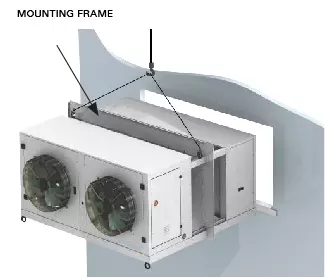
So, what’s physically happening? In simple, non-metaphorical terms: An air conditioner cools your indoor air by forcing it over a set of cold coils (the evaporator coils). These coils are kept cold by a circulating refrigerant. When the warm, moisture-laden air from the room hits these cold coils, the air temperature drops sharply. Cold air can’t hold as much water vapor as warm air. The excess water vapor in the air literally changes phase from a gas to a liquid. This liquid water condenses on the coil surfaces, much like water droplets form on the outside of a cold soda can on a hot day. This water is then collected in a drain pan and routed outside via a condensate drain line. That’s the intended, healthy process. When any part of this chain fails, you get problems.
H2: From Data Centers to Drug Manufacturing: When Condensation Management is a Business Continuity Issue
For your B2B clients, condensation is rarely just about a puddle on the floor. It’s a critical environmental control parameter. Consider the 2023 industry data on facility downtime causes:
| Industry Sector | Primary Condensation-Related Risk | Potential Financial Impact (Example) |
|---|---|---|
| Data Centers & Server Rooms | Water drip onto servers, causing short circuits and data loss. | Avg. cost of downtime: ~$9,000 per minute (Uptime Institute). |
| Pharmaceutical & Laboratory Storage | High humidity promoting microbial growth, compromising sterility. | Batch spoilage can run into millions of USD; regulatory non-compliance. |
| Indoor Agriculture (Cannabis, Vertical Farms) | Uncontrolled humidity leading to powdery mildew, botrytis (gray mold). | Crop loss; a single fungal outbreak can destroy an entire harvest cycle. |
| Archives & Museums | Fluctuating humidity damaging artifacts, paper, canvases. | Irreplaceable cultural heritage loss; insurance claims. |
| Food Processing & Cold Storage | Frost buildup on evaporator coils, reducing efficiency; ice blockages. | Increased energy spend by up to 30%; compromised food safety. |
For a distributor, selling a unit isn’t enough. You need to spec units with adequate dehumidification capacity (often listed as pints of moisture removal per day) and ensure clients have robust secondary drain pans and moisture alarms. A server farm in Singapore has a vastly different latent load (moisture removal need) than a warehouse in Arizona.
H2: The Supply Chain Headache: Common Condensation Failures in Commercial Units
These are the real-world issues that lead to angry calls from your overseas buyers. They’re not looking for theory; they want diagnostics and solutions.
- Clogged Drain Lines: This is the number one culprit for water overflow. Algae, mold, dust, and even insect nests block the PVC drain line. In humid climates, this can happen within months. Solution? Educate your clients on preventative maintenance: using condensate tablets (algaecides) and scheduling regular line flushes. Stock and recommend inline drain safety switches that shut the unit off if a clog occurs.
- Dirty Air Filters & Coils: A heavily clogged filter or a coil caked in grime restricts airflow. This can cause the evaporator coil to get too cold, potentially freezing over. When that ice melts, the condensate drain pan overflows. This is a frequent issue in manufacturing plants with dusty or fibrous air. The message here is simple: maintenance schedules are non-negotiable.
- Failed Insulation on Refrigerant Lines: The larger copper pipe (suction line) carrying cool refrigerant back to the outdoor unit must be properly insulated. If this insulation is missing or damaged, the cold pipe will sweat profusely as it passes through a hot, unconditioned space like an attic or ceiling plenum. This can cause significant water damage to ceilings and structures. It’s an installation quality check you can highlight.
- Mismatched System Sizing: An oversized AC unit is a silent killer. It cools the space so quickly that it doesn’t run long enough to properly dehumidify the air. The result is a cold, clammy, and damp environment—perfect for mold. This is a critical selling point for quality over mere tonnage. Right-sizing based on Manual J calculations (which account for latent loads) is a premium service you can advocate for.
H2: The Distributor’s Checklist: Specifying Units for High-Humidity Markets
You’re not just moving boxes; you’re providing climate solutions. When dealing with regions like Southeast Asia, Coastal Africa, or South America, your product specifications must be precise.
- Inquiry Point: Dehumidification Capacity. Don’t just look at BTU/h (sensible cooling). Demand the Pints per Day (Liters per Day) removal rate at specific conditions (e.g., 80°F/67°F DB/WB). This data is crucial.
- Inquiry Point: Variable Speed Compressors & Fans. Units with inverters or ECM motors can run at lower speeds for longer periods. This is ideal for dehumidification, as it allows the coil to stay cold enough to condense moisture without short-cycling. It’s a key feature for hotels, hospitals, and luxury retail.
- Inquiry Point: Corrosion Resistance. Coastal clients need units with coated coils (e.g., Blue Fin, Gold Fin), stainless steel drain pans, and anti-corrosion treatments on chassis components. Salt air destroys standard units.
- Stock & Recommend Accessories: Make it easy for your buyers. Bundle or prominently display:
- Float switches for primary and secondary drain pans.
- Condensate pump kits for installations where gravity drainage isn’t possible.
- Insulation sleeves for refrigerant line sets.
- Antimicrobial drain line treatments.
H2: The Hidden Cost: Energy Efficiency and Condensation
There’s a direct, measurable link. A 2024 study on commercial HVAC efficiency showed that a fouled evaporator coil (reducing heat transfer and potentially causing icing) can increase compressor energy consumption by 15-25%. Furthermore, if the system isn’t removing humidity effectively, facility managers often lower the thermostat setpoint to achieve comfort. This “overcooling” can spike energy use by another 10-20%. When you pitch a higher-efficiency, properly sized unit with good moisture control, you’re selling long-term operational savings, not just hardware. Frame the conversation around Total Cost of Ownership (TCO).
Professional Q&A for B2B Technical Queries
Q1: One of our buyers in a tropical climate says their new AC units are cooling but the air feels damp and sticky. What’s the likely cause from a manufacturing/spec standpoint?
A: This strongly points to an issue with the latent heat capacity of the units. They are likely oversized for the sensible load but undersized for the dehumidification (latent) load. The units satisfy the temperature thermostat quickly but shut off before removing sufficient moisture. Review the unit’s specified moisture removal rate at AHRI conditions relevant to high humidity (e.g., 80°F DB/67°F WB). A unit with a variable-speed blower and compressor can better handle this by running longer at lower capacities to wring out moisture.
Q2: We are seeing a high rate of corrosion on drain pans and external casings in units shipped to the Middle East. What material specifications should we upgrade?
A: For drain pans, insist on stainless steel (SS304 or better) or a rigid polymer pan with antimicrobial properties. Avoid thin, coated galvanized steel. For casings and internal components, look for units with powder-coated finishes that pass high-salt-spray tests (e.g., ASTM B117 for 500+ hours). Request documentation on anti-corrosion treatments for copper coils and aluminum fins from your manufacturers.
Q3: A data center client asks about the risk of condensation from their precision air conditioning. Is there a “safe” humidity level to prevent both static discharge and condensation?
A: Yes, this is a precise balance. The ASHRAE recommended envelope for data centers is a dew point between 5.5°C (41.9°F) and 15°C (59°F) and a relative humidity between 50% and 60% RH. The key is to control the dew point temperature of the air to be always below the temperature of any cold surface (like a server chassis or a cold aisle floor tile). Precision ACs with sophisticated humidification and dehumidification controls are mandatory for this application. Emphasize units with precise dew point management capabilities.