
Beyond the Buzz: How Condenser Performance Dictates Operational Costs Across Industries
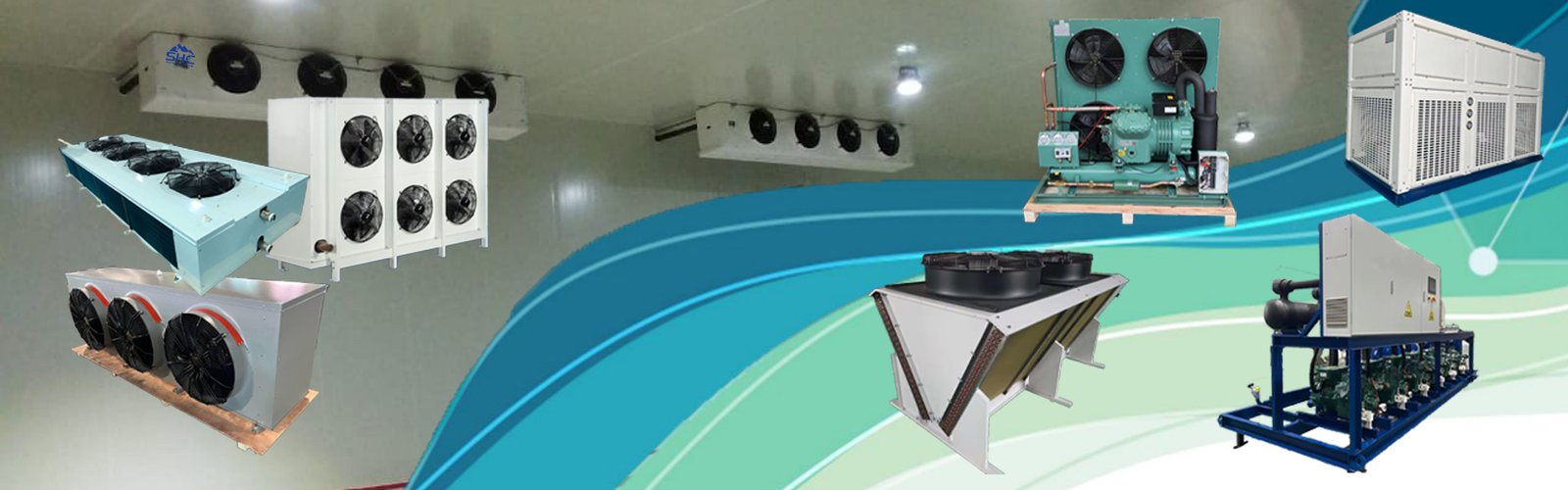
Let’s cut right to the chase. You’re in the business of sourcing and supplying HVAC equipment. Your clients—from factory managers to hotel owners—don’t care about textbook definitions. They care about performance, reliability, and the bottom line. And the single most critical external component determining all three is the air conditioner condenser unit. It’s not just a metal box outside; it’s the profit protector or the silent profit drain for your customers’ businesses.
Think of it this way: the indoor unit handles the “comfort,” but the condenser unit is the “engine” responsible for rejecting all the heat absorbed from inside, plus the heat generated by the compressor’s work. Its efficiency is the linchpin of the entire system’s efficiency.
H2: The Data Center Dilemma: Where Every Watt and Degree Counts
In a data center, cooling isn’t about comfort; it’s about infrastructure survival. IT load is massive and constant. The condenser’s job here is Herculean. A subpar or poorly maintained condenser forces the compressor to work against higher head pressure, consuming exponentially more power.
Real-time Impact: For a 500kW cooling load, a condenser that allows just a 1°C increase in condensing temperature can increase compressor power consumption by 2-3%. Annually, that’s tens of thousands of dollars in pure energy waste. For your B2B clients, specifying condensers with advanced microchannel coils (for optimal heat transfer) and variable-speed fans (that modulate with ambient temperature) isn’t an upgrade; it’s a non-negotiable for operational continuity and cost control. Downtime from overheating is measured in millions per hour—a risk no distributor wants their name attached to.
H2: Cold Chain Integrity: From Warehouse to Retail, Condensers are the Guardian
In food logistics and cold storage, temperature consistency is law. A condenser clogged with debris or failing to dissipate heat effectively causes temperature fluctuations and forces the system into defrost cycles more frequently. This stresses the compressor, shortens its life, and risks spoilage of entire inventories.
The Distributor’s Insight: Modern condensers designed for these applications feature corrosion-resistant coatings (for environments near coastal areas or with chemical exposure) and winterized operation kits for sub-zero ambients. When pitching to cold storage clients, the conversation shifts from mere “cooling” to “asset preservation.” A robust condenser setup ensures precise temperature and humidity control, directly reducing product shrinkage—a direct, measurable ROI for your client’s client.
H2: Manufacturing Precision: More Than Just Cooling the Workshop
In pharmaceutical manufacturing or precision electronics assembly, HVAC systems control critical environmental parameters. The condenser’s stability directly affects the evaporator’s ability to maintain precise temperature and humidity. Fluctuations can ruin batches of medicine or affect micro-component assembly.
The Technical Talk for Your Clients: Explain the importance of the condenser’s subcooling performance. Proper subcooling, achieved by an efficiently sized and functioning condenser, ensures a solid liquid seal at the expansion valve inlet. This translates to stable evaporator temperatures and precise cooling capacity. Recommending units with enhanced subcooling circuits means you’re selling predictability and quality control, not just hardware.
H2: The Hospitality Equation: Guest Comfort vs. Operational Overhead
For hotel chains and large resorts, the condenser field is a major operational expense. Hundreds of units running 24/7. Inefficiency here multiplies. Noise is also a critical factor—a noisy, outdated condenser detracts from guest experience.
Selling the Solution: Highlight condensers with ultra-low sound levels and high Seasonal Energy Efficiency Ratio (SEER) or Integrated Energy Efficiency Ratio (IEER) ratings. For a hotel with 200 rooms, upgrading to condensers with a 20% higher IEER can slash total property energy bills by a significant margin. The argument is about total cost of ownership and brand reputation. Quieter, more efficient units mean happier guests and lower, more predictable operational budgets.
Comparative Performance Data: Condenser Technologies at a Glance
This table helps in specifying the right unit for the application.
| Feature | Standard Single-Speed Condenser | Inverter-Driven Scroll Condenser with Microchannel Coil | Application Advantage |
|---|---|---|---|
| Part-Load Efficiency | Low. Cycles on/off frequently. | Excellent. Modulates capacity to match exact load. | Ideal for climates/vocations with wide temperature swings (e.g., continental regions, restaurants). |
| Heat Exchanger Tech | Traditional fin-and-tube copper coil. | Microchannel aluminum coil. | Higher heat transfer, more compact size, uses less refrigerant, better corrosion resistance. |
| Noise Level | Typically higher (65-75 dBA). | Significantly lower (55-65 dBA). | Critical for residential areas, hotels, hospitals, offices. |
| Initial Cost | Lower. | Higher. | Justified by long-term energy savings (2-4 year ROI common in commercial use). |
| Best For | Initial budget projects, stable load conditions. | High-usage, noise-sensitive, and variable load applications. Maximizes long-term value. |
Professional Q&A Section
Q1: For a retrofit project, how critical is matching a new high-efficiency condenser to an older indoor evaporator coil?
A: It is a critical consideration. While technically possible, mixing can severely undermine the potential efficiency gains. The system is designed as a matched set. An older coil may not handle the new refrigerant flow characteristics or pressures optimally, leading to reduced efficiency, capacity loss, and even compressor damage. We strongly recommend a full system assessment and, ideally, a matched indoor coil upgrade to guarantee the rated SEER/IEER and protect the investment.
Q2: What are the key maintenance indicators for condensers that we should advise our end-user clients to monitor?
A: Advise them to focus on three visual/performance cues: 1) Airflow Obstruction: Regularly clear leaves, dirt, and debris from the coil fins. Even a thin layer acts as insulation. 2) Coil Corrosion: Look for green patina (copper) or white crust (aluminum), especially in coastal or industrial areas. 3) Unusual Noise: Bearing wear in fan motors or imbalanced fan blades signal impending failure. Recommend semi-annual professional cleaning and electrical check-ups, especially before peak cooling seasons.
Q3: With evolving environmental regulations (like the F-Gas regulation in EU, AIM Act in US), how does condenser design impact future compliance?
A: Modern condenser design is central to compliance. New regulations push for lower-GWP (Global Warming Potential) refrigerants like R-32, R-454B, or R-290. These refrigerants often operate at different pressures and require condensers with specifically engineered coil volumes, pressure tolerances, and safety features. Specifying a condenser designed for next-gen refrigerants future-proofs the installation against regulatory phase-outs, protects asset value, and avoids costly replacements down the line. Always verify the unit’s certified refrigerant compatibility.