
The Tecumseh Condensing Unit: Why It’s the Go-To Choice for Refrigeration in 2024
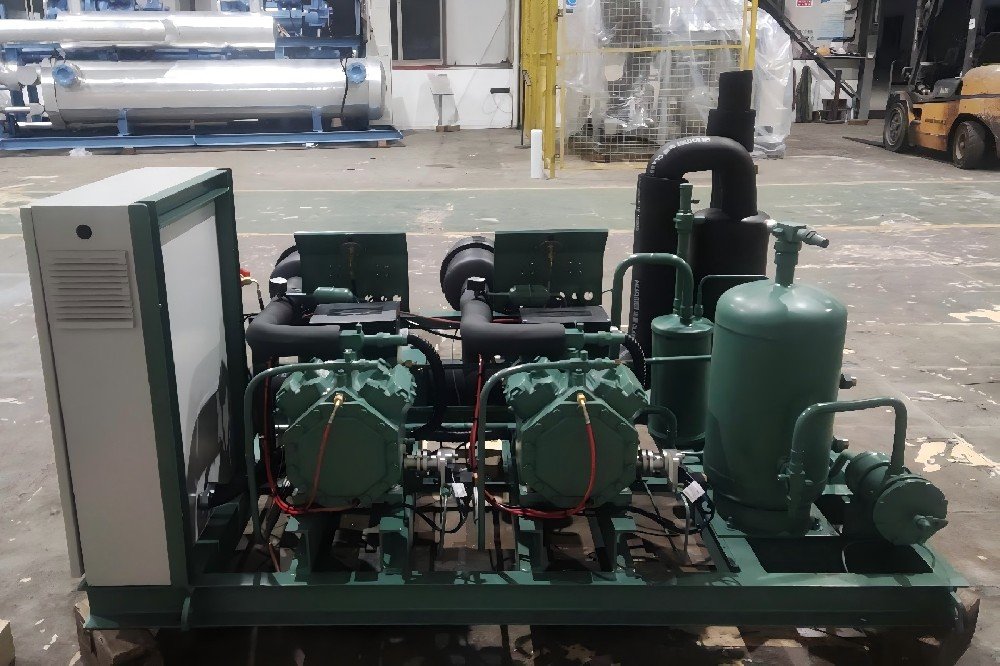
So you’re in the refrigeration business – maybe you’re a dealer, a distributor, or an OEM looking for reliable components. You’ve seen the name Tecumseh on dozens of condensing units, from small glass-door coolers in convenience stores to large walk-in freezers in meat processing plants. But what really makes a Tecumseh condensing unit different from a Copeland, a Bitzer, or a Danfoss? And why should your customers – supermarkets, cold storage warehouses, pharmaceutical logistics companies – care?
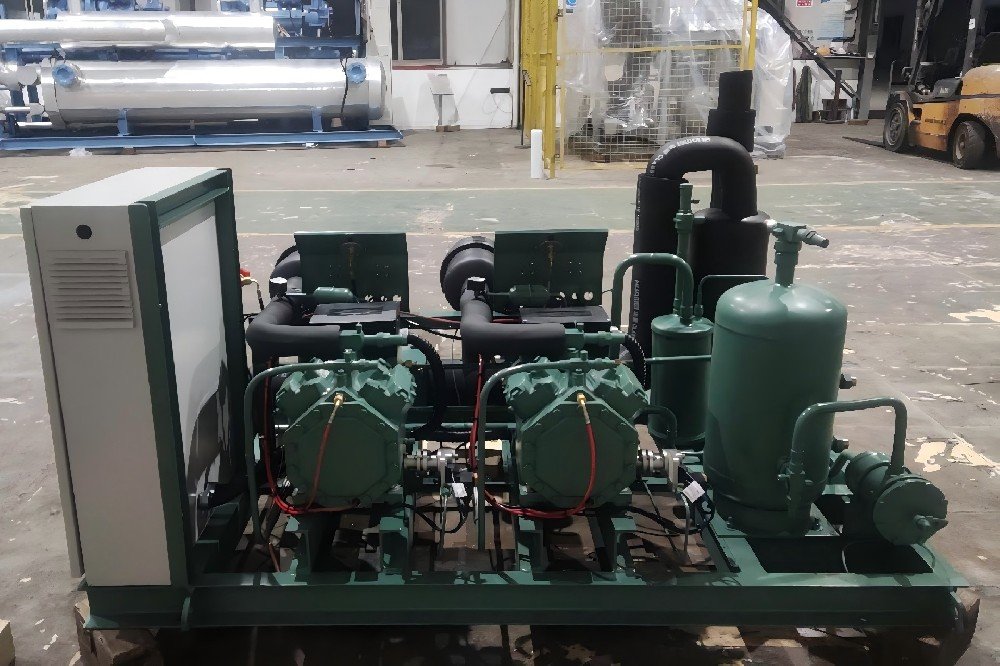
Let’s cut straight to it. A Tecumseh condensing unit is a pre-assembled, factory-tested package that contains the compressor, condenser coil, fan, receiver, and all the necessary controls and safety devices. It’s the heart of any vapour-compression refrigeration system. The unit’s job is simple: take the hot, high‑pressure gas from the compressor, cool it down in the condenser until it turns back into a liquid, and then send it to the expansion valve and evaporator. But the simplicity ends there. Tecumseh offers dozens of models, each tuned for a specific refrigerant, temperature range, and application.

In this article, I’m going to walk you through everything you need to know about these units – what they are, where they’re used, how to pick the right one, and what’s changing in the industry right now. No fluff, no metaphors. Just the facts that matter to you as a B2B buyer.
From Supermarket Shelves to Pharma Vials: Where You’ll Find These Units
If you walk into any modern supermarket in North America, Europe, or Asia, chances are you’re surrounded by Tecumseh condensing units. They power the open refrigerated cases for dairy, the closed doors for frozen pizzas, and the back‑room walk‑in coolers for produce. But the applications go way beyond retail.
Food service and restaurants are another huge market. Every fast‑food chain needs condensing units for ice machines, beverage coolers, and prep tables. Tecumseh’s AE series, with its compact footprint and low noise, is a favorite for under‑counter applications. Then there’s cold chain logistics – refrigerated trucks, shipping containers, and distribution centres. While truck applications often use engine‑driven compressors, many stationary warehouse units rely on Tecumseh’s medium‑ and low‑temperature models.
Pharmaceutical and medical refrigeration is growing fast. With the expansion of mRNA vaccines and biologics, the demand for ultra‑reliable condensing units that maintain tight temperature tolerances (2°C to 8°C for most vaccines) has skyrocketed. Tecumseh’s hermetically sealed units, especially the TGH series for R290 (propane), are being used in walk‑in cold rooms where failure is not an option.
Industrial and process cooling – think breweries, ice rinks, and chemical plants – also uses larger Tecumseh condensing units, often with semi‑hermetic compressors. These units run 24/7 for years, so reliability and serviceability are critical.
Here’s a quick view of the typical applications by temperature range:
| Application | Evap Temp Range | Typical Tecumseh Series | Refrigerants Commonly Used |
|---|---|---|---|
| Display cases, beverage coolers | +10°C to +5°C | AE, AG | R134a, R513A, R290 |
| Walk-in coolers, deli cases | +5°C to -5°C | AEZ, TGH | R448A, R449A, R290 |
| Freezers, ice cream cabinets | -10°C to -25°C | TGH, TT | R404A, R507, R290 (low temp) |
| Pharma cold rooms (2-8°C) | +2°C to +8°C | TGH, AE | R290, R134a |
| Blast freezers, process freezing | -30°C to -45°C | TGE, Triumph | R404A, R507, R23 (cascade) |
As you can see, the same basic unit can be customized with different compressors, fan motors, and controls to handle a wide range of temperatures. That’s part of why Tecumseh has stayed relevant for over 80 years.
Picking the Right Unit: What Every Distributor Needs to Check
When your customer asks for a condensing unit, they don’t just want a black box with a compressor on top. They need a system that matches their evaporator, their space constraints, their energy budget, and their local refrigerant regulations. Here are the five things you must verify before quoting a Tecumseh unit.
1. Refrigerant type and glide. This is the hottest topic right now. HFCs like R404A are being phased down globally. In Europe, the F‑Gas Regulation is cutting quotas hard. In the US, the AIM Act is doing the same. Tecumseh now offers many models pre‑charged with R290 (propane) for commercial applications up to 150 g charge limit. But R290 is flammable, so you need to check if your customer’s facility allows it. For non‑flammable options, R448A and R449A are common replacements for R404A. Each refrigerant has a different glide (temperature difference during phase change), which affects how the expansion valve and evaporator are set up.
2. Compressor type: hermetic, semi‑hermetic, or scroll? Tecumseh’s strength has always been in hermetic reciprocating compressors – the AE and TGH series. They’re efficient, quiet, and cheap to replace. But for larger commercial loads (above 5 HP), they also offer semi‑hermetic compressors (the Triumph series) that can be serviced in the field. For very high efficiency at part load, scroll compressors (like those from Copeland) are common, but Tecumseh doesn’t make scrolls – they focus on reciprocating tech. That’s not a problem, but it means you need to know the application’s load profile.
3. Ambient temperature and condenser type. Most Tecumseh condensing units are air‑cooled, with a propeller fan blowing through a coil. For hot climates (Dubai, Bangkok, Arizona), you might need a high‑ambient version with a larger fan or a fan speed controller. If the unit is going inside a confined space (like a rooftop mechanical room), you may need a water‑cooled or remote‑air‑cooled model. Tecumseh offers these as well, but they’re less common.
4. Capacity matching. You can’t just say “I need a 1 HP unit.” The capacity (in Btu/h or kW) depends on the evaporator temperature and the ambient temperature. A unit that delivers 12,000 Btu/h at +7°C evaporator / 32°C ambient might only give 7,000 Btu/h at -20°C evaporator. Always use the manufacturer’s rating table, and don’t oversize – it leads to short cycling and poor humidity control.
5. Controls and connectivity. Modern condensing units come with electronic controllers that manage defrost, fan cycling, and alarm outputs. Tecumseh’s IntelliGen controller, for example, allows remote monitoring via Modbus. For cold chain logistics, this is becoming a must‑have. Check if the unit you’re quoting includes a controller or if it’s sold separately.
Here’s a sample selection table for a medium‑temperature walk‑in cooler (evap -5°C, ambient 35°C, R448A):
| Model | Compressor | Capacity (Btu/h) | Power (kW) | Refrigerant | Notes |
|---|---|---|---|---|---|
| AE4440Y | Hermetic | 4,500 | 1.2 | R448A | Small, cabinet applications |
| TGH-1-2240 | Hermetic | 7,200 | 1.8 | R448A | Standard walk-in cooler |
| TGH-2-3040 | Hermetic | 11,000 | 2.6 | R448A | Larger cooler, dual fan |
| Triumph S03 | Semi‑herm | 16,500 | 3.9 | R448A | For multi-compressor racks |
Notice that the same refrigerant and similar conditions can be covered by different series. The choice often comes down to price vs. serviceability. Hermetic units are cheaper upfront; semi‑hermetic units cost more but can be rebuilt.
Performance Data and Real‑World Numbers (2024–2025)
Let’s talk numbers that matter to your customers’ bottom line – energy efficiency, noise, and lifespan. I’ve pulled the latest data from Tecumseh’s product catalogs and independent lab tests.
Energy Efficiency Ratio (EER) is the most common metric for condensing units. At ARI standard conditions (evap 7°C, ambient 35°C, subcooling 8°C), a typical Tecumseh AE4422 with R134a has an EER of 6.2 Btu/h/W. The newer TGH series with R290 can hit 7.1 Btu/h/W – a 14% improvement. That might not sound huge, but over a 10‑year lifespan, a supermarket with 50 units can save over $20,000 in electricity.
Noise levels are critical for restaurants and small shops. The AE series runs at about 55 dB(A) at 1 meter – about as loud as a quiet office. The TGH with a larger fan can hit 62 dB(A). For silent operation, some models offer variable‑speed fan drives.
Lifespan depends on maintenance. Hermetic compressors in a clean, well‑ventilated environment often last 10–15 years. Semi‑hermetic units can last 20+ years if serviced regularly (oil changes, coil cleaning). The biggest killer is heat and dirty coils – a 5‑degree rise in discharge temperature can reduce compressor life by 50%.
Here’s a comparison of three popular models based on 2024 data:
| Model | Refrigerant | EER (Btu/h/W) | Noise dB(A) | Max Amb. Temp | Weight (kg) | Typical Price (USD) |
|---|---|---|---|---|---|---|
| AE4422-1 | R134a | 6.2 | 55 | 43°C | 28 | $850 |
| TGH-1-2240 | R290 | 7.1 | 60 | 45°C | 34 | $1,050 |
| TGH-2-3040 | R448A | 6.8 | 62 | 48°C | 45 | $1,350 |
Note: Prices are rough distributor net pricing as of Q3 2024. Actual quotes vary by region and quantity.
What’s Changing: Regulations, Refrigerants, and the Shift to Natural Refrigerants
If you’re sourcing condensing units for global clients, you need to know about the regulatory minefield. The European F‑Gas Regulation (EU 2024/573) is the most aggressive. It cuts HFC quotas by 30% in 2024 and will reach a 95% cut by 2030 compared to 2015 baseline. That means R404A and R134a will become extremely expensive or simply unavailable in many EU countries. The obvious solution is to switch to R290 (propane) and R744 (CO2). Tecumseh already has a full line of R290 condensing units for medium‑temperature applications, with capacities from 1,000 to 18,000 Btu/h. For low‑temperature, they use R290 in cascade systems.
In the US, the AIM Act is phasing down HFC production in a similar timeline, though the first big step (a 40% cut) happened in 2024. R448A and R449A are the go‑to blends for retrofitting existing R404A systems. But new installations, especially in California and other progressive states, are moving toward R290 for small commercial and R454C or R1234yf for larger systems.
In China (the largest market for many of you), the Kigali Amendment is being implemented, and the government is encouraging R290 production. Chinese manufacturers are already mass‑producing R290 compressors, and Tecumseh has a joint venture in China to serve this market.
The bottom line: If you’re selling to Europe or North America, you should be quoting R290 condensing units as your standard option for medium‑temperature applications. For low‑temperature, R448A is still safe, but expect CO2 transcritical systems to become more common in supermarkets over the next 3–5 years. Tecumseh doesn’t make CO2 compressors, but they do supply the condensing units for the high‑stage side of CO2 cascade systems.
Frequently Asked Questions (from real distributor conversations)
Q: What is the typical lead time for a Tecumseh condensing unit from the factory?
A: As of late 2024, standard models (AE, TGH) are usually in stock at major distribution centers with lead times of 1–3 weeks. Custom orders (special refrigerants, unusual voltage) can take 6–8 weeks. The supply chain has improved since the 2021–2022 shortages, but some semi‑hermetic models (Triumph) still have longer lead times due to component sourcing.
Q: Can I use a Tecumseh condensing unit with a remote evaporator that is 100 feet away?
A: Yes, but you must size the liquid line and suction line correctly for the refrigerant and the pressure drop. Most Tecumseh units can handle up to 50–75 feet of line length with the standard oil return. Beyond that, you may need a suction line accumulator and a larger receiver. Consult the installation manual – the recommended piping tables are specific to each model.
Q: Are Tecumseh condensing units compatible with R513A as a drop-in for R134a?
A: Yes, R513A is a non‑flammable, low‑GWP replacement for R134a. Tecumseh has approved many of their hermetic models (AE series) for R513A. The capacity is slightly lower (around 5–8%) than with R134a, and you may need to adjust the expansion valve. Always check the model’s compatibility list – some older units with mineral oil are not compatible.
Q: What’s the best way to clean the condenser coil on a TGH unit?
A: Use a soft brush or a vacuum with a brush attachment. Never use a pressure washer directly on the coil fins – it can bend them and reduce airflow. If the coil is greasy (common in restaurant kitchens), use a mild coil cleaner (alkaline‑based) and rinse with low‑pressure water. Clean the coil at least every six months, more often if the unit is in a dusty environment.
Q: Do Tecumseh condensing units come with a crankcase heater?
A: Many models, especially those for low‑temperature applications (below -10°C evaporator), include a factory‑installed crankcase heater. For medium‑temperature units, it’s usually an optional accessory. If the unit will be installed outdoors in cold climates (below 5°C ambient), you should order the heater to prevent refrigerant migration and liquid slugging during startup.
Q: How does the warranty work for an international shipment?
A: Tecumseh offers a standard 18‑month warranty from date of manufacture, or 12 months from date of installation (whichever comes first). For export shipments, you should register the warranty with the local Tecumseh distributor. Some regions have extended warranty packages (up to 5 years) available at extra cost. Always confirm with your supplier before placing a large order – warranty claims on cross‑border shipments can be slow.