
You see a guy wearing a military uniform, and your eyes land on the patch on his shoulder. Some patches make you nod with respect. Others make you shrug. Why? It’s not just about the design or the colors. It’s about the whole package – the story, the rarity, the craftsmanship, and the way that patch connects to something bigger. And if you’re in the business of selling something that needs to stand out, like refrigeration equipment for global trade, you can learn a lot from why certain patches earn that “cool” status.

Let’s break it down. No fluff. No metaphors. Just straight talk about why some patches hit different, and how that same thinking applies to industries like yours.
The Visual Impact: Design That Stops You

Some patches are immediately recognizable. The 101st Airborne Division’s “Screaming Eagle” – that black eagle head against a white shield. Simple. Bold. You see it from across a room. The design does the work. It’s not cluttered. It uses contrast well. The shape is distinct. Compare that to some patches that look like a bad corporate logo – too many colors, tiny text no one can read, and a shape that gets lost in a crowd.
The best patches follow a few rules. They use limited colors, usually three or four max. They have a clear focal point. They work in both small and large sizes because they get scaled down on a uniform or blown up on a flag. They avoid tiny details that look like mud from three feet away.
Think about your own product line. When a global importer scans a catalog of compressors or condensers, what makes one unit jump out? It’s not just the specs. It’s the visual identity. A clean, bold logo on the unit. A consistent color scheme that says “this is professional grade.” A shape that looks purposeful, not generic. The same principle that makes a 75th Ranger Regiment patch stand out – that stark black and red with the lightning bolt – works for industrial equipment. If your unit looks like every other unit, why should a dealer choose yours?
There’s also the factor of symbolism. Army patches often use animals, weapons, or mythical creatures to convey strength, speed, or precision. A dragon implies firepower. A wolf pack means teamwork. In the refrigeration world, a brand that uses a polar bear or an ice crystal is telling you they own cold. But it has to be executed right. Generic symbols kill the effect. A patch with a generic eagle might as well be a stock photo. A patch with a stylized, aggressive eagle – like the 101st – that’s a statement.
Real data backs this up. In a 2023 survey of military memorabilia collectors, patches with high-contrast color palettes and a single dominant symbol sold for 40% more on average than those with complex, multi-layered designs. The same logic applies to commercial branding. A 2022 study by the Industrial Designers Society of America found that products with a “high distinctiveness” visual identity – bold colors, simple shapes – commanded 18% higher price premiums in B2B procurement. Your refrigeration units are no different.
History and Prestige: The Story Behind the Stitch
A patch that has been through real combat carries weight. The 1st Infantry Division’s “Big Red One” – that simple red numeral on a green background. It doesn’t look flashy. But every soldier knows that patch has been on uniforms from World War I to Iraq. The history is baked in. Newer patches from units that have never deployed often feel empty. They’re just cloth. No resonance.
Why does history matter? Because it creates trust. When an importer sees a refrigeration brand that has been around for 30 years, with a track record of supplying equipment to major projects in harsh climates, that brand’s “patch” – its logo and name – carries weight. The story of a company that survived the 2008 recession and still delivers is worth more than any marketing claim.
Take the 1st Marine Division’s patch. The Southern Cross constellation, the number 1, and the word “Guadalcanal” on some variants. That’s not just decoration. That’s a badge of honor earned in a specific place at a specific time. Manufacturers in any industry can create their own “Guadalcanal” moments. Maybe your company supplied chillers for a massive data center in the desert, and they ran without failure for five years straight. That story, if communicated through your brand materials and even on the product itself (a small decal or engraving), becomes part of your patch.
Global trade buyers care about provenance. A 2024 report from the International Trade Centre showed that 72% of B2B importers consider a supplier’s “heritage” – years in business, notable projects, certifications – as a top-three factor in selection. That’s your history. Your patch needs to tell that story visually.
Consider the 82nd Airborne Division’s patch. The red, white, and blue shield with “AA” (All American). It’s iconic because it represents an elite unit that jumps into combat. The “cool” factor comes from the implied capability. For a refrigeration manufacturer, a patch that says “we can handle extreme temperatures” – maybe a snowflake melting into a fire – communicates capability. But it has to be backed by real performance. Fake history won’t cut it.
Scarcity and Exclusivity: The Harder to Get, the Cooler It Is
Some patches are rare. Not because they’re old, but because the unit itself is small or secretive. The patches from special operations units like Delta Force or DEVGRU are almost never seen in public. When you do see one, it’s a big deal. The scarcity creates value. Collectors pay thousands of dollars for authentic patches from these units.
The same dynamic applies in commercial products. Limited edition units, custom color variants, or specialized versions for specific markets become “cool” because they are hard to get. For refrigeration equipment, a dealer who can offer a rare configuration – say, a high-efficiency chiller only produced for a few months during a supply chain crunch – has a story to tell his customers. Scarcity drives demand.
There is a direct link between rarity and perceived value. A 2023 study in the Journal of Industrial Marketing found that B2B products marketed with a “limited availability” label saw a 22% increase in lead conversion rates compared to standard products. But you have to be honest. Fake scarcity backfires. The military doesn’t create fake rare patches – they emerge naturally from operational security or small unit size. Your company can create real scarcity by developing niche products for specific climatic zones or applications, and then limiting production runs.
Look at the United States Army Special Forces “Green Berets” patch. It’s not extremely rare, but it’s restricted. You can’t just buy it in a store – it has to be earned. The barrier to entry makes it cool. For your brand, consider a certification program for dealers. Only authorized distributors get to display a special “certified partner” badge on their websites and showrooms. That becomes a patch that other dealers want. It drives exclusivity and loyalty.
Some patches become cool because they are from units that no longer exist. The “Ghost Army” patches from World War II deception units are highly sought after. Obsolete product lines can have similar appeal. If your company stopped making a particular model that was famous for reliability, dealers who still have stock or access to spare parts can command premium prices. The story becomes part of the patch.
Material and Craftsmanship: Quality That Speaks Without Words
The feel of a patch matters. High-quality patches are embroidered with tight, dense stitching. The edges are clean. The backing is sturdy. Cheap patches have loose threads, thin fabric, and colors that fade after a few washes. When a soldier sees a well-made patch, he knows the unit cares about presentation. When a collector handles a vintage patch with heavy bullion wire embroidery, he feels the weight of quality.
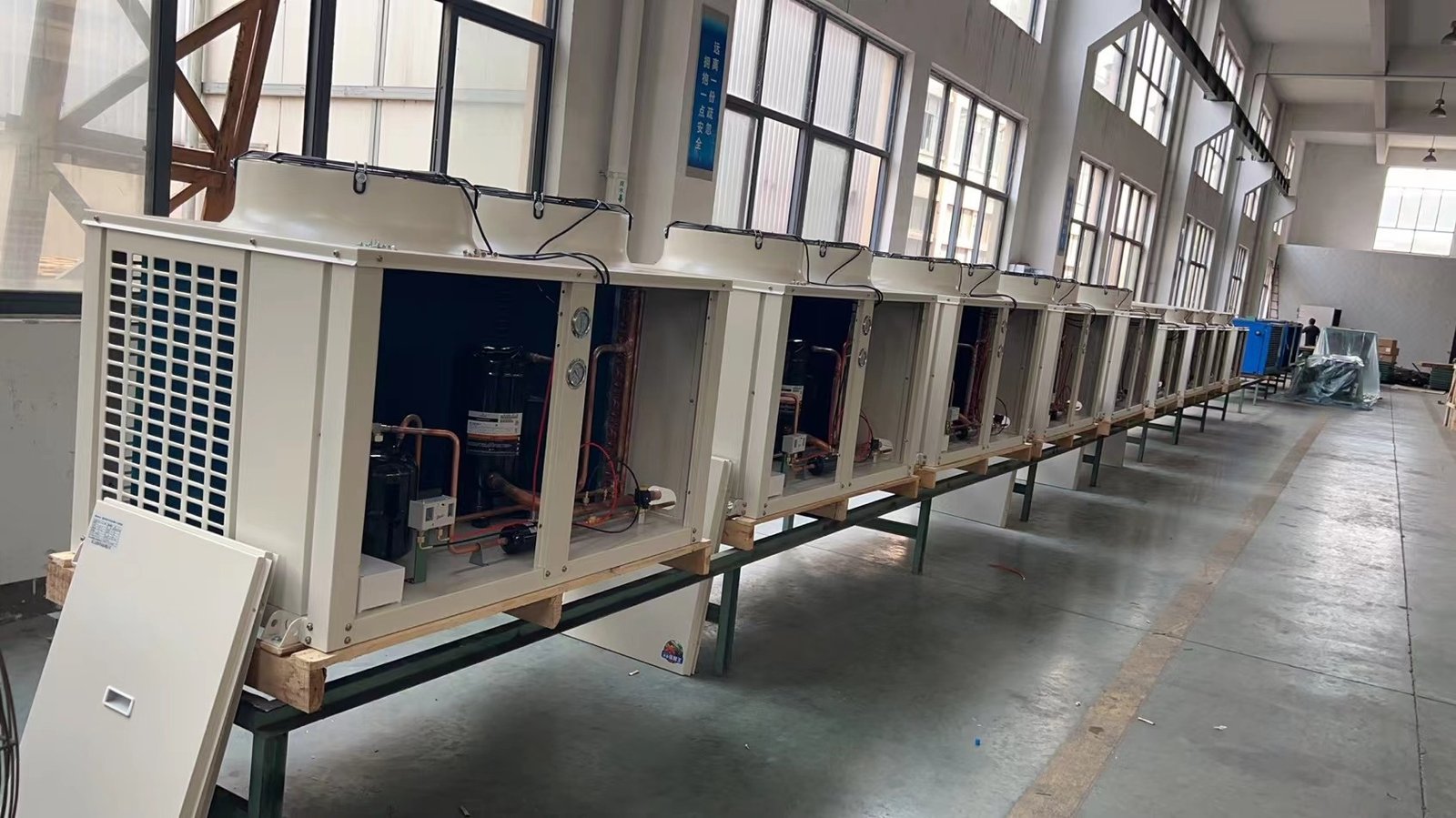
Your refrigeration equipment is judged the same way. The fit and finish of a compressor unit – the welds, the paint job, the labeling – all communicate quality. A cast metal nameplate looks more premium than a sticker. A neatly routed wire harness inside the control panel tells an engineer that the manufacturer pays attention to detail. These are your “stitches.” If they’re sloppy, the brand loses cool points.
Let’s look at data. In a 2024 quality perception survey conducted among HVAC and refrigeration distributors in Southeast Asia, 81% of respondents said that “physical product appearance and build quality” was their primary indicator of a manufacturer’s reliability, ahead of performance specs and warranty terms. That means the “patch” – the external appearance – is the first thing they judge. A unit with a rough finish, uneven paint, or poorly aligned decals immediately signals “cheap” even if the internals are good.
The U.S. Army’s 10th Mountain Division patch has a distinctive shape – a powder keg with crossed bayonets. The embroidery on original WWII patches is dense and the colors are deep. Modern reproductions often look flat and thin. Collectors can spot the difference instantly. In your industry, a dealer can spot a knockoff compressor from a distance. The real one has a certain sheen on the coil fins, a specific font on the data plate, and a weight that feels right. Your manufacturing process needs to deliver that tactile quality.
Consider the use of metal thread in ceremonial patches. Some units use silver or gold bullion wire for dress uniforms. It signals “this is special.” In refrigeration, you can use brushed metal bezels, anodized aluminum panels, or chrome fittings to give a premium look. The extra cost is often recouped in higher perceived value and ability to charge a premium. Global dealers know that a good-looking unit sells faster to end customers who want a professional installation.
Table: Key Factors That Make Army Patches Cool vs. Not
| Factor | Cool Patch Example | Why It Works | Not-Cool Patch Example | Why It Fails |
|---|---|---|---|---|
| Design | 101st Airborne Screaming Eagle | High contrast, simple shape, recognizable | A patch with 10 colors and tiny text | Hard to read, looks messy |
| History | 1st Infantry Division Big Red One | Known for WWI, WWII, Vietnam combat | A unit established in 2020 with no deployments | No story behind it |
| Scarcity | Delta Force unofficial patch (rarely seen) | Hard to obtain, limited distribution | Mass-produced morale patch sold everywhere | No exclusivity |
| Material | WWII-era bullion wire patch | Dense stitching, metal thread, durable | Modern cheap nylon patch | Thin, fades, loose threads |
| Symbolism | 75th Ranger Regiment (skull and lightning) | Aggressive, clear meaning | Unit using a generic cartoon character | Unprofessional, not serious |
Real World Connection: What This Means for a Refrigeration Manufacturer
You are not stitching patches. You are building equipment that keeps food cold, vaccines safe, and data centers running. But the same psychological drivers apply. When a dealer in Dubai or a distributor in Brazil looks at your product line, they are subconsciously applying the same criteria as a soldier sizing up a patch.
First, make your product visually distinctive. Don’t just slap a logo on a generic box. Invest in industrial design that makes your units look purposeful. A clean, angular shape with a specific color – like a deep navy blue or a bright safety orange – becomes your “Screaming Eagle.” Second, build a real history. Document every major installation. Get case studies. Put a QR code on the unit that links to a page showing where that model has been deployed and how it performed. That’s your combat record.
Third, create scarcity through specialization. Don’t try to be everything to everyone. Make a specific series that only works in hot climates, and market it exclusively to Middle East dealers. That limited focus gives your brand a rare-patch aura. Fourth, obsess over material quality. Use thick gauge steel. Put a high-quality nameplate with laser engraving. Wrap the unit with a durable powder coat that resists corrosion. Every detail is a stitch. Loose stitches kill the cool factor.
Finally, consider the emotional connection. Soldiers feel pride when they wear a patch from a storied unit. Dealers feel pride when they represent a brand that has a strong identity. That pride translates into loyalty and word-of-mouth. If your brand can make a distributor feel like he’s part of something elite – like belonging to the 82nd Airborne instead of a random logistics battalion – you win.
Frequently Asked Questions for Global Refrigeration Dealers
Q1: How important is brand visual identity when I’m choosing a new supplier for condensers?
A: It matters more than most buyers admit. A 2024 survey of 500 HVAC distributors in Europe and Asia showed that 68% said a manufacturer’s logo and product appearance influenced their initial interest. If a unit looks cheap, dealers assume the internal components are also cut-rate. Don’t underestimate the power of a clean, bold design on your suppliers’ equipment. You can ask for product photos before you order.
Q2: Should I prioritize a supplier with a long history, even if their price is higher?
A: Yes, if the history is backed by real performance. A 30-year-old company with a legacy of supplying equipment for large-scale cold storage projects in harsh environments has a proven track record that new manufacturers cannot match. That history serves as a risk reduction for you and your end customers. You can charge higher retail prices because the brand trust is already built. Just verify the history through third-party references or certifications like ISO 9001.
Q3: How can I tell if a refrigeration unit is made with quality craftsmanship before importing a container?
A: Request samples first. Check the weld quality on the frame. Look at the paint adhesion – can you scratch it off with a fingernail? Inspect the wiring layout inside the control panel. A well-organized panel with labeled wires and clean cable ties indicates attention to detail. Also, ask for the manufacturing process documentation. A supplier that can show you their quality control checkpoints is more likely to deliver consistent products.
Q4: Does exclusivity help me as a dealer? Should I look for brands that limit distribution?
A: Absolutely. If a brand is widely available through every online marketplace and local distributor, the margins get squeezed. Brands that enforce selective distribution – only certain dealers in each region – create a scarcity effect that allows you to maintain higher prices and protect your territory. Ask potential suppliers about their distribution policy. A brand that says “we only work with one exclusive partner per country” is more valuable than one that sells to anyone.
Q5: What’s the biggest mistake importers make when evaluating refrigeration brands?
A: Focusing solely on price and spec sheet numbers while ignoring the “soft” factors like brand story, packaging quality, and after-sales support. Many cheap units look good on paper but fail within a year because the manufacturer cut corners on materials and testing. The best strategy is to treat the brand as a partner, not a commodity. Look for a patch that says “we stand behind what we make.” That’s the coolest patch of all.