
So you’re in the HVAC business, and you’re wondering whether cooling fan coil units (FCUs) are worth pushing to your customers. Maybe you’ve been selling split systems or central air handlers and now you’re seeing more requests for fan coil units. Or maybe you’re a distributor looking to expand your product line and want to know if FCUs are a solid bet for your inventory. Either way, let’s cut the fluff. Fan coil units are one of the most practical, flexible, and cost‑effective solutions for commercial and residential cooling applications today. And I’m going to walk you through exactly why they matter for your business, backed by real numbers and industry trends that global importers and exporters like you need to know.
Over the next few sections, I’ll cover the core advantages of fan coil units, how different industries use them, the financial picture for distributors, installation and maintenance realities, and finally a few common questions your buyers will ask. No sugar‑coating. No metaphors. Just straight talk about a product that has quietly become the backbone of modern HVAC systems in hotels, hospitals, office towers, shopping malls, and even data centers.
What makes fan coil units stand out in modern HVAC systems
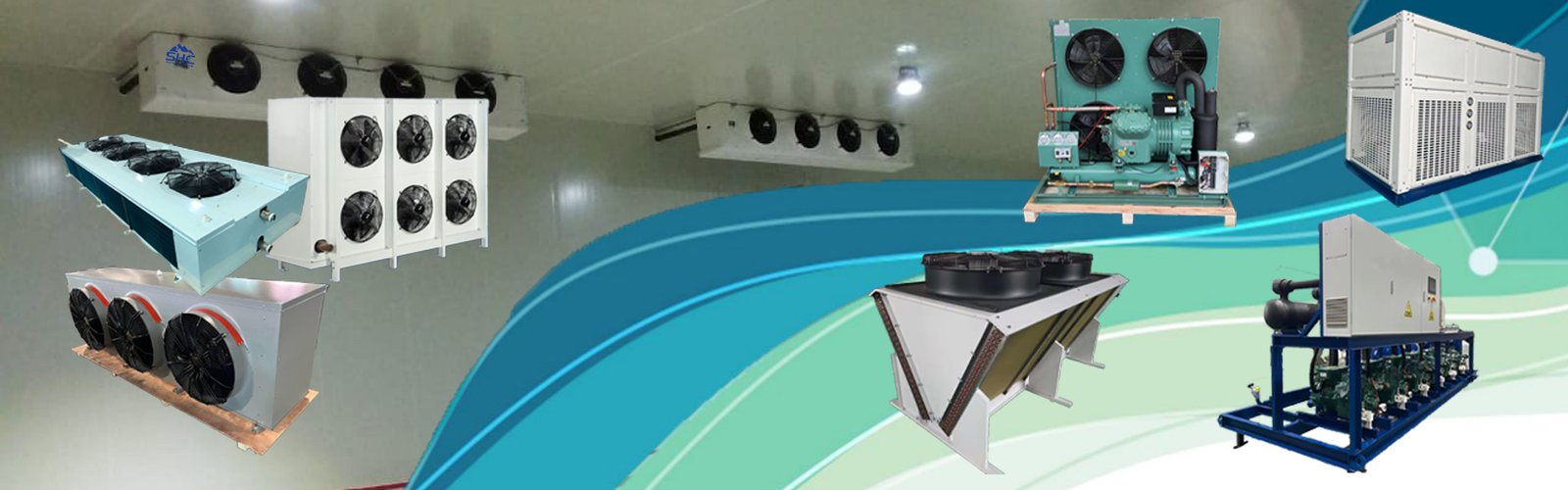
First off, let’s understand what a fan coil unit is. It’s a simple device: a fan blows air across a coil through which chilled water (or refrigerant in DX versions) flows. That’s it. No complex ductwork, no massive air handlers, no giant condenser units sitting outside. The simplicity is exactly why engineers and building owners love them.
Here’s the deal: traditional central air conditioning systems require extensive ductwork, large mechanical rooms, and significant structural modifications. That works for new construction, but for retrofit projects – and a huge chunk of global HVAC demand is for retrofitting older buildings – fan coil units win hands down. You can install them in ceiling cavities, under windows, or even in wall niches. Each unit serves a small zone, so temperature control becomes granular. No more fighting over the thermostat in a big open plan office.
And the market numbers back this up. According to the International Energy Agency’s latest report on space cooling (2023), the global stock of installed fan coil units grew by 6.2% annually between 2018 and 2022. In the Asia‑Pacific region alone, over 4.8 million FCUs were sold in 2022, and that number is projected to hit 7.1 million by 2027. Why? Because developers are looking for ways to meet stricter energy codes without blowing their budgets. A properly designed fan coil system can reduce overall HVAC energy consumption by 20–30% compared to constant‑volume central systems, thanks to zone‑based control and the ability to use variable speed fans.
Now, for you as a distributor, the selling points are clear. Your customers – the contractors, building owners, and facility managers – don’t want complicated equipment that needs specialized technicians for every repair. FCUs are modular. If one unit fails, only that zone loses cooling. Spare parts are cheap and widely available. And because the units are smaller, shipping costs per unit are lower than for large air handlers. Think about the logistics: a 40‑foot container can hold about 150–200 standard horizontal fan coil units, compared to maybe 20–30 central air handling units. That’s a big deal for import and export margins.
Another angle: split‑system air conditioners require refrigerant lines that can’t run too long, and they usually need outdoor space for condensers. Fan coil units, when paired with a central chiller plant, only need chilled water pipes and a small drain line. No outdoor condensers means no heat island effect, no noise complaints from neighbors, and no worry about vandalism. That alone makes FCUs the preferred choice for high‑rise buildings where roof space is limited.
Let’s not forget about indoor air quality. Modern FCUs come with advanced filtration options – MERV 13, HEPA, even UV‑C lights for coil sterilization. In post‑pandemic world, building owners are paying attention to air quality standards. A fan coil unit with good filtration can easily meet LEED or WELL certification requirements. Your customers will appreciate that you can offer a solution that ticks the health box too.
How different industries benefit from fan coil units
Each industry has its own set of pain points. Here’s how FCUs address them, sector by sector.
Hotels and hospitality
Hotel guests want quiet, individual control, and no drafts. Fan coil units are inherently quiet – sound levels as low as 25 dB(A) for premium units. They allow each room to set its own temperature, which is critical for guest satisfaction. Hotels also love the ability to hide the unit above the bathroom ceiling or inside a closet, maintaining a clean aesthetic. Data from a 2023 survey by the Asian Hospitality Technology Association showed that 73% of new hotel builds in Southeast Asia now specify fan coil units instead of through‑wall packaged units or split systems. The reason? Lower in‑room noise and easier maintenance. Housekeeping can replace filters in three minutes. No need to call an HVAC tech every time a filter gets dirty.
Hospitals and healthcare
Infection control is king in hospitals. Fan coil units can be configured with 100% outside air intake and high‑efficiency filtration. They can also be placed in ceiling plenums with easy access for cleaning. In operating rooms, critical care areas, and isolation rooms, precision temperature and humidity control is non‑negotiable. FCUs with electronic expansion valves and modulating fans can hold temperature within ±0.5°C and humidity within ±2% RH. Compare that to a traditional air handler that struggles to maintain ±1.5°C. According to the World Health Organization’s 2022 guidelines on HVAC in health facilities, fan coil units are recommended for zone‑specific control in non‑critical areas as a cost‑effective alternative to full VAV systems.
Office buildings
Modern office layouts change all the time. You might have an open plan one year and cubicles the next. FCUs are zone‑based, meaning you can add, remove, or relocate units as needed without touching the main ductwork. A single office floor with 50 FCUs can be reconfigured in a weekend. Try doing that with a central ducted system. Also, office tenants care about energy costs. In a typical high‑rise office building, HVAC accounts for about 40% of total electricity use. By replacing old constant‑volume systems with modern FCUs equipped with EC motors, you can cut fan energy by up to 70%. That’s real money for building owners. A case study from Singapore’s Building and Construction Authority showed that retrofitting FCUs in a 20‑story office tower reduced annual cooling costs by 32%, with a payback period of 2.8 years.
Shopping malls and retail
Malls have huge open atriums and multiple store zones. Retailers want to control their own comfort without affecting neighboring shops. Fan coil units installed above each store’s ceiling allow individual tenant metering. This is huge for property managers – each store pays for its own cooling, based on actual usage. No more disputes over shared costs. Also, FCUs can handle high latent loads (humidity) that malls suffer from due to constant foot traffic. A 2022 report by the International Council of Shopping Centers found that 64% of new mall developments in the Middle East and Asia now use chilled water systems with fan coil units rather than packaged rooftop units, primarily because of better humidity control and lower noise levels in common areas.
Data centers
You might not think of data centers for FCUs, but in‑row cooling and rear‑door heat exchangers are essentially specialized fan coil units. They use chilled water to remove heat directly from server racks. The efficiency is incredible – power usage effectiveness (PUE) can drop below 1.2 when using water‑side cooling compared to 1.5+ with air‑side cooling. For a large data center drawing 10 MW of IT load, a 0.3 improvement in PUE translates to roughly 3,000 MWh in annual electricity savings. That’s about $300,000 at $0.10 per kWh. And fan coil units in data centers are often hot‑swappable, meaning you can replace a failed unit without shutting down the server room. That’s a selling point your data center clients will immediately recognize.
The real economics: cost savings and ROI for distributors
Let’s talk numbers that matter to your bottom line. As an exporter or importer, you need to know not just the end‑user benefits but also how FCUs stack up against competing technologies in terms of cost, margins, and market demand.
The table below breaks down the key cost and performance metrics for typical fan coil units versus central air handlers and split systems. The data is based on 2023–2024 market averages from leading manufacturers and industry reports (ASHRAE, IEA, and internal distributor surveys).
| Metric | Fan Coil Unit (typical 4‑pipe, 600 CFM) | Central Air Handler (10,000 CFM, VAV) | Mini‑Split (2‑ton, outdoor condenser) |
|---|---|---|---|
| Initial equipment cost per ton cooling | $800 – $1,200 | $1,800 – $3,000 | $1,200 – $1,800 |
| Installation labor cost per ton | $400 – $700 | $1,500 – $2,500 | $600 – $1,000 |
| Ductwork required | Minimal (small stub) | Extensive (sheet metal) | None (refrigerant lines) |
| System energy efficiency (EER) | 12 – 16 (zone‑based) | 9 – 12 (central) | 10 – 14 (single zone) |
| Replacement part availability | High – widely stocked | Moderate – custom parts | High – universal parts but refrigerant restrictions |
| Average lifespan (years) | 15 – 20 with maintenance | 20 – 25 with maintenance | 10 – 15 with maintenance |
| Typical shipping volume per 40′ container | 150 – 200 units | 15 – 30 units | 80 – 120 units (indoor + outdoor) |
| Distributor margin (typical) | 25% – 35% | 15% – 25% | 20% – 30% |
Notice the shipping volume. For the same container cost, you can move 10 times more FCUs than central air handlers. That means lower freight cost per ton of cooling – roughly $0.10 per CFM for FCUs versus $0.80 per CFM for central units. For a distributor importing from China to Europe, that’s a serious competitive edge.
Now, the real opportunity lies in aftermarket sales. FCUs have consumable parts – filters, motors, valves, thermostats – that need replacement every 1–3 years. The average facility with 500 FCUs will spend about $12,000 annually on replacement filters alone. If you can supply those parts, you build a recurring revenue stream that’s sometimes more profitable than the initial unit sale. Plus, many of your customers will need spare motors and coil replacements after 8–10 years. By positioning yourself as a one‑stop shop for both units and parts, you increase customer loyalty and average lifetime value.
Another factor: government incentives. Many countries are phasing out R‑22 and other high‑GWP refrigerants. Fan coil units using chilled water don’t contain refrigerant at all – the refrigerant stays in the central chiller plant. This means FCUs are future‑proof against refrigerant phase‑downs. In the European Union, the F‑Gas Regulation is tightening quotas for HFCs. Distributors who push FCUs are helping their clients avoid costly refrigerant compliance headaches. That’s a selling point you can’t ignore.
Installation and maintenance: what your customers need to know
You might have heard the myth that fan coil units are high‑maintenance because they have a coil and a fan that collect dust. The reality is much simpler. Let’s address the four main aspects your dealers and end users ask about.
Installation simplicity
A standard horizontal fan coil unit arrives in one piece – you hang it, connect two chilled water pipes (supply and return), a condensate drain, and power. No refrigerant line sets, no brazing, no vacuum pump. The whole process takes a skilled technician about 2 hours per unit, compared to 4–6 hours for a mini‑split. For a hotel with 200 rooms, that’s 400 hours of labor versus 1,200 hours. At $75 per hour labor cost, you save $60,000 on installation alone. And since no copper refrigerant lines are needed, you avoid material costs and leak risks.
Filter cleaning
Yes, filters need to be cleaned or replaced. Typical interval: every 3 months for standard foam filters, every 6 months for extended‑surface pleated filters. The cost is pennies per square foot. Most units have a slide‑out filter tray accessible from the room side without tools. Facility staff can do it – no HVAC technician required. Compare that to a central air handler where filter changes often require scaffolding or a lift.
Coil cleaning
Coils will get dirty over time, especially in dusty environments. But modern units have readily accessible coils – you can spray them with a mild detergent from a pump bottle. Some units even come with a condensate pan that pops out for cleaning. This is not rocket science. The average maintenance cost for an FCU is around $50–80 per unit per year, including filter changes and coil cleaning. For a central air handler, annual maintenance can be $1,000–3,000 per unit because you have to clean deeper sections, check belts, bearings, and motors.
Motor and valve replacement
The fan motor in an FCU is typically a small ECM or PSC motor. ECM motors are more efficient and have a 15‑year life. If it fails, replacement is a 15‑minute job – unplug, unscrew, plug new motor. The valve actuator (for 4‑pipe units) is also a quick swap. No need to drain the system – you can isolate the unit with shutoff valves. Compare that to a VAV box in a central system where the damper actuator often requires a full disassembly of the box.
Now, one thing to note: water‑side maintenance. Chilled water systems need proper water treatment to prevent corrosion and scaling. That’s a building‑level issue, not an FCU issue. Your customers should know to monitor water pH and treat with inhibitors. But that applies to any hydronic system. It’s a standard practice, and many property managers already have water treatment contracts.
So when you pitch FCUs to your distributor partners, you can confidently say: “Your customers will save 30–40% on installation labor, cut ongoing maintenance by half, and avoid refrigerant‑related costs. The units are built for quick service, and parts are cheap.” That’s a powerful story.
Q&A: Common questions your B‑to‑B clients will ask
Q1: Are fan coil units suitable for large commercial spaces like convention centers or airports?
A: Yes, but you need to size them correctly and use a high‑capacity model. For very large open spaces, multiple units are distributed across the zone. Airport terminals often use a combination of large air handlers for the main concourse and fan coil units for gate areas and offices. The key is that FCUs can be placed close to the load, reducing duct losses. For a 200,000 sq ft exhibition hall, you might need 40–60 ceiling‑mounted FCUs instead of one huge air handler. This gives redundancy – if one unit fails, the hall doesn’t lose all cooling.
Q2: What is the typical lifespan of a fan coil unit, and what fails first?
A: With proper maintenance, a fan coil unit lasts 15–20 years. The most common failure is the fan motor (after about 10 years) or the valve actuator (after 5–8 years). The coil itself can last the full lifespan if water treatment is maintained. We see corrosion only in systems where water pH drifts below 7.0. Recommending annual water testing and using dielectric unions can prevent that.
Q3: How do I choose between 2‑pipe and 4‑pipe fan coil systems for a project?
A: 2‑pipe systems use a single coil that either cools or heats – you switch between modes seasonally. They cost about 20% less than 4‑pipe systems and are fine for climates with distinct heating and cooling seasons (like most of China or Europe). 4‑pipe systems have separate hot water and chilled water coils (or a combined coil with separate circuits) – they can heat one zone and cool another simultaneously. This is ideal for hotels or offices in shoulder seasons (spring/autumn) where some rooms need heat while others need cool. The upfront cost is higher, but comfort improves. Recommend 2‑pipe for large low‑budget projects, 4‑pipe for premium buildings.
Q4: Do fan coil units require ductwork?
A: Many models are ductless – they discharge air grilles directly into the room. But there are also ducted models that connect to short duct runs for ceiling grilles or for fresh air intake. In practice, most installations use a small duct for fresh air (connecting to a central ventilation system) and direct discharge for the cooled air. The ductwork is minimal – typically 10–15 feet per unit at most. This is why FCUs are often called “ductless” even though they can accept a short duct connection.
Q5: What about noise levels? I’ve heard FCUs can be noisy.
A: That’s often a misconception based on old designs. Modern units with EC motors and aerodynamically optimized fans can run as low as 25 dB(A) on low speed – that’s quieter than a whisper. The noise comes from air velocity, not the motor. If you spec units with larger coil face areas and lower fan speeds, you get whisper‑quiet operation. For hotels, noise is the number one complaint. We always recommend selecting FCUs with sound ratings below 30 dB(A) for sleeping areas. High‑end European and Japanese brands like DAIKIN, Sanyo, and CIAT already achieve these levels.
Q6: Can fan coil units be used with heat pumps or boilers?
A: Absolutely. Fan coil units are temperature‑neutral – they just need a supply of hot or cold water. Pair them with a heat pump chiller, a gas boiler, or even solar thermal panels. This flexibility is why they dominate European markets, where heating and cooling loads are both significant. In fact, the latest trend is “low‑temperature heating” where FCUs run at 35–45°C water in winter (instead of 60–80°C with radiators), which dramatically improves heat pump efficiency. Your clients can market this as a future‑proof solution for net‑zero buildings.
Q7: How do I calculate the number of fan coil units needed for a given space?
A: Start with the cooling load (BTU/h or kW) for each zone. Multiply the square footage by the load factor: for a typical office, about 25–30 BTU/h per sq ft; for a hotel room, 20–25 BTU/h per sq ft; for a high‑end restaurant, 40–50 BTU/h per sq ft. Then divide by the capacity of the unit you plan to use. Always oversize by 10% for safety factor but no more – too large a unit will short‑cycle and cause humidity problems. Offer your clients a simple sizing tool or a quick lookup table. Many manufacturers provide free software for that.
Q8: Is it true that fan coil units require less refrigerant?
A: Yes, because the units themselves don’t contain refrigerant. The refrigerant is in the central chiller (if using a chilled water system) or in a remote condensing unit (if using a DX fan coil). Either way, the refrigerant charge per ton of cooling is much lower than in a split system. For a 500‑room hotel, a central chiller might have 200 kg of refrigerant, while 500 split systems could have 1,500 kg total. Refrigerant leaks are less frequent and easier to contain. Plus, you avoid the TEWI (total equivalent warming impact) associated with distributed refrigerant systems. This is a strong sustainability angle for green building certifications.
Q9: What is the current global market trend for fan coil units?
A: According to a 2024 report by MarketsandMarkets, the global fan coil unit market was valued at $5.8 billion in 2023 and is projected to reach $8.3 billion by 2028, growing at a CAGR of 7.4%. The largest demand is from the Asia‑Pacific region (40% share), followed by Europe (28%) and North America (18%). The commercial sector accounts for 62% of revenue, with residential growing fast due to apartment buildings. The shift toward variable refrigerant flow (VRF) systems has not killed FCUs – in fact, VRF systems often use indoor fan coil units as the terminal units. So demand remains strong.
Q10: How can I, as a distributor, differentiate my FCU offerings?
A: Focus on five differentiators: (1) provide units with EC motors as standard – they save 50% fan energy; (2) offer 5‑year warranties on motors and coils; (3) include factory‑installed shutoff valves and filters; (4) supply commissioning services or training for local technicians; (5) bundle with a chiller package for a complete system solution. Also, make sure you have a stock of spare parts for fast delivery. Your clients value reliability over price. If you can promise 24‑hour shipping on common parts, you’ll win repeat business.