
How to Select a Rittal Enclosure Cooling Unit: A Straight-Talk Guide for Industrial Buyers
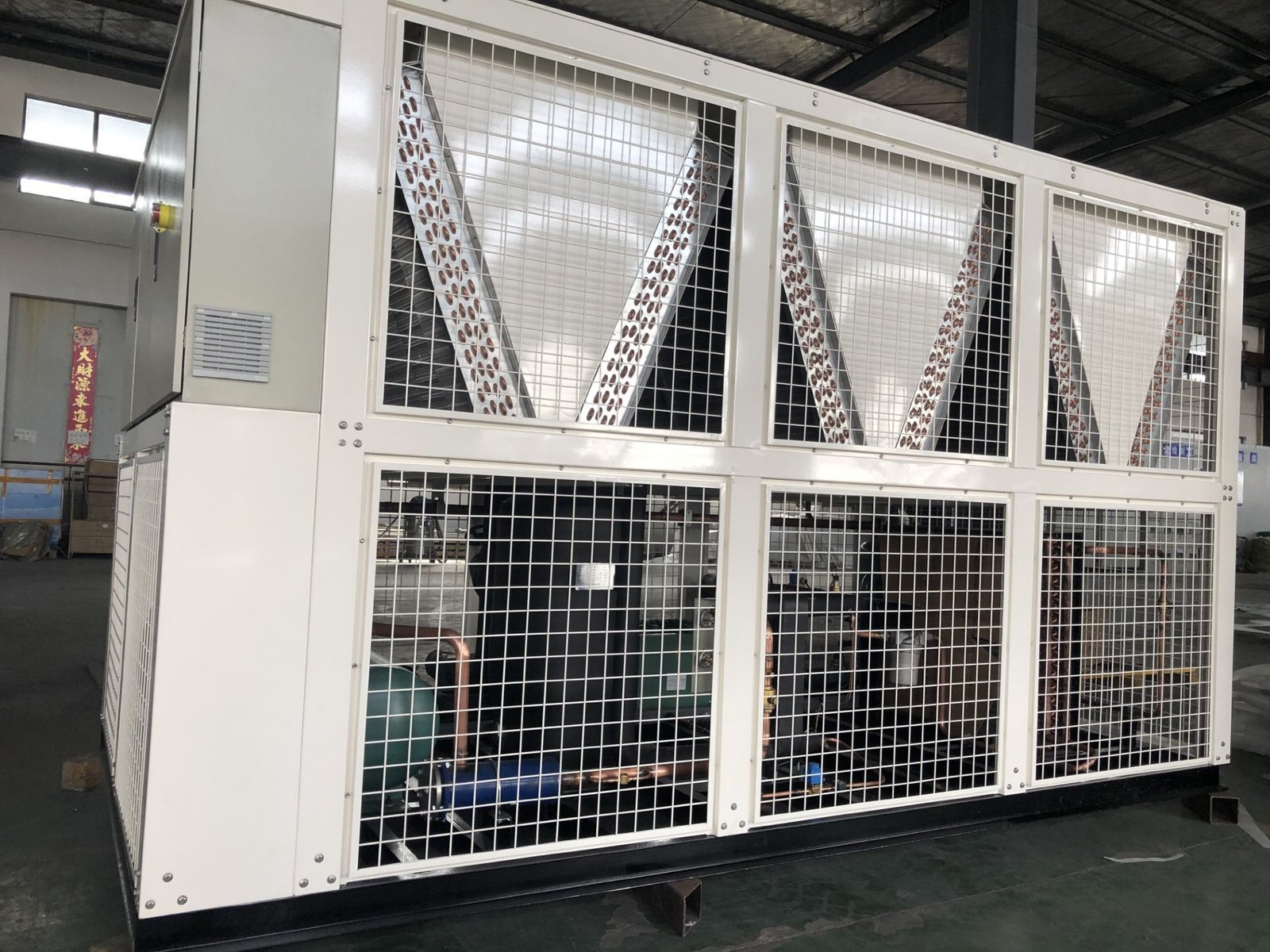
You’re looking at a Rittal enclosure – maybe it’s holding a CNC controller, a PLC rack, a telecom repeater, or a solar inverter. Inside, your expensive electronics are pumping out heat. You need a cooling unit that keeps everything running without tripping or failing. Rittal makes dozens of models, from the classic TopTherm series to the energy‑saving Blue e+. The wrong choice means downtime, wasted cash, or a melted circuit board. Let’s walk through the exact steps you need to take. No fluff, no metaphors – just the real numbers and decisions.

Step 1 – Nail Down Your Heat Load Before You Do Anything Else
This is the #1 mistake I see from buyers. They guess the cooling capacity, pick a unit based on enclosure size, and then wonder why it can’t keep up. You need to calculate the total heat generated inside that enclosure. Here’s the simple formula:
Heat load (BTU/h) = Total power dissipation of all devices inside (Watts) × 3.412.
Why 3.412? Because 1 Watt = 3.412 BTU per hour. If you prefer kilowatts, 1 kW = 3412 BTU/h. Let me give you a real example. Say you have a servo drive that draws 2000 W, a PLC that consumes 500 W, and a small power supply at 150 W. That’s 2650 W total. Multiply by 3.412 and you get about 9042 BTU/h. Now, you shouldn’t run a cooling unit at 100% capacity all the time – that shortens its life. Add a safety margin of 20% for peak loads and future expansion. So 9042 × 1.2 = 10,850 BTU/h. That’s your target.
But what if you don’t know the exact wattage of every device? Most electrical cabinets have a nameplate rating. Add up the input power of all drives, transformers, and controllers. If you’re retrofitting an old panel, you can measure the current with a clamp meter and multiply by voltage to get approximate power (P = I × V). Don’t forget about the heat from the enclosure itself if it’s sitting in direct sunlight – add another 10-15%.
Now, match that to Rittal’s lineup. Here’s a table with typical capacities for their most common series. Data is based on Rittal’s 2024 catalog and field experience.
| Rittal Series / Model | Cooling Capacity (BTU/h) | Cooling Capacity (kW) | Typical Voltage | Enclosure Width Recommendation | Approx. Price Range (USD) |
|---|---|---|---|---|---|
| TopTherm 3302.410 | 3,000 | 0.88 | 115V / 230V | Up to 600 mm wide | $450 – $600 |
| TopTherm 3304.415 | 5,300 | 1.55 | 115V / 230V | 600 – 800 mm | $650 – $850 |
| TopTherm 3306.420 | 8,500 | 2.49 | 230V / 400V | 800 mm – 1000 mm | $850 – $1,100 |
| TopTherm 3308.430 | 12,500 | 3.66 | 230V / 400V | 1000 mm – 1200 mm | $1,100 – $1,400 |
| Blue e+ 3370.710 | 18,000 | 5.28 | 230V / 400V 3‑ph | 1200 mm – 1400 mm | $2,200 – $2,800 |
| Blue e+ 3372.720 | 25,000 | 7.33 | 400V 3‑ph | 1400 mm – 1800 mm | $3,000 – $3,800 |
| Blue e+ 3374.730 | 36,000 | 10.55 | 400V 3‑ph | 1800 mm+ | $4,200 – $5,500 |
The 12,500 BTU/h TopTherm would be right for our 10,850 BTU/h example. But look at the Blue e+ models – they’re more expensive upfront but use inverter compressors that cut energy use by up to 30% compared to fixed‑speed TopTherm units. If the enclosure runs 24/7, the payback can be under two years.
One more thing: If you’re cooling a server rack full of 1U equipment, the heat load per rack can easily hit 20,000 BTU/h or more. Don’t guess – get a thermal camera or check the PDU power readings. For outdoor telecom cabinets, you also have to add solar radiation (about 1000 W/m² on the enclosure surfaces). That can add another 2,000‑5,000 BTU/h depending on cabinet size and location.
Step 2 – Match the Cooling Unit to Your Real-World Environment
The factory floor is not a clean, air‑conditioned office. Dust, humidity, oil mist, and extreme temperatures will kill a cooling unit fast if you pick the wrong version. Rittal offers a range of environmental options, and you have to check the datasheet for each model.
Indoor clean environment (e.g., a climate‑controlled server room):
You can use standard TopTherm or Blue e+ units with IP54. The ambient temperature should stay between +10°C and +55°C (50°F to 131°F). No special coatings needed.
Factory floor with moderate dust and vibration:
Get a unit with a washable filter (Rittal offers a “Filter Mat” option) or even a closed‑loop cooling system that doesn’t pull in outside air. The Blue e+ models have a condenser coil that’s easier to clean. For dusty environments like cement plants, go for an air‑to‑air heat exchanger instead of a refrigerant‑based unit – less maintenance, though less cooling capacity per dollar.
Outdoor installations (telecom towers, EV charging stations, solar farms):
You need an outdoor‑rated unit with IP56 or higher. Rittal’s “Outdoor” variants include a coated condenser, a rain shield, and a heater to prevent condensation inside the enclosure. The ambient temperature range for these is –20°C to +60°C (–4°F to +140°F). Some models also include a galvanic isolation for the control electronics. If you’re in a coastal area, pick a unit with a special anti‑corrosion treatment (e.g., C5‑M coating).
High‑humidity and washdown environments (food processing, breweries, chemical plants):
Humidity causes condensation inside the enclosure if the cooling unit’s evaporator is too cold. Rittal has “condensate management” options – some units evaporate the water automatically, while others have a drain tube. For washdown areas, you need a stainless‑steel enclosure (304 or 316) and a cooling unit with an IP66 rating. The Rittal “Stainless Steel” series, like the TopTherm SS, come with a fully welded housing and no exposed fasteners.
Here’s a quick reference table for environment vs. recommended features:
| Environment | Key Risks | Recommended Rittal Feature | Example Model |
|---|---|---|---|
| Indoor, clean | Low | Standard IP54, no extras | TopTherm 3302.410 |
| Factory, dusty | Filter clogging, coil fouling | Washable filter, closed‑loop or Blue e+ with easy‑clean condenser | TopTherm 3306.420 with filter mat, or Blue e+ 3370.710 |
| Outdoor, hot desert | High ambient temp, solar load | Outdoor variant, +60°C ambient, condensation heater | Blue e+ Outdoor 3372.720‑O |
| Coastal, offshore | Corrosion | C5‑M coating or stainless steel | TopTherm SS 3304.415‑SS |
| Food & beverage | High humidity, washdown | Stainless steel, IP66, automatic condensate evaporation | TopTherm SS‑W 3308.430‑SS‑W |
One real‑world case: A client in Phoenix, Arizona, put a standard TopTherm on an outdoor electrical panel. Summer temps hit 48°C (118°F). The unit shut down every afternoon because its ambient rating was only 55°C. They switched to an outdoor model with a widened compressor range and added a sun shield. No more trips.
Step 3 – Installation Location Matters More Than You Think
You’ve got the right capacity and the right environment rating. Now where do you mount the thing? Rittal cooling units come in three common configurations: top‑mounted, side‑mounted, and door‑mounted. Each has airflow implications and clearance requirements.
Top‑mounted: The unit sits on top of the enclosure. Hot air rises naturally into the unit’s evaporator, which is efficient. But you need at least 200 mm (8 inches) of clearance above the enclosure for airflow and maintenance. If your panel is against a ceiling, top mounting is impossible. Top‑mount units are common for smaller enclosures (< 800 mm width) and for applications where floor space is tight.
Side‑mounted (wall‑mounted or flange‑mount): The unit attaches to the side wall or the back of the enclosure. This is the most popular style for medium to large enclosures. The cooling unit pulls air from the inside through a cutout, cools it, and returns it. The condenser (hot side) blows out the back or side. You need at least 150 mm clearance on the air‑discharge side. If the enclosure is flush against a wall, you can’t use a side‑mounted unit with rear discharge – look for a model with a front‑facing condenser (Rittal calls this “front‑blower” or “C‑frame” design).
Door‑mounted (door‑built‑in): The cooling unit is integrated into the door of the enclosure. This saves internal space and is ideal for shallow enclosures. But the door becomes heavier, and you have to route cables carefully. Door‑mounted units are common in telecom cabinets and IT racks. Rittal’s Blue e+ door‑mount series is popular for data centers.
Built‑in (sub‑rack or through‑wall): For very tight spaces, Rittal makes units that sit inside the enclosure itself, with the condenser ducted outside. These are rare and typically custom order.
Now, think about airflow direction. The cooling unit should create a circulation pattern inside the enclosure without short‑circuiting. If you mount the unit at the top, the cold air blows down, and hot air rises up – natural convection helps. If you mount it on the side, the cold air should blow toward the bottom of the enclosure, and the return air should come from the top. Don’t put the cooling unit right next to a major heat source like a transformer – it will just recirculate hot air.
Here’s a table showing Rittal’s most common mounting types and their typical applications:
| Mounting Type | Rittal Series Options | Advantages | Disadvantages | Best For |
|---|---|---|---|---|
| Top Mount | TopTherm 3302‑3308 (top version) | Saves floor space, good natural airflow | Requires overhead clearance; limited to smaller capacities | Small panels, machine tools, control boxes |
| Side / Wall Mount | TopTherm, Blue e+ side‑mount | Wide capacity range, easy service access | Needs side clearance; can block adjacent enclosures | Medium to large industrial cabinets, automation cells |
| Door Mount | Blue e+ door‑mount, TopTherm door | No internal space loss, sleek look | Door weight increases; hinge stress; cable routing | IT racks, telecom enclosures, clean rooms |
| Built‑in / Through‑Wall | Custom or special order | Very low profile, isolated condenser | High cost, longer lead time, complex installation | Limited space, outdoor kiosks, mobile equipment |
Real‑world constraint: In a steel mill, the enclosure might be in a row of 10 cabinets. You cannot use side‑mounted units on the middle cabinets because there’s no side clearance. The only option is top‑mount or door‑mount. Rittal makes a slim top‑mount model that fits between the ceiling and the cabinet – but you have to measure the vertical gap first. Always check the installation manual for minimum clearances. I’ve seen installers ignore the 150 mm rule and then wonder why the unit trips on high pressure within a month.
Step 4 – Energy Efficiency and Noise: The Hidden Cost Drivers
A cooling unit runs 24/7 in many applications. Over a decade, the electricity cost can exceed the purchase price by 5‑10 times. That’s why the Blue e+ series exists – it uses a variable‑speed inverter compressor and EC fans. Compared to the traditional TopTherm (fixed‑speed piston compressor and AC fans), the Blue e+ cuts energy consumption by up to 30% in partial load conditions. Since most cooling units run at partial load most of the time, that’s a big deal.
EER (Energy Efficiency Ratio) – Rittal publishes EER values for each model at a given ambient temperature. For example, a Blue e+ 3370.710 has an EER of 3.2 at 35°C ambient, meaning it delivers 3.2 kW of cooling for every 1 kW of electrical input. A comparable TopTherm 3308.430 might have an EER of 2.0. Over a year of continuous operation at 5 kW cooling load, the difference in power consumption is about 4,000 kWh – worth roughly $400‑$600 at typical industrial electricity rates. The price premium for Blue e+ is often $1,000‑$1,500, so payback is 2‑3 years.
But energy efficiency isn’t the only factor. Noise matters if the unit is in an office, a lab, or a warehouse where people work nearby. Rittal lists sound pressure levels (at 1 meter) for each model. Here’s a comparison:
| Model | Cooling Capacity (BTU/h) | Sound Pressure Level (dB(A)) | Notes |
|---|---|---|---|
| TopTherm 3302.410 | 3,000 | 52 | Acceptable for most shop floors |
| TopTherm 3306.420 | 8,500 | 58 | Louder – don’t use in quiet areas |
| TopTherm 3308.430 | 12,500 | 62 | Can be intrusive near workstations |
| Blue e+ 3370.710 | 18,000 | 48 | Inverter technology reduces noise |
| Blue e+ 3372.720 | 25,000 | 51 | Still quieter than 8,500 BTU/h fixed |
| Blue e+ 3374.730 | 36,000 | 55 | Good for data centers with some ambient noise |
Notice that a Blue e+ 3370.710 at 48 dB(A) is quieter than a much smaller TopTherm 3302.410. If you’re cooling a remote telecom cabinet that’s near a residential area, noise complaints are real – go for the Blue e+ or use an air‑to‑air heat exchanger if the heat load is modest.
Another efficiency angle: Rittal now offers a “Hybrid” cooling unit for outdoor cabinets that uses a thermosiphon when ambient is cold, switching to compressor cooling when it’s hot. The Blue e+ S (Sustainability) series claims up to 75% energy savings in Nordic climates. But these are more expensive and only make sense if you have seasonal temperature swings.
Step 5 – Certifications, Global Approvals, and Special Industry Requirements
You’re a global trading company – you ship cooling units to different continents. Each destination has its own mandatory certifications. Rittal is good about offering multiple certification options for the same hardware, but you must specify at the time of ordering. Here’s the landscape:
North America: UL 484 listing is required for air conditioners used in electrical enclosures. Rittal has UL‑listed versions for all TopTherm and Blue e+ models. Also need cUL for Canada. For hazardous locations (Class I Division 2), Rittal offers “HazLoc” versions with spark‑proof components and special labels.
Europe: CE marking is mandatory. The relevant standard is EN 60601? No, for industrial cooling it’s EN 14511 (performance), and EN 60730 (safety). As of 2023, the EU Ecodesign directive (Lot 13) sets minimum EER values – make sure the model you buy meets the current tier. Most Blue e+ units already exceed 2025 requirements.
China: CCC (China Compulsory Certification) is required for any cooling unit sold domestically. Rittal’s “CCC” series is available, but not all export models carry it. Check with your Rittal distributor.
Marine and offshore: DNV‑GL, ABS, or Lloyd’s Register certification needed for ships and oil rigs. Rittal’s “Marine” cooling units have reinforced compressors and corrosion‑proof enclosures.
Food industry: NSF/ANSI 7 certification for commercial refrigeration. If the cooling unit is mounted inside a food processing area (not just an electrical room), you need an NSF‑listed model with easy‑to‑clean surfaces and no harborage points.
- Medical / laboratory: Some hospitals require IEC 60601‑1‑2 (EMC) compliance. Standard Rittal units usually have industrial EMC levels; check if you need a medical‑grade power supply.
Here’s a table of common certifications and which Rittal series include them:
| Certification | Applicable to | Typical Rittal Models | Notes |
|---|---|---|---|
| UL / cUL | USA, Canada | TopTherm, Blue e+ with “UL” suffix | Most export models have UL available |
| CE (EU) | Europe | All standard models | Automatic with EU distribution |
| CCC (China) | China | Special “CCC” variant | Must order specifically |
| DNV / ABS | Marine | TopTherm Marine, Blue e+ Marine | Enhanced vibration resistance |
| NSF (Food) | Food & beverage | TopTherm SS with NSF option | Stainless steel + smooth finish |
| ATEX / IECEx | Hazardous areas | TopTherm Ex, Blue e+ Ex | Zone 2 / Zone 22 compatible |
If you’re selling to a client who requires a specific certification, do not assume the standard model will qualify. Many Rittal units are built on the same platform but with different components inside. For example, a UL‑listed unit uses a different compressor and fan motor than a CE‑only unit. The price difference is usually 5‑10%.
One more thing about special industries: For railway applications, you might need EN 50155 certification (temperature, shock, vibration). Rittal offers a “Railway” variant with conformal‑coated PCBs and robust connectors. For high‑altitude installations (e.g., mountain telecom sites above 3000 m), the cooling capacity derates – you may need a larger unit. Consult Rittal’s altitude correction factor table.
Frequently Asked Questions (Professional Answers for Dealers and Importers)
Q1: How do I know if I need an air conditioner vs an air‑to‑air heat exchanger?
A1: Simple – if the inside temperature needs to be lower than the ambient temperature, you need an air conditioner (refrigerant‑based). If the outside air is cooler than your desired internal temperature, an air‑to‑air heat exchanger works. Heat exchangers have no compressor, so they’re cheaper and more reliable, but they cannot cool below ambient. For example, a telecom cabinet in a desert where ambient hits 50°C – you must use an air conditioner. For a warehouse where ambient stays below 35°C and your equipment only needs to stay below 45°C, a heat exchanger could work.
Q2: What’s the typical lifespan of a Rittal cooling unit?
A2: With proper maintenance, a Rittal TopTherm can run 7–10 years. Blue e+ units tend to last longer because the inverter compressor runs at lower speeds and has fewer start‑stop cycles. I’ve seen units in clean factories go 15 years. But in dirty environments with no filter changes, the lifespan drops to 3–5 years. The most common failure is a clogged condenser leading to high‑pressure shutdown. Replace filters every 3 months in dusty areas, and clean the condenser coils annually.
Q3: Can I retrofit an older Rittal enclosure with a newer cooling unit?
A3: Yes, but you need to check the cutout dimensions. Rittal has standardized cutout sizes for each series. For example, a TopTherm 3306.420 has a 400mm × 400mm cutout. The newer Blue e+ 3370.710 uses the same cutout pattern, so you can swap directly. However, some older enclosures have different mounting hole patterns – you may need an adapter plate. Rittal sells retrofit kits for common cases. Also, the electrical connection might need an upgrade (older enclosures had only 115V, newer units may require 230V or 400V). Always verify voltage.
Q4: How often should I clean the filters?
A4: It depends on the environment. In a clean office, every 6 months. In a woodworking shop or cement plant, every 2–4 weeks. Rittal’s filter mats have a pressure drop indicator, but you can also inspect visually. When the filter looks grey or clogged, replace it. Running a cooling unit with a dirty filter reduces airflow by up to 40% and can cause the compressor to cycle on high pressure. I recommend setting a calendar reminder – monthly for industrial sites, quarterly for normal conditions.
Q5: What is the warranty period for Rittal cooling units?
A5: Standard warranty from Rittal is 2 years from date of purchase. For Blue e+ models, some distributors offer an extended 3‑year warranty if you register the product online. The warranty covers factory defects but not damage from improper installation or lack of maintenance. If you’re a dealer, you can also purchase extended warranty packages (up to 5 years) through Rittal’s service contracts. Note that outdoor units exposed to extreme UV or salt water might have a shorter warranty unless you buy the outdoor variant with the corrosion package. Always read the fine print on the warranty card.