
AC Condenser Unit Installation 2024: Titanium-Threaded Protocols That Make Profits Bounce Back
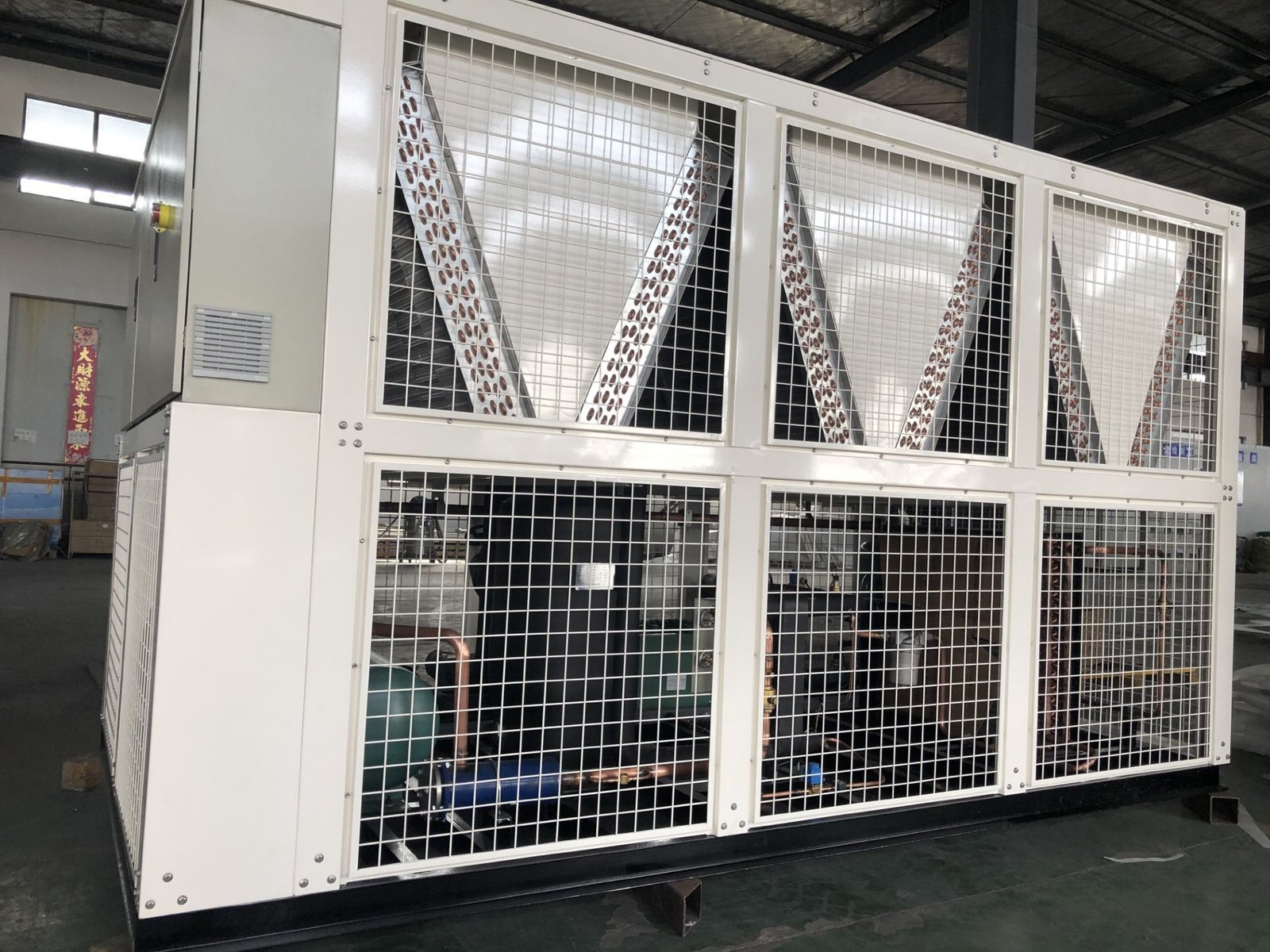
Alright, let’s get straight into it. You’re a distributor, a project manager, or a procurement specialist. Your client just ordered a container of high-efficiency condenser units, or maybe you’re stocking up for the upcoming peak season. The last thing you need is a callback because of a faulty installation that voids the warranty and kills your margin. Installing an AC condenser isn’t just about connecting pipes; it’s the final, critical step that determines system performance, longevity, and your reputation. Get this right, and you secure repeat business. Get it wrong, and it’s a logistical and financial headache. Here’s the no-fluff, field-tested protocol for 2024.

H2: The Unskippable Pre-Installation Checklist: More Than Just Tools
You wouldn’t ship a unit without a packing list. Don’t install one without this list. This phase is 50% of the job.
First, site verification. Your installer needs to be a detective. Is the pad or mounting frame level, stable, and able to support the unit’s weight (check the spec sheet—e.g., 150 lbs for a 3-ton unit)? Is there the mandated clearance? We’re talking a minimum of 24-36 inches on all sides, especially the coil face, with 60+ inches recommended above for optimal airflow and service access. Any shrubbery, fences, or walls closer than that will choke the unit, force it to work harder, and spike energy consumption by up to 15%—data your end-client will notice on their bills.
Next, electrical readiness. This is a major trip-up. The disconnect box must be within sight, typically no more than 25 feet away, as per most electrical codes. Verify the voltage (e.g., 208/230V single-phase) and amperage match the unit’s nameplate and the supplied circuit breaker. A mismatch here is a guaranteed failure. For our B2B partners, providing a simple “Site Readiness Guideline” PDF with these specs in visual format drastically reduces pre-installation queries.
Now, the unit itself. Conduct a pre-install inspection with the client present if possible. Check for shipping damage—dents on the coil fins, a cracked fan blade. Document everything with photos before unwrapping. Verify the model number matches the order (Model: e.g., COND-24HPA). This is your proof of condition upon receipt and protects you from claims for damage you didn’t cause.
| Pre-Installation Critical Data Points (Example for a 3-Ton R-410A Unit) | ||
|---|---|---|
| Parameter | Specification | Consequence of Deviation |
| Pad Levelness | ≤ 1/4″ incline | Vibrations, stress on linesets, noise. |
| Electrical Data | 230V, 1-Phase, 20A Min. Circuit | Component failure, safety hazard. |
| Clearance (Min.) | 24″ all sides, 60″ above | Efficiency drop ~10-20%, premature failure. |
| Refrigerant Type | R-410A (as specified) | DO NOT substitute. Incompatible with R-22 systems. |
| Torque Specs (Example) | Liquid Line: 15-18 ft-lbs | Leaks. Over-torquing damages flare nuts. |
H2: The Core Installation Sequence: A Walkthrough for Field Teams
Safety first—kill power at the main panel AND the disconnect. Let’s place the unit. Use lifting straps, not ropes through the coil fins. Coil fins are aluminum, they bend easily, and a bent fin bank restricts airflow. Once on the pad, use a spirit level. Shim if necessary with non-compressible, weather-resistant shims.
Line set connection. This is where leaks happen. If using a pre-charged quick-connect system (increasingly common for splits), it’s straightforward—just ensure the caps are removed and connections are hand-tight plus a quarter turn with a wrench. For traditional flare connections, the flare must be perfect—no scratches, perfectly circular. Apply a drop of the refrigerant oil (Poe oil for R-410A) to the flare surface before mating to lubricate and aid sealing. Tighten to specification—do not over-tighten. This isn’t a “the tighter the better” situation. It’s precision engineering.
Electrical hookup. Run the high-voltage cables from the disconnect through the conduit and into the unit’s electrical compartment. Match the colors: Black to L1, Red to L2 (for 230V), White to Neutral, Green or bare copper to Ground. Secure the connections tightly on the terminal block. Follow the wiring diagram on the unit’s panel exclusively. Do not assume. Then, connect the low-voltage control wires from the indoor unit (typically a 2- to 5-wire bundle). These are usually color-coded (e.g., Red for 24V power, Yellow for cooling, Green for fan). Secure them to the corresponding terminals. Keep high and low voltage wiring separate to avoid interference.
Vacuum and dehydration. This is non-negotiable. Connect a high-quality vacuum pump and a manifold gauge set to the service valves. Pull a deep vacuum to at least 500 microns (better to aim for 250-300). Let it hold for 15-30 minutes. If the micron level rises significantly, you have a leak or moisture. This step removes air and water vapor. Air causes increased head pressure and inefficiency; moisture mixes with refrigerant to form acids that destroy the compressor from the inside. According to 2023 field data from major servicing networks, over 70% of early compressor failures in the first 18 months are traceable to poor dehydration on installation.
H2: Commissioning, Testing, and The Handover Protocol
The system is now physically installed. Now, we make it live. Open the liquid and vapor line service valves fully, using the appropriate hex key. This releases the factory-holding charge into the system. Power on the system at the thermostat.
Monitor. You should hear the condenser fan start and the compressor engage smoothly—not with a loud, labored hum. Immediately check the manifold gauges. For R-410A, at an ambient temperature of, say, 95°F (35°C), expect a high-side pressure around 300-325 PSI and a low-side around 110-120 PSI. These are examples; always consult the unit’s P/T chart. Measure the temperature difference (“split”) between the return and supply air at the indoor unit. A 16-22°F (9-12°C) split is typical for a properly charged system.
But don’t just rely on pressure. Use a clamp-on ammeter. Check the running amperage of the compressor and fan against the rated load amperage (RLA and FLA) on the nameplate. It should be at or below the rating. An over-amped motor is a failing motor.
The handover is your value-add. Don’t just leave. Provide a one-page commissioning report. Log the final vacuum micron reading, operating pressures, voltage, amperage, and temperature split. Have the end-client sign it. This document proves professional installation, activates the full warranty (most manufacturers require proof of proper installation), and builds immense trust. It turns your shipment from a commodity into a certified solution.
H2: The Five Most Common Post-Installation Failures (And How You Can Prevent Them for Your Clients)
- Tripped Breakers on First Start: Almost always due to incorrect voltage or a wiring fault (loose connection causing a short). Double-check supply voltage and terminal tightness pre-energizing.
- Reduced Cooling Capacity Within Weeks: Often a slow leak at the flare connections due to improper torque or a flawed flare. Emphasize torque wrenches and flare inspection in your technician guidelines.
- Loud Vibration or Humming: Unlevel pad or missing vibration-absorbing pads (if required by model). Also, check if the lineset is rigidly strapped to the house—it should have flexible loops to dampen compressor vibration.
- Ice Formation on the Indoor Coil (Soon after install): This indicates low refrigerant charge, likely from a leak introduced during installation, or a restriction (like a kinked lineset). The vacuum test should have caught a major leak; this points to a poor flare job.
- Condenser Fan Not Spinning: Could be a faulty capacitor—a cheap but critical component. It could also be a wiring error on the low-voltage control wires failing to signal the fan to start. A quick visual check of the capacitor for bulging and a multimeter test can confirm.
Professional Q&A for Distributors & Dealers
Q: A client reports their new unit is making a gurgling/hissing noise intermittently. Is this a defect?
A: Not necessarily. This is often normal, especially in systems with a TXV (Thermostatic Expansion Valve) metering device. The sound is refrigerant flowing through the expansion valve during the cycle. However, constant hissing may indicate a leak. Differentiate by having technicians listen: cycle-related gurgling is fine; persistent hissing, especially near connections, requires a leak check.
Q: We’re shipping to regions with volatile power grids. What installation prep is critical?
A: Beyond basic voltage checks, mandate the installation of a high-grade surge protector at the disconnect box. Voltage spikes are a top killer of compressor control boards. Offering this as a bundled accessory can be a profitable upsell and reduce warranty claims from electrical damage, which is often not covered.
Q: The market is shifting to R-454B and other A2L “mildly flammable” refrigerants. How does installation change?
A: Significantly. For units containing A2L refrigerants, installation codes (like the updated IECC and NEC) require specific measures: no installation in certain confined areas, specific placement relative to ignition sources, revised line-set brazing procedures (requiring nitrogen purge to prevent explosive atmospheres inside pipes), and often specialized leak detectors. Your technical documentation and installer training must be updated in lockstep with the product shift.
Q: Can we use existing R-22 linesets with new R-410A or R-32 condenser units?
A: It is generally not recommended and often voids the warranty. Old linesets may contain incompatible mineral oil residues and often are not sized correctly for the higher-pressure, different flow characteristics of new refrigerants. They may also have weak points or internal corrosion. Always recommend new, clean, correctly sized linesets for a new installation to ensure performance and warranty compliance.