
Let’s talk about industrial cooling units. Not the fancy marketing fluff, not the buzzwords. Just the cold hard facts about what keeps your production lines running, your servers alive, and your medicines safe. If you’re a B2B buyer looking to source cooling equipment for your clients or your own facility, you need to understand how different industries rely on these units. The global industrial cooling market is projected to hit $26.4 billion by 2028, according to a 2024 report from MarketsandMarkets. That’s a compound annual growth rate of 5.7% from 2023. Why? Because every industry that generates heat needs to get rid of it. And I mean every industry.

But not all cooling units are created equal. A chiller that works perfectly for a plastic injection molding plant will fail miserably in a pharmaceutical cleanroom. Different sectors have different temperature ranges, humidity control requirements, and regulatory standards. Your job as a distributor or exporter is to match the right unit to the right application. Let’s break it down by the top industries that are buying industrial cooling units right now.
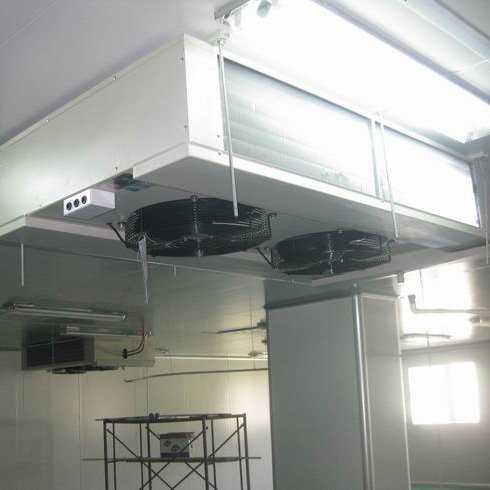
Food and Beverage Processing: Where Temperature Control Is Literally a Matter of Life and Death
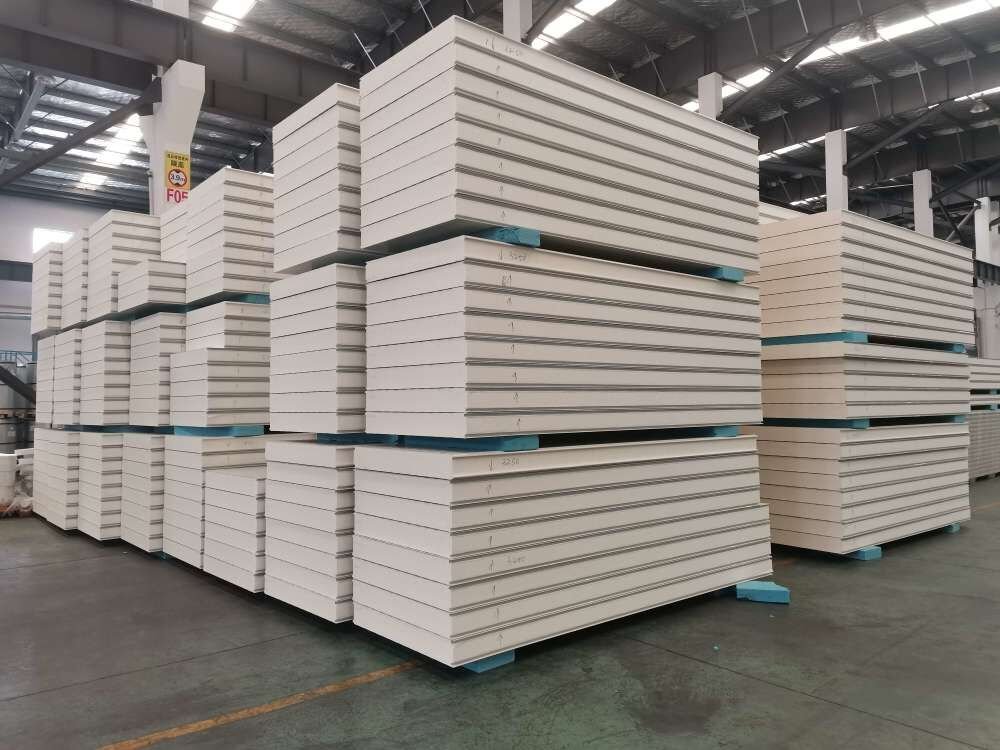
Food processing facilities are the biggest buyers of industrial cooling units after HVAC systems. Think about it: every time you walk into a supermarket, you see frozen meat, chilled dairy, and fresh produce. All of that requires precise temperature control from factory to fridge. In 2023, the global food cold chain market was valued at $292 billion, according to Grand View Research. By 2030, it’s expected to hit $585 billion. That growth is driven by rising demand for frozen foods, ready-to-eat meals, and international trade of perishable goods.
For a food processing plant, cooling units are not optional. You need them for:
- Raw material storage (meat, vegetables, dairy)
- Processing lines (chilling dough, cooling cooked products)
- Finished product cold storage (freezer warehouses)
- Blast freezing (rapid freezing to preserve texture)
The most common types of cooling units used here are:
- Glycol chillers: For indirect cooling in processes like beer brewing or dairy pasteurization.
- Ammonia screw chillers: Large-scale refrigeration for freezer warehouses.
- Plate and frame heat exchangers: For rapid cooling of liquids.
But here’s the thing: food processing plants must comply with strict hygiene standards like HACCP, ISO 22000, and FDA regulations. That means the cooling units need to be:
- Easy to clean (stainless steel surfaces, no crevices for bacteria)
- Corrosion-resistant (because of acidic foods and cleaning chemicals)
- Energy-efficient (because these units run 24/7)
A real-world example: In 2024, a major poultry processor in Brazil switched from old R-22 chillers to ammonia-based systems. They reported a 34% drop in energy costs and a 22% increase in throughput because the new units maintained tighter temperature control. That’s the kind of ROI your clients care about.
| Industry | Typical Cooling Unit Type | Temperature Range | Key Requirement |
|---|---|---|---|
| Food Processing | Glycol chiller, Ammonia screw chiller | -40°C to +10°C | Hygiene, corrosion resistance |
| Data Centers | Precision air conditioner, Chilled water system | 18°C to 27°C | Redundancy, humidity control |
| Pharmaceuticals | Water-cooled chiller, Air-cooled chiller | 2°C to 8°C (cold storage) | 21 CFR Part 11 compliance |
| Plastics & Rubber | Oil chiller, Air-cooled chiller | 10°C to 30°C | High heat load, constant flow |
| Chemical Processing | Explosion-proof chiller, Tower systems | -20°C to +50°C | Safety, corrosion resistance |
If you’re dealing with a food processing client, ask them: What’s your production volume per day? Do you need blast freezing? What’s your current energy bill? Then recommend a cooling unit that matches those numbers. Don’t oversell a 500-ton chiller for a small bakery. That’s just bad business.
Data Centers: The Silent Killer of Heat
You might think data centers are all about blinking lights and fiber optics. But the real story is heat. A single server rack can generate 30 kW of heat. Multiply that by hundreds of racks, and you’ve got a massive thermal problem. In 2023, data centers consumed about 1-2% of global electricity, and cooling accounted for 35-40% of that energy use. That’s according to the International Energy Agency. With the rise of AI and high-performance computing, heat densities are increasing. Some new GPU clusters generate over 100 kW per rack.
Data centers need cooling units that can:
- Maintain precise temperature (ASHRAE recommends 18°C to 27°C)
- Control humidity (40% to 60% relative humidity)
- Provide 99.999% uptime (no downtime allowed)
- Scale with future expansion
The cooling technology in data centers has evolved fast. Traditional CRAC (Computer Room Air Conditioning) units are being replaced by:
- Chilled water systems: More efficient for large facilities.
- Direct-to-chip cooling: Liquid cooling that removes heat directly from processors.
- Immersion cooling: Servers submerged in dielectric fluid. Getting popular for crypto mining and AI workloads.
A 2024 report from Uptime Institute showed that 42% of data center operators are planning to adopt liquid cooling within the next two years. That’s a huge opportunity for cooling unit manufacturers. If you can supply high-efficiency chillers or heat rejection units that work with liquid cooling loops, you’re ahead of the curve.
But here’s a practical tip for exporters: Data centers often have strict requirements for fire safety and refrigerant type. For example, in Europe, the F-Gas regulations are phasing down high-GWP refrigerants like R-404A. Your clients might want units with R-513A or R-1234yf. Make sure your product specifications clearly state the refrigerant type and GWP value. If you don’t, you’ll lose the deal.
Pharmaceuticals and Life Sciences: Precision Under Pressure
If a food processing plant has a cooling failure, they lose some inventory. If a pharmaceutical plant loses cooling, they lose drugs worth millions – and potentially patient lives. The pharmaceutical cold chain is one of the most regulated environments in the world. Vaccines, biologics, and insulin require strict temperature ranges between 2°C and 8°C. Some drugs need -20°C, -70°C, or even cryogenic storage.
In 2024, the global pharmaceutical cold chain market was valued at $26.5 billion, according to a report by Allied Market Research. The main drivers are the rise of biologic drugs (which are temperature-sensitive) and the expansion of vaccine distribution worldwide. For example, mRNA vaccines like the ones for COVID-19 must be stored at -70°C. That requires ultra-low temperature freezers and specialized cooling units.
Pharmaceutical facilities use:
- Walk-in cold rooms with redundant cooling systems
- Ultra-low temperature freezers (UPRIGHT or chest style)
- Water-cooled chillers for manufacturing processes
- Cleanroom HVAC with HEPA filters
The key requirements for pharmaceutical cooling units are:
- Validation and compliance: Must meet FDA 21 CFR Part 11, GMP, and WHO standards.
- Temperature mapping: Every point in the storage area must stay within range.
- Alarm systems: 24/7 monitoring with remote alerts.
- Redundancy: N+1 or 2N configuration.
A real scenario: In 2023, a generic drug manufacturer in India had a chiller failure during a heatwave. Their cold room temperature spiked to 12°C. They lost $2.8 million worth of insulin because the drug was exposed to high temperature for 6 hours. That’s why buyers are willing to pay a premium for units with dual compressors, backup power, and remote monitoring.
If you’re selling to pharmaceutical distributors, emphasize the reliability features. Show them your unit’s MTBF (Mean Time Between Failures) data. Provide documentation for validation support. They don’t care about fancy aesthetics; they care about data sheets and certificates.
Plastics, Rubber, and Injection Molding: The Heat Management Challenge
This industry might not be as glamorous as pharmaceuticals, but it’s a huge market for industrial cooling units. Every plastic injection molding machine needs to cool down the mold after each cycle. Without efficient cooling, the cycle time increases, and the product quality suffers. In fact, cooling accounts for about 80% of the total cycle time in injection molding. So if you can reduce cooling time by 10%, you boost production capacity by 10%.
Typical cooling units for plastics include:
- Air-cooled chillers: For smaller operations.
- Water-cooled chillers: For larger plants with better efficiency.
- Oil coolers: For hydraulic systems and screw barrels.
Temperature requirements vary. For example:
- ABS plastic molding: 50-80°C mold temperature (needs cooling to 10-20°C)
- Polypropylene: 20-60°C
- Nylon: 80-120°C (needs high-temperature cooling)
The challenge here is that plastic molders often have fluctuating heat loads. A single press might run different molds during the day, each with different cooling demands. So the cooling unit needs to handle variable flow rates and temperatures. That’s why many plants use chillers with variable-frequency drives (VFDs) to match the load.
According to a 2024 survey by Plastics Technology magazine, 67% of injection molders are planning to upgrade their cooling systems in the next three years. The main reasons: energy savings (53%) and reduced cycle time (38%). If you can show a customer that your chiller can cut their energy bill by 20% using VFD technology, you’ve got their attention.
I’ve seen Chinese manufacturers produce reliable chillers for this market. But the key is to offer after-sales support. Plastics plants run 24/5 or 24/7. If a chiller goes down on a Friday night, they need a technician on site by Saturday morning. As a distributor, that might mean stocking spare parts locally or partnering with a service company.
Oil and Gas, Chemical Processing: When Cooling Meets Hazardous Conditions
These industries have the toughest requirements. Cooling units in oil refineries, petrochemical plants, and chemical processing facilities must operate in explosive environments. You can’t just install a standard chiller. You need explosion-proof (Ex-rated) equipment that meets ATEX (Europe) or NEC (North America) standards.
Common applications include:
- Cooling of compressors and turbines
- Condensation of gases (e.g., natural gas liquefaction)
- Cooling of reactors and distillation columns
- Glycol cooling for dehydration units
The cooling units used here are usually:
- Closed-loop cooling towers with water treatment
- Air-cooled heat exchangers (fin-fan coolers)
- Flooded evaporator chillers with explosion-proof electrics
A critical factor is material selection. Copper tubes can corrode in presence of hydrogen sulfide. So you need stainless steel or titanium heat exchangers. Also, the refrigerant must be non-flammable and non-toxic. R-134a, R-410A, and R-513A are common choices.
In 2024, the global oil and gas cooling market was $8.9 billion, with growth of 4.2% due to increased LNG production. For example, in Qatar’s North Field expansion, multiple large-scale propane chillers are being used for LNG liquefaction. If your company can manufacture high-capacity chillers (10 MW and above), there’s a market.
But the certification process is long. Your units need IECEx or ATEX certification. That adds cost but also creates a barrier to entry for smaller competitors. If you can provide certified equipment with a track record, you can charge a premium.
How to Choose the Right Industrial Cooling Unit for Your Client
Let me give you a quick checklist for evaluating cooling units as a distributor:
- Capacity: Measured in tons of refrigeration or kW. Don’t buy too big or too small.
- Temperature range: What’s the target temperature? Some units can’t go below 5°C.
- Refrigerant type: Check local regulations. R-290 (propane) is popular in Europe now.
- Energy efficiency: Look for EER (Energy Efficiency Ratio) above 3.0 for chillers.
- Cooling method: Air-cooled vs water-cooled. Water-cooled is more efficient but needs cooling tower.
- Material: Stainless steel for food/pharma, carbon steel for general use.
- Certifications: CE, UL, ASME, ATEX as needed.
- After-sales service: Warranty, spare parts availability, technical support.
And always ask for the client’s existing electrical supply. Three-phase 380V? 460V? 600V? Many Chinese-made units are 380V/50Hz. Exporting to North America requires 460V/60Hz. You might need to specify motor rewinding or buy units with dual-frequency drives.
Frequently Asked Questions
Q: What is the difference between an air-cooled chiller and a water-cooled chiller?
A: Air-cooled chillers use fans to reject heat to the ambient air. They are simpler, cheaper, and don’t need a cooling tower or water treatment. But they are less efficient, especially in hot climates. Water-cooled chillers use a cooling tower to dissipate heat and are more efficient (COP can be 5.0 versus 3.0). They require more space, plumbing, and maintenance. For large installations (over 100 tons), water-cooled is usually the better choice.
Q: Which industries require explosion-proof cooling units?
A: Any environment where flammable gases, vapors, or dusts are present. This includes oil refineries, chemical plants, gas processing, paint spray booths, grain elevators, and pharmaceutical facilities handling solvents. You need ATEX (Europe) or NEC Class 1 Div 1/2 (North America) certification.
Q: How often should industrial cooling units be serviced?
A: Depends on the type and environment. For air-cooled chillers, clean the condenser coils every 3 to 6 months. Check refrigerant levels quarterly. For water-cooled systems, treat the cooling tower water weekly to prevent scaling and bacteria. Annual maintenance should include checking electrical connections, lubrication, and leak detection. Many manufacturers recommend a preventive maintenance contract.
Q: Can I use the same cooling unit for a data center and a food processing plant?
A: Technically possible but not recommended. Data center cooling units need precise humidity control (usually with humidifiers) and tight temperature tolerances. Food processing units prioritize hygiene and often need lower temperatures. Also, data centers use precision air conditioners with hot-aisle/cold-aisle containment, while food plants use walk-in freezer evaporators. Using the wrong unit will lead to inefficiency or product loss.
Q: What are the emerging trends in industrial cooling technology?
A: Three big trends: first, the shift to natural refrigerants like CO2 (R-744) and ammonia (R-717) due to environmental regulations. CO2 is becoming popular in supermarket refrigeration and some cold storage. Second, liquid cooling for data centers is exploding because of high heat densities from AI chips. Third, digitalization – smart chillers with cloud-based monitoring, predictive maintenance using AI, and remote control via IoT platforms. If you’re a distributor, investing in units with built-in IoT capabilities can differentiate you.