
Industry Insights: Selecting the Right Air-Cooled Condensing Unit for Your Client’s Project
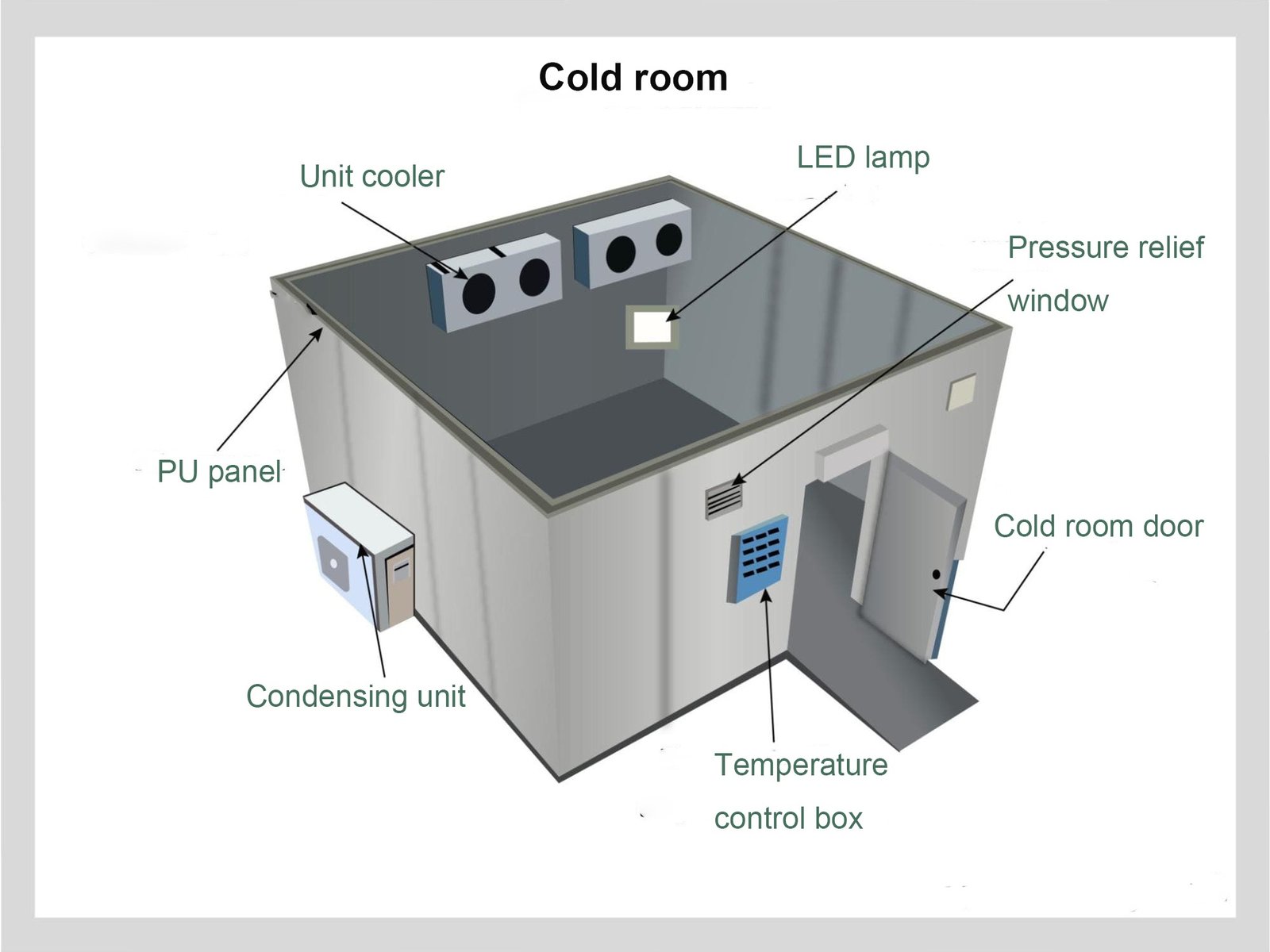
As a manufacturer, we know you’re not just moving boxes; you’re providing solutions. Your commercial and industrial clients come with specific needs, and their project’s success often hinges on the unseen workhorse—the air-cooled condensing unit. Let’s cut through the noise and talk straight about what matters when selecting these units for different applications.

Core Components & Efficiency: What You’re Really Selling

Forget just selling a metal box with a fan. You’re selling reliability, efficiency, and total cost of ownership. The core of a top-tier unit isn’t a mystery: it’s the compressor (the heart), the condenser coil (the lungs), and the fans (the circulatory system). In 2023, the conversation is dominated by COP (Coefficient of Performance) and IEER (Integrated Energy Efficiency Ratio). Clients may not quote these numbers, but they feel them on their electricity bills.
For instance, a modern scroll compressor in a mid-range unit can offer a COP of 3.2-3.5 under standard conditions (35°C ambient), meaning for every 1 kW of electrical energy input, it provides 3.2-3.5 kW of cooling capacity. This is a tangible selling point. Look for units with ECM fans—they adjust speed based on head pressure, slashing fan power consumption by up to 60% compared to fixed-speed PSC fans. This isn’t just greenwashing; it’s a direct reduction in operational expense for your end-user.
Here’s a snapshot of real-time performance expectations across common commercial capacities:
| Refrigeration Capacity (kW) | Typical Compressor Type | Expected COP Range (at 35°C) | Key Application Fit |
|---|---|---|---|
| 10 – 30 kW | Scroll / Reciprocating | 3.0 – 3.3 | Retail Stores, Small Cold Rooms |
| 30 – 70 kW | Scroll / Semi-hermetic | 3.1 – 3.5 | Supermarkets, Medium Warehouses |
| 70 – 150 kW | Screw / Semi-hermetic | 3.3 – 3.8+ | Food Processing Plants, Large Distribution Centers |
| 150 kW+ | Screw | 3.5 – 4.0+ | Industrial Process Cooling, District Cooling |
Matching the Unit to the Sector: Commercial Retail & Hospitality
Walk into any supermarket or hotel, and comfort and food safety are non-negotiable. Here, noise and footprint are as critical as capacity. Rooftop installations are standard, meaning units must be compact, vibration-isolated, and acoustically optimized. You’re solving for space constraints and community noise ordinances.
For medium-temperature refrigeration (display cases, cold rooms), units with digital scroll compressors offering capacity modulation (10-100%) are king. They prevent temperature fluctuations that cause food spoilage and compressor wear. For HVAC in hotels, look for condensing units designed for heat pump operation (reversible). With R-454B and R-32 becoming the new standard refrigerants in many regions, offering lower GWP options here is no longer a premium feature—it’s a market requirement in the EU, North America, and parts of Asia. The pitch? “This unit keeps your guests comfortable, your energy bills predictable, and your compliance paperwork clean.”
Robust Demands of Food Processing & Cold Storage
This is where the rubber meets the road. Ambient conditions can be harsh—flour dust, salty sea air, or high ambient temperatures near cooking facilities. Your clients need a workhorse. Corrosion protection is key: full epoxy-coated coils, stainless steel fan guards, and galvanized casings aren’t optional extras.
In blast freezing or low-temperature storage (-25°C and below), you’re dealing with low evaporation temperatures and high compression ratios. Units equipped with screw compressors or advanced semi-hermetics with liquid injection cooling are essential for reliability. Discuss the actual operating envelope—can the unit deliver full capacity at 46°C ambient? What is its low-ambient operation kit for winter? For a cold storage warehouse in the Middle East or a seafood processing plant in Southeast Asia, this data is the deal-breaker. You’re selling uptime.
Industrial & Process Cooling: Precision is Profit
Beyond comfort cooling, these units are critical for manufacturing processes—injection molding, chemical production, laser cutting, and pharmaceutical manufacturing. Here, the requirement is often for year-round, precise temperature control of process water or glycol. The stability of the leaving condenser fluid temperature is paramount.
This demands units with sophisticated control systems, often with PLC integration and remote monitoring capabilities. Redundancy through multiple independent compressor circuits within a single unit is a major selling point. For a plastics manufacturer, a shutdown due to a failed condenser means halted production lines costing thousands per hour. You’re not selling a cooler; you’re selling production insurance. Discuss the specifics of the process: required fluid type, target temperature (±0.5°C tolerance?), flow rate, and the consequence of a temperature deviation.
The Tech Edge: Data Centers & Controlled Environment Agriculture
These are high-growth niches with unique specs. Data centers need massive heat rejection with extreme reliability. Units here often feature indirect free cooling (adiabatic or dry cooler sections) that kick in when ambient drops, drastically cutting energy use—a major OPEX concern. Redundancy is configured in N+1 or 2N arrangements. Your value is in understanding the PUE (Power Usage Effectiveness) metric and how your unit’s part-load efficiency contributes to lowering it.
In Controlled Environment Agriculture (indoor vertical farms, cannabis cultivation), the units manage both temperature and humidity (dehumidification via reheat). They run 24/7 during growth cycles. Key specs include precise humidity control, often using hot gas reheat function, and materials resistant to the high-humidity, sometimes nutrient-rich atmosphere. Lighting generates immense heat; the cooling capacity per square meter of grow space is a critical calculation you can help with.
Professional Q&A
Q: With the global HFC phase-down, which refrigerants should I stock for replacement and new projects?
A: The market is solidifying around lower-GWP alternatives. For new commercial equipment, R-454B and R-32 are leading replacements for R-410A. For industrial and high-ambient applications, R-513A is a common drop-in for R-134a. Always check local regulations (like the EU F-Gas Regulation or EPA SNAP rules in the US) as they vary and change. As a manufacturer, we are shipping units with these next-gen refrigerants as standard to future-proof your inventory.
Q: A client’s old unit runs on R-22. What’s the best path forward?
A: Direct replacement with a new unit is almost always the most economical long-term answer. Retrofitting old R-22 systems with drop-in replacements is a temporary fix on a dying platform. New units offer 30-50% higher efficiency, have available warranty, and use legal, available refrigerants. The ROI from energy savings often justifies the capital expenditure. We provide cross-reference tools to match old system capacity with new, efficient models.
Q: How critical is the minimum ambient temperature rating for a unit installed in a cold climate?
A: Extremely critical. If a standard unit operates in very low ambient conditions (below +10°C) without a low-ambient kit, the system head pressure will crash, leading to poor oil return, expansion valve instability, and ultimately compressor failure. Always specify units with factory-installed or recommended low-ambient accessories, which may include fan speed controllers, head pressure control valves, or flooded condenser packages. This ensures stable operation year-round, whether it’s in Norway or Canada.