
Beyond the Basics: Unpacking the Real-World Power of Bitzer Condensing Units

Let’s cut right to the chase. You’re in the business of moving industrial cooling and refrigeration systems, and your clients need performance that doesn’t quit. They’re not just buying a condensing unit; they’re buying reliability, efficiency, and the backbone of their critical operations. When the conversation turns to top-tier components, Bitzer condensing units consistently come up. But why? It’s not about brand hype; it’s about what these units do on the ground, day in and day out, across wildly different industries.
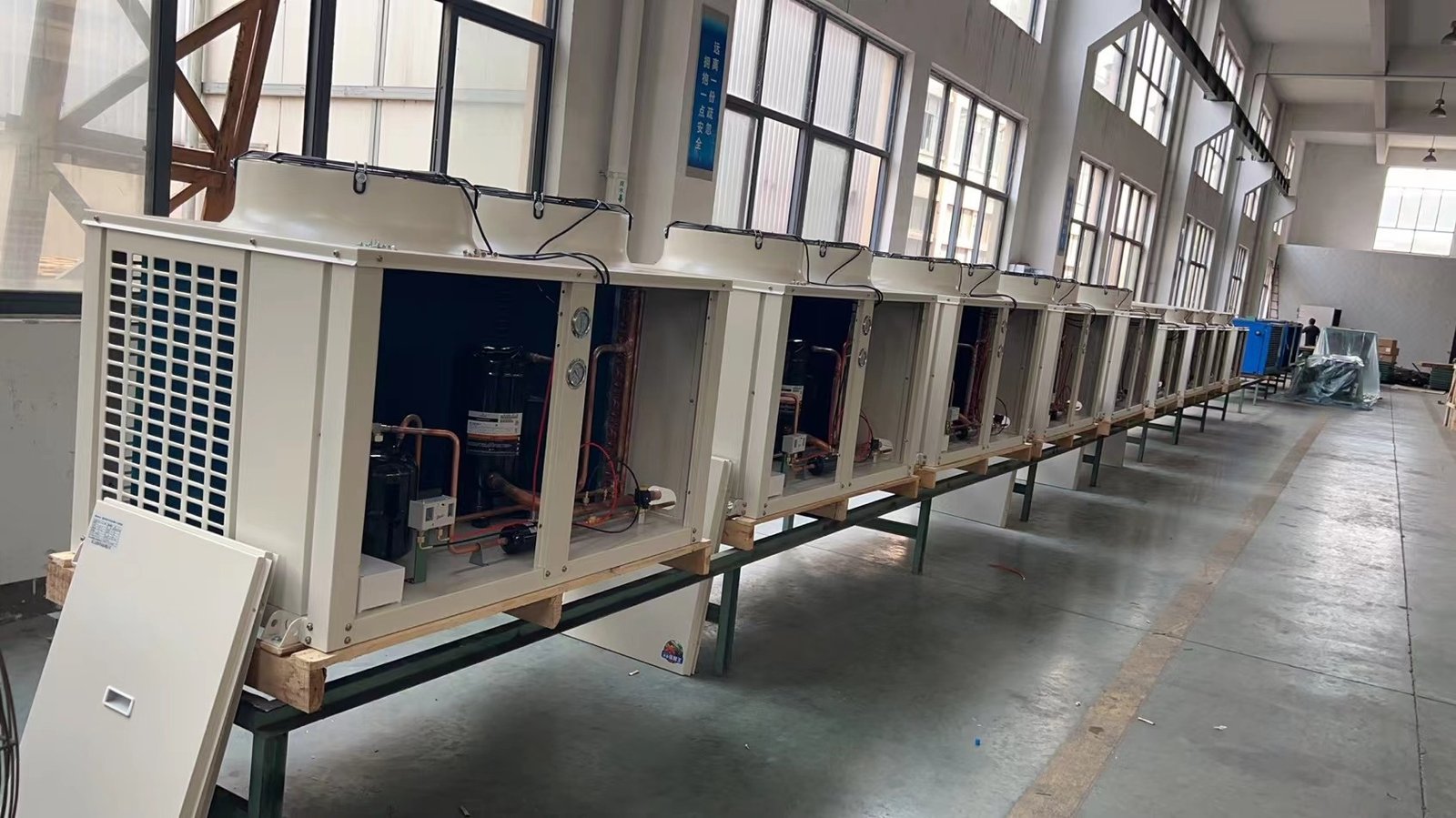
We’re going to look at the specific models and configurations that make sense for your key client segments. Forget the generic specs sheet; think real-world application.

Performance Where It Counts: From Cold Storage to Chemical Plants
The “industrial” tag covers a lot of ground. A unit perfect for a neighborhood supermarket will drown (or rather, overheat) in a steel mill. Bitzer’s range is built for this segmentation.
For the Cold Storage and Logistics client, it’s all about massive, stable cooling at various temperature tiers. Think Bitzer’s Octagon series, especially the screw compressor models like the HS95. They’re built for continuous, heavy-duty operation at medium and low temperatures. Your client running a -25°C freezer warehouse needs a unit that handles the punishing load 24/7, with minimal vibration and a footprint that doesn’t eat into valuable space. These units deliver high COP (Coefficient of Performance) even at part-load, which is where these systems run most of the time. That translates directly into your client’s electricity bill – a major selling point you can take to the bank.
Switch gears to Food and Beverage Processing. Here, hygiene and consistent precision are king. Bitzer’s F series (semi-hermetic reciprocating) and CSH series (scroll) condensing units are stars in this arena. They often come with coated coils (epoxy or similar) to resist the corrosive washdown environments of meat processing or dairy plants. For a brewery controlling fermentation temperatures, the precise capacity modulation of a Bitzer screw compressor (like in the M series) ensures the product quality never varies batch to batch. You’re selling them process integrity.
Now, consider Chemical and Pharmaceutical applications. This is where special materials and control stability are non-negotiable. Bitzer offers units with special steel casings, aluminum or stainless steel fin coils, and compatibility with a wide range of refrigerants, including ammonia (NH3) in their reciprocating and screw compressor lines. For a pharma client maintaining a cleanroom, the ability of a Bitzer unit to provide rock-solid condensing pressure, coupled with low sound levels, is a direct contributor to their compliant production environment. You’re offering them a piece of certified, reliable infrastructure.
Here’s a snapshot of how core Bitzer series align with industrial demands:
| Series/Compressor Type | Typical Industrial Application | Key Strength for the Dealer’s Pitch |
|---|---|---|
| HS/HL (Screw) | Large Cold Storage, Process Cooling, District Cooling | Unbeatable efficiency at part-load, extreme durability for 24/7 operation, long lifespan. |
| F (Semi-hermetic Recip.) | Food Processing, Ice Plants, Industrial Chillers | Serviceability, robustness, wide refrigerant compatibility (including NH3), proven technology. |
| CSH/CSW (Scroll) | Supermarkets, Small/Medium Cold Rooms, HVAC | Quiet operation, compact size, high efficiency for their capacity range, reliability. |
| Octagon (Packaged) | Convenience Stores, Server Rooms, Medical Storage | Pre-assembled and tested, quick installation, space-saving design, plug-and-play reliability. |
The Refrigerant Transition: A Practical Guide for Your Inventory
Your clients are hearing the noise about HFC phasedowns (like R404A, R507) and new regulations (F-Gas in EU, EPA rules in the US, etc.). This isn’t a future problem; it’s a present-day specification decision. Bitzer has been ahead of this curve, and as a dealer, this is your chance to guide clients to future-proof solutions.
The move is towards lower GWP (Global Warming Potential) refrigerants. Bitzer engineers its compressors and units to handle a broad spectrum. For new installations, you should be primarily looking at units optimized for:
- R448A/R449A: Common retrofit replacements for R404A in medium/low temp. Good efficiency, but requires attention to discharge temperatures.
- R513A: A near-azeotropic drop-in for R134a in medium temp, with about half the GWP.
- CO2 (R744): Bitzer has specific reciprocating and screw compressors for transcritical and cascade systems. This is for the cutting-edge client in supermarkets or heat pumps, where sustainability is a core goal.
- Ammonia (R717) & Hydrocarbons (R290, R600a): For large industrial systems (ammonia) or specialized, charge-limited applications (hydrocarbons). Bitzer provides robust solutions here, emphasizing safety and efficiency.
Stocking and recommending units designed for these next-gen refrigerants protects your client from costly retrofits in 5 years and positions you as a knowledgeable advisor, not just a parts supplier.
Specification and Selection: Avoiding Costly Mistakes
This is where your expertise as a dealer becomes critical. Pushing the wrong unit leads to callbacks, unhappy clients, and bruised reputations. Here’s the practical checklist for getting the Bitzer spec right:
- Ambient Temperature Range: This is huge. A unit rated for a +35°C max ambient will fail in a Middle Eastern plant where it hits +50°C. Bitzer offers high-ambient versions. Know your client’s local extremes.
- Sound Level: Don’t get caught out by a municipal noise ordinance. Bitzer provides sound power data. For an urban distribution center or a hospital, the quieter CSH scroll pack or a silenced octagon unit might be the only compliant choice.
- Electrical Supply: It seems basic, but confirming 50Hz vs. 60Hz, voltage (200V, 400V, 575V etc.), and phase before ordering saves a nightmare. Bitzer’s modular approach allows for specific motor windings.
- Connected Load: This isn’t just the compressor. Factor in the condenser fans, control circuits, and potential crankcase heaters. Your client’s electrician needs the right total number to size wiring and breakers.
- Serviceability: For remote sites, ease of maintenance is paramount. The accessible service valves, standard filter drier cores, and clear oil sight glasses on Bitzer units are a technician’s friend. This reduces downtime for your client.
Integration and Control: Selling a System, Not Just a Box
The modern industrial condensing unit is a networked device. Bitzer’s units are designed to integrate seamlessly with building management systems (BMS) and advanced refrigeration controllers. The BITZER Electronics (BE) range of controllers and frequency inverters is a key add-on.
For a warehouse using an adaptive control system, pairing a Bitzer screw compressor with a frequency inverter allows the cooling capacity to precisely match the real-time load. This can slash energy consumption by 30% or more compared to fixed-speed units constantly cycling on/off. You’re selling measurable ROI.
For multi-compressor racks, the intelligent capacity control ensures even wear and optimal efficiency. This is the kind of smart, system-level thinking that wins large, competitive tenders. Your proposal should highlight this integration capability—it shows you understand the complete picture.
Professional Q&A: Addressing Dealer and End-User Concerns
Q: A client had a bad experience with another brand’s compressor failing after 2 years. How do I convince them of Bitzer’s durability?
A: Point to the design fundamentals. Bitzer manufactures its own cast iron crankcases for core models—they don’t outsource this critical component. Discuss mean time between failures (MTBF) statistics, which for Bitzer screw compressors often exceed 100,000 hours. Offer to connect them with a case study from a similar industry with long-running installations. It’s about proven engineering, not promises.
Q: Lead times for some components are volatile. What’s the current reality with Bitzer unit availability?
A: As of late 2023, while the global supply chain has improved, planning is still key. Standard, popular models like the CSH scroll packs or F series reciprocating units generally have better stock availability. For larger, custom-configured screw compressor units, a 12-16 week lead time is a safe bet for planning. Always check with your distributor for a real-time snapshot, and advise clients to plan major projects accordingly. Highlight that Bitzer’s large-scale, centralized manufacturing helps ensure consistency and quality control, even in tight markets.
Q: My client is torn between a cheaper alternative and a Bitzer unit. What’s the most effective final argument?
A: Don’t just talk price; talk total cost of ownership. Draft a simple 5-year TCO comparison. Factor in: 1) The energy savings from a higher efficiency Bitzer unit (use their published COP data), 2) The expected maintenance costs (Bitzer’s robustness typically means fewer service interventions), 3) The risk and cost of production downtime from a failure. In almost every industrial scenario, the higher initial investment is drowned out by the operational savings and risk mitigation. Your role is to make that math clear and undeniable.