
Condensing Units: The Silent Powerhouse Behind Global Commerce – From Supermarket Aisles to Data Centers
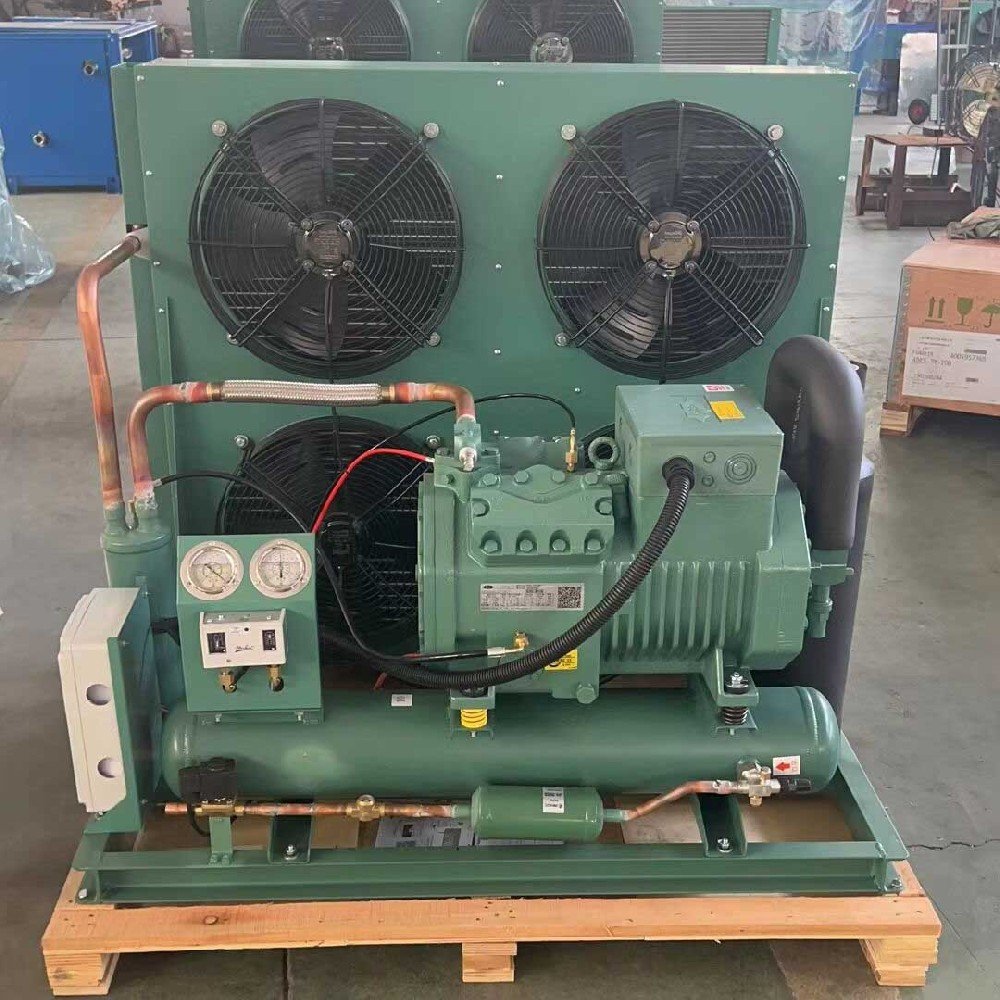
When you walk into a crisp, perfectly chilled supermarket, store your pharmaceutical vaccines with confidence, or trust that your online server farm won’t overheat, you’re witnessing the workhorse of temperature control: the condensing unit. This isn’t just a “big air conditioner part.” It’s the complete, self-contained engine of refrigeration systems, the component that B2B buyers like you source, integrate, and rely on to build profitable, reliable solutions for countless industries.
Let’s break it down without the jargon. A condensing unit is the outdoor section of a refrigeration system. It’s the package that contains the compressor, the condenser coil, and a fan. Its sole job is to take hot, high-pressure refrigerant gas from the indoor evaporator, cool it down until it turns back into a liquid (condenses), and send it back ready to absorb more heat. It’s the heart of the vapor-compression cycle, and its performance directly dictates system efficiency, capacity, and lifespan.
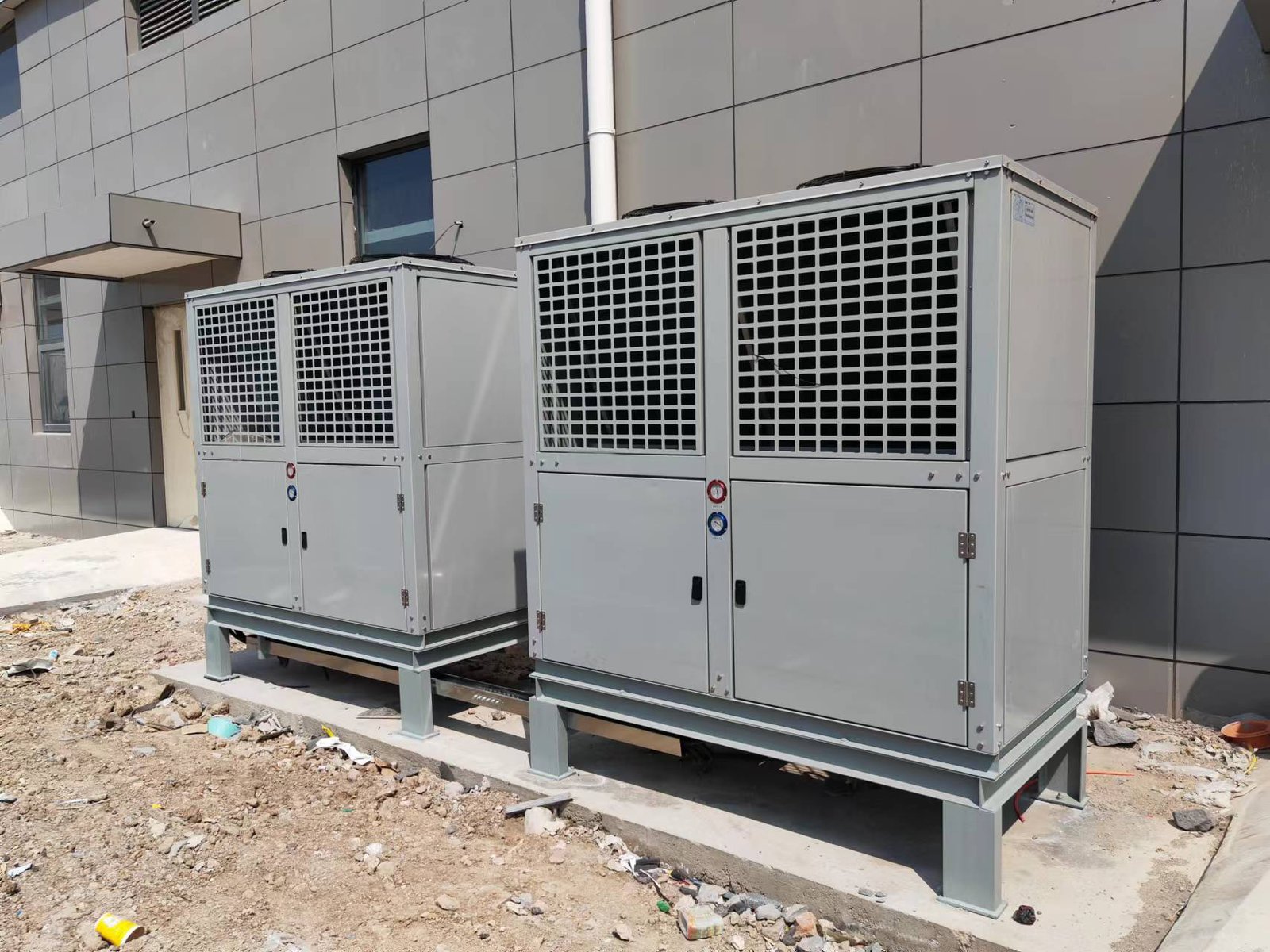
Core Components and Their Real-World Impact on Your Projects
For a distributor or OEM, understanding the nitty-gritty of these components means you can specify the right unit for the job, manage maintenance contracts effectively, and avoid costly callbacks.
The Compressor: The System’s Pulse
This is the most critical and expensive part. Think of it as the pump. Current market trends show a massive shift towards scroll and variable-speed (inverter) compressors, even in commercial applications, due to their superior energy efficiency and quieter operation. A semi-hermetic compressor might offer serviceability for large cold storage projects, while a robust scroll compressor is often the go-to for a restaurant’s walk-in freezer due to its reliability. The choice here affects the unit’s COP (Coefficient of Performance)—a key metric your end-clients care deeply about with rising global energy costs.
The Condenser Coil: The Heat Rejector
This is where the magic of heat exchange happens. Microchannel coils are increasingly popular in modern units because they are lighter, more efficient, and use less refrigerant than traditional copper-tube-aluminum-fin coils. They are particularly advantageous for transport refrigeration or in areas with strict refrigerant charge regulations. The material (copper vs. aluminum) and fin design impact corrosion resistance and cleanability, a crucial factor for coastal deployments or food processing plants.
The Fan and Motor: The Forced Draft
This isn’t just any fan. Axial fans move high air volume at low pressure, common in standard units. For applications where the unit faces high external pressure (like being wall-mounted or in a tight mechanical room), a centrifugal fan might be specified. EC (Electronically Commutated) motors are now the industry benchmark for fan motors, offering precise speed control and significant energy savings over old PSC motors.
| Comparative Snapshot: Common Condensing Unit Types for B2B Specification | Unit Type | Typical Capacity Range | Ideal Application | Key Consideration for Buyers |
|---|---|---|---|---|
| Air-Cooled (Standard) | 0.5 HP – 120 HP | Supermarkets, Restaurants, Cold Rooms, HVAC | Dominates the market. Balance of cost, ease of installation, and performance. Requires adequate ambient air flow. | |
| Water-Cooled | 10 HP – 数百HP | Large Industrial Plants, Data Centers, Coastal Areas | Higher efficiency, compact size, but requires cooling tower/water loop. OPEX vs. CAPEX analysis needed. | |
| Remote (Split System) | 1 HP – 80 HP | Retail Stores, Offices, Server Rooms | Flexible installation; compressor noise is outdoors. Requires skilled installation for refrigerant piping. | |
| Packaged (Refrigerated Container Units) | 3 HP – 10 HP | Intermodal Transport, Mobile Cold Storage | Ruggedized, vibration-resistant. Must comply with transport regulations (e.g., ATEX, marine grade). |
Industry-Specific Applications: Where Your Clients Need Solutions
Your customers aren’t buying “a condensing unit.” They’re buying a solution to a business-critical temperature problem.
The Cold Chain & Food Retail: Precision is Profit
From the slaughterhouse to the supermarket shelf, every link requires precise temperature bands. A malfunctioning unit in a distribution center doesn’t just risk food spoilage; it breaches HACCP protocols and can destroy a brand. Modern units for this sector feature digital scroll compressors for precise temperature control and integrated telemetry systems that alert facility managers (and you, the service provider) to pressure anomalies or filter alerts before a breakdown occurs. The global push for natural refrigerants like CO2 (R744) and propane (R290) is strongest here, driven by sustainability goals and regulations like the EU F-Gas regulation. Offering units designed for these refrigerants opens doors to forward-thinking clients.
Data Centers & Telecom: Cooling the Digital Economy
Here, the condensing unit is part of a Computer Room Air Handler (CRAH) or Direct Expansion (DX) system. Reliability is non-negotiable. Redundancy (N+1 configuration) is standard. The trend is towards indirect evaporative cooling coupled with DX systems, where the condensing unit works hardest only during peak ambient temperatures, dramatically reducing PUE (Power Usage Effectiveness). For you, this means clients need units that can integrate seamlessly with complex BMS (Building Management Systems) and provide fault-tolerant operation.
Pharmaceutical & Healthcare: Compliance-Driven Demand
Vaccines, insulin, and laboratory samples demand unwavering temperature stability. Units for pharmaceutical cold storage, IL/IR (Inverter Linear/Inverter Rotary) compressor-based units are preferred for their tight temperature tolerance (±0.5°C). Documentation and validation are as important as the hardware itself. Clients require detailed material certificates, factory test reports, and designs that support easy validation (IQ/OQ/PQ). A unit with a clear audit trail for every component is a competitive advantage in this high-stakes field.
The Procurement Checklist: What Smart B2B Buyers Are Asking in 2024
When you’re evaluating a supplier (like us), move beyond basic specs. The conversation has evolved.
- “What is the unit’s part-load efficiency?” Full-load efficiency is a starting point, but systems run at part-load 90% of the time. Ask for IPLV (Integrated Part Load Value) or ESEER (European Seasonal Energy Efficiency Ratio) data. A unit with a high-efficiency variable-speed compressor will shine here.
- “Is it compatible with low-GWP refrigerants?” The phase-down of HFCs (R404A, R410A) is a global reality. Units designed from the ground up for R32, R454B, or R290 are future-proof investments. Verify the compressor manufacturer’s approval for the specific refrigerant.
- “What does the smart control platform offer?” Can the unit’s performance data be integrated via Modbus, BACnet, or a cloud API? Remote monitoring, predictive maintenance alerts, and energy usage reports are now expected features that add value to your offering.
- “What is the true total cost of ownership?” Factor in installation complexity, expected maintenance intervals, local service support, and the energy cost over a 10-year lifespan. A slightly higher initial cost for a unit with EC fans and an inverter compressor can yield a rapid ROI for your end-client.
Frequently Asked Questions by Industry Professionals
Q1: We’re seeing more demand for “plug-and-play” modular condensing units. What’s driving this, and what are the trade-offs?
A: The drive is speed and cost of installation, especially in retrofit projects and fast-build logistics centers. Modular units are pre-charged, pre-wired, and tested. They can be wheeled into place and connected quickly, slashing labor costs. The trade-off is typically a slight premium in unit cost and sometimes a limitation on maximum capacity per module. For applications with multiple zones or scalable needs, however, their flexibility is a major advantage.
Q2: How critical is the selection of the condenser coil material for projects in highly corrosive environments (e.g., seafood processing, coastal areas)?
A: It’s one of the most critical spec decisions. Standard aluminum fins with a hydrophilic coating may not suffice. For these environments, you must specify units with copper tubes and copper fins, or aluminum fins with a heavy-duty epoxy or e-coating. Some manufacturers offer “seashore” or “tropicalized” versions with upgraded coatings and stainless steel hardware. Failure to specify correctly leads to rapid coil degradation, loss of efficiency, and premature unit failure.
Q3: With the rise of IoT, how can data from connected condensing units actually be monetized or used to create new service models?
A: This is a huge opportunity for forward-thinking distributors. Data allows you to move from break-fix to predictive maintenance. You can offer service contracts based on actual runtime and system health, not just time intervals. You can provide clients with monthly energy and carbon footprint reports. Furthermore, you can remotely diagnose issues, often solving them before the client is aware, which builds incredible customer loyalty and creates a stable, recurring revenue stream for your business.