
You don’t see it. You rarely think about it. But if it fails, your production line stops, your product gets ruined, and your balance sheet bleeds. We’re talking about the condensate drain unit—the unsung hero inside industrial refrigeration and air conditioning systems. For a B2B distributor or project specifier, understanding this component isn’t just technical trivia; it’s about safeguarding your clients’ operations and minimizing costly callbacks. Let’s cut straight to the chase and see how this unassuming box is non-negotiable across key sectors.
Food & Beverage: Where Moisture Control Equals Profit Protection

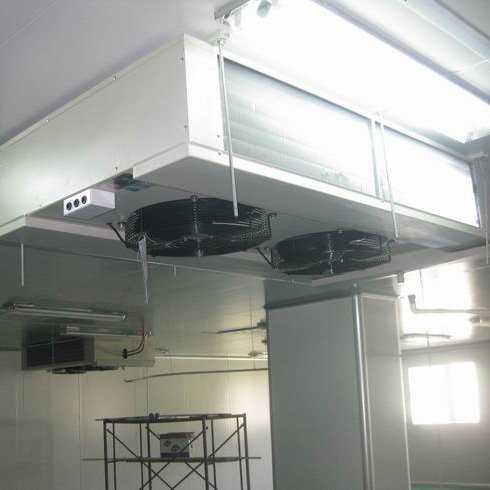
Walk into any frozen food warehouse, brewery, or meat processing plant. The air is frigid and dry for a reason. Evaporator coils inside cooling units work overtime to pull heat out. This process creates condensate—a lot of it. If this water doesn’t get removed instantly and reliably, it refreezes on the coils.
That’s when trouble starts. Ice buildup acts as an insulator. The compressor works harder, energy consumption spikes by up to 30%, and the system’s cooling capacity plummets. In a cold storage facility holding millions in inventory, a 5-degree temperature fluctuation can trigger a total loss. We’re talking about spoiled goods, failed safety inspections, and shattered contracts.
A robust condensate drain unit with built-in heater elements and failsafe alarms isn’t an accessory here; it’s a core part of the refrigeration circuit. For distributors, specifying a system with a cheap, unreliable drain is a surefire way to lose a client. The conversation with a food producer isn’t about the drain itself—it’s about uptime, HACCP compliance, and protecting their capital.
| Industry Segment | Key Challenge | Consequence of Drain Failure | Recommended Unit Spec |
|---|---|---|---|
| Frozen Storage | High humidity ingress, sub-zero ambients | Ice blockages, compressor burnout, thawed inventory | Heated reservoir, dual float switches, high-lift pump |
| Breweries & Distilleries | Hygienic design, acidic condensate | Bacterial growth (biofilm), tank corrosion, product contamination | Stainless steel construction, clean-in-place capability |
| Supermarket Refrigeration | Constant cycling, space constraints | Water leakage on floors (safety hazard), case warmer temperatures | Compact pan, reliable solenoid valve, moisture alarm tie-in |
Pharmaceutical & HVAC: Precision in Climate Control
Step up the requirement to pharmaceutical manufacturing or stringent HVAC for tech cleanrooms. Here, the stakes are legal and reputational. These spaces require precise control over not just temperature, but also humidity. Any pooling water from a failed drain is a breeding ground for microbes—Pseudomonas, Legionella—you name it.
For a pharma client, a condensate drain is a critical utility component. It must be documented, validated, and fail-operational. Modern units with MODBUS or BACnet integration allow the Building Management System (BMS) to monitor status in real-time: “Pump Active,” “High Water Alarm,” “Heater Fault.” This isn’t just data; it’s audit trails for regulators like the FDA and EMA.
For you as a distributor, this shifts the sale from a component to a compliance solution. You’re not selling a pump and a pan; you’re selling risk mitigation, data integrity, and validation support. The unit needs to be serviceable without contaminating the controlled environment—think external service ports and quick-disconnect fittings.
Data Centers & Telecom: Preventing a Digital Meltdown
A server room’s worst enemy isn’t a hacker; it’s water. Precision cooling units in data centers remove immense heat loads, generating gallons of condensate daily. This water is often located above mission-critical server racks.
A float switch stuck due to algae? A pump motor that seizes? It’s a single point of failure that can lead to a catastrophic leak onto electrical infrastructure. The resulting downtime costs are staggering—averaging $9,000 per minute for larger facilities, according to recent 2024 industry reports.
Therefore, the spec here is about redundancy and remote diagnostics. Dual pumps in a lead-lag configuration are standard. Units now come with IoT connectivity, sending alerts directly to facilities managers’ phones long before a backup overflow occurs. For a telecom or colocation provider, your recommendation as a supplier must address their Tier III or Tier IV uptime requirements. The discussion is about Mean Time Between Failures (MTBF) data, service contracts, and the unit’s performance in high ambient temperatures.
Automotive & Manufacturing: The Unseen Element in Process Cooling
In automotive paint booths, plastic injection molding, and metalworking plants, process cooling is vital. Condensate here can be contaminated with oils, particulates, or chemicals. Letting this water simply drain away is an environmental violation. Letting it sit in a pan allows fumes to be re-introduced into the air handling unit, potentially creating corrosion or foul odors.
The solution is a condensate drain unit with an integrated neutralization system or an oil-water separator. It treats the water on-site to meet local effluent standards before disposal. For a plant manager, this is about environmental, social, and governance (ESG) compliance and avoiding hefty fines.
As an equipment supplier, you provide a complete package. You help navigate local regulations. The value is in your application knowledge—knowing that for a laser cutter cooling system, you need a pump resistant to metallic particulates, or for a paint booth, you need explosion-proof components.
Professional Q&A
Q1: For a client comparing options, what’s the real difference between a basic solenoid valve drain and a full pump unit?
It boils down to gravity and location. A solenoid valve simply opens a drain line, relying on gravity to remove water. It’s only suitable if you have a reliable, downward-sloping drain path directly below the air handler. A pump unit actively moves water vertically and/or horizontally, allowing installation in basements, on roofs, or where drainage is distant. For most retrofit or flexible industrial applications, the pump unit is the safer, more versatile choice.
Q2: We often see drain pans clogged with algae and slime. What’s the solution beyond regular cleaning?
This is a major pain point. The answer is multi-pronged: 1) Specify units with built-in, EPA-registered antimicrobial tablets in the reservoir that slowly dissolve, inhibiting organic growth. 2) Recommend using a condensate pan treatment (a liquid algicide) as part of the client’s quarterly maintenance schedule. 3) For critical applications, units with UV-C lights inside the pan compartment can provide continuous biological control without chemicals.
Q3: How critical is the lift height and run length specification when selecting a pump unit?
It’s the most common sizing mistake. The lift height (vertical push) and run length (horizontal push) are rated separately, and real-world performance is less than the ideal lab rating. Always derate by 20-25%. If you need to push water 20 feet up to a ceiling drain and then 50 feet horizontally, you must select a pump whose rated head pressure exceeds the total dynamic head (lift + friction loss from horizontal run). Undersizing guarantees premature failure and floods.
Q4: Are smart, connected drain units worth the premium for our B2B clients?
Absolutely, and it’s becoming the standard for commercial and industrial jobs. The premium is offset by the first avoided disaster. These units monitor pump cycles, detect failures (like a running dry pump), and send immediate alerts via email or SMS. This transforms maintenance from reactive to predictive. For your client, it means they can dispatch a technician before water damage occurs, protecting assets and maintaining their own service-level agreements with their tenants or production teams. It’s a compelling value-add you can provide.