
Beyond the Basics: Cross-Industry Protocols for Deploying Air-Cooled AC Systems
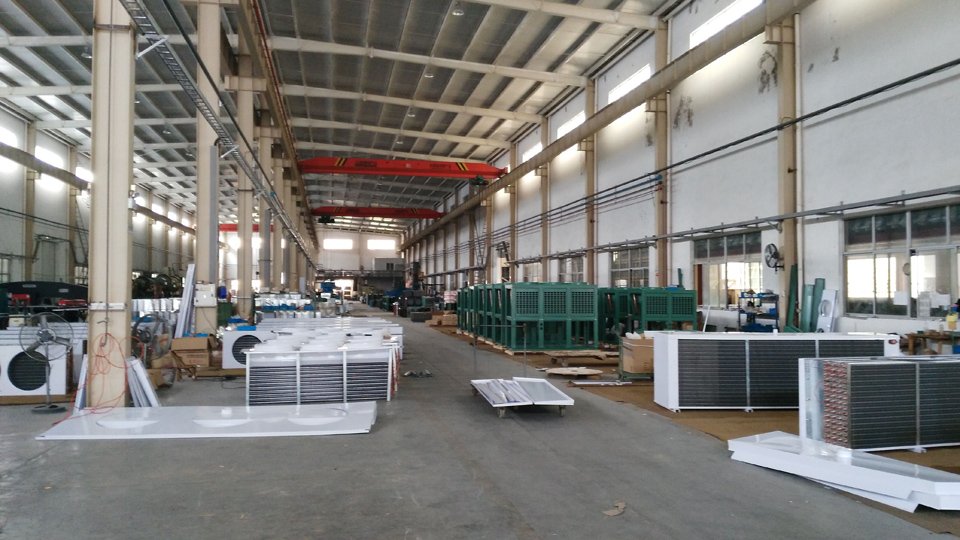
So, you’ve got a container of air-cooled AC units landing next week. Your B2B clients—from hotel chains to server farm operators—are waiting. But “install the outdoor unit on a stable base” isn’t going to cut it as advice anymore. The real value you provide as a distributor is in understanding the context of the installation. Here’s a breakdown of what that looks like across different sectors, with the technical specifics that keep your clients coming back.

H2: Hospitality & Retail: Minimizing Guest Disruption and Maximizing Uptime
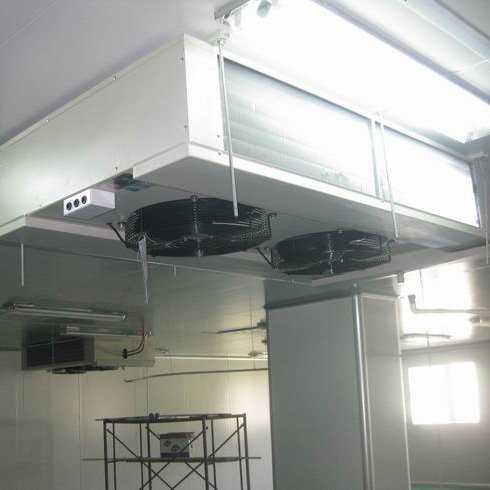
For a hotel manager or retail store owner, an AC installation isn’t just a technical task; it’s a logistics and customer experience puzzle. Downtime is revenue lost.
The first non-negotiable is scheduling. You coordinate with the facility manager for the absolute slowest period—for a hotel, that might be a Tuesday morning after the business check-outs; for a retail store, a Monday when they’re traditionally closed. The crew you recommend needs to be in and out with military precision.
Site prep is everything. It’s not just about a level concrete pad. You’re looking at noise vectors. Pointing the condenser exhaust away from guest room balconies, outdoor dining areas, or neighboring businesses is critical to avoid complaint calls. We’re seeing a 2024 industry shift towards specifying units with lower Sound Power Levels (Lw) below 65 dB(A) for these applications—a spec you should now be highlighting in your sheets.
Then there’s access. In a crowded urban retrofit, can the unit fit through the service corridor? Are there cranes or specialized lifting gear required? You advising on this before the sale cements your role as a solution provider, not just a box mover. Drainage is another sneaky one. In a rooftop hotel installation, ensuring condensate drain lines are properly insulated and routed to avoid dripping onto pedestrian entrances or patios is a detail that prevents massive headaches later.
H2: IT & Telecommunications: Precision Cooling for Critical Infrastructure
This is where “installation” morphs into “commissioning.” The margin for error is zero. An air-cooled AC unit for a server room or telecom shelter isn’t just cooling air; it’s maintaining a precise envelope for multi-million dollar equipment.
Your client’s primary concern here is redundancy and control. They’re often installing in N+1 configurations. Your installation protocol must address how multiple condenser units will be staged and controlled. Advise on clear, unobstructed spacing—not just for service access but to prevent hot air recirculation. The latest ASHRAE 2023 guidelines for data centers recommend a minimum clearance of 1.5 meters around condensers in grouped arrays, but more is always better.
Power quality is paramount. These installations often require dedicated circuits, with proper phasing and voltage stability checks post-installation. You should be asking for the site’s power quality reports. Furthermore, integration is key. The units must seamlessly interface with Building Management Systems (BMS) or DCIM (Data Center Infrastructure Management) software. Ensure your technical teams can verify communication protocols like BACnet MS/TP or Modbus right after physical installation.
Condensate management gets a high-tech twist here. In a sensitive server hall, a simple drain pan isn’t enough. Recommending and facilitating the installation of auxiliary condensate pumps with leak detection alarms is now a standard value-add.
H2: Industrial & Agricultural Applications: Rugged Reliability in Harsh Environments
Installing an AC unit in a plastic injection molding plant is a different beast than in a clean office. Here, the enemy is ambient contamination—dust, fibers, chemical vapors, and extreme ambient heat.
The first discussion point is filtration and coil protection. Standard units will choke. You should be proposing options like factory-installed high-efficiency filters or, more commonly, guiding the installation of external filter racks with easy-access, washable filters. For environments like textile mills or grain processing, this isn’t an accessory; it’s the determinant of unit lifespan.
The mounting surface itself needs review. In agriculture, for cooling control rooms for automated feeding systems or mushroom farms, the “stable base” might be a specially reinforced frame to counteract damp, uneven ground. Corrosion resistance moves up the spec sheet. Recommending units with epoxy-coated coils and galvanized cabinets isn’t upselling; it’s preventing a total failure in 18 months.
Airflow considerations are also environmental. In a factory, you must analyze prevailing winds to avoid pulling exhaust from industrial processes into the condenser intake. Sometimes, you’re guiding the construction of simple baffle walls to create a clean air zone for the AC units.
Installation Parameter Comparison for Key Sectors
| Parameter | Hospitality / Retail | IT / Telecom | Industrial / Agricultural |
|---|---|---|---|
| Primary Focus | Noise Reduction, Aesthetics, Speed | Precision, Redundancy, Integration | Durability, Filtration, Corrosion Resistance |
| Key Spec to Highlight | Low Sound Power Level (Lw <65 dB(A)) | BMS Integration (BACnet, Modbus) | Coil Coating & Filter Grade |
| Site Prep Criticality | High (Noise, Access, Drainage) | Very High (Clearance, Power, Data) | Extreme (Contamination, Surface, Air Quality) |
| Post-Install Verify | Noise levels at property line, Drain flow | BMS comms, Redundancy switching | Filter static pressure, Cabinet seal integrity |
| Common Client Ask | “Can you do it overnight?” | “Will it talk to our SNMP monitor?” | “Will it last in this dust/chemicals?” |
Professional Q&A for B2B Distributors
Q: A client in the Middle East is concerned about derating. Our units are rated at 35°C ambient, but their peak design temp is 48°C. What’s the real-world impact, and what should we advise during installation planning?
A: This is a critical technical discussion. At 48°C ambient, the cooling capacity of a standard unit can drop by 20-30%, and power consumption can spike by 15-20%. Installation advice must include: 1) Oversizing: Propose a unit with a nominal capacity 25-30% higher than the calculated load. 2) Site Optimization: Ensure the installation location is fully shaded, preferably with passive ventilation to avoid heat traps. 3) Condenser Fan Upgrade: Check if a high-static-pressure fan option is available for better heat rejection in dense, hot air. Provide them with the manufacturer’s official derating charts for their specific models to make an informed decision.
Q: We’re seeing more demand for “green” compliance in Europe. How does installation affect EER/SEER ratings, and what documentation do end-users need?
A: The installed EER/SEER can vary significantly from lab ratings. Key installation factors that auditors may check include: refrigerant line length (excessive length reduces efficiency), proper refrigerant charge (requires subcooling/superheat measurement post-install), and condenser airflow obstructions. As a distributor, you should provide a commissioning report template. This document, filled out by certified installers, should record final refrigerant measurements, electrical readings, and airflow verification. This report is the proof your B2B client needs to validate the system’s efficiency for their own sustainability reporting or to qualify for local incentives.
Q: For retrofitting old buildings, existing electrical infrastructure is a constant issue. What are the realistic checks before confirming an order?
A: Never assume the electrical supply is sufficient. Your pre-sale checklist must include: 1) Voltage & Phase: Confirm if it’s 230V/1Ph, 400V/3Ph, etc. 2) Available Current: Check the rating of the existing circuit breaker and cable gauge. A new 5-ton unit might require a 40A dedicated circuit; an old branch might only be 20A. 3) Harmonics & Soft Starts: For installations with multiple units or sensitive equipment, recommend and supply units with inverter technology or external soft starters. This reduces inrush current by up to 70%, preventing nuisance tripping and allowing installation on grids with lower fault current capacity. Advising a client to budget for an electrician’s survey before delivery avoids stranded assets and builds immense trust.