
Why the Smart Money is Shifting to Danfoss CO2 Condensing Units (And Your Business Should Too)

Let’s cut straight to the point. You’re a B2B dealer, distributor, or project specifier navigating the complex world of commercial refrigeration. Your clients – from supermarket chains and food processors to pharmaceutical warehouses and cold storage logistics firms – are demanding more: lower operational costs, future-proof compliance, and undeniable environmental credentials. The heart of their systems? The condensing unit. And the conversation is rapidly turning to CO2 (R744) technology, with Danfoss emerging as the go-to benchmark. This isn’t just a trend; it’s a strategic shift. Here’s why aligning your portfolio with Danfoss CO2 condensing units is a decisive move for your business.
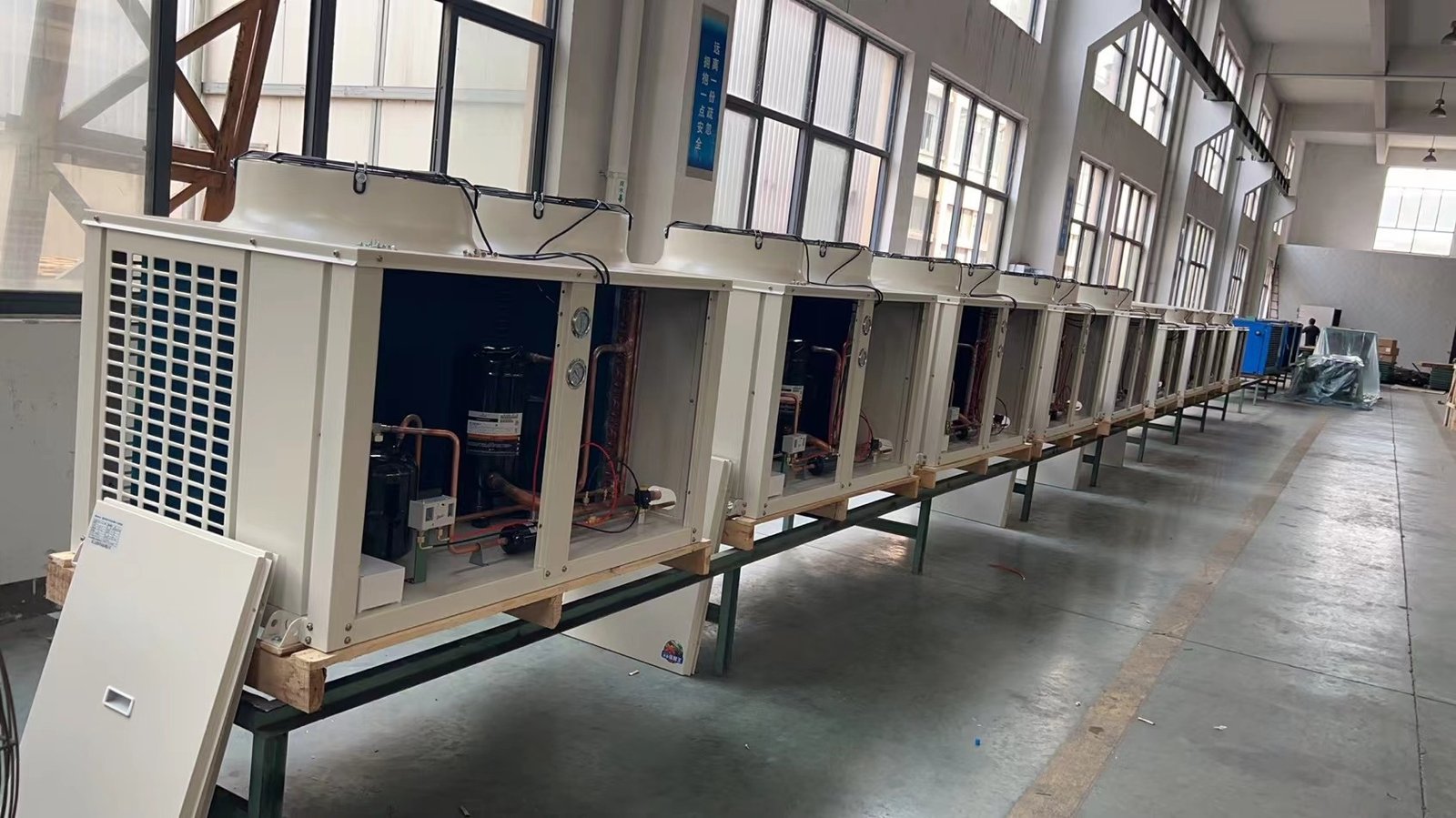
H2: The Regulatory Tide Has Turned: Future-Proofing Your Inventory
Stocking equipment that faces regulatory obsolescence is a distributor’s nightmare. The global phase-down of high-GWP (Global Warming Potential) HFC refrigerants, driven by the Kigali Amendment to the Montreal Protocol and regional laws like the EU F-Gas Regulation and the US AIM Act, is accelerating. Bans on common HFCs in new commercial systems are already in effect across Europe and are rolling out in key North American states.

This isn’t speculative; it’s calendar-based. For instance, as of 2022, the EU has prohibited the use of refrigerants with a GWP ≥ 150 in new plug-in commercial cabinets, and stricter caps are coming. CO2, with a GWP of 1, sits entirely outside this regulatory storm. By recommending and supplying Danfoss CO2 units, you’re not just selling a product; you’re selling immunity from regulatory risk for your end-users. You’re providing a solution that won’t require a costly refrigerant change-out in five years, protecting both your client’s investment and your reputation as a forward-thinking partner. Your inventory stays relevant, and your consultations become strategic planning sessions.
| Table: Regulatory Countdown & Refrigerant GWP Comparison | Region/Regulation | Key Measure | Timeline | Impact on Traditional Refrigerants (e.g., R404A, R507) | CO2 (R744) Status |
|---|---|---|---|---|---|
| EU F-Gas Regulation | Phase-down quota system; bans on high-GWP in new equipment. | Ongoing (2024 quota reduced to 40% of 2015 baseline). | Declining supply, rising cost, restricted use in new systems. | Exempt from phase-down. Preferred solution. | |
| US AIM Act | EPA mandates 40% reduction in HFC production/import by 2024. | Phasedown began 2022. | Allocation limits driving price volatility and scarcity. | Exempt. Listed as acceptable alternative. | |
| California CARB | Prohibits new stationary systems with GWP > 150 in supermarkets. | In effect since Jan 1, 2022. | Eliminates most HFCs from new supermarket installations. | Fully compliant and widely adopted. | |
| Common Refrigerants | GWP (AR5) | Environmental Class | Typical Application | Future Outlook | |
| R744 (CO2) | 1 | A1 (Non-flammable, low toxicity) | Commercial refrigeration, heat pumps. | Long-term sustainable solution. | |
| R290 (Propane) | 3 | A3 (Flammable) | Small plug-in cases, domestic. | Growing in niche, limited by charge size. | |
| R454C/A2L | ~146 | A2L (Mildly flammable) | Intended as HFC replacement. | Mid-term transition option, carries flammability logistics. | |
| R404A | 3922 | A1 | Legacy commercial refrigeration. | Phasing out, subject to high costs and restrictions. |
H2: Unmatched Efficiency in Real-World Conditions: The Data Speaks
“Efficiency” gets thrown around a lot. With Danfoss CO2 systems, it’s quantifiable, especially in demanding climates and applications. The secret isn’t just CO2; it’s Danfoss’s integrated system design and component mastery. Their units are engineered with high-efficiency components like multi-stage compressors, advanced gas coolers, and sophisticated adaptive control logic (think the Danfoss ADAP-KOOL® system).
Here’s the real talk for your clients: In supermarket applications, transcritical CO2 booster systems with heat recovery (which Danfoss components are optimized for) are demonstrating total cost of ownership (TCO) advantages. They provide “free” hot water for floor heating or sanitation, directly offsetting a building’s gas or electric heating bill. In colder climates, or for low-temperature applications (like industrial freezing), CO2 systems in subcritical mode can outperform HFC systems in energy efficiency by significant margins – we’re talking 10-25% under the right conditions, as documented in field studies from Scandinavia and North America.
For you as a dealer, this translates into a powerful sales narrative. You’re not just selling a box; you’re selling a proven reduction in the biggest operational cost your client has: electricity. You can present case study data showing payback periods. Danfoss provides extensive performance data and selection software (like the CoolSelector 2) that allows you to model these savings accurately for specific projects, turning a technical specification into a financial proposal.
H2: Total Cost of Ownership: Looking Beyond the Purchase Order
Your B2B clients are savvy. They scrutinize CAPEX but live with OPEX. The initial investment for a CO2 system can be higher than a standard HFC baseline—this is a point you need to address head-on. The narrative, backed by data, is about TCO.
A Danfoss CO2 condensing unit is part of a system designed for longevity and low maintenance. CO2 is less aggressive on components than some HFCs or ammonia, potentially reducing wear. More importantly, the dramatic reduction in direct refrigerant emissions (due to lower charge and lower leak rates in robust systems) and the elimination of future, costly HFC purchases are massive financial wins. With HFC prices subject to regulatory-driven inflation, this is a predictable cost avoided.
Furthermore, Danfoss’s global service network and component standardization mean faster troubleshooting and repair times, minimizing costly downtime for your clients. When you offer a Danfoss unit, you’re also offering the security of global technical support and widely available spare parts—a critical factor for dealers who also manage service contracts.
H2: Application Versatility: From Supermarkets to Cold Storage & Beyond
The market for CO2 has moved far beyond pioneering Nordic supermarkets. Danfoss has been instrumental in adapting CO2 technology for diverse climates and sectors, making it a viable core product for dealers across verticals.
- Food Retail: The flagship application. Integrated systems for supermarkets (with parallel compression and heat recovery) are now standard in Europe and growing rapidly in North America and Asia-Pacific. Danfoss offers packaged solutions that simplify design and installation.
- Industrial Cold Storage & Logistics: For large-scale freezing (-25°C and below) and chilled storage, CO2 in cascade systems with ammonia or as a stand-alone transcritical solution offers superb efficiency and safety benefits. The reliability is key for 24/7 operations.
- Food & Beverage Processing: Process cooling, blast freezing, and temperature-controlled production lines benefit from the precise temperature control and efficient heat rejection of CO2 systems.
- Heat Recovery (CO2 as a Heat Pump): This is a game-changer. The same condensing unit can provide refrigeration and generate high-temperature hot water (up to 90°C+). For clients with simultaneous heating and cooling needs—like a dairy processing plant or a hotel with a pool—this dual functionality makes the economics incredibly compelling.
By understanding these applications, you can proactively target clients in these sectors, positioning yourself as a specialist rather than a general supplier.
H2: The Partnership Edge: Tools, Training, and Trust
Selling advanced technology requires confidence. Danfoss invests heavily in tools that empower dealers. Their selection and simulation software allows you to create optimized system proposals. Their extensive online training portals (like Danfoss Learning) enable your sales and technical teams to get up to speed on CO2 system design, installation, and service.
For a B2B dealer, this support is invaluable. It reduces your technical risk and enables you to have authoritative conversations with consulting engineers and end-users. You become a knowledge partner, not just a vendor. This builds the kind of long-term, sticky customer relationships that define successful distribution businesses.
Professional Q&A
Q1: We operate in a very hot climate. I’ve heard CO2 systems lose efficiency in high ambient temperatures. Is Danfoss technology viable for my clients?
A: This is a critical and valid concern. Early CO2 transcritical systems did face challenges in high ambients. However, Danfoss has pioneered solutions like parallel compression, ejector technology, and adiabatic gas coolers specifically to address this. These features dramatically improve efficiency in warm climates by managing the high pressure more effectively. For instance, field data from installations in Southern Europe, Australia, and the southern US shows that modern Danfoss-equipped CO2 systems now achieve annualized energy performance comparable to or better than HFC systems, even with sustained high outdoor temperatures. The key is proper system design utilizing these Danfoss components.
Q2: As a distributor, what about service technician training and the availability of spare parts for Danfoss CO2 units?
A: Danfoss runs a global, structured certification program for service technicians through its Danfoss Climate Solutions Academy. These hands-on and online courses cover safe handling, troubleshooting, and maintenance of CO2 systems. Regarding parts, Danfoss components (compressors, valves, controllers, etc.) are standardized and available through its worldwide distribution network. A significant advantage is that many core components are similar in principle to those used in HFC systems, easing the transition for trained technicians. The control logic is advanced, but the service interface is designed for clarity.
Q3: For an end-user client concerned about safety, how does CO2 compare to other natural refrigerants like ammonia or flammable HFOs/HFCs?
A: CO2 (R744) has a distinct safety profile. It is non-flammable (ASHRAE Safety Class A1), which is a major advantage over hydrocarbons (A3) and some A2L “mildly flammable” alternatives. It has a much higher occupational exposure limit (OEL) than ammonia, meaning it is far less toxic. The primary hazard with CO2 is that it is denser than air and can displace oxygen in high concentrations in confined spaces. This is managed through standard safety procedures like proper ventilation, leak detectors, and alarms—requirements that are routine in commercial refrigeration. For many end-users, particularly in public spaces like supermarkets, CO2’s non-flammable and lower toxicity profile makes it a more straightforward choice than other natural options.