
Top Heating and Cooling Air Conditioning Units

Let’s cut straight to it. You’re a global dealer or wholesaler looking for the best heating and cooling units to stock, distribute, or specify for large commercial projects. The market is packed with options, but only a handful of models really deliver the mix of reliability, energy efficiency, and install flexibility that your clients demand. I’m talking about units that work in scorching deserts, freezing tundra, and everything in between. Whether your buyers are outfitting a 50-story office tower, a pharmaceutical plant, a data center, or a chain of hotels, the equipment they choose directly impacts their operating costs and tenant satisfaction. Let’s walk through the top units by application, backed by real specs and market data.
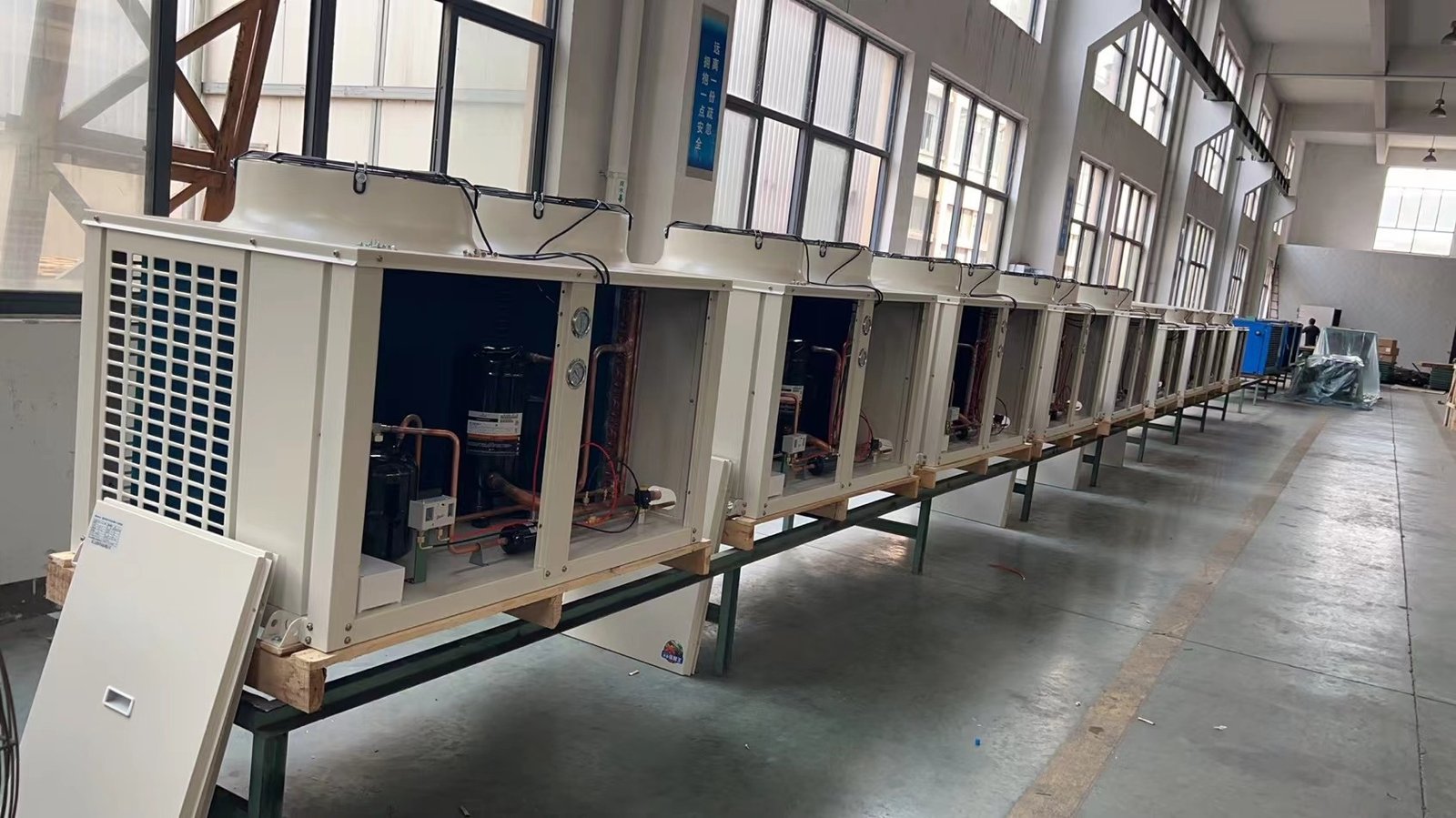

Units Built for Commercial Office Buildings
Commercial office buildings across the Middle East, Southeast Asia, and North America have different pain points. In Dubai, it’s extreme heat and high humidity. In Toronto, it’s deep winter cold. But one thing is universal: building owners want equipment that lowers energy bills without sacrificing comfort. The current sweet spot is the VRF (Variable Refrigerant Flow) system. Brands like Daikin, Mitsubishi Electric, and LG have dominated this space.
Take the Daikin VRV 5 series as an example. It uses R-32 refrigerant, which has 76% lower global warming potential than R-410A. That’s not just good for the environment—it helps your clients meet tightening regulations in Europe and parts of Asia. The unit can heat down to -25°C ambient, so even in cold climates you don’t need a backup electric heater. For cooling, it goes up to 46°C, which covers most of the world’s hot spots. SEER ratings for these systems hit 28 or higher, well above the minimum for LEED certification.
Another heavy hitter is Trane’s VariTrane VRF, which pairs with their Tracer SC building automation system. That’s a big selling point for smart building projects. Your dealer buyers want equipment that integrates easily into existing BMS protocols like BACnet or Modbus.
Here’s a quick look at current top performers for office applications:
| Model | Type | Cooling Capacity (kW) | Heating Capacity (kW) | SEER / EER | Refrigerant | Ambient Operation Range |
|---|---|---|---|---|---|---|
| Daikin VRV 5 | VRF Multi-Split | 22.4 – 112 | 25 – 126 | SEER up to 28 | R-32 | -25°C to 46°C |
| Mitsubishi Electric CITY MULTI YNW | VRF Multi-Split | 22.4 – 140 | 25 – 155 | SEER up to 26.5 | R-410A / R-32* | -20°C to 46°C |
| LG MULTI V 5 | VRF Multi-Split | 22.4 – 128 | 25 – 144 | SEER up to 27.4 | R-410A / R-32* | -20°C to 46°C |
| Trane VariTrane VRF | VRF Multi-Split | 22.4 – 129 | 25 – 140 | SEER up to 25.8 | R-410A | -20°C to 46°C |
*Note: LG and Mitsubishi are transitioning to R-32 for new models in 2024–2025. Always verify with your supplier for current production.
For smaller office floors or retrofits, look at ducted split systems like Carrier’s Infinity 25 SEER series. These single-zone units are easier to ship and install, and they hit SEER 26 on some configurations. But if you’re targeting large-scale projects, VRF is where the volume is.
Heavy-Duty Units for Manufacturing and Industrial Facilities
Industrial buyers are a different breed. They don’t care about aesthetics. They care about uptime, repairability, and being able to handle dust, chemicals, and high ceilings. For large factories, textile mills, and food processing plants, the go-to solution is rooftop units (RTUs) or central station air handlers with gas heat or heat pump options.
In 2024, the market for industrial RTUs is shifting toward high-efficiency models that use low-GWP refrigerants and variable speed compressors. Carrier’s WeatherExpert series is a prime example. The 48/50HC model offers cooling capacities from 25 to 150 tons. It uses Puron Advance (R-454B), which is A2L classified—mildly flammable. That’s a change your industrial clients need to prepare for because many jurisdictions are phasing out R-410A. The WeatherExpert has a dedicated outdoor air option, which is critical for factories that need to bring in fresh air while maintaining temperature.
Then there’s Lennox’s Energence series. These units come with a factory-installed economizer and a high-static blower option for ductwork that runs long distances. For a 50,000-square-foot warehouse in Alabama or a textile mill in Bangladesh, the Energence delivers an EER of up to 12.5. That’s not headline-grabbing, but it’s workhorse efficient.
For process cooling or spot cooling in industrial settings, we’re seeing more demand for packaged heat pumps from Rheem and Goodman, especially in warmer regions. But if you’re dealing with heavy machinery that generates its own heat, like injection molding or server farms, industrial chillers are the better play. We’ll get to data centers next.
Here’s a snapshot of popular industrial units:
| Model | Type | Cooling Capacity (tons) | Heating Source | EER / IEER | Refrigerant | Key Feature |
|---|---|---|---|---|---|---|
| Carrier WeatherExpert 48/50HC | Rooftop Unit | 25 – 150 | Gas / Electric / Heat Pump | IEER up to 18.0 | R-454B | Variable speed compressors |
| Lennox Energence | Rooftop Unit | 7.5 – 50 | Gas / Electric / Heat Pump | EER up to 12.5 | R-410A / R-32* | High-static blower |
| Trane IntelliPak | Rooftop Unit | 20 – 130 | Gas / Electric | IEER up to 20.1 | R-454B | Integrated economizer |
| Goodman GPC14H | Packaged Heat Pump | 2 – 5 | Heat Pump | SEER 14.0 | R-410A | Low cost, easy service |
*Lennox is introducing R-32 models in 2025. Check availability.
One thing to watch: industrial clients often require NEMA 4X or higher corrosion protection for outdoor equipment near coastal plants. Make sure you stock or specify coated coils and stainless steel drain pans. That’s a selling point your dealers can use.
Precision Cooling for Data Centers
Data center cooling is its own universe. You can’t use standard comfort cooling units here. The heat loads are massive, the humidity must stay tight (40-60% RH), and downtime is measured in millions of dollars per minute. For 2024, the trend is toward liquid cooling and high-density in-row cooling, but the majority of hyperscale and colocation facilities still rely on CRAC (Computer Room Air Conditioning) or CRAH (Computer Room Air Handler) units.
Vertiv (formerly Liebert) is the undisputed leader. Their Liebert XDC series is a direct expansion precision cooling unit designed for high-density server rooms. It handles up to 200 kW of sensible cooling per unit and uses R-410A refrigerant with an EER around 10.5. That might seem low compared to comfort cooling, but sensible heat ratio is the real metric here—these units are nearly all sensible, which means they dump heat without overcooling. The Liebert XDC also has variable speed fans and EC motors, reducing fan energy by up to 30%.
For modular data center builds, we’re seeing more Schneider Electric Uniflair units. The Uniflair SF series is a floor-mounted precision cooler that fits in standard IT spaces. It uses R-32 refrigerant and has a compact footprint—only 0.6 square meters. That’s a big deal for leasing colocation space where every square inch costs money.
And then there’s Stulz, a German manufacturer that’s huge in European data centers. Their CyberMax air handling units use direct expansion or chilled water, and they offer ultra-precise humidity control via an ultrasonic humidifier. That’s becoming a requirement for battery storage rooms and high-performance computing centers.
Let’s look at some specs:
| Model | Type | Max Cooling Capacity (kW) | Refrigerant | EER / SHR | Power Supply | Humidity Control |
|---|---|---|---|---|---|---|
| Vertiv Liebert XDC | Precision CRAC | 200 | R-410A | EER 10.5, SHR >0.95 | 208V/3ph | Infrared steam |
| Schneider Uniflair SF | Precision Floor Mount | 150 | R-32 | EER 11.2, SHR >0.92 | 400V/3ph | Electrode steam |
| Stulz CyberMax 2.0 | Precision Air Handling | 250 | R-410A / R-513A | EER 10.0, SHR >0.93 | 400V/3ph | Ultrasonic |
Your B2B clients importing these units need to understand that precision cooling equipment often requires special paperwork—like UL 1995 or CE marking for safety, and ASHRAE compliance for energy standards. Also, many data center operators demand factory leak testing and nitrogen holding charge for all components. If you’re shipping from China, make sure your manufacturing line includes those steps. It builds trust.
Energy-Efficient Heat Pumps for Hospitality and Retail
Hotels and retail chains operate 24/7 and have unique zoning needs. A five-star hotel in Bangkok needs to cool the lobby heavily, but guest rooms can be moderate. A supermarket in Berlin needs consistent refrigeration and heating for checkout areas. For these verticals, ductless mini-splits and multi-zone heat pumps are the bread and butter.
Mitsubishi’s Hyper-Heating Series (e.g., MSZ-FH) is a legend in this space. The MSZ-FH12NA can heat at full capacity down to -13°C and still operate down to -25°C. That’s critical for hotels in colder climates like Canada or Scandinavia. It also has a SEER of 33.1, which qualifies for the highest Energy Star ratings. Dealers love it because the learning curve for installation is short—it’s a straightforward split system with a standard line set.
For larger installations, such as a multi-story hotel with 200 rooms, Fujitsu’s Halcyon Airstage VRF system offers a modular solution. The AJY series has a maximum piping length of 1000 meters, which means the outdoor units can sit on the roof while serving rooms on all floors. That reduces the need for mechanical rooms. The Airstage VRF also comes with a built-in zoned control that integrates with hotel PMS (Property Management Systems) via BACnet. That’s a huge plus for energy savings—guests can’t override the temperature when they leave the room.
Retail clients, especially those in strip malls or standalone stores, often prefer packaged terminal heat pumps (PTHPs) or small rooftop units. Carrier’s 50GC series is a common choice. It’s a light commercial rooftop unit that delivers cooling from 3 to 12.5 tons with a gas or electric heater. It’s inexpensive to ship in containers because the unit is compact and can be stacked. For a chain of 50 restaurants or clothing stores, this is a reliable workhorse.
Check out these top picks for hospitality and retail:
| Model | Type | Capacity (BTU/h) | SEER / COP | Refrigerant | Key Feature |
|---|---|---|---|---|---|
| Mitsubishi MSZ-FH12NA | Ductless Mini-Split | 12,000 Cooling / 13,800 Heating | SEER 33.1 / HSPF 13.5 | R-410A | Hyper-heat to -25°C |
| Fujitsu Airstage AJY VRF | Multi-Split VRF | 48,000 – 180,000 | SEER up to 22.0 | R-410A / R-32 | 1000m piping length |
| Carrier 50GC | Rooftop Unit | 36,000 – 150,000 | EER 11.5 | R-410A | Low profile, stackable |
| LG ART COOL Mirror | Ductless Mini-Split | 12,000 – 24,000 | SEER up to 28 | R-32 | Designer aesthetics for lobbies |
A quick note for dealers: when sourcing heat pumps for Europe, be aware of the new F-Gas regulations. As of 2025, many R-410A units cannot be imported if they contain more than 2.5 tonnes of CO2 equivalent. That means you should already be shifting to R-32 or R-290 (propane) models for the EU market. For US-bound units, check the DOE’s 2023 efficiency standards—residential units must now have SEER2 of at least 15.0 in the south and 14.0 in the north. For commercial, it’s a mess of regional standards. Our advice: always confirm the destination state’s requirements before quoting.
Stand-Alone Solutions for Warehouses and Distribution Centers
Warehouses and distribution centers are often low on HVAC priority until a hot summer shuts down the pickers or a winter freeze damages inventory. The most cost-effective solution is large evaporative cooling units for hot dry climates, or gas-fired unit heaters for cold zones. But for full-year temperature control, high-volume low-speed (HVLS) fans paired with efficient packaged units are common.
The top packaged unit for large open spaces is the Carrier WeatherMaster 48HC. It’s a single-package rooftop unit that can deliver up to 150 tons of cooling. For a 100,000-square-foot warehouse in California or Texas, you’d typically install multiple units on zone dampers. The WeatherMaster uses a dual compressor design with a variable speed supply fan, so it can modulate down to 20% capacity. That saves huge amounts of energy during mild days. It also has a gas heat option up to 1,500,000 BTU/h, so it can handle winter heating without a separate boiler.
For distribution centers in cold storage applications (e.g., frozen food logistics), you need low-temperature condensing units paired with evaporators. Bitzer and Copeland (part of Emerson) dominate the compressor game. But for a simpler wholesale import, many Chinese manufacturers like Gree and Midea have started producing cold storage condensing units with R-404A or R-507. However, these are being phased down globally. New installations should use R-448A or R-449A, which are lower GWP and widely accepted in the US (under EPA’s SNAP program). Let me show you a comparison:
| Type | Application | Typical Capacity (BTU/h) | Refrigerant | GWP | Efficiency |
|---|---|---|---|---|---|
| Standard Package Unit (Warehouse) | 70°F – 80°F storage | 240,000 – 600,000 | R-410A / R-454B | 2088 / 466 | EER 11.0 |
| Low-Temp Condensing Unit (Cold Storage) | -10°F to 32°F rooms | 80,000 – 200,000 | R-448A / R-449A | 1273 / 1397 | COP 1.5 – 2.0 |
| Gas-Fired Unit Heater | Only heating | 100,000 – 1,000,000 | Natural Gas / LPG | N/A | 80% – 95% efficiency |
If your B2B clients are buying for new build warehouses in 2025 and beyond, tell them to avoid R-404A completely. The cost of that refrigerant has already tripled in the last three years due to production cuts. R-448A is a direct drop-in replacement and costs about 60% less now.
Professional Q&A for Global Dealers
Q: What is the typical lead time for VRF systems shipped from China to a European port?
It varies by manufacturer and order volume, but for a standard 40-foot container with 10 to 15 VRF outdoor units plus indoor units, you’re looking at 45 to 60 days from factory to port (excluding customs). Custom configurations or projects requiring specific refrigerant can take up to 90 days. Always ask your supplier for a linear schedule and consider pre-booking shipping slots during peak seasons (October to December).
Q: Do I need any special certifications to import air conditioning units into the UK post-Brexit?
Yes. The UK now operates under its own UKCA mark (UK Conformity Assessed) for most HVAC products. Units that only have CE marking may still be accepted until 2026, but after that you must have dual UKCA + CE for full compliance. Additionally, the F-Gas regulations in the UK are slightly stricter than the EU for leak checking and record-keeping. Make sure your Chinese supplier has a UK Responsible Person registered. This is a common headache for first-time importers.
Q: What’s the minimum order quantity (MOQ) for packaged rooftop units like Carrier WeatherExpert?
From Carrier itself, MOQs can be as high as 10 units per model for special orders. But if you work through a distributor or a Chinese OEM that produces compatible units, MOQs can drop to 3 to 5 containers for mixed models. For Trane or Lennox official distributors, MOQs are often tied to annual volume agreements. If you are new, start with a smaller test order of 20–50 units from the manufacturer’s stock lines.
Q: How should I handle warranty claims for components when the end user is in a remote location with no local service?
This is a critical question for dealers. Most major brands (Daikin, Mitsubishi, Carrier) have global warranty networks but they often require the installation to be done by a certified contractor. For remote regions, you might need to stock spare parts in your own warehouse and hire local technicians for repairs. Alternatively, we recommend negotiating with your Chinese supplier for a “no-questions-asked” 12-month component replacement on the first 2% failure rate. Then you can ship the faulty part back in the next container. Make sure the contract clearly defines shipping costs.
Q: Are there any trade restrictions on importing R-32 units into the United States?
As of 2024, R-32 is approved by the EPA under the SNAP program for most residential and commercial air conditioning applications. However, R-32 is an A2L refrigerant (mildly flammable), so additional labeling and handling requirements apply. The UL 60335-2-40 standard now covers A2L installations. Some states like California have their own CARB regulations that require early phase-outs of high-GWP refrigerants. R-32 has a GWP of 675, which is well below California’s target of 750, so it’s generally safe. But double-check with your buyer about local fire codes before shipping larger units (over 4 kW charge).