
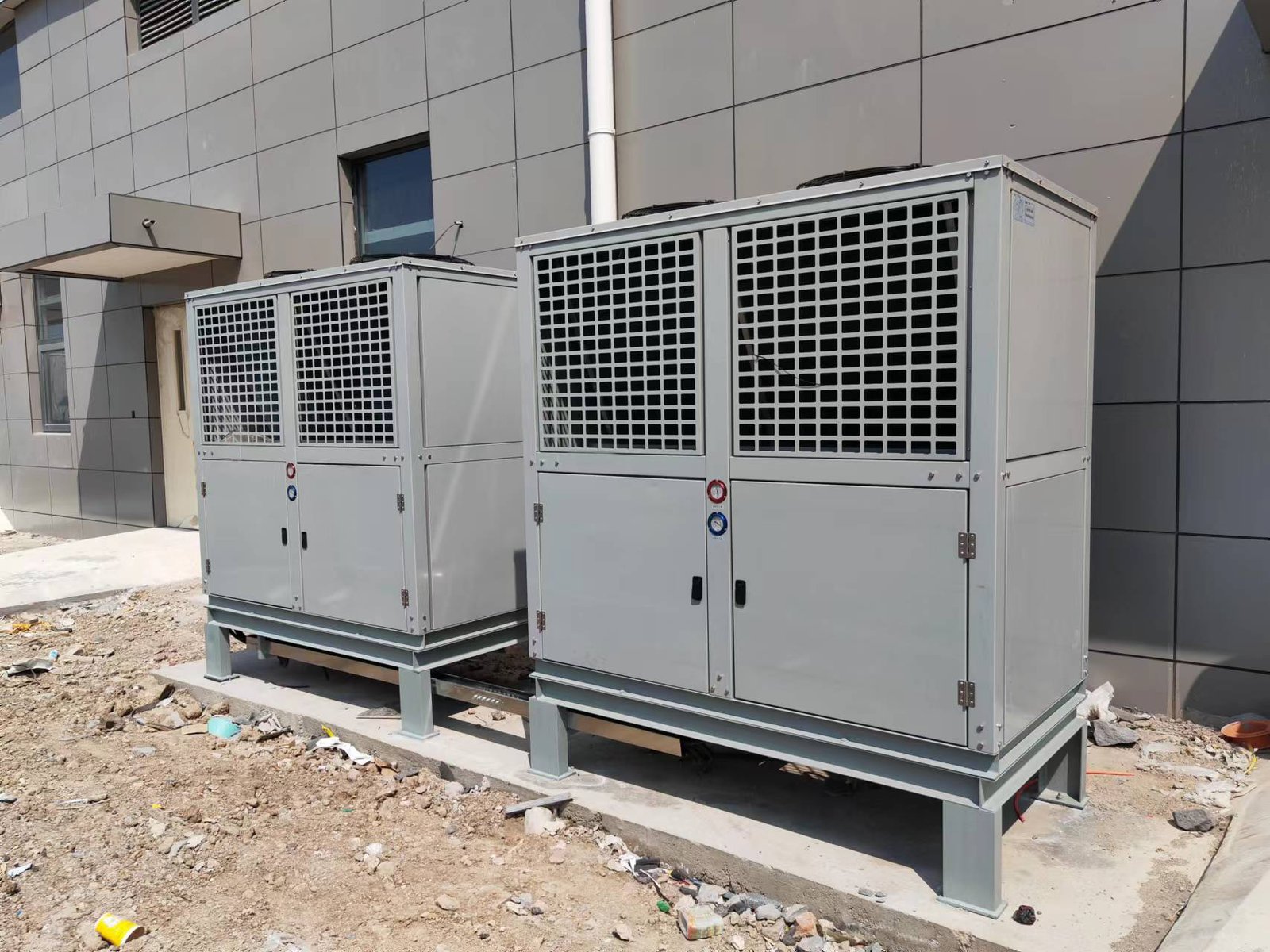
You just got a Mighty Metal cooling unit delivered to your warehouse. Maybe it’s for a walk-in freezer in a restaurant chain, a cold storage room in a food processing plant, or a refrigerated display case for a supermarket chain. The unit looks solid—all welded steel frame, copper tube aluminum fin condenser, and a hermetic scroll compressor from Copeland. But now you need to get it installed and running without any callbacks.
I’m going to walk you through the actual installation process for a typical Mighty Metal commercial condensing unit (model MCU-4800, 4.8 kW cooling capacity, R-404A refrigerant). This isn’t theory. This is what you need to do on site, step by step, with the numbers you can check against real-world specs. Let’s get into it.
Get your tools and site ready before you touch the unit
The first thing you want to do is lay out everything you need. Nothing worse than getting halfway through a job and realizing you forgot a torque wrench or a vacuum pump. For a Mighty Metal unit installation, here’s your minimum tool list:
| Tool / Equipment | Purpose | Typical brand or spec |
|---|---|---|
| Torque wrench (1/4” to 3/8” drive) | Tightening flare nuts on copper lines | 0–60 in-lb range |
| Flaring tool set | Making clean flares on 1/4” and 3/8” tubing | Imperial or Rothenberger |
| Vacuum pump (minimum 4 cfm) | Pulling deep vacuum on the system | Robinair or JB |
| Micron gauge | Measuring vacuum depth (target 500 microns or lower) | CPS or Fieldpiece |
| Refrigerant manifold gauges | Checking pressures during charging | Yellow Jacket digital |
| Nitrogen tank with regulator | Pressure testing and purging | Industrial grade 99.99% |
| Thermocouple thermometer | Measuring evaporator and condenser coil temps | Type K probe |
| Drill and hole saw (2.5” for line set hole) | Penetrating wall or roof | Variable speed |
| Safety harness and lanyard | Any rooftop installation | OSHA compliant |
Make sure the unit sits on a solid, level surface. If it’s on a roof, check that the curb or mounting platform can handle the weight. A Mighty Metal MCU-4800 weighs 112 pounds empty. With refrigerant charge and oil it’s about 125 pounds. That’s not heavy compared to large chillers, but you still need proper support. Check the manufacturer’s mounting dimension drawing (usually in the manual). The base footprint is 28 inches wide by 24 inches deep. Use a concrete pad or rubber vibration isolators. Never bolt the unit directly to a wood deck because the vibration will loosen fasteners over time.
Electrical supply is next. This unit runs on 208–230V single phase, 60 Hz. The compressor RLA (rated load amps) is 10.2 amps, and the total unit FLA (full load amps) including the condenser fan motor is 11.8 amps. You need a dedicated breaker sized at 15 amps minimum. Use a 14 AWG copper wire for the supply. The unit has a factory-installed contactor and a high-pressure switch. Wire the L1 and L2 to the contactor coil terminals. Do not forget to connect the green ground wire to the chassis ground lug. Double-check that the voltage reading at the unit’s disconnect matches nameplate. A 10% voltage drop can cut compressor life by half. I’ve seen installations where the contractor used undersized wire and the compressor kept tripping on overload. Don’t let that be you.
Run the line set and braze with nitrogen
The line set is the arteries of your cooling system. For the MCU-4800, the recommended suction line is 1/2 inch OD and the liquid line is 3/8 inch OD. If the distance between the condenser and evaporator is more than 50 feet, you need to upsize the suction line to 5/8 inch to prevent excessive pressure drop. Measure the exact run length. Cut the copper tubing with a tubing cutter—never a saw, because sawdust gets inside. Deburr both inside and outside. Clean the ends with a wire brush.
Now here’s where most installers mess up: brazing without nitrogen flow. You must flow nitrogen through the tubing while you braze. Buy a small nitrogen regulator and a flow meter. Set the flow to about 3–5 cubic feet per minute. This pushes the oxygen out and prevents carbon formation inside the copper. If you braze without nitrogen, black oxide scale forms on the inner wall. That scale will later break loose and plug the metering device or the compressor’s oil screen. I’ve seen compressors fail within a month because of this. Mighty Metal’s warranty requires proof of nitrogen brazing on any warranty claim. Don’t skip it.
Braze using 15% silver phosphor copper alloy (BCuP-5). Heat the fitting evenly. When the silver flows, stop heating and let it cool slowly. You should see a smooth, shiny ring around the joint. Don’t overheat to the point where the copper turns cherry red—that weakens the metal.
After all brazing is done, install the filter drier. Mighty Metal ships a standard Catch-All filter drier with the unit for field installation. Install it as close as possible to the expansion valve inlet, not at the condenser outlet. Some installers put it right at the liquid line service valve, but that’s wrong. The drier should be after the condenser but before the expansion valve, ideally within 18 inches of the expansion valve. Make sure the flow arrow points toward the valve.
Pressure test, vacuum, and charge the system
Before you even think about opening the refrigerant valves, you need to pressure test the entire system with dry nitrogen. Use the high-side service port. Pressurize to 350 psi for R-404A (that’s about 1.5 times the critical pressure point of the low side). Watch the gauge for 15 minutes. If it drops, you have a leak. Use electronic leak detector (sensitive to 0.1 oz per year) to find it. Common leak spots: flare connections, brazed joints, service valve stems, and evaporator coil coil bonds.
Once the pressure test holds, relieve the nitrogen. Now connect the vacuum pump to both the high and low side ports through the manifold. Open both valves. Run the pump until the micron gauge reads 500 microns or lower. For R-404A systems, you want to get below 500 microns and hold for at least 30 minutes without rising above 1000 microns. If the pressure rises quickly, you still have moisture. You may need to use a triple evacuation method: pull vacuum to 1500 microns, break with nitrogen to 0 psig, pull again to 500 microns. This pushes out moisture that stays in oil. The whole process takes about 1 to 2 hours.
After vacuum holds, close the manifold valves and turn off the pump. Now you can open the condenser service valves. Mighty Metal ships the unit with a holding charge of dry nitrogen. You’ll see a Schrader valve cap. Remove the cap, connect a gauge, and check that the pressure is around 50–60 psi (room temperature nitrogen). If it’s zero, the unit may have leaked during shipping. In that case, do a pressure test again.
The unit comes pre-charged with R-404A for a 25-foot line set. Your actual line set might be longer or shorter. The manual gives you a charge adjust table: add 0.6 ounces per foot for liquid line over 25 feet, subtract 0.2 ounces per foot for shorter runs. For a 50-foot line set, you need to add 15 ounces of R-404A. Weigh it on a digital scale. Do not overcharge—overcharging causes high head pressure and can blow the high-pressure switch at 450 psi.
Start the unit. Let it run for at least 5 minutes to stabilize. Measure the suction pressure and discharge pressure. For a typical medium-temperature application (evaporator temp around 25°F), suction pressure on R-404A should be about 35–45 psi. Discharge pressure should be around 200–280 psi depending on ambient temperature (say 95°F outdoor). Check the liquid line sight glass. You want a solid column of liquid, no bubbles. A few bubbles during startup are okay, but steady bubbles indicate undercharge or a restriction.
Inspect the airflow and condenser placement
The Mighty Metal unit has a high-efficiency condenser fan that moves 1200 CFM at low speed. If the unit is installed in an enclosed space or too close to a wall, the hot discharge air recirculates back into the condenser coil. That kills performance. The minimum clearance from the back of the condenser (air intake side) is 12 inches. The front (air discharge side) needs at least 36 inches of open space. Top discharge units are less sensitive, but still keep the top clear of any obstruction for at least 48 inches.
Measure the ambient temperature at the condenser intake using your thermocouple. If it’s more than 10°F above the outdoor temperature, you have a recirculation problem. The solution: add a duct or use a wind baffle to redirect the discharge air. I’ve seen rooftop installations where the unit was placed right next to a wall, and the compressor kept overheating and tripping on internal overload. Moved the unit out 30 inches, problem solved.
For the evaporator coil side, you need to make sure the airflow across the coil is within 350–400 CFM per ton for medium temperature. The MCU-4800 is about 1.5 tons. That means 525–600 CFM. Check with an anemometer. If airflow is too low, clean the filter, adjust the belt tension on the evaporator fan, or increase motor speed. Low airflow reduces heat transfer and causes the suction pressure to drop, which leads to frozen coils and short cycling.
Also, check the refrigerant superheat and subcooling. For a thermostatic expansion valve (TXV) system, target superheat at the evaporator outlet is 8–12°F. Measure with a thermocouple on the suction line right at the evaporator outlet, and use your manifold gauge pressure to get saturation temperature. Subcooling at the liquid line near the condenser outlet should be around 10–15°F. If superheat is too high, the expansion valve is underfeeding; adjust the valve stem or check for a clogged filter. If superheat is too low, you have flooding of liquid back to compressor, which can damage valves.
Verify line set insulation and drain line
You might think insulation is trivial. But the suction line must be insulated with closed-cell foam of at least 3/4 inch thickness, rated for R-value of 4.0 or higher. For line runs longer than 50 feet, use 1-inch insulation. If the suction line passes through an unconditioned space (like a hot attic), the insulation prevents condensation and energy loss. On a 100°F day, an uninsulated suction line can gain 20°F of superheat. That reduces capacity by about 15%.
The condensate drain from the evaporator needs to slope at least 1/8 inch per foot. Mighty Metal supplies a 3/4 inch PVC drain adapter. Connect to a drainage line that leads to a floor drain or to the outside. If the drain line is long or has multiple bends, install a P-trap to prevent sewer gases from entering. Also add a cleanout tee for future maintenance. I’ve seen drain lines get clogged with algae after a few months, causing water damage to the ceiling below. You can use a simple copper mesh screen at the drain pan outlet to block debris.
Finally, document everything. Take photos of the installation, write down the measured pressures, superheat, subcooling, ambient temp, and line set length. The end user (restaurant owner, warehouse manager) will need these for warranty registration. Mighty Metal offers a 5-year compressor warranty, but only if you submit a start-up report within 30 days of installation.
Q&A for Dealers
Q: Can I install a Mighty Metal cooling unit on a rooftop without a crane?
A: Yes, if the unit is 125 pounds or less, two people can carry it up a ladder with a rope and pulley. But for any unit over 150 pounds, use a crane or a mechanical lift. The MCU-4800 is 112 pounds, so manual lift is okay as long as you have proper ladder setup and safety harness. Never carry the unit while it’s tilted more than 30 degrees – compressor oil can migrate into the suction line.
Q: What happens if the line set is longer than 100 feet?
A: For runs over 100 feet, you must use a larger suction line (3/4 inch for MCU-4800) and add an oil trap at the base of the riser. Also, the charge adjustment becomes significant – about 1.5 ounces per foot. You may need a crankcase heater on the compressor if the run is that long. Check with Mighty Metal technical support for a specific charge calculation.
Q: The unit keeps tripping the high-pressure switch during summer. What should I check?
A: First, verify condenser airflow – clean the coil with a coil cleaner (alkaline-based, not acid). Check the fan blade for damage or incorrect rotation. Measure the discharge pressure – if it’s above 350 psi on a 95°F day, the condenser is undersized or the air is recirculating. Also check if the unit is overcharged. Remove refrigerant in 1-pound increments and observe pressure drop.
Q: Do I need a special power supply for the Mighty Metal unit?
A: No special supply needed. The MCU-4800 works on standard 208-230V single phase. But if the unit is used in a country with 50 Hz frequency (Europe, Asia), you must order a 50 Hz model. The 60 Hz model will run slower at 50 Hz and lose about 17% capacity. Always verify the nameplate frequency.
Q: How often should the filter drier be replaced?
A: Normally, the filter drier lasts the life of the system if the installation was clean and the vacuum was deep. But if you ever open the system for repairs, replace the drier. Also, if you see a significant pressure drop across the drier (more than 5 psi on the liquid line), change it. Some dealers replace it every 3 years as preventive maintenance.
Q: Can I use R-407C or R-134a in the same unit?
A: No. This unit is designed specifically for R-404A. The compressor oil (POE) and expansion valve capacity are calibrated for R-404A’s pressure-temperature characteristics. Using a different refrigerant will give wrong superheat and can damage the compressor within weeks. If you want to convert to R-448A or R-449A (low-GWP alternatives), consult Mighty Metal for a conversion kit that includes a new thermal expansion valve.
Q: What’s the best way to test the unit before leaving the job site?
A: Run the unit for at least 30 minutes at design conditions. Measure and log suction pressure, discharge pressure, superheat, subcooling, evaporator inlet and outlet air temperatures, condenser inlet and outlet air temperatures, and current draw. Compare to the performance curve in the manual. The temperature difference across the evaporator coil should be 15–20°F for medium temp. If everything is within 10% of spec, you’re good.