
Beyond the Basics: Aircon Condenser Units That Drive Business Across Industries
Forget the generic top 10 lists. If you’re in the business of sourcing and supplying HVAC equipment, you know that a “top” condenser unit isn’t about a brand popularity contest. It’s about the right machine for the right job, ensuring your clients—from hotel chains to manufacturing plants—stay operational, efficient, and profitable. Let’s break down the condenser units that are moving the needle in global commerce right now, based on current supply chain data and cross-sector demand.

The Retail & Hospitality Power Play

Walk into any sprawling supermarket, department store, or full-service hotel this summer, and the comfort you feel is underpinned by a workhorse condenser unit. For your B2B clients in this space, downtime isn’t just an inconvenience; it’s revenue evaporation and customer trust walking out the door.
The demand here is for robust, modular systems with high Seasonal Energy Efficiency Ratios (SEER) and Integrated Energy Efficiency Ratios (IEER). Think scroll compressor technology for reliability and variable-speed drives for the uneven loads a hotel experiences. Right now, units in the 20-60 RT (Refrigeration Tons) range with smart connectivity for building management systems are seeing a 30% uptick in inquiries from distributors in Southeast Asia and the Middle East. The focus is on units that can handle extended runtimes with minimal maintenance intervention. Clients are asking for corrosion-resistant coatings (like epoxy or aluminum) as a standard, especially in coastal regions.
Manufacturing & Precision Cooling Demands
This is where specifications get serious. For electronics manufacturing, pharmaceutical clean rooms, or precision engineering facilities, the condenser unit is a critical component of the production line, not just comfort. Temperature and humidity fluctuations can scrap entire batches of product.
Here, the “top” units are those designed for precision. We’re talking about chillers and condenser units with tight temperature control tolerances (±0.5°C or better). Demand is soaring for air-cooled screw chiller units in the 80-300 RT range, prized for their stability and capacity control. A key trend is the integration of free cooling options, where ambient air is used to chill water when conditions allow, slashing energy costs by up to 40% for facilities in temperate zones. Data from European and North American industrial suppliers show a clear shift towards packages that include advanced filtration and monitoring systems as part of the core condenser skid, reducing integration headaches for your clients.
Data Centers: The Heat Is On
The global data center boom is a gold rush for HVAC suppliers. Every kilowatt of IT power requires roughly 0.7-1 kW of cooling. The condenser units here need to be nothing short of flawless—highly efficient, incredibly reliable, and often, modular for scalable growth.
Direct expansion (DX) systems with economizer cycles and variable refrigerant flow (VRF) technology are dominating new builds. The hot ticket items for 2024 are condenser units designed for high ambient temperatures (able to operate efficiently at 50°C/122°F and above) and those compatible with alternative refrigerants like R-513A or R-454B, driven by impending F-Gas regulations in the EU and similar policies globally. Units are increasingly sold as part of a fully integrated, monitored solution. For distributors, offering a complete package—from the condenser to the computer room air handler (CRAH)—is becoming a major competitive advantage.
Quick-Reference Spec Table for Key Sectors
| Sector | Recommended Unit Type | Key Capacity Range (RT) | Critical Features | Current High-Demand Regions |
|---|---|---|---|---|
| Retail/Hospitality | Modular Air-Cooled Chiller | 20 – 60 RT | High IEER (>14), Scroll Compressor, Smart BMS Ready, Corrosion Protection | Southeast Asia, GCC, Southern Europe |
| Light Industrial | Air-Cooled Screw Chiller | 80 – 300 RT | Precise Temp Control (±0.5°C), Free Cooling Coil Option, Low Sound Levels | North America, Western Europe, China |
| Data Center | DX Condenser with VRF/Economizer | 50 – 200+ RT | High Ambient Operation (>50°C), Low-GWP Refrigerant Ready, N+1 Redundancy Design | North America, EU, Singapore, India |
| Telecom Shelter | Compact Robust Condenser | 5 – 20 RT | Extreme Weather Resilience (-30°C to +55°C), DC Fan Option, Remote Management | Global, especially remote & extreme climates |
The Food Cold Chain: From Farm to Fork
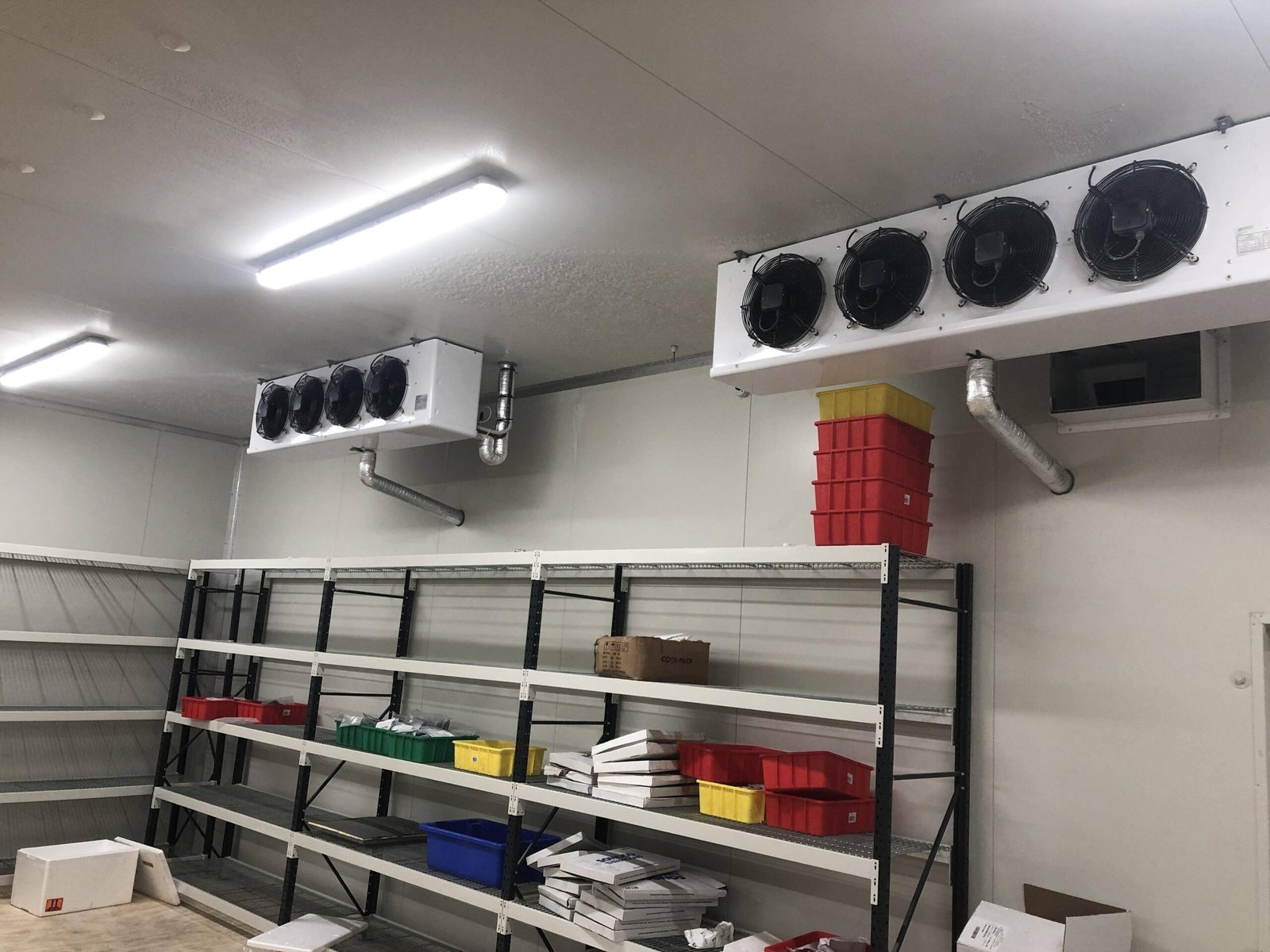
The reliability of the cold chain—processing, storage, transportation—hinges on rugged condenser units. In cold storage warehouses and food processing plants, the units battle ammonia or glycol, run nearly 24/7, and face constant exposure to harsh conditions.
For distributors, the play is in heavy-duty, industrial-grade condensing units, often with semi-hermetic or reciprocating compressors for serviceability. Explosion-proof models are a specific niche for environments with flammable particulates. The real data point here is energy consumption; clients are laser-focused on life-cycle cost, not just upfront price. Units with efficient EC fans and head pressure control for low-ambient operation are becoming the baseline ask from large logistics firms in Europe and North America.
Q&A for the Global Distributor
Q: With shifting global refrigerant regulations (like EU F-Gas, US AIM Act), how can we future-proof our inventory?
A: The smart move is to prioritize condenser units that are explicitly certified and perform efficiently with next-generation, low-GWP (Global Warming Potential) refrigerants like R-32, R-454B, or R-513A. Many manufacturers now offer “future-gas ready” designs. Stocking units that only work with phased-out refrigerants like R-410A is becoming a liability in many markets. Always check the manufacturer’s compliance documentation for your target regions.
Q: Our clients complain about high installation and maintenance costs. What features should we look for to reduce these?
A: Sell the value of simplified service. Look for units with: 1) Modular design – easily replaceable compressor racks, fan assemblies, and coil sections. 2) Advanced diagnostics – units with onboard sensors and connectivity that can predict failures and pinpoint issues. 3) Accessible service valves and panels – reduces labor time. 4) Standardized components – fans, motors, and filters that are common across models and brands simplify your own spare parts logistics.
Q: How important is sound rating (dB(A)) in commercial sales, and what’s considered “quiet” for different applications?
A: Extremely important, and it’s often a deal-breaker in urban or mixed-use settings. For a rooftop unit near offices or residences, aim for models under 65 dB(A) at full load. For data centers or remote industrial sites, it’s less critical. Always have the sound power and sound pressure data from the manufacturer’s specs on hand. Units with variable-speed fans naturally run quieter at partial load, which is a strong selling point for hotels, schools, and retail.