
Top Cooler Units Powering Industries This Year: A Buyer’s Guide for Global Distributors
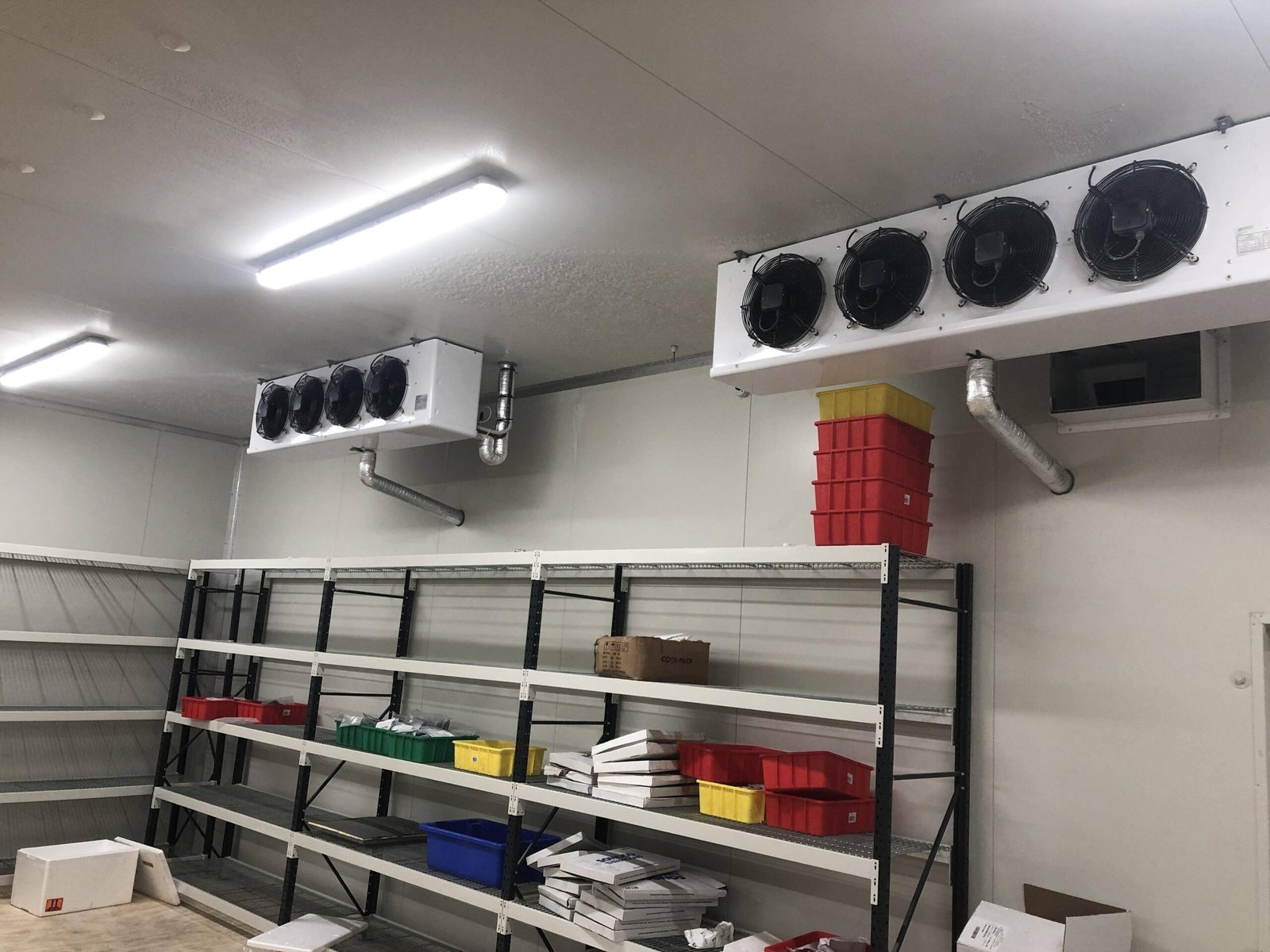
Forget a one-size-fits-all list. This year’s top cooler units are defined by how they solve real, tough problems for specific industries. As a distributor, your B2B clients aren’t just buying a “cooler”—they’re buying reliability for their vaccine shipments, precision for their craft breweries, and durability for their hot kitchen lines. Here’s the breakdown of the units making waves, and more importantly, why they’re in demand.

What’s Driving Demand in Commercial & Industrial Cooling

The market isn’t just about colder temperatures anymore. The big drivers we’re seeing are energy efficiency compliance, robust remote monitoring, and extreme climate resilience. Regulations in the EU and North America are pushing strict efficiency standards (like the EU’s Ecodesign Directive), making units with variable speed compressors and low-GWP refrigerants (like R-290 propane or R-744 CO2) the default ask for new projects.
Secondly, after the supply chain lessons of recent years, managers want visibility. Units with integrated IoT sensors that send real-time alerts for temperature deviation or predictive maintenance needs are moving from premium features to must-haves. Finally, with more global trade flowing through extreme ambient conditions—from Middle Eastern heat to Arctic cold—the baseline for “reliable” has been raised. Units are now being stress-tested for stable performance at 50°C+ ambients, not just standard 32°C ratings.
Cold Chain & Pharmaceutical Logistics: Precision is Non-Negotiable
This sector has zero tolerance for error. The top units here are all about documentation, precision, and redundancy.
The leaders are integrated monobloc units with continuous data logging that meets FDA 21 CFR Part 11 and EU Annex 11 compliance standards. We’re seeing a major shift towards dual-compressor systems in single cabinets for critical storage. If one compressor fails, the second automatically takes over, with an immediate alert sent to the facility manager’s phone. Temperature uniformity is also key—the best units maintain a tight ±0.5°C variance throughout the entire chamber, crucial for sensitive biologics.
For active transport, the game-changer has been hybrid-powered (electric/diesel) transport refrigeration units (TRUs). They allow for silent, emissions-free operation during urban deliveries—a requirement in many European cities with strict noise and emission zones—while switching to diesel for long-haul stretches. This isn’t just a “green” feature; it’s a permit to operate in metropolitan areas.
| Top Performer Specs: Pharma-Grade Cold Room Unit | Model Example | Temp Range | Key Technology | Compliance Focus | Annual Energy Consumption (Est.) |
|---|---|---|---|---|---|
| PharmaGuard Dual-Core | -25°C to +15°C | Dual independent refrigerant circuits, IoT cloud logging | EU GDP, WHO PQS | 15,200 kWh | |
| LogiCool HVR-45 | -30°C to +20°C | Hybrid (R-290/R-744) refrigerant, low ambient kit (-40°C) | FDA 21 CFR Part 11 | 14,800 kWh |
Food Service & Hospitality: Durability Meets Smart Control
In a commercial kitchen, a cooler dies two deaths: by a thousand dings and from the door being left open. The winning units here are brutally durable and intelligently efficient.
Undercounter worktop refrigerators with stainless steel exteriors and interior liners that resist cracks and bacterial growth are the baseline. But the real trend is in high-volume walk-in coolers for restaurants and hotel banquet facilities. The top units feature hot gas defrost systems instead of standard electric defrost. Why? Speed and energy savings. They clear evaporator ice 3x faster, putting less heat back into the box and reducing compressor workload. For a busy kitchen that defrosts 2-3 times a day, the annual energy saving is significant.
Connectivity is also huge. Smart units now integrate with kitchen management systems. They can track door-open events, send alerts if temperature rises during a delivery, and even compile efficiency reports to help managers reduce utility costs. For beverage cooling, modular cellar coolers with precise digital thermostats (±0.3°C) are essential for craft beer and wine preservation, directly impacting product quality served to the customer.
Industrial Process & Manufacturing: The Heavy-Duty Partners
This is where cooling gets rugged. It’s not about storing a product, but enabling a process. Think cooling injection molding machines, controlling reactor temperatures in chemical plants, or maintaining precise conditions in laser cutters.
The demand is for industrial process chillers with massive heat removal capacities and resistance to corrosive or dusty environments. Air-cooled chillers with inverter scroll compressors are dominating for their ability to modulate cooling output from 20% to 100%, matching the exact process load and cutting energy use by up to 40% compared to fixed-speed models.
For harsh environments like plastics manufacturing, units come with industrial-grade air filters and coated condenser coils to resist plasticizer fumes. In the beverage industry, glycol chillers for brewery fermentation tanks are specifying pumps with higher head pressure to handle complex multi-tank piping layouts without losing set point control.
| Workhorse Chiller Comparison | Model Type | Cooling Capacity Range | Ideal Application | Key Rugged Feature | Typical ROI Period |
|---|---|---|---|---|---|
| Air-Cooled Inverter Chiller | 20 kW – 500 kW | Plastic injection molding, laser cutting | Corrosion-resistant condenser coating | 14-18 months (via energy savings) | |
| Glycooling Brewery Chiller | 10 kW – 100 kW | Fermentation & bright beer tank cooling | High-head stainless steel pump, PID control | 10-14 months |
Retail & Supermarket Display: The Silent Salesperson
A retail cooler’s job is to keep products perfectly chilled while looking impeccable and costing less to run. The trends are all about aesthetics, efficiency, and shopper experience.
Doored vertical multideck cases with triple-pane, anti-fog glass are winning over traditional open-air cases. Why? They reduce cold air spillage by over 70%, dramatically cutting the store’s HVAC load. They also allow for precise zone cooling—dairy at 3°C, meats at -1°C—in a single footprint.
LED lighting has evolved. It’s now full-spectrum, high-CRI (Color Rendering Index) lighting that makes fresh produce look vibrant and meat look naturally red, proven to increase sales. On the technical side, plug-in, modular refrigeration systems for smaller supermarkets are gaining traction. Instead of one central compressor rack, each case or small group has a self-contained system. If one fails, only that section is down, simplifying maintenance and reducing potential loss.
Q&A for the Professional Distributor
Q1: A client in the Middle East needs outdoor condensing units. What specs are non-negotiable?
A: Focus on three things: High Ambient Kit: Ensure the unit is rated for stable operation at 55°C ambient, not just 43°C. Corrosion Protection: Look for units with gold-fin or epoxy-coated condenser coils and stainless steel hardware to resist salt-air corrosion. Sun and Rain Shields: Integrated protective louvers are essential to deflect direct sun and driving rain, maintaining performance and longevity.
Q2: What’s the real advantage of variable speed (inverter) compressors over fixed speed for a cold storage warehouse?
A: It’s about precision and cost. A fixed-speed compressor is like a car that can only go 0 mph or 100 mph—it constantly cycles on at full power and off. An inverter compressor smoothly modulates from 20% to 100% capacity, exactly matching the cooling load. This results in: 1) Stable temperature (±0.2°C vs. ±1.5°C swings), 2) ~30-40% lower energy consumption, and 3) Less wear and tear on components, extending unit life.
Q3: A brewery client is expanding. Should they opt for a centralized glycol system or multiple unit coolers?
A: It depends on scale and layout. Centralized Glycol Systems are more efficient (one powerful chiller) for larger breweries (>10 BBL capacity) with many tanks clustered together, offering easier overall control. Multiple Unit Coolers (DX Systems) offer greater zoning flexibility for breweries with tanks spread out or in different rooms, and have a lower upfront cost. The maintenance risk is also distributed. For most mid-sized craft breweries planning phased growth, a modular DX system is often the more flexible and financially manageable choice.
Q4: How critical is remote monitoring, and what should a basic system provide?
A: For B2B clients, it’s now a decisive factor. A basic effective system must provide: Real-time temperature/humidity alerts via SMS/email if set points are breached; Access to historical data logs for compliance audits; Predictive alerts for issues like “filter clogging” or “compressor short cycling” based on performance trends, allowing proactive maintenance before a costly failure occurs.