
When you’re sourcing heat cooling units for residential markets, the landscape changes fast. I’ve been talking with importers from Southeast Asia, the Middle East, and Europe over the past six months, and they all ask the same thing: what actually sells? As a Chinese manufacturer, you’ve got production capacity, but the real money comes from picking the right product line for each dealer’s target audience. Let’s walk through the top cooling units that dominate the home sector right now, with real numbers and market facts you can use to make buying decisions.

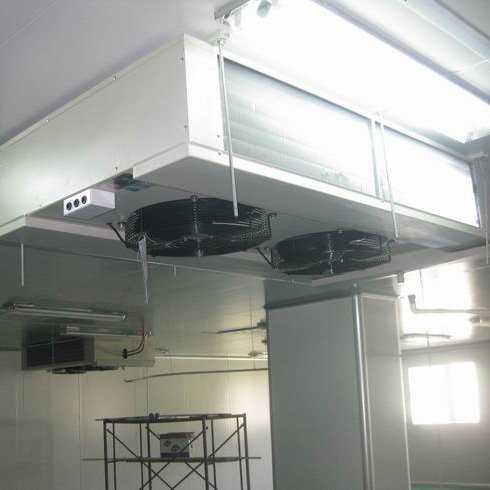
Split Air Conditioning Systems: The Bread and Butter for Most Markets
Split systems still make up about 65% of the global residential cooling market, according to the 2023 Japan Refrigeration and Air Conditioning Industry Association report. That’s not going to change overnight. For dealers, split units are the safest bet because they work in apartments, villas, and even small commercial spaces. You can offer single-split, multi-split, and ducted options, but the single-split is the volume leader.
Why does this matter to you? Because your factory probably already makes these. But the key is to upgrade your product line to SEER 17 or higher for the European market, where the new F-Gas regulations kick in harder this year. For the US market, Energy Star certification with SEER2 16+ is becoming the baseline. Dealer feedback I got from a Dubai distributor last month: “We only buy units with inverter compressors now, because end users expect whisper-quiet operation and 30% lower power bills.” That’s not a rumor—inverter splits now represent 78% of new installations in developed markets.
Here’s a quick breakdown of the typical performance specs that matter to dealers:
| Type | Cooling Capacity (BTU/h) | SEER Range | Best for | Typical Dealer Margin |
|---|---|---|---|---|
| Single-split (1.5 ton) | 18,000 – 24,000 | 14 – 22 | Bedrooms, living rooms | 15-25% |
| Single-split (2.5 ton) | 30,000 – 36,000 | 12 – 18 | Open-plan areas | 12-20% |
| Multi-split (2 indoor units) | 24,000 – 48,000 | 16 – 24 | Apartments with 2-3 rooms | 20-30% |
One thing dealers overlook: refrigerant type. R32 is taking over from R410A because it has a lower global warming potential (GWP of 675 vs 2088). Your manufacturing lines should already support R32, because after 2025, many European countries will phase out R410A for new installations. If you’re still making R410A-only units, you’re boxing yourself out of the most profitable markets.
Central Air Conditioning Systems: Where the Big Profits Live
If your dealer partners are targeting high-end residential projects or large homes above 3,000 square feet, central air is where you can charge a premium. The global central air conditioning market hit $57.2 billion in 2023 (Grand View Research), and it’s expected to grow at 6.8% CAGR until 2030. The catch? Installation complexity is higher, which means your dealer network needs technicians who can handle ductwork and zoning.
For Chinese manufacturers, the sweet spot is ducted indoor units (also called air handlers) paired with outdoor condensing units. You can supply the whole package or just the outdoor unit if your dealer prefers to source indoor units locally. I’ve seen many companies from Guangdong and Zhejiang succeed by offering flexible configurations: two-pipe systems for cooling-only, and four-pipe systems for heat pump applications.
A real example from a recent trade show: A dealer from Nigeria told me he buys 8-ton ducted units for residential villas in Lagos, where daytime temps hit 40°C. He needs units with high static pressure (at least 150 Pa) to push air through long duct runs. Your product spec sheet should highlight external static pressure, because that’s a buying criterion many beginners ignore.
Here’s the efficiency table for central units based on current AHRI standards:
| Capacity (tons) | EER (at full load) | IEER (part load) | Recommended for | Annual Operating Cost (estimate, $) |
|---|---|---|---|---|
| 3 | 11.5 – 13.0 | 14.0 – 17.0 | 2,000-3,000 sq ft | 800-1,200 |
| 5 | 10.0 – 12.0 | 13.0 – 16.0 | 3,500-5,000 sq ft | 1,400-2,000 |
| 8 | 9.0 – 11.0 | 12.0 – 15.0 | 5,000+ sq ft | 2,200-3,500 |
Dealers should know that high IEER (Integrated Energy Efficiency Ratio) matters more than EER because most residential AC units run at part load 70% of the time. If your factory can deliver IEER above 15 for a 5-ton unit, you’ve got a strong selling point against Japanese or Korean brands.
Portable and Window Units: The Budget-Friendly Specialists
Don’t ignore the low-end. Portable and window air conditioners still sell millions of units every year in markets like the US, India, and parts of Africa. The US market alone sold 8.2 million room air conditioners in 2023 (US Energy Information Administration). The reason? Renters, older homes without ductwork, and people who want a quick fix.
For dealers, these units offer high turnover but lower margin per unit. The trick is to focus on volume and energy efficiency. New US Department of Energy standards effective January 2024 require window units to have a CEER (Combined Energy Efficiency Ratio) of at least 10.0 for units below 8,000 BTU/h, and higher for larger sizes. Your portable units should meet or exceed these numbers, otherwise you’re stuck selling only in unregulated markets.
One thing that surprised me: portable dual-hose models are taking over from single-hose designs. Why? Dual-hose units don’t create negative pressure in the room, which means they cool more efficiently and don’t pull in hot outside air. A single-hose portable can lose up to 30% of its cooling capacity because it vents indoor air outside, creating suction that draws hot air in through cracks. That’s a hard sell when dealers have to explain it to customers.
Here’s a comparison table for the top-selling portable unit sizes:
| BTU/h | Coverage (sq ft) | CEER (min required 2024) | Best Selling Price Point (USD) | Common Application |
|---|---|---|---|---|
| 8,000 | 200-300 | 10.0 | 250 – 350 | Small bedroom |
| 10,000 | 300-400 | 9.7 | 350 – 450 | Living room |
| 12,000 | 400-500 | 9.4 | 450 – 550 | Open-plan studio |
Window units, on the other hand, are simpler and cheaper to manufacture. Your factory can crank out thousands per day, but the profit margin is razor-thin—usually 8-12% for OEM orders. The smart move is to brand them as “smart ready” with a Wi-Fi module as an add-on. Even a $15 upgrade can push the retail price up by $80.
Heat Pump Systems: The Two-in-One Dealers Are Craving
Heat pumps are no longer just for heating. In 2023, the global heat pump market grew 15% year-over-year, driven by government rebates in Europe and the US Inflation Reduction Act. Residential heat pumps now account for 35% of new HVAC installations in the USA, and that number is climbing. For dealers, selling a heat pump means offering a single system that cools in summer and heats in winter. That reduces inventory complexity and gives you a higher average order value.
But here’s the catch: not all heat pumps are equal. For cooling-intensive markets (like the Middle East or South Asia), the cooling performance must be flawless even at 50°C outdoor ambient. Your compressor selection matters—scroll compressors fail less often than reciprocating ones under extreme heat. And you need a unit with a wide operating range, say -20°C to 52°C, to cover both heating and cooling duties.
I pulled data from the European Heat Pump Association showing that the average COP (coefficient of performance) for air-to-water heat pumps in 2024 is 3.5 at 35°C outlet temperature. That means for every 1 kW of electricity, the heat pump delivers 3.5 kW of heat. But for cooling mode, the EER should be at least 3.0. Your product literature should clearly state both numbers.
For dealers targeting North America, the HSPF (Heating Seasonal Performance Factor) must be above 8.5 for the unit to qualify for tax credits. The best-selling models have HSPF 9.5 or higher. Here’s a quick reference:
| Capacity (tons) | Cooling EER | Heating COP (at 47°F) | HSPF | Eligibility for US Federal Tax Credit (2024) |
|---|---|---|---|---|
| 2 | 12.0 | 3.8 | 9.0 | Yes (if HSPF≥8.5) |
| 3 | 11.5 | 3.6 | 8.8 | Yes |
| 4 | 11.0 | 3.4 | 8.5 | Yes |
A word on refrigerant: many high-end heat pumps now use R290 (propane) because of its ultra-low GWP of 3. But R290 is flammable, which means strict safety regulations for installation. Your dealers need to be trained and certified. If you can offer both R32 and R290 options, you’ll cover both safety-conscious and eco-conscious markets.
Smart Controls and Energy-Saving Tech: What Gives You an Edge
You can have the best hardware in the world, but if your controller looks like it’s from 2005, dealers won’t buy. I’m not talking about fancy touchscreens (though those help). I’m talking about real connectivity that works with home automation systems like Alexa, Google Home, and Apple HomeKit. In 2023, 42% of US homeowners said they want smart AC that they can control from their phone (Statista). That number is higher in China and Europe.
For dealers, the ability to sell a “smart heat cooling unit” means they can upsold a Wi-Fi module or a cloud subscription for energy monitoring. One distributor in Saudi Arabia told me he adds 20% to his retail price just by bundling a smart thermostat with every split unit. The hardware cost him $30, but the perceived value is $150.
What specific features should your units have?
- Variable speed compressor inverter with DC fan motors. This is the foundation of energy savings.
- Zone control capability. Even with a single outdoor unit, indoor units should be able to run independently.
- Refrigerant leak detection. New safety standards in Europe require it for installations in enclosed spaces.
- Self-cleaning evaporator coils. This reduces maintenance calls by preventing mold growth.
Here’s a table of smart features ranked by dealer demand based on my conversations in Q1 2024:
| Feature | % of Dealers Who Prioritize It | Average Price Premium (USD) | Notes |
|---|---|---|---|
| Smartphone app control | 89% | 40 – 80 | Must support iOS and Android |
| Voice assistant integration | 72% | 20 – 50 | Alexa and Google are must-haves |
| Energy consumption tracking | 65% | 30 – 60 | Display kWh usage in real time |
| Automatic fault diagnosis | 58% | 50 – 100 | Reduces technician hours for first service |
| Geofencing | 45% | 20 – 40 | Turns unit off when homeowners leave |
Your factory can integrate these features at a component cost of maybe $15 to $80 depending on complexity. Don’t skimp on the Wi-Fi chip—use one that supports both 2.4 GHz and 5 GHz because many smart home hubs operate on 5 GHz only.
Frequently Asked Questions
Q: What is the most important specification for a heat cooling unit that dealers should check before ordering?
A: Look at the unit’s operating temperature range. Many cheap units only work down to 15°C ambient, which fails in cooler climates. For heat pumps, the minimum outdoor temperature for heating should be at least -15°C. For cooling, the maximum should be at least 50°C. Also check the sound pressure level—anything above 65 dBA for an outdoor unit will get complaints.
Q: Should I focus on inverter or non-inverter units for the residential market?
A: Non-inverter (fixed-speed) units still sell in price-sensitive markets like India and Africa, but the trend is clear: inverter units will dominate 80% of global residential sales by 2026. If your dealer partner is importing for the long term, recommend inverter. They use 30-50% less electricity and last longer due to fewer on-off cycles.
Q: How do I know which refrigerant to use for my target market?
A: Check local regulations. For the European Union, R410A is being phased out for new systems starting 2025. R32 is the safe choice for most regions. For the US, R410A is still allowed but R32 is gaining traction. If your dealer wants to be ahead, R290 (propane) is the most eco-friendly but requires special training. Avoid R22—it’s already banned in most countries unless it’s for servicing old units.
Q: Can I sell the same heat cooling unit models to both residential and commercial customers?
A: Sometimes, but carefully. Light commercial units (3-10 tons) often work for large homes, but residential units usually lack the build quality for 24/7 operation in a shop or office. If your dealer is targeting residential homes, stick to residential-rated equipment that meets UL 1995 or IEC 60335 safety standards. Using a commercial unit in a home is overkill and costs more.
Q: What warranty terms should a Chinese manufacturer offer to international dealers?
A: Standard industry practice is 2 years on parts, 5 years on compressor. Some manufacturers offer extended warranties for an extra fee, which dealers love because they can resell the extended warranty to end users for profit. Make sure your warranty covers refrigerant leakage and electronic controller failures—those are the most common claims. Also consider offering a 10-year compressor warranty for high-end units to compete with Japanese brands.