
Restaurant vs. Warehouse vs. Office: Who Pays More for HVAC? Real Cost Breakdown
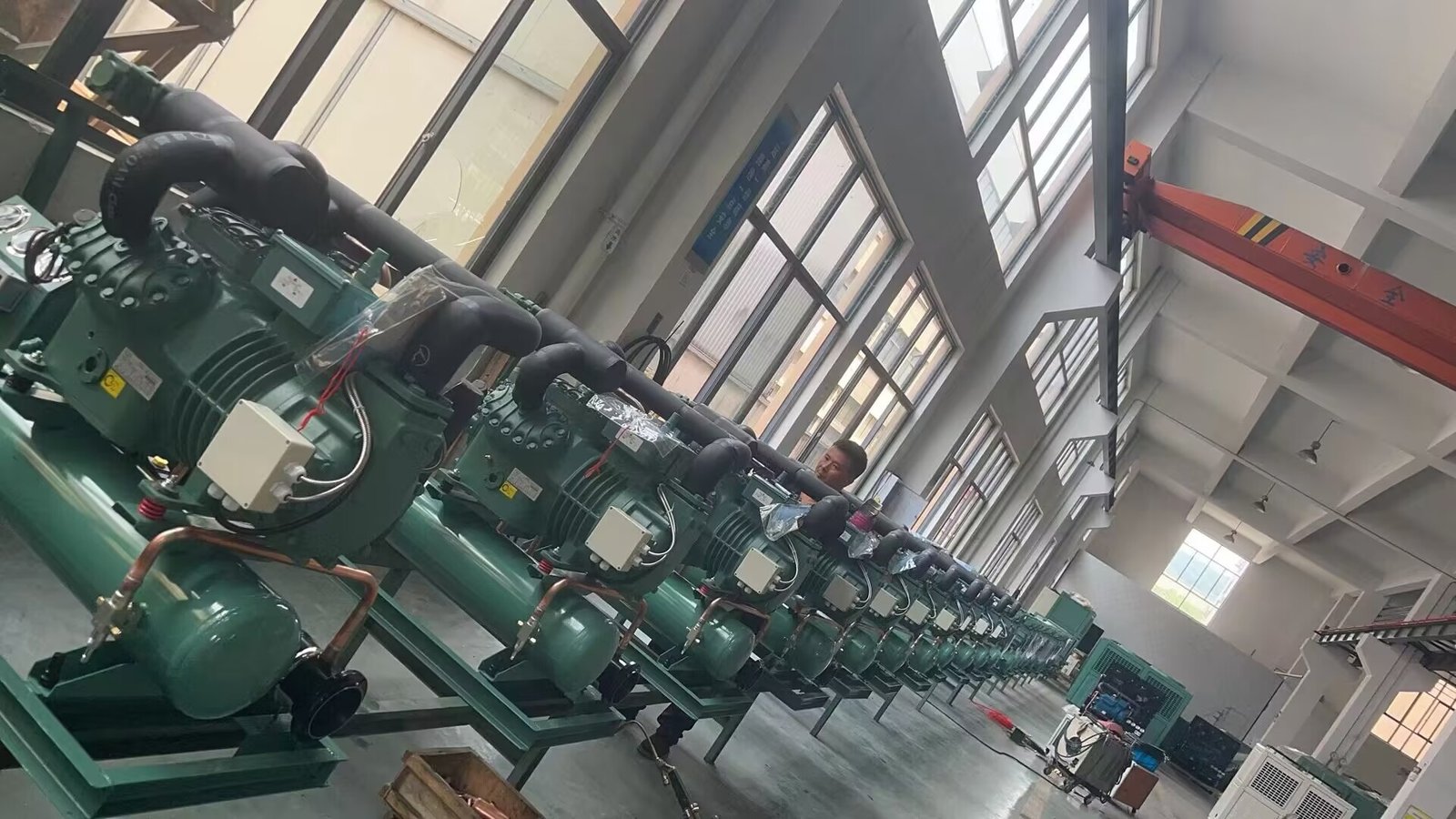
Alright, let’s cut the fluff. You’re a manufacturer of refrigeration and HVAC equipment, and you’re selling to global importers and B2B dealers. Your customers are asking the same thing: “How much does a heating and cooling unit really cost for my industry?” Not the retail sticker price you see on Home Depot, but the real dealer price, the installation markup, the long-term operational cost, and how it compares across different sectors.

I’m going to give you a straight-up comparison of heating and cooling unit costs for three big industries – restaurants, warehouses, and offices. These sectors have totally different needs, and their price points are all over the map. I’ll include actual market data from recent years (2023-2024), so you can take this to your clients and help them make smart buying decisions. No metaphors, no fancy language – just hard numbers and honest talk.
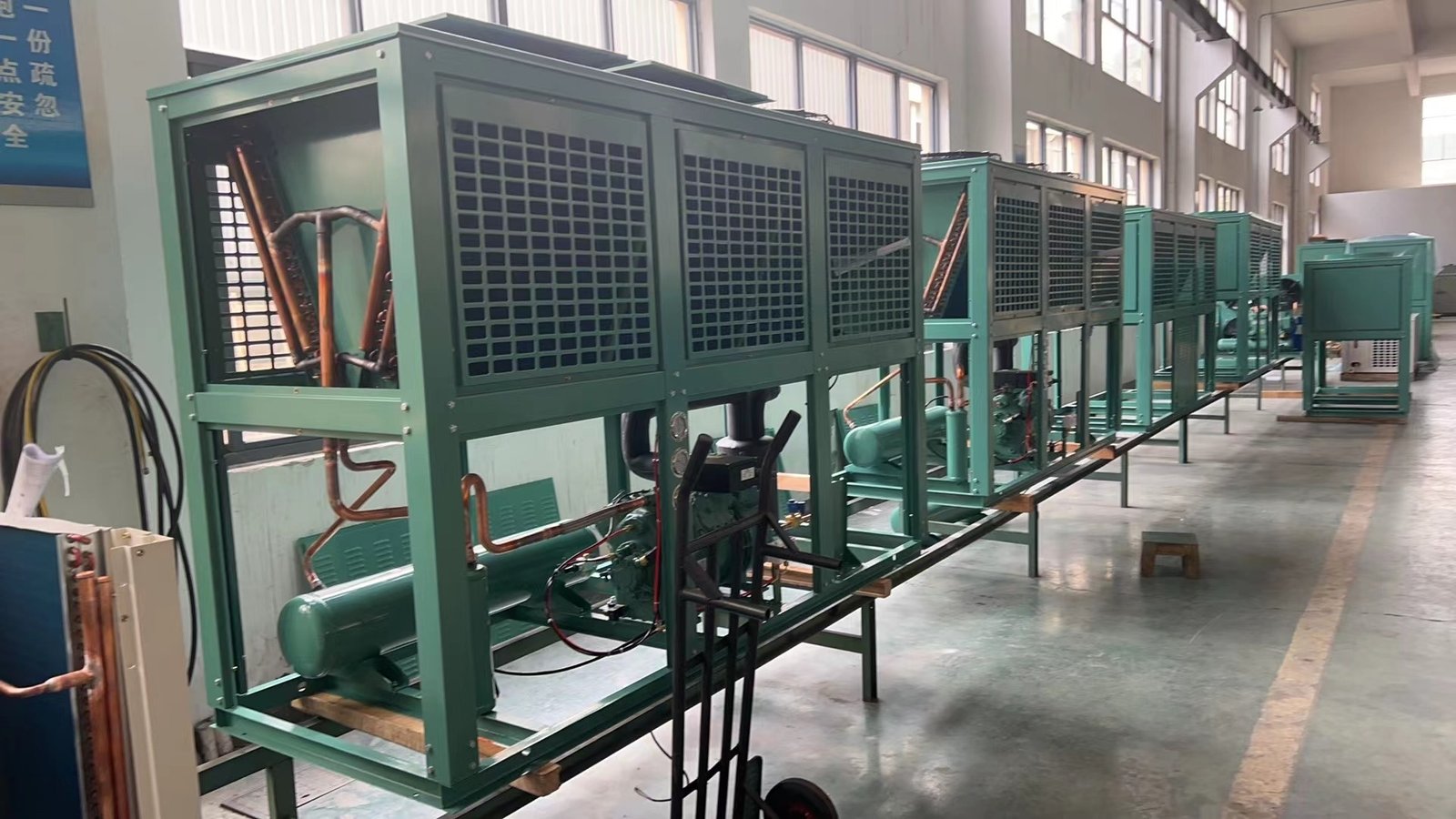
Let’s start with something that might surprise you: restaurants often pay the most for HVAC per square foot, but warehouses pay the most in total dollars per unit. Why? Because a restaurant needs precision cooling for kitchens, while a warehouse needs brute-force heating and cooling over massive spaces. Offices sit somewhere in the middle, but they have unique requirements like zoning and noise control. I’ll break it down piece by piece.
Commercial Rooftop Units: The Workhorse for Retail Chains and Warehouses
Let’s talk about rooftop units (RTUs) first. These are the big metal boxes you see on top of shopping malls, big-box stores, and warehouses. They handle both heating and cooling, and they’re the most common solution for commercial spaces from 5,000 to 100,000 square feet.
For a typical 10,000-square-foot restaurant, you’re looking at a 15-ton RTU. For a 50,000-square-foot warehouse, you need a 30-ton unit. And for a 20,000-square-foot office building, an 8-ton RTU might do the job. But the cost per ton varies wildly.
Here’s a real-market data table based on average dealer pricing from 2024 (excluding installation, just the equipment cost for a gas-electric RTU with 14 SEER and standard controls):
| Space Type | Typical Size (sq ft) | RTU Capacity (tons) | Equipment Cost (USD) | Cost per Ton (USD) | Installation Cost (USD) | Total Installed Cost (USD) |
|---|---|---|---|---|---|---|
| Restaurant | 10,000 | 15 | $12,500 – $16,000 | $833 – $1,067 | $8,000 – $12,000 | $20,500 – $28,000 |
| Warehouse | 50,000 | 30 | $24,000 – $30,000 | $800 – $1,000 | $15,000 – $22,000 | $39,000 – $52,000 |
| Office | 20,000 | 8 | $7,000 – $9,500 | $875 – $1,188 | $5,000 – $8,000 | $12,000 – $17,500 |
Notice that the restaurant’s RTU cost per ton is actually comparable to a warehouse’s, but the restaurant’s total installed cost is much higher per square foot because of ductwork complexity and kitchen exhaust requirements. A restaurant kitchen needs makeup air units and extra cooling for the grill and fryer zones – that adds another $6,000 to $10,000 to the job. For a warehouse, it’s just wide-open space with simple duct distribution. So if you’re a dealer selling to restaurant chains, expect them to push back on price because they’re getting squeezed by restaurant margins. But you can justify the cost by emphasizing the need for corrosion-resistant coils and grease filters.
For offices, the RTU cost is lower, but the challenge is zoning. A typical office needs at least four zones – executive, open plan, conference rooms, and break area. That means you need VAV (variable air volume) boxes and controls, which can add $1,000 to $2,000 per zone. So the real total installed cost for an office RTU system can jump to $18,000 to $25,000 – close to a restaurant’s cost but for a smaller unit.
Now, here’s the key for B2B dealers: warehouse owners care most about first cost. They want the cheapest RTU that meets code. Restaurants care about reliability – a downed unit in summer kills their business. Offices care about energy efficiency and noise. So when you’re quoting different industries, adjust your pitch.
Split Systems for Small Offices: Don’t Overpay on Something You Don’t Need
Say you’re selling to a small office – 2,000 square feet, maybe a dental practice or a law firm. They don’t need a rooftop unit. They can get by with a standard split system: one outdoor condenser and one indoor air handler. But here’s where many dealers screw up – they sell a 4-ton unit when the office only needs 2.5 tons.
Let’s look at real costs for a high-efficiency (16 SEER) split system for a 2,000-sq-ft office in a temperate climate (like the US Midwest):
- Equipment cost: $3,200 to $4,200 for a 2.5-ton split system (condenser + air handler + line set)
- Installation labor: $2,000 to $3,500 depending on accessibility
- Total installed: $5,200 to $7,700
But for a restaurant with a 2,000-sq-ft dining area plus kitchen? They need a 3.5-ton unit with a heat pump for the kitchen, and the equipment jumps to $5,000 to $6,500, with installation around $4,000 to $6,000 because of duct modifications. So that 2,000-sq-ft restaurant pays $9,000 to $12,500 for a split system – nearly double the office cost.
For warehouses under 5,000 square feet, split systems are rare. They usually use mini-splits for small office areas inside the warehouse. Those cost about $1,500 to $2,500 per ton installed. So if a warehouse has a 500-sq-ft office, a 1.5-ton mini-split runs around $2,500 to $3,500 total.
Here’s a quick comparison table for split systems (small spaces, all 16 SEER):
| Space Type | Square Footage | Unit Size (tons) | Equipment Cost | Total Installed | Cost per sq ft |
|---|---|---|---|---|---|
| Small Office | 2,000 | 2.5 | $3,200–$4,200 | $5,200–$7,700 | $2.60–$3.85 |
| Small Restaurant | 2,000 | 3.5 | $5,000–$6,500 | $9,000–$12,500 | $4.50–$6.25 |
| Warehouse Office | 500 | 1.5 (mini-split) | $1,800–$2,500 | $2,500–$3,500 | $5.00–$7.00 |
Notice that mini-splits for warehouse offices have the highest cost per square foot, but that’s because the space is tiny and the overhead of installation doesn’t scale down. For a dealer, those jobs are less profitable per hour, but they’re easy to do and don’t require a big crew.
One thing I want to stress: when selling to small offices, don’t upsell them on a 16 SEER unit if they’re only going to use it 6 months out of the year. A 14 SEER unit costs about $2,800 to $3,500 equipment, and $4,800 to $6,200 installed – a savings of $1,000 to $1,500. That matters to a small business owner. But if that office is in Phoenix or Dubai, then 16 SEER pays for itself in two summers. Know your climate.
Chillers for Industrial Facilities: Big Bucks, Big Savings
Now, let’s talk about the big boys – chillers. These are used in industrial facilities, data centers, hospitals, and large manufacturing plants. A chiller cools water or glycol, which is then circulated through air handlers or fan coils. They can be air-cooled or water-cooled, and the cost difference is massive.
For a typical 100,000-sq-ft industrial warehouse (like a food processing plant or a logistics hub), you’re looking at a 200-ton chiller system. For a hospital with the same square footage, you may need 300 tons because of the medical equipment heat load. For a data center, you could need 500 tons for just 50,000 square feet – insane, right?
Here’s the 2024 market pricing for air-cooled scroll chillers (the most common type for mid-sized industrial facilities):
| Facility Type | Square Footage | Chiller Capacity (tons) | Equipment Cost (USD) | Installation Cost (USD) | Total Installed (USD) | Cost per Ton |
|---|---|---|---|---|---|---|
| Industrial Warehouse | 100,000 | 200 | $120,000 – $160,000 | $80,000 – $120,000 | $200,000 – $280,000 | $1,000–$1,400 |
| Hospital | 100,000 | 300 | $180,000 – $240,000 | $120,000 – $180,000 | $300,000 – $420,000 | $1,000–$1,400 |
| Data Center | 50,000 | 500 | $350,000 – $500,000 | $250,000 – $400,000 | $600,000 – $900,000 | $1,200–$1,800 |
You’ll notice that data centers have a higher cost per ton. Why? Because they need redundancy (N+1 or 2N) and specialized controls, plus free cooling options like dry coolers. A data center chiller system is usually a custom build, whereas a warehouse chiller can be a standard off-the-shelf unit.
For B2B dealers selling to industrial customers, the profit margins on chiller installations are huge – you can make 15% to 25% markup on equipment and 30% to 40% on labor. But the competition is fierce because these are big-dollar deals. Your typical client is a commercial real estate developer or a facility manager with a capital budget. They care about total cost of ownership, not just upfront cost.
Let me give you a real example. I talked to a dealer in Texas who sold a 200-ton chiller to a cold storage warehouse. The equipment cost was $140,000, installation was $100,000. The client wanted a VFD (variable frequency drive) on the condenser fans to save energy. That added $15,000 to the equipment cost. But the energy savings were projected at $8,000 per year. So the payback on the VFD was less than two years. That’s the kind of detail you need to present to industrial buyers.
Also, remember that chillers require regular maintenance: condenser cleaning, refrigerant checks, water treatment. Offer a service contract alongside the sale. You can charge $5,000 to $10,000 per year for a 200-ton chiller maintenance plan. That’s recurring revenue for your business.
Heat Pumps for Schools and Hospitals: The Energy-Efficient Option
Heat pumps are getting more popular for commercial applications, especially in mild climates. Schools, hospitals, and even some offices are switching to heat pumps because they can provide heating and cooling with one unit, and they qualify for energy efficiency incentives.
But here’s the catch: heat pumps are more expensive upfront than gas-electric units, and they don’t work well in freezing climates unless you add electric backup or a gas furnace. So for a school in Seattle (mild winters) a heat pump makes sense. For a school in Minneapolis (cold winters), you’re better off with a gas furnace and standard AC.
Let’s look at costs for a 50-ton heat pump system (air-to-air) for a 20,000-sq-ft school:
- Equipment: $35,000 to $45,000 for a 50-ton heat pump (multiple modules, often DX)
- Installation: $25,000 to $35,000 including ductwork and control wiring
- Total: $60,000 to $80,000
- Cost per ton: $1,200 to $1,600
Compare that to a 50-ton gas-electric RTU for the same school: equipment $28,000 to $35,000, installation $20,000 to $28,000, total $48,000 to $63,000. So a heat pump costs about 20% to 30% more upfront. But the operating cost is lower if natural gas prices are high. In the Pacific Northwest, where electricity is cheap and gas is expensive, the heat pump can save $5,000 to $8,000 per year in energy. Over 15 years, that’s a big win.
For hospitals, heat pumps are often used in dedicated outdoor air systems (DOAS) for fresh air intake. A 20-ton DOAS heat pump can cost $25,000 to $35,000 installed. Hospitals are willing to pay that premium because they need precise humidity control, and heat pumps do that better than gas units.
Now, if you’re a dealer selling to schools, you need to know about government rebates. In the US, the Inflation Reduction Act of 2022 offers tax credits for commercial heat pumps up to $1.50 per square foot. That can knock $30,000 off a 20,000-sq-ft school project. So when you quote a heat pump, always mention the rebates. It makes the upfront cost more palatable.
But here’s the reality: schools are notoriously cheap. They want the lowest bid. You’ll often lose the job to a competitor offering a cheap gas RTU. So you need to target school districts that have sustainability goals or bond measures for energy upgrades. They’re the ones who will pay the premium.
Variable Refrigerant Flow (VRF) for Hotels: Luxury at a Price
Finally, let’s talk about VRF systems. These are becoming the go-to for hotels, residential towers, and upscale office buildings. Why? Because they allow individual temperature control in each room, they’re quiet, and they’re very energy efficient by moving refrigerant instead of air.
A typical 100-room hotel might need a VRF system with a total capacity of 60 tons (about 0.6 tons per room). The system includes outdoor condensing units, branch controllers, and indoor fan coil units in each room. Here’s the cost breakdown for a mid-range hotel in 2024:
- VRF outdoor units (multiple modules): $50,000 to $70,000
- Branch controllers (refrigerant distribution): $15,000 to $25,000
- Indoor fan coil units (100 units, standard): $30,000 to $45,000
- Controls and wiring: $10,000 to $15,000
- Installation labor: $60,000 to $90,000
- Total installed: $165,000 to $245,000
- Cost per room: $1,650 to $2,450
For a hotel, that’s actually pretty competitive with a traditional hotel-style PTAC (packaged terminal air conditioner) system. A PTAC unit per room costs about $800 to $1,200 equipment, plus $300 to $500 installation, totaling $1,100 to $1,700 per room. So VRF is more expensive, but it’s also a lot more comfortable – no noisy wall units, and you can control the fan speed and temperature precisely. Hotels that market themselves as “boutique” or “luxury” prefer VRF because guests complain less.
For a warehouse, VRF is overkill. But for an office building with a lot of private offices? VRF can be a great solution if the building doesn’t have duct space. The cost per ton for VRF is typically $2,000 to $3,000 installed, compared to $1,200 to $1,500 for a rooftop unit. So it’s a premium product.
One important thing for B2B dealers: VRF systems require specialized training for installation and service. If you don’t have certified technicians, don’t even bother. But if you do, you can charge a premium. The markup on VRF equipment is often 25% to 30% over dealer cost, because the end customer doesn’t have many alternatives. Also, VRF systems have long pipe runs – up to 500 feet – which makes them ideal for large, sprawling buildings like hotels or hospitals.
Let me put all this into a single comparison table for the four main system types I covered, based on a 20,000-sq-ft typical space (like an office building) – just to give you a sense of the spread:
| System Type | Equipment Cost | Installation Cost | Total Installed | Cost per sq ft | Best For |
|---|---|---|---|---|---|
| Rooftop Unit (gas-electric) | $8,000 – $10,000 | $5,000 – $8,000 | $13,000 – $18,000 | $0.65 – $0.90 | Warehouses, big-box retail |
| Split System (heat pump) | $4,500 – $6,000 | $3,000 – $5,000 | $7,500 – $11,000 | $0.38 – $0.55 | Small offices, small restaurants |
| Chiller (air-cooled) | $25,000 – $35,000 | $20,000 – $30,000 | $45,000 – $65,000 | $2.25 – $3.25 | Industrial, hospitals |
| VRF (heat recovery) | $30,000 – $45,000 | $20,000 – $35,000 | $50,000 – $80,000 | $2.50 – $4.00 | Hotels, multi-zone offices |
Notice that VRF and chiller systems are in the same ballpark for total installed cost per square foot for a 20,000-sq-ft building. But a chiller system requires a mechanical room and cooling tower or air-cooled condenser, whereas VRF is all outdoor and wall-mounted. So for a building with limited roof space, VRF can be a better fit even if it’s slightly more expensive.
Frequently Asked Questions (Real Answers for Global Dealers)
Q: What’s the biggest cost mistake dealers make when quoting heating and cooling units for exporters?
A: They don’t account for voltage and frequency differences. If you’re exporting to a country with 50 Hz power (Europe, Asia, Australia), standard US 60 Hz compressors won’t work. You need to specify 50 Hz motors or VFD-drive compressors. That adds 10-15% to the equipment cost. Also, refrigerant availability varies – R-410A is being phased out in Europe and Japan, so you may need R-32 or R-454B systems. Always check local regulations before quoting.
Q: How do I help a restaurant customer choose between a rooftop unit and a split system?
A: If the restaurant has an existing rooftop curb and ductwork, go with an RTU – it’s cheaper and easier to maintain. If the restaurant is a new build with interior mechanical space, a split system might be quieter and give better zone control. But for any restaurant with a commercial kitchen, you need a separate makeup air unit (MAU) regardless of which system you pick. That’s an extra $5,000 to $8,000. So total cost can climb fast.
Q: Are there any low-cost alternatives for warehouses that need heating only?
A: Yes. If a warehouse is in a cold climate and only needs heating (no cooling), you can use infrared tube heaters or unit heaters. Those cost $1,000 to $3,000 per unit installed, and you may need 20 to 30 units for a 50,000-sq-ft warehouse. That’s $20,000 to $90,000 total – half the cost of an RTU. But you lose cooling capability. If the warehouse also needs cooling for people comfort or product storage, you’re stuck with an RTU or a chiller.
Q: What’s the typical profit margin for dealers on HVAC equipment for export?
A: For standard RTUs, expect 12-18% markup above your wholesale cost. For high-end VRF and chillers, you can get 20-30% because of the complexity and limited suppliers. But if you’re exporting, add logistics costs: crating, shipping insurance, and customs duties. That can eat 5-10% of your profit. So your net margin might be 10-15% on RTUs and 15-20% on VRF. Also, some countries require UL or CE certification – if your equipment doesn’t have it, you’ll lose the deal instantly.
Q: How do I convince a B2B client to pay more for a high-efficiency unit?
A: Use a simple payback calculation. Say the more efficient unit costs $5,000 extra, but saves $1,500 per year in electricity. That’s a 3.3-year payback. Most businesses will buy if payback is under 5 years. Show them the numbers in a table – people trust tables more than words. Also, point out that tax incentives or utility rebates can cover 10-30% of the extra cost. For example, in California, commercial customers can get up to $0.50 per square foot in rebates for high-efficiency HVAC. That’s real money.
Q: What about the cost of refrigerant? Does it significantly affect the total price?
A: Yes, especially now that R-410A is being phased down. In 2024, a 30-ton RTU requires about 50 pounds of refrigerant. At $6-8 per pound for R-410A, that’s $300-400. But if you need R-32, it costs $10-12 per pound, and you need about 40 pounds – $400-480. Not huge, but when you add labor for charging and leak testing, it adds another $500-800 to the installation. For large chillers, refrigerant cost can be $2,000-5,000. So always include it in your quote as a line item. Clients appreciate transparency.
Q: Should I recommend a heat pump for a restaurant in a cold climate?
A: Only if the restaurant has a backup heat source (like electric strips or gas). Heat pumps lose efficiency below 20°F (-6°C). If you’re selling to a restaurant in Chicago or Toronto, best to stick with a gas furnace + AC split system or a gas-electric RTU. However, if the restaurant is in a moderate climate like Sydney or San Francisco, a heat pump is fine. Always check the building’s heat loss calculation. If they need more than 40,000 BTUs of heating, a heat pump alone won’t cut it below freezing.
Q: How do I handle price competition from low-cost Chinese manufacturers?
A: You can’t beat them on price. So don’t try. Focus on service, warranty, and availability of parts. Chinese units often have lead times of 8-12 weeks, and they’re hard to repair locally. Offer a 5-year warranty on compressors, and stock common spare parts in your own warehouse. Many global dealers in Africa and the Middle East are willing to pay 15-20% more for a unit that arrives quickly and has local technical support. Also, emphasize that your units meet IEC or CE standards – many Chinese OEMs don’t. That can be a dealmaker for European or Australian customers.
Q: What’s the latest trend in commercial HVAC costs for 2024-2025?
A: Prices have stabilized after the COVID-19 supply chain chaos. Steel and copper costs are down 10-15% from their peaks in 2022. But labor costs continue to rise, especially for skilled installers. Expect equipment prices to increase about 3-5% annually due to inflation and new efficiency minimums. The big game-changer is the federal mandate in the US to phase out R-410A by 2026. So any new system you sell after 2025 should be R-32 or R-454B. That will drive up equipment costs by 10-15% short-term. But if you’re an exporter, you can pivot to markets that still accept R-410A (like Latin America) for a few more years. Plan ahead.
Q: Can you give me a real-world example of a dealer who made a lot of money on a chiller deal?
A: Sure. I know a guy in Miami who sold a 300-ton water-cooled chiller to a high-rise hotel. Equipment cost: $250,000. Installation and piping: $180,000. Total: $430,000. He made a 22% margin on equipment and 35% on installation labor. Net profit: about $115,000 on one job. But it took 6 months to close, and he had to fly to the factory in Houston three times to negotiate. The key was financing – the hotel had a construction loan that allowed for 60-day payment terms. If you can offer net-30 or net-60 payment terms to big clients, you can command higher prices because you’re solving their cash flow problems. That’s a secret weapon.