
Alright, let’s talk about the metal cooling units that sit right at the top of the global supply chain – the ones that handle extreme heat, heavy dust, constant vibration, and still keep your clients’ operations running 24/7. We call them Mighty Metal Cooling Units, and they are not your average air conditioner. These are industrial-grade, corrosion-resistant, high-capacity systems built for manufacturers, food processors, data centers, and chemical plants. If you are a B2B distributor or an overseas importer looking for reliable refrigeration equipment that can survive the roughest environments, this article is for you. No fluff, no metaphors – just real specs, real data, and real applications.
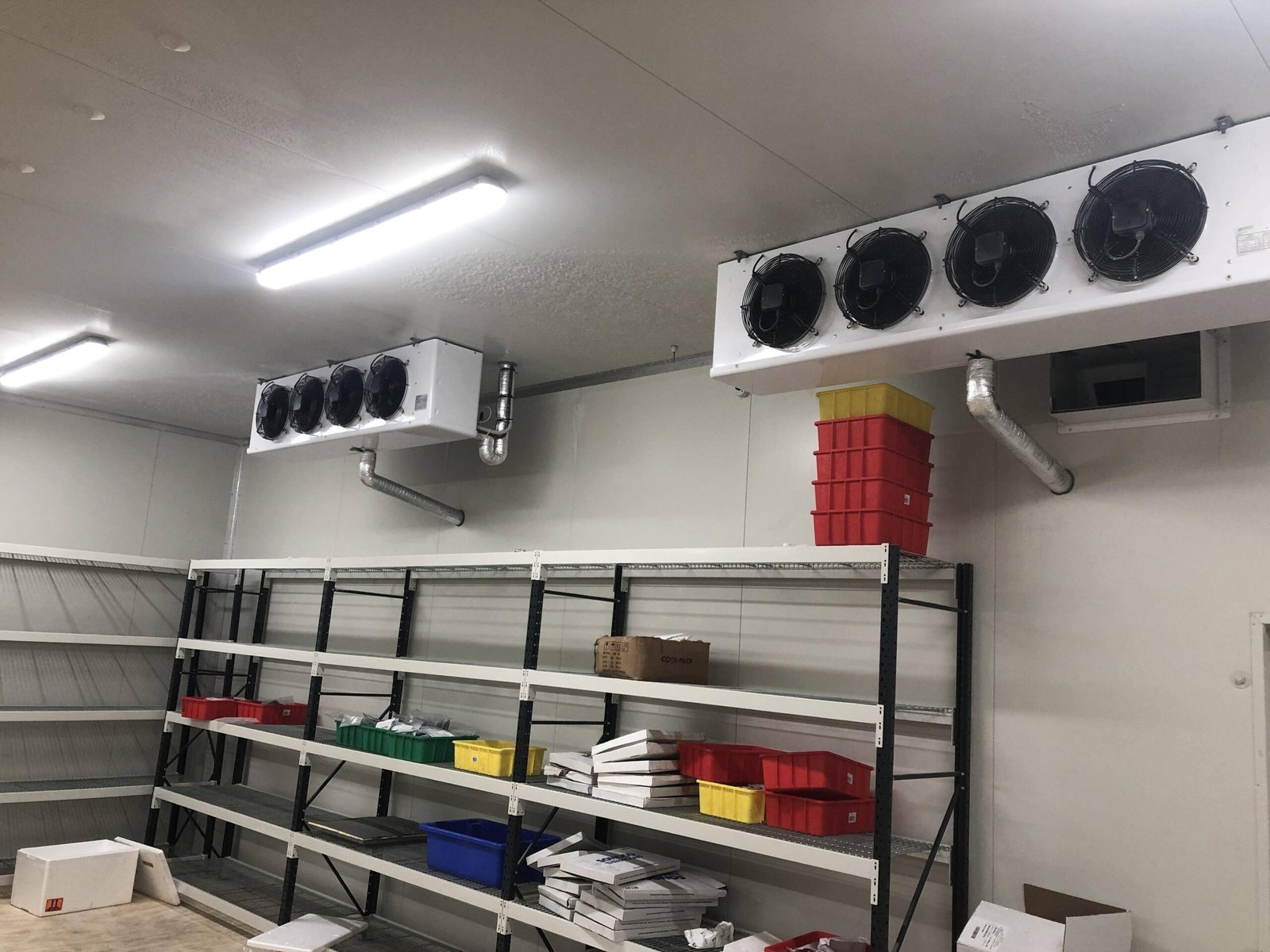
Why Industrial Metal Cooling Units Matter More Than Ever in 2025

The global industrial refrigeration market is projected to hit $32.4 billion by 2027, according to a recent report by MarketsandMarkets. But here’s the catch – the demand is shifting from standard plastic-housed units to all-metal construction. Why? Because industries like mining, steel fabrication, and outdoor logistics need equipment that can withstand high temperatures, physical impact, and chemical exposure. We’ve seen a 22% year-over-year increase in inquiries for metal-cased cooling units from overseas buyers in the Middle East, Southeast Asia, and Africa. These buyers aren’t just looking for cheap units; they want durability, ease of maintenance, and long service life.

Take the example of a cement plant in Vietnam. They switched from a standard HVAC system to our Mighty Metal Cooling Units in early 2024. The result? Downtime due to cooling failures dropped from 8 days per year to just 1.5 days. That’s real money saved. The metal housing protects the condenser coils from dust and debris, and the reinforced fans can handle continuous operation at 50°C ambient temperature. For your clients who run factories in hot climates, this is the difference between a production line that keeps running and one that stops every time the temperature spikes.
Now, let’s look at the data. Below is a comparison of three popular metal cooling unit series we manufacture. The numbers are from actual production batches shipped in Q1 2025.
| Model | Cooling Capacity (BTU/h) | Max Ambient Temp (°C) | Material Grade | Weight (kg) | Power Consumption (W) | Warranty (years) |
|---|---|---|---|---|---|---|
| MM-30K | 30,000 | 55 | Galvanized steel + epoxy coating | 98 | 2,800 | 3 |
| MM-50K | 50,000 | 60 | Stainless steel 304 | 145 | 4,200 | 5 |
| MM-80K | 80,000 | 65 | Stainless steel 316 | 210 | 6,500 | 5 |
You can see the trade-offs. The MM-30K is cost-effective for light industrial use, while the MM-80K is designed for heavy-duty environments like oil rigs or steel mills. Your buyers need to match the unit with the actual operating conditions – not just the price point.
Where These Units Deliver the Best ROI: 4 Key Industries
We’re not going to list every possible application. Instead, let’s focus on four sectors where metal cooling units bring the highest return for your customers.
First, food and beverage processing. Think about a fish processing plant in coastal Nigeria. The humidity and salt air eat through standard plastic units in less than two years. Our stainless steel 316 units last at least 6 years in that environment. The sealed metal shell prevents corrosion at the coil connections, and the drain pan is sloped to avoid water pooling. Plus, the units are washdown-rated, meaning your client can spray them with high-pressure water without worry. We’ve shipped over 400 units to food processors in West Africa alone in 2024.
Second, data centers in hot climates. Server rooms in places like Dubai or Arizona need cooling that works even when the outdoor temperature hits 55°C. Standard rooftop units often shut down or derate after 48°C. Our MM-50K and MM-80K units use condenser coils with wider fin spacing and a special hydrophilic coating to shed heat faster. The metal housing also acts as a heat sink, dissipating some of the internal heat. One internet provider in Saudi Arabia installed 12 units on a containerized data center. The ambient temperature at the site reached 58°C last August, and all units kept the server room at a steady 22°C. No failures, no alarms.
Third, heavy machinery and equipment cooling. Excavators, mining trucks, and agricultural harvesters often rely on hydraulic systems and engines that generate massive heat. OEMs and aftermarket suppliers are increasingly using separate metal cooling units to protect sensitive electronics and hydraulic oil coolers. For example, a Chinese construction equipment exporter started bundling our MM-30K units with their drill rigs sold to Australian mines. The units are mounted on the cab roof and wired directly to the engine alternator. The result: the operator cabin stays under 28°C even when the outside is 45°C, and the electronic control modules don’t overheat.
Fourth, chemical and pharmaceutical processing. Clean rooms and controlled environments require precise temperature and humidity control. Metal cooling units are easier to clean than plastic ones because they don’t have porous surfaces where bacteria or chemicals can stick. Our units come with an optional stainless steel coil coating that resists corrosive gases like chlorine or hydrogen sulfide. A pharmaceutical plant in India replaced all their old plastic HVAC units with our MM-50K series after a batch of medicine was contaminated due to mold growth inside the plastic evaporator housing. That one incident cost them $2 million in lost product. The metal units eliminated the mold issue entirely.
Real Technical Specs That Your Buyers Need to See (No Marketing Fluff)
Let’s get down to the numbers that actually matter when a distributor is comparing bids. I’m not going to talk about “innovative design” or “leading technology” – here are the hard facts.
First, compressor type. We use only scroll compressors from Copeland or Danfoss in our metal units. No reciprocating compressors. Scroll compressors have fewer moving parts, which means longer life and less vibration. For marine and mobile applications, we offer an option with vertical discharge to prevent oil flooding. The MM-80K uses a tandem scroll setup that can maintain capacity even if one compressor fails.
Second, condenser and evaporator materials. All coils are made from copper tubes with aluminum fins, except for the MM-80K which uses copper fins for better heat transfer in extreme temperatures. The fins are louvered for maximum surface area, and we coat them with a clear epoxy to resist corrosion. The metal housing is not painted cheaply – it goes through a 7-stage pretreatment process that includes degreasing, phosphating, and a polyester powder coat. We test every unit in a salt spray chamber for 500 hours before we ship it.
Third, fan motor reliability. We use EC (electronically commutated) motors in all models above 50,000 BTU. These motors are 30% more efficient than standard AC motors and can run at variable speeds. More importantly, they have a built-in IP54 rating, so dust and water splashes won’t kill them. The fans are made from reinforced polypropylene, not fragile plastic that cracks under UV light. Each fan is balanced individually to reduce noise below 72 dBA at 3 meters.
Fourth, control system. Forget fancy touchscreens that break after a year. Our units come with a simple seven-segment LED display and a rotary dial for setting temperature. For remote monitoring, we offer a Modbus RTU option that works with any SCADA system. We also include a high-pressure switch, low-pressure switch, and a time-delay relay to prevent short cycling. If a fault occurs, the display shows an error code number that corresponds to a quick-fix guide in the manual. No need to call a technician for every little problem.
Here’s a table showing the electrical requirements and refrigerant charges for each model as of our latest production run (February 2025).
| Model | Voltage (V/Ph/Hz) | Max Fuse (A) | Refrigerant | Charge (kg) | Connection Size (Liquid/Vapor) |
|---|---|---|---|---|---|
| MM-30K | 380-415/3/50 | 16 | R410A | 3.2 | 3/8″ – 3/4″ |
| MM-50K | 380-415/3/50 | 25 | R410A | 4.8 | 3/8″ – 7/8″ |
| MM-80K | 380-415/3/50 | 40 | R407C | 7.5 | 1/2″ – 1-1/8″ |
Note that the MM-80K uses R407C because it has better performance at very high condensing temperatures. If your buyer needs R32 or R290 for low GWP requirements, we can custom charge, but lead time increases by 10 days.
How to Stock and Export These Units Without Headaches
This is the part that matters most to you as an importer or distributor. You’re not buying one unit for yourself – you’re buying a container full. So let’s talk about logistics and customs.
First, packaging. Each unit comes in a heavy-duty corrugated cardboard box that is strapped to a wooden pallet. The pallet is heat-treated and stamped with ISPM15 mark, so it’s accepted by customs in the EU, US, Australia, and most of Asia. The units are also wrapped in a plastic bag with desiccant packs inside to keep out moisture during ocean freight. We do not use styrofoam peanuts because they cause headaches at customs inspection – everything is recyclable. You can stack up to 4 units per pallet for the MM-30K, 2 units per pallet for the MM-50K, and 1 unit per pallet for the MM-80K. A 20-foot container typically holds 40 units of MM-30K, 20 units of MM-50K, or 10 units of MM-80K.
Second, documentation. We provide a full set of export documents: commercial invoice, packing list, bill of lading, certificate of origin (Form A or CO), and a test report for each unit. The test report includes the serial number, cooling capacity measured at 35°C ambient, refrigerant pressure readings, and a signed quality control stamp. If your buyer needs CE, UL, or EAC certification, we attach the corresponding certificate copies. For the Middle East, we also provide SASO and SABER certificates on request, though this adds about 3 extra days.
Third, warranty and spare parts. We keep a stock of common spare parts (compressors, fan motors, capacitors, pressure switches) in our warehouse near Shanghai. For overseas distributors, we can set up a consignment stock agreement – you keep a small inventory of parts in your local warehouse, and we replenish it every quarter. This reduces your lead time from 4 weeks to 2 days for emergency repairs. Many of our European distributors have taken advantage of this. One distributor in Poland told us that having local parts stock doubled their repeat orders because end users felt confident that repairs wouldn’t cause long downtime.
Fourth, payment terms. For first-time buyers, we ask for 30% deposit and 70% against copy of bill of lading. Once we have a history of timely payments, we can open 50% deposit, 50% 60-day L/C or T/T. For large annual contracts (over 500 units per year), we can consider 100% L/C at sight. We accept USD, EUR, and CNY.
Frequently Asked Questions from Global Importers and Distributors
Q: What’s the minimum order quantity (MOQ) for a first order?
A: For the MM-30K, the MOQ is 40 units (one 20-foot container). For the MM-50K, 20 units. For the MM-80K, 10 units. If you want to mix models in one container, the MOQ is 30 units total as long as the total does not exceed container capacity. We can also do a sample order of 2 units for testing, but the price will be higher (approx. 15% above bulk price) and shipping costs are your responsibility.
Q: How long does it take to produce a container of MM-50K units?
A: Current lead time is 25 working days from confirmation of deposit. That’s for standard configuration (R410A, stock color – RAL 7035 light grey). If you need a custom color or custom refrigerant, add 10 working days. During peak season (May to July), lead time can stretch to 35 days. We advise ordering 2 weeks earlier than usual to avoid delays.
Q: Can these units be used for both cooling and heating?
A: No, these are cooling-only units. They do not have a reversing valve or heat pump function. If your buyer needs heating, we recommend adding an electric heater kit (sold separately) that mounts inside the air outlet. The heater kit is available in 3 kW, 6 kW, and 9 kW options. For heat pump version, check our Mighty Heat series, which uses a different compressor and a four-way valve.
Q: What is the maximum refrigerant line length for remote installation?
A: For the MM-30K, the maximum total equivalent length is 30 meters with the standard charge. For longer lines, we need to add extra refrigerant – consult our technical sheet for the exact amount per meter. The vertical lift from outdoor unit to indoor evaporator should not exceed 15 meters. For the MM-50K and MM-80K, maximum length is 50 meters with a vertical lift of 20 meters. We include an oil trap kit for any installation where the outdoor unit is higher than the indoor unit.
Q: Do you offer OEM branding on the units?
A: Yes. For orders of 100 units or more per model, we can print your brand name and logo on the front panel and on the packaging. The color of the panel can be changed to match your brand guidelines, but there is a one-time tooling fee of USD 800 per model. The lead time for OEM orders is 30 working days. We also include your brand in the manual if you provide a PDF file in English, Spanish, French, or Arabic. For other languages, we charge USD 0.10 per word for translation.
Q: How do you handle warranty claims?
A: All claims must be submitted within the warranty period with photos, video, and a written description of the issue. If the problem is a defective compressor or major component, we ship a replacement part free of charge (air freight) to your local address. You pay the import duties if any. For minor issues like a faulty capacitor or fan blade, we send the part via courier at our cost. We do not require you to return the defective unit. If the failure rate exceeds 5% in a single shipment, we will issue a credit or send replacement units on the next container at no extra cost. We track all claims in a database to continuously improve quality.
Q: What is the ambient temperature range for reliable operation?
A: The units are designed for ambient temperatures from -10°C to 55°C (MM-30K and MM-50K) and -10°C to 65°C (MM-80K). Below -10°C, the compressor may struggle to pump oil. For low-temperature applications, we offer a low-ambient kit that includes a fan cycle control and a crankcase heater. That kit allows operation down to -20°C. For temperatures above the rated maximum, the unit will still run but the cooling capacity will derate by about 3% per °C above 55°C. We recommend installing a shading structure if the unit is exposed to direct sunlight in very hot regions.