
Danfoss Condensing Units: The Silent Engine Powering Global Commerce
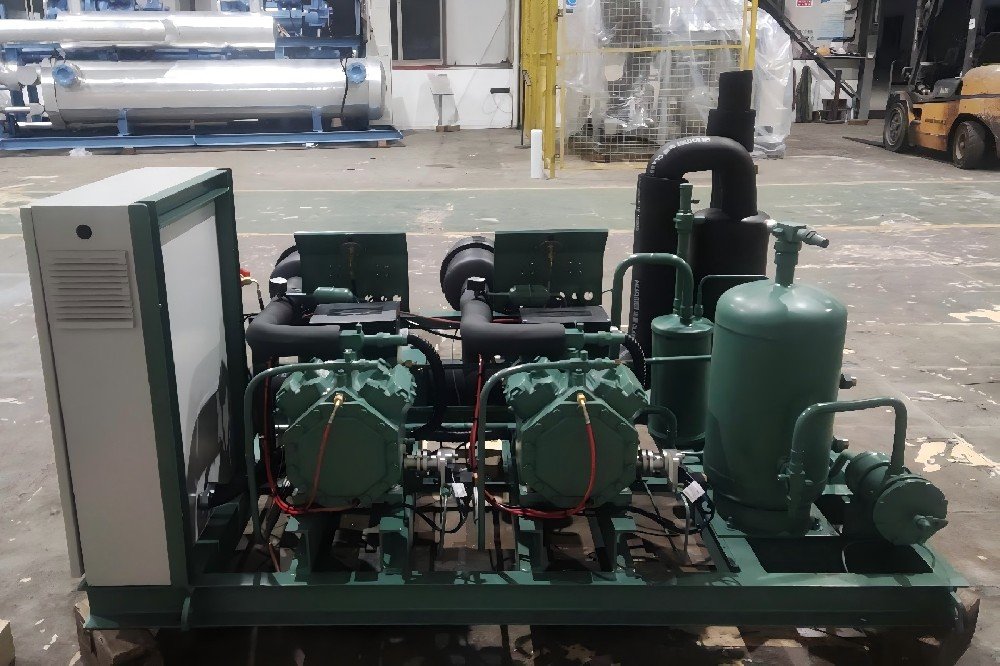
You’re sourcing refrigeration for a supermarket chain in Southeast Asia, an ice cream producer in Europe, or a cold storage warehouse in North America. Your client needs reliability, efficiency, and total cost control. In the heart of countless systems meeting these demands, you’ll often find a Danfoss condensing unit. It’s not just a component; it’s the pre-assembled, optimized powerhouse that makes commercial and industrial cooling happen.
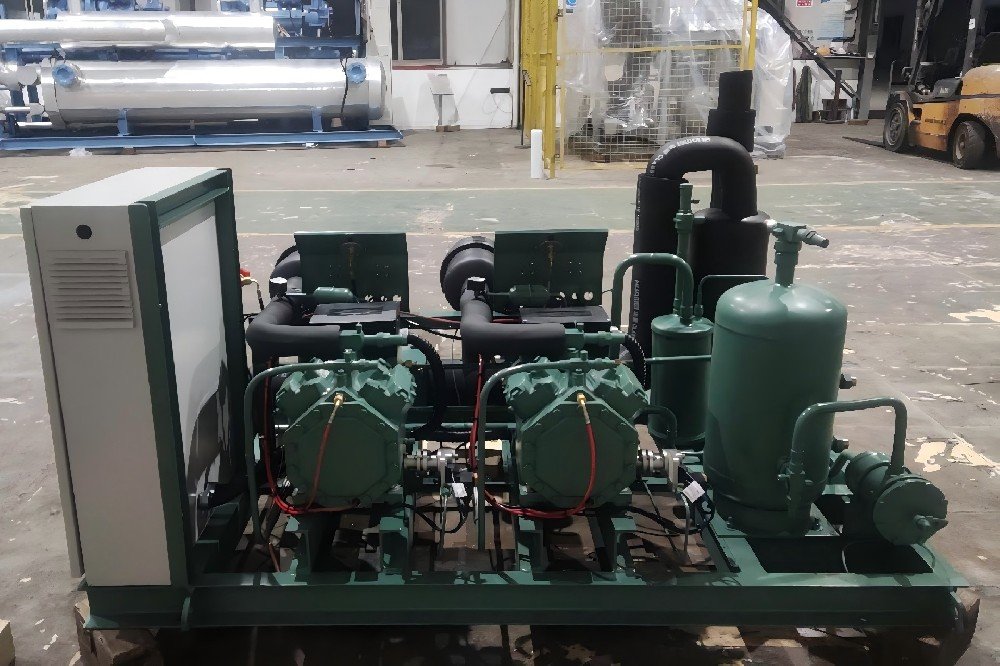
Let’s break down what it is, without the jargon. A condensing unit is the outdoor section of a refrigeration system. It’s the part that expels the heat collected from inside your fridge, freezer, or display case. The Danfoss version takes this core function and elevates it through integrated, matched-component design and intelligent technology. Think of it as a ready-to-install, high-performance engine for your cooling application.

The Core of Modern Cooling: More Than Just a Box
At its simplest, a condensing unit houses the compressor, the condenser coil, and a fan. The compressor is the pump, circulating refrigerant. The hot, pressurized gas from the compressor flows into the condenser coil, where the fan blows ambient air across it, causing the refrigerant to release its heat and condense back into a liquid. This liquid then feeds back to the indoor unit to repeat the cooling cycle.
What makes a Danfoss condensing unit different is the level of foresight and engineering packed into that compact frame. Danfoss doesn’t just put a compressor and a coil together. They engineer them to work in perfect harmony. This includes precise refrigerant charge optimization, carefully selected expansion devices, and integrated controls from the start. For you as a distributor or installer, this means reduced commissioning time, fewer compatibility headaches, and a system that’s tuned for peak performance right out of the box. The reliability shift is tangible—you’re dealing with a tested system, not a collection of individual parts that might not be perfectly matched.
Real-World Impact: For a food distribution center, this translates to consistent temperature zones for different products (dairy, meat, produce) with lower energy bills and a drastic reduction in call-backs for performance issues. It’s a direct contributor to their operational uptime and profitability.
Engineering that Drives Your Margin: Efficiency & Intelligence
Today’s B2B buyers aren’t just buying hardware; they’re investing in total cost of ownership. Energy consumption is the single largest operational cost in refrigeration. Danfoss condensing units are built to attack this head-on.
The game-changer here is variable speed technology, primarily driven by Danfoss’s own compressors and drives. Traditional units cycle on and off at full power. A Danfoss unit with variable speed capability can precisely modulate its capacity—like a car cruising efficiently at the exact right speed instead of constantly accelerating and braking. It adjusts cooling output in real-time to match the exact load, which can lead to energy savings of 30% or more compared to fixed-speed units.
Then there’s connectivity. Modern Danfoss units come with integrated controllers (like the ADAP-KOOL® platform) that provide a window into the system’s soul. You and your end-client can monitor performance, receive alerts for potential issues, and track energy usage remotely. This isn’t just a fancy feature; it’s a sales and service tool. It allows you to move from a reactive “break-fix” model to proactive facility management, offering higher-value service contracts.
| Table: Operational Cost Comparison (Typical 40kW Medium-Temp Application) | Feature | Standard Fixed-Speed Unit | Danfoss Variable Speed Unit | Impact for End-User |
|---|---|---|---|---|
| Energy Consumption | Higher, constant full-load cycles | Lower, adapts to partial load | Up to 30-40% energy savings | |
| Temperature Stability | Wider fluctuations during cycles | Tight, precise control | Better product quality & shelf life | |
| Component Stress | High due to frequent start/stop | Reduced, smooth operation | Longer system lifespan, lower maintenance | |
| Data & Control | Basic, local only | Remote monitoring & diagnostics | Predictive maintenance, reduced downtime |
Application-Specific Solutions: From Farm to Pharma
The “one-size-fits-all” approach doesn’t work in commercial refrigeration. Danfoss excels in providing tailored solutions for specific verticals, which is a key selling point for specialized distributors.
Food Retail: For supermarkets, compact outdoor units (like the Danfoss MLM series) are designed for easy installation on rooftops or alongside buildings. They prioritize low noise for urban environments and high efficiency for the intense load of open display cases and cold rooms. Hybrid systems that can switch between cooling and heat recovery (for store heating or hot water) are a growing value proposition.
Cold Storage & Logistics: Here, robustness and capacity are king. Heavy-duty condensing units and compressor racks built with Danfoss components are the standard for large warehouses and distribution centers. The focus is on fault tolerance, easy serviceability, and the ability to maintain stringent temperatures for frozen goods (-25°C and below) with unshakable reliability.
Food & Beverage Processing: In a cheese factory or brewery, process cooling is critical. Condensing units here often work with glycol or ammonia secondary systems. Danfoss provides solutions designed for harsh washdown environments (corrosion-resistant coatings) and precise temperature control crucial for fermentation and production consistency.
- Specialized Cooling (Pharma, Data Centers): These sectors demand absolute precision and redundancy. Danfoss units integrated with advanced control systems ensure temperature and humidity are maintained within strict limits, with built-in backup protocols. The reliability data from connected units is often part of regulatory compliance records.
Why Global Distributors Bet on Danfoss: The Supply Chain Advantage
For you as a B2B player, technical specs are only half the story. The other half is supply chain reliability, brand trust, and support. Danfoss has invested in a global manufacturing and distribution network. This translates to shorter lead times, consistent availability of units and spare parts across regions, and localized technical support. When you commit to a project, you need certainty that the core component won’t be the bottleneck.
Furthermore, the global push towards lower-GWP (Global Warming Potential) refrigerants (like R-448A, R-449A, CO2, and hydrocarbons) is a regulatory maze. Danfoss condensing units are often available pre-configured and tested for these next-generation refrigerants. This future-proofs your inventory and your clients’ investments, ensuring compliance with evolving regulations in the EU, North America, and Asia-Pacific.
The build quality and extensive testing also mean lower failure rates. In the logistics of global trade, a lower defect rate isn’t just a quality metric; it’s a financial one. It reduces costly returns, warranty claims, and reputational damage on complex projects.
专业问答 (Q&A)
Q1: We source for clients in both the EU and the Middle East. Are Danfoss condensing units adaptable to such different ambient temperatures?
A: Absolutely. This is a critical design parameter. Danfoss offers specific high-ambient models engineered to operate efficiently and reliably in extreme heat (up to 55°C/131°F ambient), common in the Middle East. For European climates, standard and low-ambient versions (for cold weather operation) are available. Always specify the intended operating climate when selecting a model to ensure optimal compressor cooling, correct refrigerant charge, and fan cycling logic.
Q2: How does the smart control integration work for a multi-unit installation, like a hotel with dozens of individual minibars?
A: This is where system architecture shines. Individual Danfoss condensing units can be equipped with controllers that communicate via protocols like BACnet MS/TP or Modbus. They can be networked back to a central building management system (BMS) or supervised by Danfoss’s own monitoring software. This allows for centralized set-point adjustment, alarm management, and energy consumption aggregation across all units, turning a collection of coolers into a manageable, efficient asset.
Q3: For a client looking to retrofit an old system, is a Danfoss condensing unit a drop-in replacement?
A: Often, yes, but a professional assessment is key. The physical footprint and electrical connections are designed with retrofits in mind. The major advantage is that the unit comes as a sealed, pre-charged system. This simplifies installation dramatically compared to a field-built compressor rack. However, the existing indoor evaporators, refrigerant type, and electrical infrastructure must be evaluated for compatibility. The integrated controls also typically offer far greater functionality than old mechanical thermostats.
Q4: What are the key certifications we should look for to ensure global market access?
A: Core certifications are non-negotiable. Look for CE marking (EU), UL/cUL (North America), and CCC (China) as baselines. For specific sectors, others are critical: EHEDG certification for hygienic design in food processing, or ATEX for units destined for potentially explosive atmospheres. Danfoss typically designs units to meet these broad certification frameworks, but the final model/serial number should always be verified against the required certification for your target market.