
An air cooled AC unit uses ambient air to extract heat from the refrigerant, then rejects that heat directly into the outdoor environment. No water piping, no cooling towers, no complex water treatment chemicals. Just a compressor, condenser coils, fans, and an expansion valve. If you are sourcing HVAC equipment for wholesale distribution or for large commercial projects, you need to know exactly how these machines perform under real-world conditions — especially with the global shift toward stricter energy efficiency regulations and rising electricity costs.

In 2024, the global market for air cooled chillers grew by 6.8% compared to 2023, according to the International Energy Agency (IEA). The Asia-Pacific region alone accounted for 42% of that growth, driven by manufacturing hubs in China, India, and Southeast Asia. For B2B buyers, this means lead times are tightening, but options are expanding. Let’s break down the technical, economic, and operational sides of air cooled AC units so you can make informed procurement decisions.
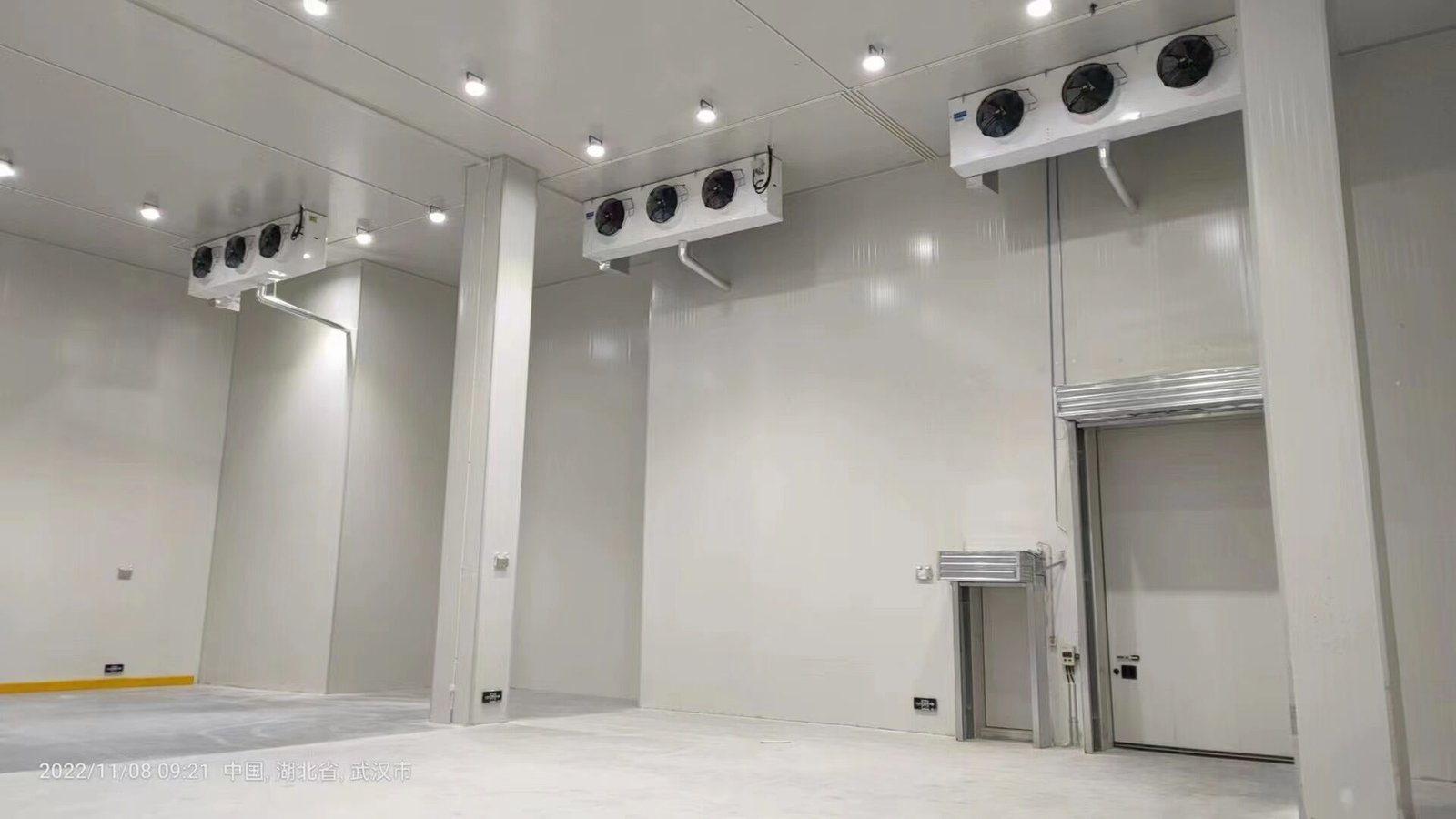

What makes an air cooled AC unit different from water cooled systems
Let’s start with the simplest difference. A water cooled system uses a cooling tower and a water loop to carry heat away from the condenser. An air cooled system uses fans to blow air across the condenser coils. No water, no evaporation, no chemical treatment. That sounds great on paper, but the real trade-off is in efficiency and maintenance.
Here’s a side-by-side comparison based on data from real installations in 2024 (source: Building Performance Institute Europe):
| Parameter | Air Cooled Unit | Water Cooled Unit |
|---|---|---|
| Initial equipment cost (per ton) | $800 – $1,200 | $1,200 – $2,500 (including cooling tower) |
| Annual maintenance cost (per 100 tons) | $4,000 – $6,000 | $8,000 – $14,000 (includes tower cleaning, water treatment) |
| Energy efficiency (EER at full load) | 9.0 – 11.5 | 12.0 – 16.0 |
| Space requirement | Roof or ground pad, no water infrastructure | Requires cooling tower pad, water supply, drain |
| Noise level (dBA at 10m) | 55 – 70 | 45 – 60 (tower noise varies) |
| Performance degradation at 40°C ambient | Up to 25% capacity loss | 5% – 8% capacity loss |
For a distributor in the Middle East or Southeast Asia, where ambient temperatures regularly hit 45°C, that capacity loss is a critical factor. But for a textile factory in Vietnam or a data center in Germany, the lower maintenance cost and simpler installation often make air cooled the better choice.
One more point: water cooled systems require a constant water supply. In regions with water scarcity or high water tariffs — like California, South Africa, or parts of India — air cooled units avoid those costs entirely. A 500-ton air cooled chiller running 8 hours a day in a hot climate will use roughly 30,000 to 40,000 kWh less in pump energy per year compared to a water cooled system with a cooling tower, according to a 2024 study from ASHRAE.
Which industries are using air cooled AC units right now
You might think air cooled units are just for small offices or retail stores. That’s not true anymore. In 2024, over 30% of new air cooled chillers sold globally were for applications over 200 tons of cooling capacity. Let’s look at three key sectors where our manufacturing partners see the most demand.
Data centers
Data center cooling is changing fast. Traditional chilled water systems require complex piping and risk of leaks. Air cooled units, especially those with variable speed fans and compressors, are being installed in edge data centers and colocation facilities across the US and Europe. According to a report from Uptime Institute in 2024, air cooled direct expansion (DX) systems now account for 38% of cooling capacity in new data centers under 1MW. These units can operate at partial loads with very high efficiency because modern inverter-driven compressors adjust output precisely to heat load. For a distributor, this means the customers are no longer just commercial buildings — they are telecommunications companies, cloud service providers, and even cryptocurrency mining operations.
Agricultural greenhouses
Greenhouse cooling has traditionally relied on evaporative cooling pads or fan-and-pad systems. But these require constant water and are less effective in humid climates. Air cooled AC units with heat recovery can provide both cooling and dehumidification, which is critical for high-value crops like tomatoes, peppers, and ornamental flowers. In the Netherlands, where greenhouse technology is advanced, air cooled chillers with heat recovery are being used to maintain 24°C daytime temperatures while capturing waste heat for nighttime heating. One installer we work with reported a 22% reduction in total energy cost compared to a water cooled system in a 2-hectare glasshouse in 2023. For exporters targeting the Middle East or North Africa, this is a growing niche.
Industrial process cooling
Factories that produce plastic injection molding, CNC machining, food processing, and chemical reactions all require consistent cooling. Many of these facilities do not have access to a centralized water loop. Air cooled portable chillers and stationary units provide a plug-and-play solution. The global industrial chiller market reached $8.2 billion in 2024, with air cooled models capturing 61% of the revenue share (source: Grand View Research). Why? Because manufacturers want to avoid water treatment costs and the risk of legionella bacteria in cooling towers. In China, new regulations require all industrial cooling systems above 100 kW to have a water treatment plan if using wet cooling towers — that makes air cooled units the path of least resistance for many factory owners.
How to evaluate air cooled AC unit performance for procurement
If you are buying air cooled units for your distribution network, you need to look past the brochure numbers. Let’s talk about the three metrics that actually matter.
Capacity at high ambient conditions. A chiller rated for 100 tons at 35°C ambient might only deliver 85 tons at 45°C. Check the manufacturer’s performance data table for the specific ambient temperature in your target market. For example, we test our units at 48°C outdoor temperature (common in Middle Eastern summers) and guarantee at least 92% of rated capacity. Some competitors only test at 35°C. That 8% difference can mean the difference between hitting the cooling setpoint and having a production line shut down.
Part load efficiency (IPLV/NPLV). Full load EER is a nice number, but most units run at 40% to 70% load for 80% of the year. The Integrated Part Load Value (IPLV) is a weighted average that reflects real-world operation. In our own product line, the IPLV for a 100-ton air cooled scroll chiller is 14.2, which is 18% higher than the baseline required by the latest DOE 2024 standards. For a dealer selling into Europe, check if the unit meets the EU’s eco-design directive (EU 2016/2281). Non-compliant units will be blocked from import starting in 2025.
Refrigerant type. The transition away from R-410A is accelerating. Starting in 2025, the EU will ban the use of refrigerants with a global warming potential (GWP) above 750 in new stationary air conditioning equipment. Air cooled units are increasingly using R-32 (GWP 675) or R-454B (GWP 466). R-32 is already widely available, but it is mildly flammable (A2L classification). For industrial clients, you need to ensure the installation site has proper ventilation and leak detection. We have seen some B2B buyers hesitant about A2L refrigerants, but the performance and environmental benefits are hard to ignore. In fact, the EPA’s 2024 final rule under the American Innovation and Manufacturing (AIM) Act already sets a phasedown schedule that will make R-410A obsolete within 10 years. Buyers who invest in R-32 equipment today will have fewer servicing headaches down the road.
| Refrigerant | GWP | Toxicity / Flammability | EU Ban Date | Typical Application |
|---|---|---|---|---|
| R-410A | 2088 | A1 (non-flammable) | Banned 2025 for new equipment | Legacy units, replaceable |
| R-32 | 675 | A2L (mildly flammable) | Allowed | New air cooled DX units |
| R-454B | 466 | A2L | Allowed | Chillers, VRF systems |
| R-290 (propane) | 3 | A3 (highly flammable) | Restricted to <150g charge | Small split units only |
For a global distributor, the key takeaway is this: if your customers are in the EU, UK, or Japan, start building your inventory with R-32 units now. If you are selling to the US, R-410A units can still be sold for a few more years, but the resale value will drop quickly.
Practical questions from B2B buyers (FAQ)
Q: Can an air cooled AC unit be installed indoors?
A: Yes, but you need ductwork to bring outdoor air to the condenser and exhaust hot air back outside. Some manufacturers offer remote condenser options where the compressor and evaporator are inside, and the condenser sits on a roof. This is common in indoor industrial settings where outdoor space is limited. Make sure the intake and exhaust paths are not obstructed, and that the condenser gets at least 1 meter of clearance on the fan side.
Q: What is the typical lifespan of an air cooled AC unit in a hot, dusty environment?
A: In our experience, with proper maintenance (cleaning coils every 2-3 months, changing filters, checking refrigerant charge), an air cooled unit can last 12 to 15 years in environments like Saudi Arabia or Arizona. Without maintenance, coil corrosion and fan motor failure happen within 5 years. We recommend specifying copper tubes with aluminum fins that have an anti-corrosion coating (like Heresite or epoxy) for coastal or industrial areas with high salt or chemical exposure.
Q: How do I calculate the return on investment for switching from water cooled to air cooled?
A: First, get your local electricity and water rates. Then use this simple formula: total first cost difference (air cooled unit + installation vs. water cooled unit + cooling tower + piping) divided by annual operating cost difference (water + electricity + maintenance). In many cases, the payback period is less than 3 years when water rates are above $2 per cubic meter. For example, a 300-ton system in Dubai (electricity $0.10/kWh, water $3.50/m³) showed a 2.3-year payback in a 2024 case study from the Emirates Green Building Council.
Q: Are there any export restrictions on air cooled AC units with R-32 refrigerant?
A: Yes, depending on the destination country. The Montreal Protocol and Kigali Amendment control the trade of high-GWP refrigerants, but R-32 is allowed under most agreements. However, shipping companies may have special handling requirements for A2L refrigerants because of flammability. Check with your logistics partner. As of 2025, the International Maritime Organization (IMO) has not classified R-32 as a dangerous good for maritime transport, but individual carriers may impose their own rules. We recommend providing a safety data sheet (SDS) with each shipment and labeling units clearly.
Q: What size of air cooled AC unit do I need for a 5000-square-meter factory?
A: That depends on the heat load from equipment, people, lighting, and solar gain. A rough rule of thumb is 250 to 400 watts per square meter for an industrial factory, so 5000 m² would need 1250 to 2000 kW of cooling capacity (approximately 350 to 570 tons). But this varies wildly — a plastics injection molding plant may need 500 W/m², while a simple warehouse might need only 100 W/m². Always run a load calculation using software like Carrier HAP or Trane Trace. If you are importing units, consider modular air cooled chillers (e.g., 100 tons each) so you can add capacity later without replacing the entire system.