
So you’re a Chinese refrigeration equipment manufacturer looking to understand the UK market. Good. Because the UK isn’t just about fish and chips and rainy weather—it’s a deeply specific, regulation-heavy, and surprisingly diverse market for cooling systems. I’m going to walk you through the hard numbers, the real business habits, and the quirks that make the UK different from anywhere else in Europe. No fluff, no metaphors, just straight facts.
Let’s start with the big picture.

The UK refrigeration market is bigger than most people think

You might assume the UK is a small island with limited industrial cooling demand. That’s wrong. In 2023, the UK’s commercial refrigeration market alone was valued at around £3.2 billion (approximately USD 4.1 billion), according to a report from AMA Research. That’s for commercial refrigeration only—supermarkets, cold storage, foodservice, and beverage coolers. If you add industrial refrigeration (food processing, chemical, pharmaceutical) and HVAC refrigeration components, the total UK cooling market pushes past £6.5 billion annually.
Here’s a quick breakdown of where the money goes, based on 2022–2023 data:
| Sector | Annual Spend (GBP) | Key Sub-sectors |
|---|---|---|
| Commercial Refrigeration | £3.2 billion | Supermarkets, convenience stores, restaurants, pubs |
| Industrial Refrigeration | £1.8 billion | Food processing, breweries, cold chain logistics |
| HVAC (cooling only) | £1.0 billion | Office buildings, data centers, retail |
| Transport Refrigeration | £0.5 billion | Reefer trucks, shipping containers |
Notice one thing: pubs and breweries are a massive chunk of commercial refrigeration. The UK has over 47,000 pubs, and each one needs a walk-in cooler for kegs, a bottle cooler, and often a back-bar display. That’s a huge aftermarket and replacement business.
Weather is not the main driver—habits are
A lot of Chinese manufacturers assume the UK is cold, so cooling demand must be low. Actually, the UK has a temperate maritime climate. Summer temperatures average 15–20°C, rarely hitting 30°C. But the demand for cooling is driven by food safety laws, consumer habits, and industry standards—not ambient temperature.
For example, the UK Food Standards Agency mandates that chilled food must be stored at or below 8°C. That sounds standard, but the enforcement is strict. Retailers and restaurants get inspected regularly, and fines for temperature abuse can reach thousands of pounds. So even in winter, every supermarket runs its refrigeration cases 24/7.
Another factor: British people drink a lot of cold beer and milk. Per capita, the UK consumes about 100 litres of milk and 80 litres of beer annually. Both require constant refrigeration from production to point of sale. That means there’s a steady demand for new equipment and maintenance.
The UK loves its condensing units—but hates noisy ones
Here’s a fact that surprises many foreign suppliers. In the UK, most small to medium refrigeration systems use condensing units placed outdoors, mounted on walls or ground pads. But because residential and commercial buildings are often close together, noise regulations are brutal. The UK’s Planning and Noise Act means that if your outdoor condensing unit hums above 40 dB(A) at night near a residential area, you can get shut down.
Many Chinese manufacturers ship standard condensing units that run at 48–52 dB(A). That’s fine for some markets, but in the UK, you need sound-reducing enclosures or variable-speed compressors that ramp down at night. Some UK distributors now explicitly ask for units that meet the “MCS (Microgeneration Certification Scheme) noise standard” even for refrigeration—not just for heat pumps.
You can differentiate yourself by providing quiet, compact outdoor units. Use scroll compressors with noise blankets, and provide a specified sound power level under 45 dB(A). That alone can open doors with UK wholesalers.
F-gas regulations are changing everything—again
The European Union’s F-gas regulations still apply to the UK post-Brexit, with some tweaks. The UK has adopted its own version, called the UK F-gas Regulation, which closely mirrors the EU phase-down schedule. Starting from 2024, the quota for HFCs (hydrofluorocarbons) was cut by 40% compared to 2015 baseline. This means the price of R-404A, R-410A, and R-134a has skyrocketed.
Here’s a real data point from the UK Environment Agency: in 2022, the average price of R-404A reached £65 per kg, up from £25 per kg in 2018. For a typical 10kg charge in a medium-temperature display case, that’s £650 just for refrigerant. So the market is rapidly shifting to low-GWP alternatives like R-290 (propane), R-32, and CO2 (R-744).
If you manufacture commercial refrigeration equipment, you must offer R-290 and CO2 options. The UK supermarket chains—Tesco, Sainsbury’s, Asda, Co-op—have all committed to natural refrigerants in new builds. As of 2023, over 60% of new supermarket refrigerated cabinets installed in the UK were CO2 transcritical systems. That number is growing.
For smaller applications (bottle coolers, ice machines, reach-ins), R-290 is the dominant choice. But note: the UK has strict charge limits for flammable refrigerants in occupied spaces. For R-290, the limit is 150g in a retail environment without special ventilation. That means your bottle cooler design needs to be compact and low-charge.
The UK cold chain is older than you think
The UK has one of the oldest cold storage infrastructures in Europe. Many warehouses were built in the 1970s and 80s, with foam insulation that’s now degrading. According to the UK Cold Storage Association, about 30% of cold storage facilities are over 40 years old. That creates a huge retrofit market.
But here’s the catch: British site managers are famously conservative about changing suppliers. They will test a new evaporator or condenser for months before ordering in volume. They also expect local technical support. If you ship a unit to a cold store in Grimsby and it breaks down, you need a service engineer in the UK, not in China, to respond within 24 hours.
Some Chinese manufacturers partner with UK-based service companies like Star Refrigeration or Arctic Circle to handle warranty and repairs. That’s a smart move. You can offer a “quick-ship” programme for spare parts—most UK end users want a replacement fan motor or controller in two days, not two weeks.
Import duties and customs: the Brexit paperwork reality
Since January 2021, the UK is no longer part of the EU’s single market. For Chinese manufacturers, this means you need to understand the UK Global Tariff (UKGT). Most refrigeration equipment components fall under HS codes 8418 (refrigerators, freezers, and parts) and 8415 (air conditioning machines).
The standard UK tariff for refrigeration equipment from China is 2.5% to 4.5%, depending on the specific item. However, there are zero-tariff quotas for certain products if they meet origin rules. Plus, you need to comply with UKCA marking (similar to CE marking). If your products were CE marked before Brexit, you can still sell them until certain deadlines—but for new models, you must have UKCA certification.
The biggest headache is the customs paperwork. Since 2022, the UK has implemented full customs controls on imports from the EU. Since China is a third country, you already had controls, but post-Brexit the UK’s border checks have become more digitised. You need to register for an Economic Operator Registration and Identification (EORI) number, and your shipments must be declared via the UK Customs Declaration Service.
Many Chinese exporters underdeclare the value of goods to save duty. Don’t do it. UK customs is now using AI risk-based checks. I’ve seen cases where a Chinese manufacturer’s entire container got held for three weeks because the invoice value didn’t match the market price. The demurrage and storage fees ate up any savings.
UK business culture: slow, formal, and relationship-driven
I’ll keep this simple. If you think you can send one email and get an order, you’re wrong. UK refrigeration distributors and contractors value trust above all. They want to know your factory, your quality control process, your delivery reliability. They will ask for samples and often do a factory audit—some may even send an engineer to China.
Meetings in the UK are typically face-to-face or over video calls. They expect you to have a local UK phone number and a registered company address. Many Chinese manufacturers set up a small office or a warehousing hub in places like Birmingham or Manchester. That gives the impression of a local partner.
The average payment terms in the UK for refrigeration equipment are 30 to 60 days net. Don’t expect upfront payment. UK buyers will push for 90 days if you’re new. You need to have cash flow to support that. Consider using trade credit insurance.
Opportunities in niche segments
Let me give you three specific areas where Chinese manufacturers can win in the UK:
1. Micro and mini coolers for the “dark kitchen” boom. The UK has seen explosive growth in delivery-only kitchens (sometimes called ghost kitchens). These small takeaway units need compact, energy-efficient refrigeration for ingredients and prepared food. They often have limited space and no dedicated machine room. A self-contained, plug-and-play unit with a small footprint and low noise sells well.
2. Medical and pharmaceutical refrigeration. The UK’s National Health Service (NHS) has a huge need for vaccine fridges, blood bank refrigerators, and laboratory freezers. These require very tight temperature control (±0.5°C) and alarm systems. The NHS procurement process is rigorous, but if you can get your product listed on the NHS Supply Chain framework, you have a steady stream of orders.
3. Ice machines and beverage cooling for hospitality. Hotels, pubs, and restaurants in the UK replace ice machines every 3 to 5 years. The market is dominated by Scotsman, Hoshizaki, and Manitowoc, but there’s room for affordable alternatives that meet the latest energy efficiency standards (Ecodesign Directive 2019/2021, now applied in UK). If you offer a machine that produces 50–100 kg of ice per day with an energy consumption below 1.2 kWh/kg, you can get wholesaler interest.
Real data on energy costs and efficiency incentives
Electricity prices in the UK are among the highest in Europe. In 2023, average commercial electricity cost was about 28 pence per kWh (approx USD 0.35). For a supermarket running 40 refrigeration units 24 hours a day, the annual electricity bill can exceed £200,000. That’s why energy efficiency is the #1 selling point in the UK.
The UK government offers various grants for energy-efficient refrigeration upgrades. For example, the Industrial Energy Transformation Fund (IETF) provides up to £30 million per year for projects that reduce energy use in manufacturing and commercial refrigeration. Similarly, the non-domestic Renewable Heat Incentive existed but has been replaced by the Boiler Upgrade Scheme—mostly for heating, but some cooling with heat recovery qualifies.
There’s also the Carbon Reduction Commitment (CRC) scheme, which large users must comply with. The point is: if your equipment is A-rated for energy (using the EU energy label, still recognised in UK), you can promote it as “eligible for government grants.” That is a powerful marketing angle.
Table: Typical UK commercial refrigeration equipment price ranges (2023)
| Equipment Type | Typical Price (GBP) | Key Brands in UK | Chinese Manufacturer Potential |
|---|---|---|---|
| Single-glide back bar cooler | 800 – 1,500 | True, Foster, CDA | Medium – if noise and energy spec met |
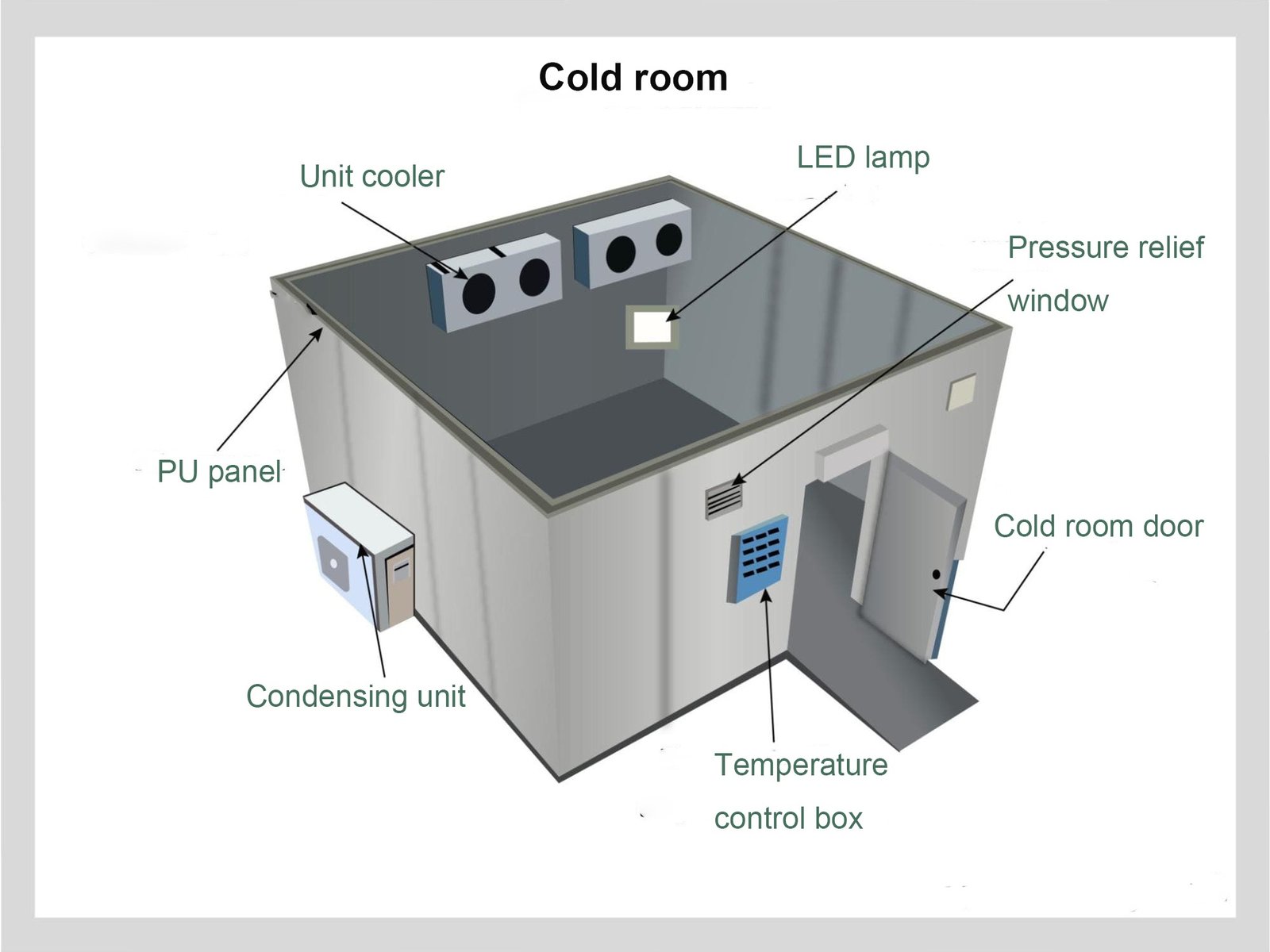
| Walk-in cooler (10m²) | 4,000 – 8,000 | Polar, Williams, Isowall | Low – UK prefers local assembly |
| Reach-in display cabinet (1.8m) | 2,500 – 5,000 | Epta, AHT, Sanyo | High – if R290 and low energy |
| Ice machine (50kg/day) | 1,200 – 2,500 | Scotsman, Hoshizaki, Brema | High – if reliability proven |
| Condensing unit (1–5 HP) | 800 – 2,200 | Bitzer, Copeland, Danfoss | Medium – need local service support |
| Cold room panel (per m²) | 180 – 300 | Kingspan, Icehouse, Custom | Low – heavy transport cost from China |
Questions and answers from UK refrigeration buyers
Q: Do UK customers accept Chinese brands or do they prefer European brands?
A: In commercial refrigeration, there’s a strong brand loyalty to UK and Italian manufacturers like Foster, Williams, and Epta. But in the past five years, more UK distributors have started sourcing from China because of price pressure from supermarkets. If you can offer a warranty of at least 3 years on the compressor and 2 years on the unit, and have a UK-based spare parts warehouse, you’ll be taken seriously.
Q: What kind of certifications do I absolutely need?
A: UKCA marking is mandatory for most refrigeration equipment sold in Great Britain. For electrical safety, you need BS EN 60335 (or the updated version). For pressure equipment, you need the Pressure Equipment Regulations (PER). For refrigeration capacity testing, you should get tests per EN 153. European CE marking is still accepted in Northern Ireland but not in England, Wales, or Scotland. Also, if you use R-290, you need ATEX certification for the electrical components (or UKEX equivalent).
Q: How do UK distributors find suppliers from China?
A: Most search on Alibaba or attend industry trade shows like the UK’s “Commercial Kitchen Show” or “Cooling Industry Awards” conference. Some use LinkedIn. But the most effective way is to partner with a UK-based import agent who already has relationships with refrigeration wholesalers like CRS (Cooling Retail Solutions) or Dean & Wood. Also, getting your products listed in a UK price comparison database like “Refrigeration Parts Catalogue” can generate leads.
Q: What’s the biggest mistake Chinese manufacturers make in the UK market?
A: Overpromising on delivery times. UK buyers don’t expect same-day shipping like domestic suppliers, but they do expect you to meet your quoted lead time. Many Chinese factories quote 30 days but then delay to 45 or 60 days due to container shortages or port congestion. That kills trust. Build in a buffer and communicate honestly. Also, avoid sending units that are designed for high-ambient conditions (40°C) when the UK rarely goes above 30°C—it means you oversized components unnecessarily, adding cost.
Q: Is there any seasonal demand pattern?
A: Yes, but not what you think. Summer months (June–August) see a spike in demand for ice machines, bottle coolers, and mobile cooling units for events. However, the biggest replacement wave happens in autumn (September–November) when pubs and restaurants prepare for the Christmas trade. They want new units installed before December. So if you plan to target the UK, ship your containers in July–August to catch that replacement cycle.