
Installing DX Cooling Units Across Industries: From Cold Storage to Data Centers – A Step-by-Step Guide for Global Distributors
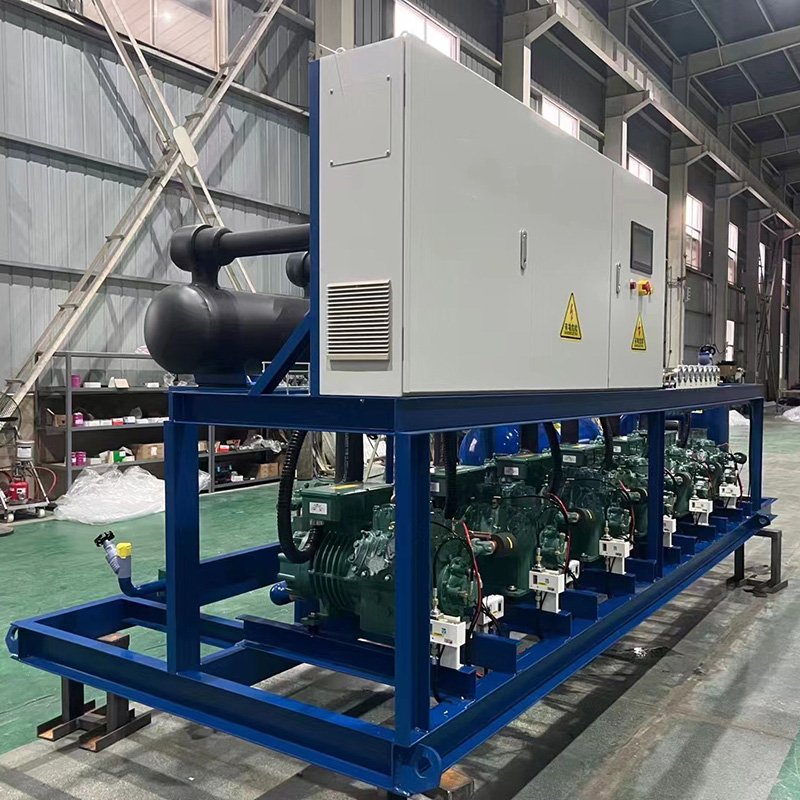
So you’re a distributor or a contractor looking to install a direct expansion (DX) cooling unit. Let’s cut the fluff and talk about what actually matters. Here’s how you do it right, whether it’s for a walk-in freezer in a seafood processing plant or a server room in Dubai. I’m going to walk you through every step – from site prep to final startup – with real numbers and industry-specific tips. No metaphors, no fluff. Just the hard facts your B2B clients need to hear.
Pre-Installation: What You Need to Check Before Touching the Unit
Before you even unbox that DX unit, you’ve got to sort out three things: the physical space, the tools, and the safety gear. Trust me, skipping these steps is how you end up with a compressor burnout or a refrigerant leak that costs you a client.
Space and Clearance Requirements
Every DX unit comes with a manufacturer spec sheet. But here’s the real-world data you need to share with your end customers:
- Indoor unit (evaporator): Minimum 24 inches of clearance on the front panel for airflow and coil access. For ceiling-mounted units, 18 inches below the unit for air return.
- Outdoor unit (condenser): Minimum 36 inches clearance on the sides with air intake, 48 inches above the coil (no roof overhang). For rooftop installations, add 12 inches extra for snow accumulation in cold climates.
- Piping pathway: Plan a route that avoids sharp bends – maximum 5 90-degree elbows per 50 feet of line. Each bend adds 5-10 feet of equivalent length, and exceeding the total equivalent length (usually 150-200 feet for most residential/commercial units) reduces capacity dramatically.
Tools You Absolutely Need
Don’t show up with just a wrench. Here’s the must-have list for a professional installation:
| Tool | Purpose | Industry Standard |
|---|---|---|
| Torque wrench (0-50 ft-lb) | Tighten flare nuts on refrigerant lines | ASHRAE 15-2022 |
| Electronic leak detector | Detect R-32, R-454B, R-290 leaks | Sensitivity ≥ 0.1 oz/year |
| Vacuum pump (≥4 CFM) | Evacuate moisture and air before charging | Down to 500 microns |
| Manifold gauge set (with low-loss hoses) | Measure superheat and subcooling | Compatible with new low-GWP refrigerants |
| Pipe cutter and reamer | Clean cuts without burrs | No shavings allowed inside lines |
| Thermometer (dual-channel) | Check temperature difference across coil | Accuracy ±0.5°F |
Safety First – Especially with Flammable Refrigerants
As of 2025, new installations in many countries (EU F-Gas, US EPA SNAP, Japan METI) are switching to lower GWP refrigerants like R-32 (GWP 675) and R-290 (propane, GWP 3). If you’re shipping units to Europe or parts of Asia, you need to handle these differently:
- R-290 requires a minimum room size – for a 3.5 kW unit, the floor area must be at least 6 m². No ignition sources within 1 meter.
- R-32 units need copper piping rated for high pressure (working pressure up to 400 psi in summer conditions).
- Always use nitrogen pressure test (200 psi for 10 minutes) before vacuum. Never use oxygen – that’s an explosion risk.
Mounting the Indoor and Outdoor Units: Positioning and Clearance Guidelines
Once the site is prepped, it’s time to get physical. Let me break down the mounting for two common industries your clients might be in: cold storage warehouses and data centers.
Cold Storage Application (Walk-in Freezers, Blast Freezers)
In a food processing plant, the evaporator is typically mounted inside the cold room, and the condensing unit sits outside (often on a concrete pad or roof). Here’s what matters:
- Evaporator placement: Install it high on the wall, at least 18 inches from the ceiling to allow cold air throw. For blast freezers, use two smaller evaporators instead of one big one – better airflow coverage and less stratification.
- Condenser location: Keep it at least 10 feet away from any fresh air intake of the building. On a hot day (say 95°F ambient), the condenser needs that clearance to avoid recirculating hot discharge air. If you’re in a tropical climate like Southeast Asia, add a shade structure but leave 24 inches above the coil for heat rejection.
- Drain line: Slope it at ¼ inch per foot. For freezers below 32°F, use a heated drain pan and trace heater on the drain line – otherwise ice forms and water backs up.
Data Center Application (Server Rooms, IT Closets)
Data centers use DX cooling units (precision ACs) that need precise temperature and humidity control. The install is different:
- Floor-mounted units: Place them along the perimeter of the cold aisle. Leave 36 inches on the rear for air return and 48 inches on the front for filter access.
- Overhead units: Do not install directly above server racks – the condensate drip risk is real. Instead, mount them 6-8 feet away, with ducted supply to the cold aisle.
- Vibration isolation: Use rubber pads under the compressor base. Data centers hate noise and vibration – it can affect hard drives and cause false fire alarms.
General Mounting Tips That Apply to All Industries
- Use stainless steel brackets for outdoor units in coastal areas (salt corrosion). Zinc-plated brackets fail within 3 years near the ocean.
- For roof installation, ensure the structural engineer approved the load. A 10-ton condensing unit weighs about 800 lbs – multiply by 1.5 for snow load in northern regions.
- Level the unit both front-to-back and side-to-side. A tilt of more than 5 degrees can cause oil return problems in the compressor.
Refrigerant Piping: Sizing, Insulation, and Leak Testing
This is where 90% of installation failures happen. Bad piping means poor performance, compressor slugging, or a leak that forces a full recharge. Let’s get it right.
Pipe Sizing Based on Refrigerant and Capacity
Use the table below for common refrigerants in 2025. These numbers come from ASHRAE 15 and manufacturer guidelines for typical DX split systems (5-20 tons):
| Unit Capacity (tons) | Refrigerant | Liquid Line (inches) | Suction Line (inches) | Max Linear Length (ft) |
|---|---|---|---|---|
| 5 | R-410A | 3/8 | 7/8 | 150 |
| 5 | R-32 | 3/8 | 3/4 | 130 |
| 10 | R-410A | 1/2 | 1-1/8 | 200 |
| 10 | R-454B | 1/2 | 1-1/8 | 180 |
| 20 | R-407C | 5/8 | 1-3/8 | 250 |
Note: R-290 (propane) requires specific copper tubing – use L-type copper with no internal burrs. Max length for a 10-ton R-290 system is 100 ft due to pressure drop and flammability concerns.
Insulation – Don’t Skimp
For suction lines (cold side), you need closed-cell foam insulation with a minimum thickness of 3/4 inch for lines up to 1-1/8 inch, and 1 inch for larger lines. In high-humidity environments like Miami or Shanghai, bump it to 1-1/2 inch to prevent sweating. Liquid lines don’t need insulation unless they run through a hot attic or boiler room – then use 1/2 inch to prevent liquid flashing.
Brazing vs. Flare Connections
- For systems over 5 tons, braze all joints with 15% silver phosphorous brazing rod. Flare connections only for small residential units (under 3 tons).
- When brazing, purge nitrogen at 5-10 psi through the pipe to stop oxidation. Oxidation creates copper scale that blocks the expansion valve.
- Cool the joint with a wet rag immediately after brazing – this prevents heat damage to the valve or compressor.
Leak Testing Procedure
- Pressurize the system with dry nitrogen to 150 psi for low-pressure side (or 400 psi for high-pressure test).
- Let it sit for 10 minutes. Pressure drop? Use a leak detector on every joint, flare, and service valve.
- For R-32 or R-290 systems, use an electronic detector that works for these refrigerants (some older models don’t detect R-32).
- After leak test, relieve pressure and pull a vacuum to 500 microns (or below 350 microns for large commercial units). Hold the vacuum for 30 minutes – if it rises above 500 microns, you have a leak or moisture.
- Break the vacuum with the refrigerant itself – never with air.
Electrical Connections and Controls: Wiring, Thermostats, and Safety Switches
Electricity is unforgiving. One cross-wired thermostat can keep a compressor running in a frozen warehouse for days. Let’s get this straight.
Power Supply Requirements
- Check the nameplate amp draw. For a 10-ton 3-phase unit at 460V, the minimum circuit ampacity is usually around 25A. You must use a disconnect switch within sight of the unit.
- For single-phase units (common in small cold rooms in developing markets), use a dedicated circuit with a 20A breaker for a 2-ton unit.
- Voltage drop: Keep it under 3% from the panel to the unit. For a 100-foot run with 10 AWG wire and 20A load, that’s about 3.5V drop – acceptable. Any longer, go to 8 AWG.
Thermostat Wiring – Industry Specific
- Cold storage: Use a digital thermostat with a remote sensor placed in the warmest part of the cold room (usually near the door). Set differential to 2°F for tight control. For blast freezers, use a PID controller to ramp down temperature fast without overshoot.
- Data center: Use a precision thermostat/controller that reads both temperature and humidity. The setpoint is typically 72°F ±2°F and 45% ±5% RH. Wire the humidifier and dehumidifier outputs separately.
- Process cooling (e.g., dairy, beverage): Use a simple on/off thermostat with a freeze protection cycle. For glycol-chilled DX units, the controller must have a low-temperature alarm set at 25°F.
Safety Switches You Can’t Skip
- High-pressure switch: Factory set at 450 psi for R-410A, 400 psi for R-32. If the condenser gets dirty or the fan fails, this kills power to the compressor. Never jumper it.
- Low-pressure switch: Set at 20 psi for most refrigerants. Protects against loss of charge or blocked evaporator.
- Crankcase heater: Must be powered 24 hours before startup – otherwise liquid refrigerant settles in the compressor oil and you get slugging on first start.
- Flow switch (for chilled water systems): If your DX unit uses a water-cooled condenser, you need a flow switch to prevent dry running – set to close at 0.5 gpm per ton.
Grounding and Bonding
Use a separate ground rod for outdoor units in lightning-prone areas (Florida, India, Indonesia). Connect the unit chassis to the ground bus with 6 AWG copper wire. For data centers, use isolated ground receptacles to avoid ground loops that corrupt server data.
Commissioning and Performance Verification: Superheat, Subcooling, and Startup
The install isn’t done until the unit runs right. You need to check three things: superheat, subcooling, and airflow. Here’s how to do it without guesswork.
Superheat and Subcooling Targets
These numbers vary by refrigerant and design. Use these as baselines for commercial DX units (adjust per manufacturer specs):
| Refrigerant | Target Superheat (°F) | Target Subcooling (°F) |
|---|---|---|
| R-410A | 10-15 | 8-12 |
| R-32 | 8-12 | 10-15 |
| R-454B | 12-18 | 6-10 |
| R-407C | 8-14 | 10-15 |
| R-290 (propane) | 10-14 | 8-12 |
How to Measure
- Hook up manifold gauges. Red (high side) to liquid service valve, blue (low side) to suction valve.
- Place a thermometer on the suction line about 6 inches from the compressor (insulated from ambient).
- Read the suction pressure, convert to temperature using a P-T chart (or your gauge’s built-in conversion).
- Subtract the actual line temperature from the saturation temperature – that’s superheat.
- For subcooling, measure liquid line temperature at the outlet of the condenser (nearest to the service valve). Subtract that from the high-side saturation temperature.
Adjusting the Charge
- If superheat is too high (above 15°F for R-410A), add refrigerant – slowly, 1 oz at a time, waiting 2 minutes for system to stabilize.
- If superheat is too low (below 8°F), remove refrigerant. Too low superheat means liquid is getting back to the compressor – that kills valves quickly.
- Subcooling too low? Means not enough liquid in the condenser – add refrigerant. Too high? Indicates overcharge – remove.
Airflow Check – The Forgotten Step
Even with perfect refrigerant charge, poor airflow kills performance. Use an anemometer to measure velocity at the evaporator coil face. Acceptable range: 350-450 fpm for comfort cooling, 450-550 fpm for cold storage (to maintain low temperature differential). Torque the blower belt to 5-8 ft-lb – a loose belt slips and reduces airflow.
Startup Sequence
- Turn on crankcase heater 24 hours before.
- Open both service valves (slowly – quarter turn per 10 seconds to avoid oil surge).
- Turn on the condenser fan and evaporator fan manually first – confirm they spin the right direction (airflow out of the condenser, into the evaporator).
- Engage the compressor contactor. Listen for unusual noise (chatter, metallic clank).
- Measure current draw on each phase – should be within 10% of rated amps.
- Let it run 30 minutes, then recheck superheat and subcooling. Document all readings for the customer.
Common Startup Issues in Different Industries
- Cold storage: If the room is very hot (say 90°F inside the freezer on first pull-down), the suction pressure may spike. Let the unit run for 24 hours before fine-tuning charge.
- Data center: Watch the humidity – a new unit can over-dehumidify when the room is empty. Install a humidistat that cuts off the cooling when RH drops below 30%.
- Process cooling (e.g., beverage chilling): You often have a liquid-suction heat exchanger. Make sure the hot gas bypass valve is set correctly – otherwise the suction line can freeze during low load.
Q&A – Frequently Asked Questions from Global Dealers
Q: I’m installing a DX unit with R-32 in a supermarket in Brazil. The manufacturer says maximum pipe length is 130 ft. Can I exceed that if I add an oil trap?
A: No. Exceeding the maximum length reduces refrigerant velocity, leading to poor oil return. Even with oil traps every 20 feet of vertical rise, you still risk compressor oil starvation. For R-32 systems, 130 ft is the hard limit for 5-ton units. If you need longer runs, consider a VRF system or install the condensing unit closer.
Q: My client runs a cold storage room at -10°F. The evaporator coil ices up after 3 days. What’s wrong?
A: Two common causes. First, low superheat – if your superheat is under 5°F, the evaporator is flooding with liquid, causing ice. Increase refrigerant charge? No – actually you might be overcharged. Check subcooling. If subcooling is above 18°F, you’re overcharged and need to remove refrigerant. Second, poor defrost cycle – typical hot gas defrost settings for -10°F rooms are 4 defrost cycles per day, each 20 minutes. Also check that the drain heater works (continuity test with multimeter, should read 50-200 ohms).
Q: We’re shipping a batch of 10-ton DX units to Nigeria. The local contractor says they use R-22 because it’s cheaper. Is that okay?
A: Not anymore. As of 2025, most manufacturers have stopped supporting R-22 (it’s being phased down globally under the Kigali Amendment). Also, R-22 compressors are different from R-410A or R-32 compressors – using R-22 in a unit designed for R-410A will cause overpressure (R-22 runs at lower discharge pressure but the compressor is optimized for R-410A displacement). You’ll get poor capacity and risk compressor failure. Instead, advise your client to use R-407C as a drop-in replacement for R-22 in older systems, or better, specify units with R-454B (GWP 466) which is available in Nigeria through major distributors. Provide the local contractor with a P-T chart for R-454B – they’ll need to adjust TXV settings.
Q: How do I calculate the required refrigerant charge for a field-installed system without a nameplate?
A: Use this formula: Charge (pounds) = (liquid line length in feet × liquid line capacity in lb/ft) + (evaporator capacity × charge per ton). For example, with 20 ft of 1/2” liquid line (0.04 lb/ft) and a 10-ton evaporator requiring 2.5 lb/ton, total = (20×0.04) + (10×2.5) = 0.8 + 25 = 25.8 lb. Then add 10% for the condenser subcooling. Always cross-check with superheat/subcooling measurements after charging. Never guess – overcharging is the #1 cause of compressor failures in field installations.
Q: We have a client in Saudi Arabia putting a DX unit on a sandy desert site. Any special precautions?
A: Yes. First, install a desert-grade filter (30% higher MERV rating) on the condenser air intake – sand will clog standard filters in a week. Second, use a coated coil (epoxy or pre-coated aluminum) to prevent sand erosion. Third, mount the outdoor unit on a concrete pad at least 6 inches high with a 2-inch gravel layer around it to keep sand from blowing into the fan area. Fourth, increase fan speed to 110% to overcome sand-induced static pressure – most modern units have a multi-speed fan setting. Finally, schedule a monthly coil wash (water only) – sand buildup can raise condensing pressure by 30 psi, cutting efficiency by 20%.